

California, like many states, has a system of choosing some judges by elections.
For our state supreme court and courts of appeal, judges are nominated by the governor. For our superior courts, when there’s a vacancy the judge is, again, nominated by the governor. In some instances, first-timers will run for a superior court judgeship. Either way, superior court judges face reelection if they want to keep their jobs.
From an early age we are taught – and told – that voting is the way to make our voices heard. We vote for candidates who support our beliefs, and once elected, officials are answerable to voters. Voters put people in office, and voters remove people from office.
But somehow, when we elect judges, those judges aren’t supposed to be answerable to us. Somehow, judges aren’t supposed to care what we think of their actions, including the decisions they make in court. Somehow, we can put them in office and remove them from office, but the judges are above caring about all that.
 Only, they aren’t.
We voters are just supposed to accept whatever decisions judges make, and smile, and nod.
Put up, and shut up.
Only, some voters didn’t.
Wake-up call.
Two years ago – well before the #MeToo movement – a group of people, mostly women, started a grass-roots effort to recall a judge.
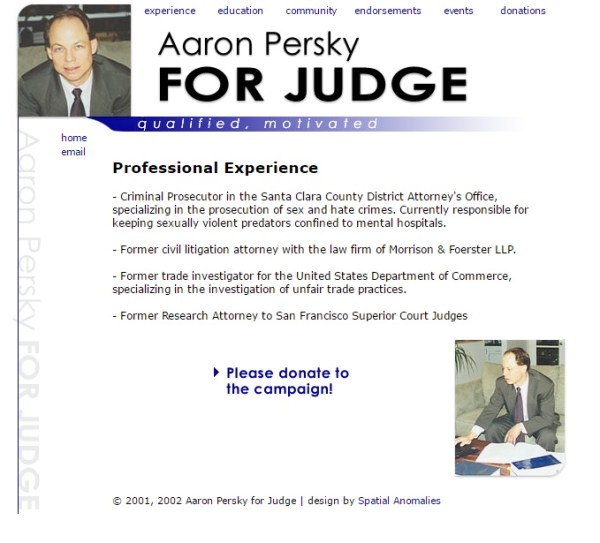
 The judge was Aaron Persky of the Superior Court of California, County of Santa Clara.
The recall movement began after a June 2016 decision made by Judge Persky in the People vs. Turner case. Turner being Brock Turner, a 19-year-old freshman at Stanford University.
Turner was indicted on five charges: two for rape, two for felony sexual assault, and one for attempted rape of a 22-year-old woman. Turner and the woman had met at a fraternity party, and both got drunk. They ended up outside, where Turner’s assault on the unconscious woman was interrupted by two witnesses.
After reviewing the results of DNA tests, the two rape charges were dropped by prosecutors. The jury unanimously convicted Turner of the three remaining charges of felony sexual assault, specifically:
- Assault with intent to rape an intoxicated woman.
- Sexually penetrating an intoxicated person with a foreign object.
- Sexually penetrating an unconscious person with a foreign object.
This conviction could have sent Turner to prison for 14 years.
He didn’t go to prison.
There were no “years” involved in his incarceration time.
Instead, Judge Persky sentenced Turner to six months in jail. 
The judge said he thought Turner would “not be a danger to others” and expressed concern that “a prison sentence would have a severe impact” on him.
The judge did not mention the impact of the assault on the victim.
Prosecutors had asked for a six-year prison sentence. But Persky sided with a recommendation from the county probation department, which said “when compared to other crimes of similar nature” the Turner case “may be considered less serious due to (his) level of intoxication.”
So because Turner was drunk, his assault on an unconscious woman was “less serious”?
Seriously?
Perhaps the most horrifying statement came from Turner’s father who said his son’s life would “never be the one that he dreamed about… a steep price to pay for 20 minutes of action out of his 20 plus years of life.”
Three felony sexual assaults reduced to a mere “20 minutes of action”?
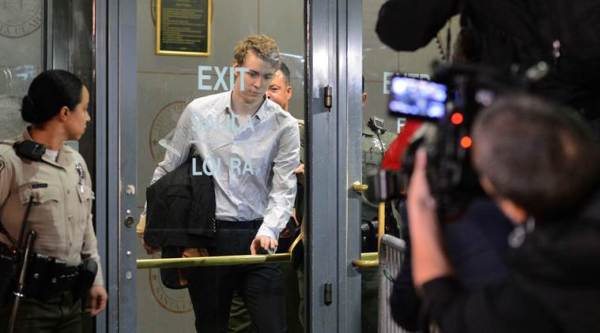
In September 2016 Brock Turner was released from jail after serving three months.
One month for each felony conviction.
All this made a lot of people – mostly women – angry.
They formed the Recall Judge Aaron Persky Campaign.
Their efforts were successful, and Persky was recalled in June 2018, the first judge recalled in California in more than 80 years.
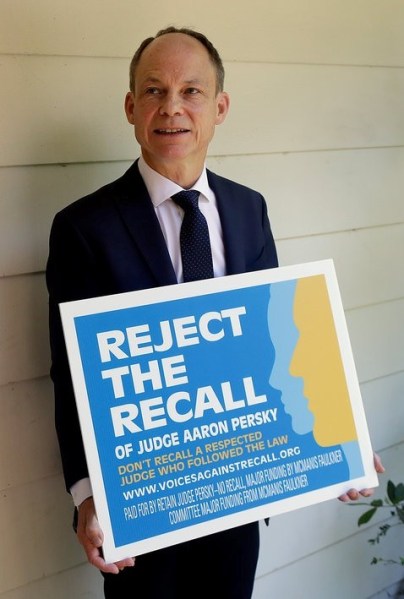
There was opposition to the recall, both before and after it happened. Before the vote, LaDoris Cordell, a retired judge and a spokeswoman for Judge Persky, said the recall was an attack on judicial independence and it had “encouraged people to think of judges as no more than politicians.”
Well, if he campaigns like a politician, and gets elected like a politician, and joins his own anti-recall movement like a politician…
After the recall Santa Clara District Attorney Jeff Rosen said, “When judges believe that they will lose their careers for making unpopular but lawful decisions, they may lack the courage to stand up for the rights of minorities or others needing protection from powerful majorities or those with even understandably inflamed passions.”
When Rosen talks about “minorities” he’s referring to Turner, a man. When he talks about “powerful majorities” he’s referring to women.
Men as a “minority”? Women as a “powerful majority”? That’s a change.
No wonder Mr. Rosen is concerned.

Michele Dauber, a Stanford University professor and chair of the Recall Judge Aaron Persky Campaign said the recall “expresses clearly that sexual assault, sexual violence is serious and it has to be taken seriously by elected officials. It’s a historical moment when women across all sectors of society are standing up saying, ‘Enough is enough.’”
Aftermath?
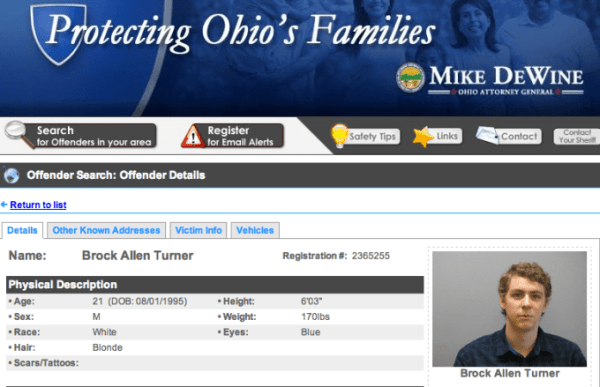
Brock Turner returned home to Ohio. He’d also been sentenced to three years probation, and required to register as a sex offender. Turner has requested that his conviction be overturned, that his lifetime requirement to register as a sex offender be canceled, and that he be given a new trial.
Persky’s sentence, and the backlash to it, prompted California lawmakers to change the law. Within four months, they enacted mandatory minimum sentences in sexual assault cases, and closed a loophole in which penetrative sexual assault could be punished less harshly if the victim was too intoxicated to physically resist.

Persky, according to the San Jose Mercury News, “will continue to work as on-call night judge from 5pm until 8am through June.” After that, “It was unclear what the judge’s next career move will be.”
My takeaway?
If you don’t agree with the law that allows judges to be recalled, then change the law.
Otherwise, judges will continue to campaign like politicians, get elected like politicians, and very likely, if they piss off enough people…
Get recalled like politicians.


 A bit of research suggested that the expression “pet peeve” goes back only about 100 years, which also makes me wonder – what did people call their peeves before then?
 chalk board. Someone standing too close and crowding your space. People showing up at your home without calling first. Toilet seats left up. Hair left in the sink.
 My companion and I were meeting our friends, a husband and wife, for dinner at a restaurant. We all were in regular contact, but this couple lives on the other side of the country and we hadn’t seen them for a number of years.


 It turns out – no. Just a few days later there was a letter in Dear Abby on this very subject. Great timing!
 good health. And everyone hates food getting stuck in their teeth.
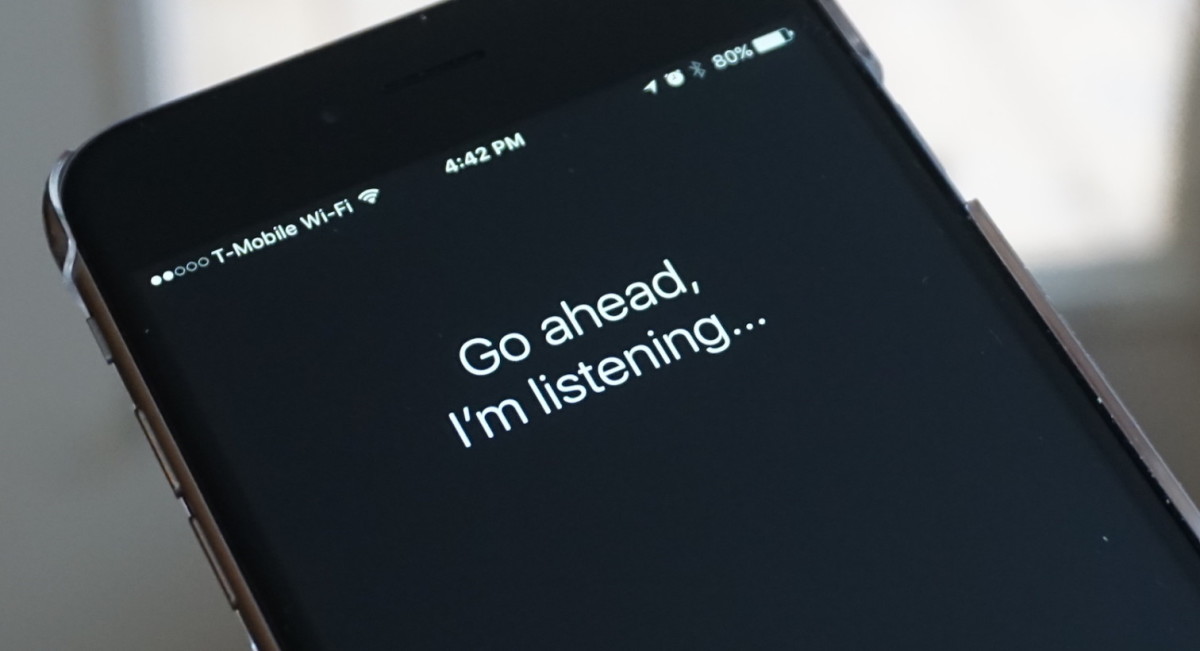
 Voice-activated digital assistants – like Amazon’s Alexa and Echo, Google’s Assistant, and Apple’s Siri – have become so popular that in a few years, more than half of U.S. households will have them.
 They got a call from a business associate of the husband’s. The caller was in Seattle, 176 miles away.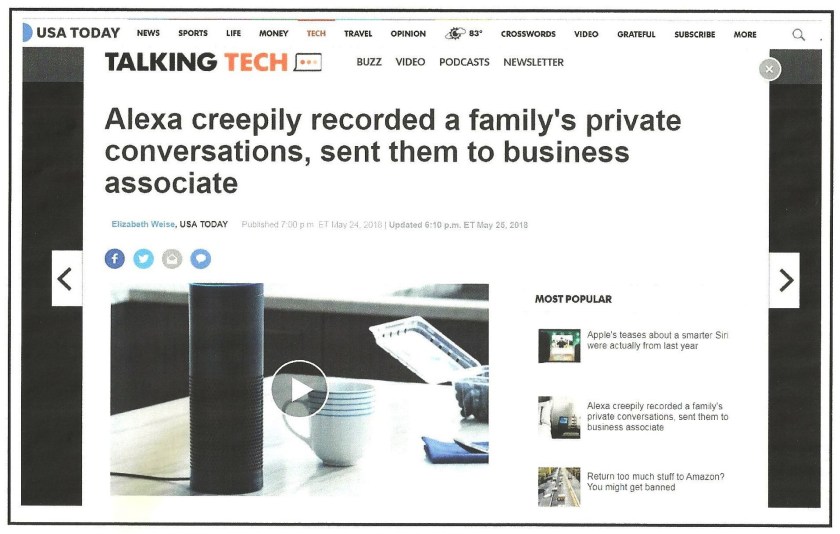




 We Americans hate waste.
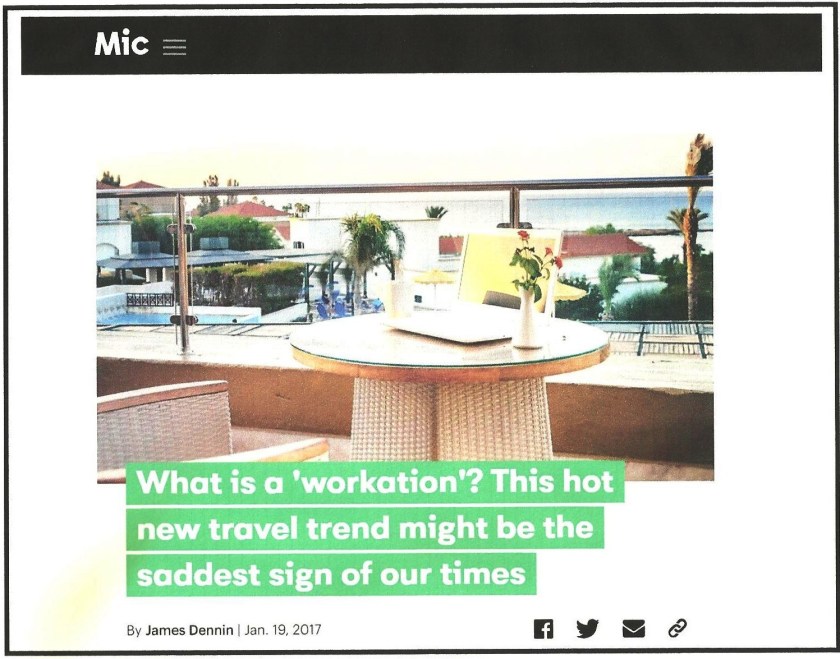
 In a recent survey of 4,439 workers, in 2017 “More than half – 52% – didn’t take all the vacation time they earned, and almost a quarter of workers said they hadn’t taken a vacation in more than a year.
 with 38 days; the count for Panama is 32 days; and Burkina Faso, a country I’d never heard of and sure couldn’t point to on a map, gets 37 days of paid leave.






 that most employers don’t fit that description.


 It’s unclear whether anbody’s going to care.
 losses of $63.6 billion from 2007 through June 2017. In addition, we will most likely default on $6.9 billion in payments for future retiree health benefits for the fifth consecutive year. We owe $33.9 billion in unfunded retiree health obligations from unpaid dues in 2012 through 2016.
 Team Member #1: Um…were all those “billion” with a “b”?
 Team Member #4: Well, it was mostly for kids, and teachers used the stickers as rewards. So if you were a good student, the teacher would put a sticker on your homework assignment and you could scratch and sniff it! Like, um…a peach or an apple!
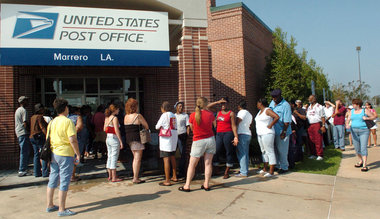 Team Leader: Then let’s get our ducks in a row. We’re considering a scratch-and-sniff stamp, with an odor – I mean, smell – yet to be determined. We produce scratch-and-sniff stamps and the masses will go wild buying them and everyone will be scratching and sniffing?
 Whatever.
 Team Member #3: I’ll find an expensive artist to create images! Something whimsical!



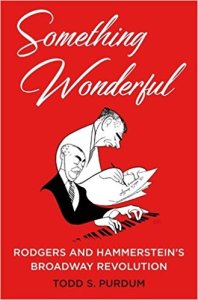 Hammerstein (lyrics).
 The inspiring part is that Rodgers and Hammerstein knew the lows as well as the highs, but even as their “failures” were closing on Broadway, they were at work on their next success.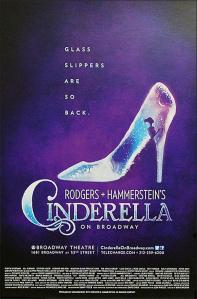
 Don’t be surprised if you find yourself humming along to some of the songs. You’ve heard them – like in the 23andMe commercial. Maybe you just didn’t know it until now.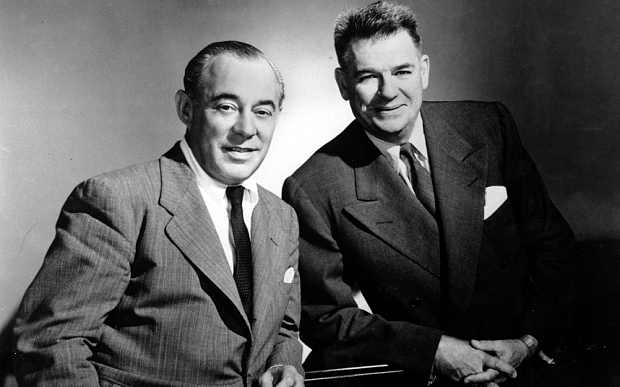






 book?
book? times a week – it The Thrill of the Chase by Forrest Fenn.
 February 2018 article says the number of deaths may be as high as six.




 their laptops, iPads and smart phones.
 So Dick and Jane have been doing their research.

 I Hate Houseguests