The noise started back in June, with headlines like this:
And this:
And this:
The U.S. Conference of Catholic Bishops – USCCB – had convened a three-day virtual conference in June where the 400+ members put their red-beanied heads together…
USCCB in pre-pandemic days.
And because the Beanie Boys apparently had nothing else to talk about, some were loudly proclaiming that President Joe Biden, a Catholic, should be forbidden to take communion because he supports a woman’s right to make her own decisions about her reproductive health.
I remember thinking at the time, “Why don’t the Beanie Boys clean up their own backyard before they start talking about anyone else’s?”
By “their own backyard,” I meant stories like this, also in June:
And this, also from June:
And this, also from June:
The June conference ended and the noise eventually faded.
But then came USCCB conference time again: November 15-18 in Baltimore, and the boys – and the noise – were back:
And a couple of the Beanie Boys were especially noisy:
Isn’t it interesting that when Archbishop Cordileone was citing the “grave evils” of society – “human trafficking, racism, terrorism, climate change and a flawed immigration system” – it didn’t occur to him to include the global crisis of clergy sexual abuse?
Apparently the Beanie Boys in Baltimore were all working on a draft of what they call a “teaching document” that says, in part:
“Lay people who exercise some form of public authority have a special responsibility to embody Church teaching.”
I would suggest this edit to the teaching document:
Priests who exercise some form of public authority have a special responsibility to embody Church teaching.
Because who in the Catholic church, first and foremost, are the people who exercise public authority?
Catholic priests.
More than any other group in the church, priests are front and center in their parishes as authority figures representing the church: Priests conduct mass, hear confessions, grant absolution, perform marriages, baptize babies, and offer counsel and advice to countless church members.
Priests have a special responsibility to “embody Church teaching.”
Which brings us back around to my thought back in June:
Bishops, clean up your own backyard first.
I know you guys were busy at the conference, dithering about President Biden, but how about focusing on these recent headlines, from just the two weeks leading up to your conference:
There’s an awful sameness to all these stories.
Sickening, isn’t it?
Especially sickening when we go back to 2019, and this:
So, the Beanie Boys wrapped up their conference last Thursday, and that document some of the bishops were so worked up about – here’s what happened, according to CNN and other media outlets:
“The US Conference of Catholic Bishops voted overwhelmingly Wednesday to approve a document that fell far short of refusing Holy Communion to President Joe Biden or others who support abortion rights, something conservatives in the Church have pushed for in spite of guidance from Pope Francis.
“The document – which passed with 222 in favor, eight against and three abstentions – would need Vatican approval before any action is taken that would directly target any elected official.”
As for that “Vatican approval” – does this look like a pope who’s going to deny Biden communion?
Time for the Beanie Boys…
…to go home and address their mess.
Update to the U.S. Conference of Catholic Bishops:
Here’s a November 17 story that broke while you were dithering – you can add it to the list above:
On this blog I’ve been doing the same thing over and over:
Excoriating a TV show, and pronouncing, “TV can’t get worse than this.”
Like this show:
And this show:
And this show:
And then another show comes along and proves me wrong.
TV can get worse.
It can, and it does.
This time the show is an offering from DLC, the Discovery Life Channel, which launched in 2015 and described itself as “a new network focused on celebrating all of life’s unexpected moments and the experiences that accompany them.”
A news release from the same time stated,
“‘From the shocking to the scandalous, the informative to the enlightening, heartbreaking to heartwarming, Discovery Life Channel’s programming has something relatable for the voyeur in all of us,’ said Jane Latman, general manager of Discovery Life Channel.”
“‘Between our bold content, unflappable talent and authentic storytelling, we are excited to debut Discovery Life in January as a must-watch television destination filled with humor – and heart – in the Discovery portfolio.’”
The “must-watch” TV show I’m focusing on – “filled with humor and heart” – is this:
For clarification purposes, “impale” means to “pierce or transfix with a sharp instrument.”
And indeed, according to the TV Tango website:
“I Was Impaled features people who accidentally ended up with foreign objects in their body, while examining how these mysterious items were discovered…”
I reckon getting impaled qualifies as one of those aforementioned “life’s unexpected moments.”
I am, of course, imagining a conference room at the Discovery Channel, filled with creative people who are supposed to come up with content for Discovery Life, the new channel. The team leader is standing by a white board, poised to write down the great ideas that will no doubt be flowing in full force…
Team Leader: Listen up, people! We have airtime to fill, viewers to capture and advertisers to please. We need content, and we need it now!
Creative Person #1: We gotta do a show where somebody gets hurt. Viewers love watching someone who’s in pain. Bleeding, maybe?
(Team Leader smiles, and notes GETS HURT on the white board.)
Creative Person #2: Yeah, really hurt, and bleeding, but not, like, bad enough to die. Right?
(Heads nod, indicating hurt and bleeding are good but die would be bad.)
Creative Person #3: How about a show set in a real Emergency Room? That’s where people go when they’re really hurt and –
Creative Person #4 (interrupts): Doofus, we already have a show in an ER – Untold Stories, remember? Geez, don’t you watch the channel?
(Muffled laughter all around.)
Creative Person #5: It’s gotta be unexpected, so like an accident. Like…falling down the stairs. How about a show about people who fall down the stairs and –
Creative Person #6 (interrupts): Nah, that’s too common. How about…how about people getting…uh…stuck by something. You know, impaled? Like, impaled by a tree branch or…or…a nail, or a spike in the head or…
Team Leader: Impaled! That’s it! People, I think we’re on to something here. I want you all to hit the internet and be back here by noon with at least three impaling stories. If the person died, that story doesn’t count.
(The meeting ends.)
If you think I’m kidding about the content of I Was Impaled, here are some samples, direct from the TV Guide website:
19 Nov Unwanted Guests A woman is impaled by a Christmas tree; a boy accidentally swallows a barbed fishing hook; and a man is injected with compressed air.
19 Nov Head On A pole penetrates a man’s mouth and neck; a man accidentally swallows a sewing needle; a 75-year-old man discovers a nail embedded in his face; and a truck driver is impaled by a pole.
19 Nov The Enemy Within A man is injured while mowing his lawn; a three-year-old swallows three magnets; a woman discovers a bug in her ear; and a carpenter gets a splinter in his eye.
Apparently I Was Impaled has been around for awhile – here’s a mention from 2012, when it debuted on what was then the Discovery Fit & Health channel:
I’ve managed to miss the show since 2012, and plan to continue doing so.
I would be remiss if I didn’t thank Wikipedia for pointing out that I Was Impaled does have one redeeming factor:
“The show chronicles the medical rescue involving first responders such as emergency medical technicians as well as doctors who saved the person’s life.”
And those first responders and ER doctors and staff who are faced with challenges like this guy’s – and I don’t even want to guess where in his body that nail came from:
Those medical pros are certainly to be lauded for their quick thinking and life-saving responses.
As for me?
I have learned my lesson.
No more insanity for me.
I now know, without a doubt, that when it comes to TV shows…
I recently read a novel about four authors who were close friends, and the book’s author started each chapter with a quote from a well-known writer.
The quotes resonated with me, as I think they will for anyone who’s struggled to write – a book, an article, a paragraph, a sentence, or even just a phrase. Most of the quotes were from writers whose names I knew, but others, not.
But all of the quotes confirm what all writers know:
A person who publishes a book willfully appears before the populace with his pants down…If it is a good book nothing can hurt him. If it is a bad book, nothing can help him. – Edna St. Vincent Millay
The profession of book writing makes horse racing seem like a solid, stable business. – John Steinbeck
Wilson
If my doctor told me I had six minutes to live, I wouldn’t brood. I’d type a little faster. – Isaac Asimov
I’m not saying all publishers have to be literary, but some interest in books would help. – A.N. Wilson
The cat sat on the mat is not a story. The cat sat on the other cat’s mat is a story. – John Le Carré
Lebowitz
Contrary to what many of you may imagine, a career in letters is not without its drawbacks – chief among them the unpleasant fact that one is frequently called upon to sit down and write. – Fran Lebowitz
For those who can do it and keep their nerve, writing for a living still beats most real, grown-up jobs hands-down. – Terence Blacker
Blacker
There is no way of writing well and also of writing easily. – Anthony Trollope
Writing a novel is like driving a car at night. You can only see as far as your headlights, but you can make the whole trip that way. – E.L. Doctorow
The most essential gift for a good writer is a built-in, shock-proof shit detector. – Ernest Hemingway
There are three rules for writing a novel. Unfortunately, no one know what they are. – W. Somerset Maugham
Lipman
A book is so much a part of oneself that in delivering it to the public, one feels as if one were pushing one’s own child out into the traffic. – Quentin Bell
You can’t wait for inspiration. You have to go after it with a club. – Jack London
Critics have been described as people who go into the street after battle and shoot the wounded. – Elinor Lipman
I don’t have a dog, so I was puzzled as to why I received a catalog from In The Company of Dogs, the “Ultimate Resource for Dog Lovers!”
But – what if I had a dog?
What if I joined the 60+ million people in the U.S. who have at least one dog, and became a dog owner?
What if I joined my fellow Americans who spent nearly $100 billion on their pets in 2020, according to the American Veterinary Medical Association:
What if I perused the catalog to see the latest and greatest items for my dog?
I did. And it was…
A veritable feast of options!
For instance…
There’s an item called a “furniture protector,” and the description assures me that “sharing the couch with a dog is easy with hair, stain, moisture and paw-print protection.”
I’m pretty sure my couch doesn’t need protection from my “hair, stain, moisture and paw-prints,” so the company is suggesting that I, the dog owner, buy a furniture protector.
But…I don’t know.
Maybe I can train my dog to not get on the furniture?
Apparently not.
So it looks like I’m going to buy this furniture protector which, the catalog notes, will be “pleasing to your dog”:
One furniture protector…………………………………………………………………. $219
OK, I accept that my dog will be on the furniture.
And it seems I need to make it easy for my dog to be on the furniture, so I need this:
It’s the “Lightweight Animals Matter Companion Stairs,” a set of portable steps that “harmonize with your furniture” and I can move from room to room so my dog can climb onto the furniture, onto the bed, onto any doggone thing he wants!
Put two writers in a room together, and sooner or later – usually sooner – they’ll be sharing stories of errors they missed in their own work.
“I’m a great proofreader of other people’s work,” one says, “but proofing my own? Forget about it.”
It’s just a fact that for the most part, writers are their own worst proofreaders.
And there’s actually a scientific – and comforting – reason for it.
According to this article:
“When we’re proofreading our own work, we know the meaning we want to convey. Because we expect that meaning to be there, it’s easier for us to miss when parts (or all) of it are absent. The reason we don’t see our own typos is because what we see on the screen is competing with the version that exists in our heads.”
So if I type “to” when I meant “too,” my brain knows I meant “too” and sees that instead.
And I’ve done that, to.
I mean, too.
I’m guessing that the same not-catching-your-own-errors premise was at work when an artist at the Ohio Department of Public Safety recently created this art for Ohio’s new standard license plate, the state’s first update in eight years:
It’s pretty, isn’t it?
It even has a pretty name:
“Sunrise in Ohio.”
Everyone was all smiles when Ohio Governor Mike DeWine unveiled the plate at a ceremony on October 21, according to this story:
The new design features not only the rural part of the state, but also its cities. Fields and a river are pictured, with a distant view of a city in the background. Backed by this are rays of sunshine and the state’s seal, followed by the state’s nickname, “Birthplace of Aviation”:
DeWine was almost rhapsodic:
“This is something that we are, in Ohio, very proud of, the innovators, the scientists, the engineers, the people who have created things in Ohio and continue to do so.”
“We love Ohio’s heritage as the birthplace of aviation, so our newly designed plate reflects all of these.”
DeWine noted that he and First Lady Fran DeWine both played a role in the new design, and that “First of all, our goal was to reflect the beauty of Ohio. We also wanted the plate to represent the diversity of Ohio in the sense of the geography of Ohio.”
Yes, it was a proud day for everyone – the Governor and First Lady, the Ohio Bureau of Motor Vehicles (BMV), that artist at the Department of Public Safety…
But maybe not so much for Wilbur and Orville Wright, whose plane, the Wright Flyer, is depicted on the plate.
“Holy Toledo!” the Wrights may be saying. “They’ve got our plane flying backwards!”
Yes, it’s true.
Here’s a close-up of the plane on the license plate, and an image of the Wright Flyer with the pilot in place:
The Wright Flyer’s propellors are on the back of the plane, and those flat things in the front – they’re called “elevators,” two horizontal pieces that allow the plane to change altitude.
You may be thinking, “Hey – that’s counterintuitive! Propellors on the back of a plane?”
Well, it worked for Wilbur and Orville at Kitty Hawk, NC in 1903, so who are we to argue?
Back to the backwards airplane.
I’m not knocking the artist from the Ohio Department of Public Safety – I’ve made creative errors that match, and may outdo, this one.
But my logic says that he would have had a picture or photo of the Wright Flyer to use as his model for the image on the license plate.
Though perhaps the image he used didn’t include a pilot, like this one:
And from this, you could easily assume the pilot would be facing the propellors.
Which the artist did.
And apparently the governor and his wife did.
And everyone involved from the Ohio BMV, and the Department of Public Safety.
And everyone involved at Lebanon Correctional Institution where inmates had made 35,000 incorrect plates.
And everyone attending that October 21 unveiling of the plate.
But…
On unveiling day, the Ohio BMV tweeted this:
And someone, somewhere, pointed out that the positioning of the airplane – as one wit put it – was “Not quite Wright.”
And someone, somewhere, at the BMV or Department of Public Safety, found an image of a Wright Flyer with a pilot, flipped the image, and within hours the BMV had apologized for the error and released an updated version with the plane facing the other way. The updated version is first:
Which was followed by numerous headlines like this one:
To that artist at the Ohio Department of Public Safety who created the incorrect image, I say:
I know what it’s like to create something I think is error-free, and I put it out there for the world to see, and then someone, somewhere catches a glaring error that wasn’t glaring at me.
I feel your pain.
To the taxpayers of Ohio, I say:
I feel your pain.
After all, taxpayers paid for those first 35,000 plates which, according to this story:
“…could weigh anywhere from 7,000 pounds to 17,500 pounds total.”
The taxpayers will pay for tons of aluminum plates to be recycled.
And for thousands of new plates to be printed.
With regards to cost of all this, the state weaseled on that:
“‘It is too early to know about if there will be any additional cost,’ said Lindsey Bohrer, assistant director of communications with the Ohio Department of Public Safety.”
We’ve heard no follow-up regarding the cost to taxpayers, which comes as no surprise.
But – instead of incurring all these additional costs to taxpayers, perhaps the authorities should have just kept the incorrect plates and used them.
Just slap a sticker on ‘em and…
Change the state’s nickname from “Birthplace of Aviation” to…
So as usual, on Halloween evening I was at home, blinds closed, lights out, waiting for it to be over.
The only light was my television and the local evening news.
And this came on:
With a video showing this:
A group of people costumed and made up as zombies were dancing to Michael Jackson’s Thriller music video.
There were on the flight deck of the Midway, a massive aircraft carrier that was commissioned in 1945, decommissioned in 1992, and opened as the USS Midway Museum in San Diego in 2004:
Hence, “Thrill the Mil” – as in, military.
It was very cool.
I love stuff like this.
People – some of them clearly not professional dancers; of varying ages – some of them clearly not young; all gussied up and dancing for the sheer pleasure of it.
Dancing for fun, with other people, because they can.
Dancing for the full six-minute song, and that is a real workout.
Dancing for the military, and that is a worthwhile reason.
Was it possible?
Possible that I’d found something to like about Halloween?
I knew nothing about this – no surprise there – and I wanted to learn more.
Since then I’ve learned that this was the first “Thrill the Mil” event, organized by Thriller San Diego:
“Thriller San Diego is San Diego’s hub of rehearsals and performance opportunities for the iconic zombie-themed dance in Michael Jackson’s internationally renowned Thriller music video.”
According to the Thriller San Diego website, “We are a community group built solely by volunteers!” They offer classes and videos to learn the dance, and the dancers can be booked for events – “private events, we ask for a $100+ suggested donation.”
I found some good information in this 2019 article, as well:
At the time, Thriller San Diego had been performing for seven years, and it grew…
“…from small pockets of friends performing random bouts of bloody dance sequences to an organized group of teachers and dancers dedicated to teaching San Diegans the moves to Michael Jackson’s Thriller.
“Thriller SD has more than half a dozen instructors teaching wannabe-zombie-dancers the moves to Jackson’s most iconic dance. The classes are free, with a suggested $5 donation, and take place all over San Diego.”
This is very cool.
Elsewhere I learned that Thriller San Diego is part of something much larger:
According to their website:
“Thrill The World is a global community project that inspires others to break down barriers by connecting people of all religions, races, political persuasions, and economic backgrounds. The organization contributes to the growth of humanity by encouraging others to step up as leaders, visionaries, and creators. Role models around the world organize local dance groups to join other nations at the same time, performing to Michael Jackson’s Thriller while raising money for charity.
The website also says,
“Thrill The World was created by Ines Markeljevic, proving to you that you CAN dance!
“Thrill The World is an event run by fans who receive no monetary benefit…”
I love stuff like this.
On Thrill the World Day – October 30, 2021 – two worldwide dances were scheduled for 10am and 10pm GMT, and when I say “worldwide” – it is. Here are just a few images from Thrill the World Day 2020, with groups ranging from two or three to much larger – and all equally lively.
I mean, undeadly:
Back in San Diego…
Thriller San Diego did, indeed, participate in Thrill the World Day on October 30.
Not content with that, those sneaky zombies somehow got aboard the USS Midway Museum for that afternoon scare on Halloween.
They rose from the dead…
And danced their undeadly dance…
And like the song says…
You try to scream But terror takes the sound before you make it You start to freeze As horror looks you right between the eyes You’re paralyzed!
Here’s a story that came and went quickly, as so many stories do in our 24/7 news cycle.
But this is too good a story to let come and go quickly.
So let’s go back to a Sunday evening in late October, to Kabuki restaurant in Woodland Hills, in Los Angeles County.
Background:
There’s a reason we Californians garner headlines like this:
Those “strictest vaccine mandates and masking policies” in the country include Los Angeles County, where all employees and customers are required to wear masks in a restaurant when not eating or drinking, regardless of vaccination status.
It’s no secret.
Signs are posted at restaurants, like this one on the Kabuki restaurant’s front door:
So when a maskless man – whom I’ll call “Maskless Man” – walked into Kabuki that Sunday evening, the hostess politely reminded him that masks were required.
He refused to put on a mask.
And all Hell broke loose.
The Hell was caught on a cellphone video and accounts vary a bit, so I’m using information from several sources, including this one from KCAL:
Maskless Man “got angry after a hostess asked him to wear a mask. The customer can be seen aggressively pointing his finger and heard yelling, ‘You go f— yourself,’ at the hostess.”
Here’s that confrontation:
“When another customer tried to intervene on the hostess’ behalf, the maskless man pushed him.”
Here’s the push – Maskless Man is on the right:
And then…
My hero.
You have to see the video to appreciate it, but here’s what happened.
About two seconds after the push, my hero – in the dark blue hat – appears from the left and punches Maskless Man:
And this was no wussy punch. This was a full-on fist to the face that knocked off Maskless Man’s glasses. Maskless Man goes flying backwards and lands on the floor near the front door.
As another customer appears to be politely opening the door for him, Maskless Man gets up and continues loudly mouthing off, but it’s clear he’s leaving:
The KCAL story said,
“The maskless man claimed he was assaulted but left soon after the altercation. Los Angeles police said no one requested medical help and no arrests were made.”
A different media outlet reported that during the confrontation with the hostess, Maskless Man also said, “Do you know what happens when you discriminate? We’re gonna fuck your restaurant up!”
While this source, the United Kingdom’s Daily Mail:
Reported that quote as, “you’re going to f*ck your restaurant up!”
The Daily Mail also said the punch appeared to knock out Maskless Man’s tooth before he went “scurrying out of the restaurant without his glasses – and perhaps a few teeth.”
His departure was accompanied by jeers, and shouts of “Get out!”
And ignominious retreat.
I call that a happy ending.
But…I’m conflicted.
I’m opposed to violence, yet it was SO satisfying to see Maskless Man get his comeuppance.
Maskless Man, who was Mr. Brave when he was yelling at the petite female hostess and pushing around a customer described as “elderly.”
But when My Hero stepped in and decked Maskless Man, he backed off in a hurry.
Maskless Man is a bully and a coward, and he’s so self-centered that he doesn’t care that he’s possibly risking the health of others by exposing them to COVID.
When Maskless Man relates this story to his friends – if he has any – he will no doubt start off with, “I was just minding my own business, and walked into this restaurant…” and finish with, “And this guy comes out of nowhere and punches me in the face. For no reason!”
If Maskless Man goes looking for sympathy, here’s my suggestion:
Update, November 8: Maskless Man is going to be really unhappy about this:
Starting today, in addition to wearing a mask, in Los Angeles he’ll have to show vaccine proof before he can walk into a restaurant and lots of other places.
The book is The Personal Librarian, and the authors are Marie Benedict and Victoria Christopher Murray.
The book’s dedication says:
For the two sides of Belle: Belle da Costa Greene and Belle Marion Greener
The novel is based on a real person, and she did, indeed, have two sides:
Belle Marion Greener, born into a middle-class black family in Washington, DC; and Belle da Costa Greene, who passed for white her entire adult life, and well beyond her death.
I’d never heard of Belle (1879-1950, pictured above), nor the place where she made her mark – the Pierpont Morgan Library in New York:
Now known as The Morgan Library and Museum, it originated as the personal repository of rare and valuable artworks and manuscripts collected by millionaire financier J.P. Morgan. Morgan’s funds were unlimited – as was his acquisitiveness – but he needed a knowledgeable person to organize, and continue adding to, his collection.
On his nephew’s recommendation, Morgan interviewed (white) Belle da Costa Greene, and hired her as his personal librarian.
J.P. Morgan.
Belle had already been living as a white, but this position moved her from relative obscurity into the spotlight. There was nothing low-key about Morgan, and as his representative, Belle had to navigate the high levels of society – wealthy art collectors, sharp-eyed art dealers, and society women whose hobby was putting each other under a microscope.
“Is this the moment,” Belle wonders, “I brace myself for almost daily, the moment when my secret will be revealed?”
But her secret wasn’t revealed during her lifetime, and Belle earned both solid reputation and many professional successes in the art world, unusual at that time for a woman, and impossible for a black woman.
The authors do a credible job of taking us inside Belle’s mind and helping us understand why Belle knew she had to keep her real self hidden. In their Historical Note they say:
Belle, pastel portrait, circa 1913.
“Clearly, Belle did not want her real identity discovered, not a surprise given the racism of her times and her legitimate concern that if her background became widely known, her accomplishments at the Pierpont Morgan Library would be eviscerated.”
Belle’s accomplishments indeed would have been eviscerated – and Belle would have been, too.
The authors don’t say how or when Belle’s background was revealed, but I was curious and spent some time looking online. It appears that in 1999, J.P. Morgan biographer Jean Strouse found Belle Greener’s 1879 birth certificate, which lists Richard Greener, an African American, as her father.
Fortunately, in 1999, that discovery was more footnote than front-page news.
And now, four-and-a-half years and 601 posts later:
Why Did I Start a Blog?
In 2017, when I started thinking about doing a blog, I ran the idea by a few people and got some strong reactions, like this:
“You’re going to go on Facebook and Twitter and other sites to promote your blog, right? What’s the point of having a blog if you don’t promote it and have millions of followers?”
Well…no…
And this:
“You’re going to monetize it, right? What’s the point of having a blog if you don’t make money off it?
Well…no…
The third person I mentioned this to said, in his most scornful voice,
“Any fool can start a blog.”
Well…yes…
And that’s what this fool did.
My first blog post went live on May 5, 2017.
Here I am, 601 posts later.
I’ve never promoted my blog, and never made money off it.
So back to the question:
Why did I start a blog?
And here’s my – I think, good – answer:
Because it’s fun.
In 2017 I’d never read a blog, and never had a desire to do one. Never even thought about blogging.
Then a coworker told me she had a blog. Not at all curious (but just to be polite), I asked her for the URL. As I spent some time reading a few of her posts (just to be polite), I had a revelation:
My coworker was having fun with her blog.
She wrote in the first person, was free with her opinions, was funny, included pictures, and I thought…
Maybe I could do that.
I can write in the first person, I can be free with my opinions, I’m sometimes funny – I’m told – and I have pictures…
I could do that.
Then, that evening, I read this in a fortune cookie. And as we all know, fortune cookies are always accurate:
My future as a blogger was assurred.
The next day I complimented my coworker on her blog (and I wasn’t just being polite), and asked what platform she used. “Wordpress,” she said.
A few days later – despite the above-mentioned opinions – I was off and running.
And with every post I’ve written, I’ve had fun.
Sometimes I write about what I know. More often, what I’m writing requires research – sometimes a lot of research. I learn a lot, and I like that.
The beauty of a blog – if you’re not trying to promote it or monetize it – is the freedom to write about anything I want.
And, important: To not worry about what anyone thinks, about me, or about what I’ve written.
Think about that – writing not to please a boss or a client or the public, not thinking about pleasing anyone but myself.
So…
I know my blog will never appear on this list…
Or this one…
Or this one…
So…
When I started blogging back in 2017, I would never have predicted I’d still be at it after four+ years and more than 600 posts.
Remove tray from box; microwave on high for three minutes.
This is my newspaper’s idea of a recipe:
This newspaper page is 11” by 22” – that’s 242 square inches of work.
For starters, there’s the reading. The introduction is close to 600 words, and the recipe instructions are another 650+ words.
C’mon, lady! Abraham Lincoln got his point across at Gettysburg in only 272 words. Think brevity, not verbosity.
Then there’s the 10 – count ‘em – 10 photographs.
What is this – a graphic novel?
Then there’s the list of ingredients – 27 items, which means a trip to the grocery store and a cart that will look like this:
And there’s all the paraphernalia you’ll need to create this dish: a size 16 foodservice scoop, sheet pans, a rimmed baking sheet, foil, a grater, a garlic press, measuring cups and spoons, olive oil cooking spray, an instant-read thermometer, a skillet, and an oven.
OK: I have an oven, but as for the rest:
Then there’s the verbs. To concoct this dish, you’ll have to split, remove, discard, roast, rake, break, stir, chop, grate, push, poke, crack, crush, beat, pour, spray, portion, roll, bake, tent, drizzle, cook, sprinkle, divide, and garnish…
Going back to brevity vs. verbosity, the recipe’s author does tend go on about her father’s famous meatballs vs. restaurant meatballs:
“My experience has proved that the perfect meatball is somewhat elusive even when eating out…They can lack flavor and be overcooked and tough or mushy and spongy.”
Horrors!
To combat this, the author generously shares her father’s techniques for making tender meatballs. His secret?
“Don’t overwork the meat.”
So apparently it’s OK to overwork the cook, but by golly – you’d better not overwork that meat.
She also offers an ingredients-combining technique “to cut down on the amount of handling the meat needs to endure.”
What “the meat needs to endure”?
What about what the cook needs to endure?
The big byword here is “gently,” as the author reminds us repeatedly, including here:
Even the recipe’s headline admonishes us to “handle with care”:
Geez, OK, I get it! Don’t mash the meat!
And now, after all that reading of all those square inches and pictures, and shopping and ingredients and paraphernalia and verbs…
You’ll have this:
What is this marvel called?
Spaghetti Squash and Meatballs with Quick Tomato Sauce
Clearly, the author and I have different definitions of “quick.”
And different definitions of “spaghetti.”
The spaghetti I know comes in a box like this:
The recipe “spaghetti” is made from the spaghetti squash, which looks like this:
But, the author assures us, if you want to use actual spaghetti…
“…go for it – no judgment here.”
Whew! That’s a relief!
For all her verbosity, there is some information the author didn’t include. Most recipes note the amount of time involved but the author didn’t, so I did it for her:
Shopping time: Eight hours. Prep/cooking time: 16 hours. Recovery from shopping/prep/cooking: Three days.
But…I decided to go ahead, dive in, and make this marvel.
And I discovered something else the author didn’t tell us.
I wasn’t paying much attention to the TV until my husband said, “Did you hear that?”
I hadn’t, so he repeated what he’d just heard and seen on a commercial:
“Life insurance so good, they’re gonna want you dead.”
I headed for the internet and learned this was a commercial for Ladder Life Insurance.
Now, life insurance as a topic is boring, at best.
Nobody wants to think or talk about life insurance, because you have to be dead to collect it, and then it doesn’t do you any good.
So, in an apparent attempt to make life insurance – I don’t know. Fun? Interesting?
Intriguing?
Ladder’s ad agency came up with the “they’re gonna want you dead” concept.
Here’s the premise:
Dad comes home from work, opens the front door, and that triggers a hatchet to swing toward him:
He holds up his briefcase to take the hit.
Next, the dog approaches with a stick of dynamite:
Which Dad takes and tosses away, blowing up an unseen part of his house.
Dad goes to the fridge for a soda, which launches a flying knife:
Which he avoids.
The last attempt on Dad’s life is an arrow:
Shot by his young daughter.
Do you find this fun? Interesting? Intriguing?
I didn’t.
But this writer at AdWeek did:
In the article the writer quotes people involved who indicate that they also thought “they’re gonna want you dead” was a winner, including this:
“Olivia Borsje, vp of marketing at Ladder, described the ad as ‘everything we were looking for.’
“‘It’s memorable, it’s relatable, but most importantly it’s different,’ she said.”
And this:
“Commercial director Casey Storm said he was immediately drawn to the ad’s unexpected premise.
“‘The concept made me laugh out loud,’ Storm said. ‘I felt like it was comical, bold and distinctly unique in advertising.’”
I wonder if these same folks would find this “memorable” and “relatable”:
And maybe this would make them “laugh out loud”:
And for sure they’re thinking “comical, bold and distinctly unique” about this:
Sorry to rain on your parade, folks.
Actually, I’m not sorry at all.
In the name of selling life insurance, they used the premise of wanting someone dead.
In the name of selling life insurance, they used multiple attempts to kill a parent.
The Ladder commercial’s premise is gruesome, it’s horrible, and it’s also highly suggestive to young minds that suck in what they see on TV and perceive it as normal.
Normal to “want someone dead.”
To attempt to kill them.
As is to so often the case, I’m way out of step with popular thinking, as indicated by DailyCommercials.com, which invites people to social media platforms to rate commercials.
The Ladder’s commercial was deemed “hilarious”:
Going back to the AdWeek article, the writer thought the commercial was “darkly humorous,” and the “But Seriously” disclaimer at the end was “entertaining”:
I wonder if the writer would find this double murder by a son for the parents’ life insurance money “entertaining” as well?
We’ve heard it for so long – and so often – that’s it’s almost like one word:
“RoeversusWade.”
“RoeveeWade.”
Roe v. Wade – the Supreme court’s 1973 landmark decision that made abortion legal in the United States.
And we’re going to be hearing a lot more about it:
Today the identity of the anonymous “Roe” in Roe v. Wade is no secret – she was Norma McCorvey, a Texas resident who, in early 1970, wanted a legal abortion and couldn’t get one.
She connected with two attorneys, Linda Coffee and Sarah Weddington, who had a plan to legally challenge and overturn Texas’s restrictive abortion law in federal court. They needed a plaintiff who wanted a legal abortion and could not afford to go to California or New York (where abortion was legal) to get one.
McCorvey, 1982.
McCorvey wanted her identity to remain hidden, so Coffee assigned Norma the pseudonym of “Jane Roe.” Coffee and Weddington filed the class-action lawsuit in federal district court in March 1970. From there, the case worked its way through the appellate process and eventually, the Supreme Court.
So she was “Roe.”
But – who was “Wade”?
Wade is also no secret – but I, and I’m betting many people, had no idea who or what she or he was.
He was Henry Wade (1914-2001), the district attorney of Dallas County where McCorvey lived. Coffee and Weddington named Wade as the defendant in McCorvey’s case because he enforced a law that prohibited abortion.
This 2018 Washington Post article…
…had some insightful things to say about Wade.
Coffee, 1972.
Regarding Roe v. Wade, the article says that “America has forgotten (or never knew) that Wade mostly shrugged his shoulders at the whole thing”; that “he never showed any personal animosity toward abortion”; and quoted from David J. Garrow’s book, Liberty and Sexuality:
“[after the decision was announced, Wade] ‘made no comments to the press’ about a case he ‘had never taken any personal interest in,’ despite the fact that it ‘bore his name.’ He did privately acknowledge later in life that ‘in some cases abortion is justified.’”
Weddington, 1972.
Two attorneys had found their plaintiff, who happened to live in Dallas County. Wade happened to be the county’s district attorney.
A plaintiff in a different county or state, and Wade’s name would never have been attached to “perhaps the most controversial Supreme Court decision in U.S. history.”
There’s a quote from Shakespeare that speaks of greatness, and how some have “greatness thrust upon them.”
I’d say that Henry Wade had fame thrust upon him – whether he wanted it or not.
I was watching a 2016 National Geographic video, Sea Monsters: A Definitive Guide, and finding it anything but definitive.
It was rife with speculation, suppositions and unanswered questions, when I wanted facts and pictures and videos, and up-close-and-personal experiences of people who had encountered sea monsters.
Nope.
I know “monsters” is an unfair word – one definition is “an imaginary creature that is typically large, ugly, and frightening.”
Add the word “sea” to “monsters” and it gets really scary – after all, we’ve explored only 20 percent of our oceans, so who knows what’s down there?
Mariners have been telling sea monster stories for centuries, and they must have seen something, right?
And they’d come home and tell their stories of what they thought they saw, and listeners would draw images of what they thought they heard…
And voila!
A sea full of monsters.
And there are a lot of strange creatures in our oceans:
And these three creatures were found in that meager 20 percent of the ocean we’ve explored – just imagine what’s in the other 80 percent!
Which brings us back to Sea Monsters: The Definitive Guide.
And my new word.
And about time.
The National Geo film did include a few actual scientists, and one talked about something that had washed up on an ocean beach. It looked like this:
Or maybe it was this:
Or this:
What these three images have in common – and what the scientist called them – and what my new word is, is:
The perfect word!
A combination of “glob” and “lobster,” and here’s the definition:
“An unidentified organic mass that washes up on the shoreline of an ocean or other body of water. A globster is distinguished from a normal beached carcass by being hard to identify, at least by initial untrained observers, and by creating controversy as to its identity.”
My spellcheck doesn’t like the word, but I sure do.
Globster was coined by British biologist Ivan T. Sanderson in 1962, after a mass of something washed up on a beach in Tasmania. It was described as having “no visible eyes, no defined head, and no apparent bone structure”:
And it was big: 20 ft by 18 ft and estimated to weigh between five and 10 tons.
What else could you call it, but a…
Apparently no photographs exist of the Tasmanian globster, but plenty more recent globster photographs do.
Like this one, from Fiji in 2020:
And this one from the Philippines in 2018:
And this, also in 2018, in New Zealand:
The last, it turns out, was actually one of these:
A lion’s mane jellyfish:
In fact, globsters that wash up on beaches are identified by scientists – mostly as various decomposing species of whale, though there are a few people out there trying to trick us:
As a scientist explained the globster phenomenon in this Newsweek article:
Once the animal dies and starts decomposing,
“Gas buildup inside the body cavity causes bloating and distortion. Various parts drop off or are scavenged by sharks as it floats around. Different parts of the flesh break down at differential rates.”
And all of that can cause this sperm whale:
To become this:
St. Augustine, FL “monster,” 1896.
So, though the National Geo program disappointed me…
Learning a new word thrilled me.
I can’t wait to use it – I’ll be the life of the party!
There are two kids in the above photo I want you to remember.
Here’s a close-up:
We’ll meet up with them later.
As to – why weren’t these adults at work, and why weren’t these kids in school…
According to this article in the October 18 San Diego Union-Tribune…
The “vaccine mandate” in the headline:
“Governor Newsom’s mandate, announced earlier this month, made California the first state in the country to say it will require the COVID-19 vaccine for schoolchildren once it receives full federal approval.
“California students age 12 and up will be required to get the COVID vaccine after it becomes fully approved by the Food and Drug Administration for their age group. First the mandate would be phased in starting with 7th to 12th grades, followed kindergarten to 6th grades.”
The adults made a choice to stage a “sit-in” as part of a statewide protest of California’s upcoming COVID-19 vaccination requirement.
These same adults made a choice to have their kids skip school on October 18, to participate in the protest.
These same adults who, a year ago, were protesting distance learning and demanding their kids return to in-person learning:
On October 18, their kids could have been in the classroom.
Instead, their parents took them out of school.
How many kids? As reported in the Union-Tribune article, in the San Diego area:
San Diego Unified School District: 1,300 students; Ramona Unified School District: 1,700 students; La Mesa-Spring Valley School District: 520 students; Poway Unified School District: 225+ students.
The article didn’t list other districts, but no doubt you can add to the list.
Why did the parents tell their kids to skip school?
Again, according to the Union-Tribune, one parent said she thinks “the COVID vaccine is not needed, and she doesn’t like that it is being forced on people. ‘It feels very anti-American to be, my way or the highway,’”
She said she had her kids skip school “to teach them that it’s okay to stand up for what you believe in” and that “some things are worth fighting for.”
Another parent said her kids missed school Monday to show the school board she’s willing to pull them out of the district if they are forced to take the COVID vaccine.
She also said it’s very rare for a child to die from COVID.
That last thought may be comforting.
Unless the child that dies is yours.
And in case that parent missed it…
What these parents are disregarding – and teaching their kids to disregard – is the safety and health of others.
You don’t get vaccinated to protect just yourself. You get vaccinated to protect yourself, which helps protect others.
These parents were also disregarding the issue of student absence impacting school funding. For example, going back to the La Mesa-Spring Valley School District, attendance was down five percent below normal, according to Superintendent David Feliciano. The district had 520 more students absent than usual, which equated to a revenue loss of about $29,000, he said.
So, the kids lose learning time, the schools lose revenue, and the parents…
Ah, the parents.
Let’s invite the parents to fast-forward say – six years.
The kids in this picture…
…are now in high school.
Let’s call the one on the left Rob, and the one on the right Emma.
Scenario #1:
Rob’s mother calls upstairs to tell him it’s time to leave for school.
Rob: I’m not going to school today.
Mom: What are you talking about? Of course you’re going to school!
Rob: They want us to do homework, and I hate homework. Remember, during COVID, when you had me skip school and said it’s OK to stand up for what I believe in? And that some things are worth fighting for? Well, I believe homework isn’t fair, and I’m standing up for what I believe in.
Scenario #2:
Emma’s mother calls upstairs to tell her it’s time to leave for school.
Emma: I’m not going to school today.
Mom: What are you talking about? Of course you’re going to school!
Emma: But Mom, remember, during COVID, when you told me to skip school that day and said you were willing to pull me out of the district school? Well, I’m having a sit-in. I hate my school. I hate all schools, and I’m not going anymore!
Perhaps these parents’ October 18 actions will come back to bite them in the ass.
Like the old idiom says…
“This is not a new idea. We already require vaccines against several known deadly diseases before students can enroll in schools. The Newsom administration is simply extending existing public health protections to cover this new disease, which has caused so much pain and suffering across our state, our nation and the entire globe over the last 18 months.”
– Dr. Peter N. Bretan, president of the California Medical Association, whose organization “strongly supports” the governor’s decision.
When Star Trek’s William Shatner had his October 13 ride on Jeff Bezos’ Blue Origin spacecraft, Shatner didn’t exactly “boldly go where no man has gone before.”
Others had ridden in a Bezos’ spacecraft, including Bezos himself, back in July.
And Shatner didn’t even get into outer space, but rather to the “edge of space 65.8 miles up,” according to this article:
But boy, oh, boy – did Bezos get the publicity he craves.
And the money.
Shatner flew for free, but two of the other passengers “paid undisclosed sums,” said the CBS story.
Bezos is cagey about disclosing what it costs for a Blue Origin trip.
Just like he’s cagey about disclosing his net worth. Fortunately, Forbes doesn’t hesitate: Bezos was worth about $199.6 billion as of October 20.
And Bezos isn’t the only rich man who’s cashing in on what we’ve come to call “space tourism”:
Richard Branson (net worth: $6 billion) and his Virgin Galactica is another, and Elon Musk (net worth: $209 billion) with his SpaceX is yet another.
Yup, space tourism is an industry, and rich people are willing to pay plenty to make the richer people even richer.
So the timing was right on October 17 for my newspaper, the San Diego Union-Tribune, to invite readers to “Have Your Say”:
The invitation referenced Shatner’s trip, and that…
“…some complained such resources would be better directed at solving problems here on Earth. What do you think of space tourism?”
Readers were invited to submit essays of 500 or fewer words for possible publication, and I expect many people will have lots to say about this topic, pro and con.
Let’s stay with that idea of, “such resources would be better directed at solving problems here on Earth.”
There is NO way that Branson, Musk and Bezos..
…are going to wake up tomorrow and say, “Holy rocket science! I should quit space tourism and direct that money to solving problems here on Earth! Like preparing for and containing pandemics, and securing cyberspace, and solving food insecurity, and…”
But how about our government?
Could our government perhaps be persuaded to stop spending money on useless space projects, like this one:
Meet “NASA’s Lucy”:
Estimated cost: $989.1 million.
That’s the better part of a billion dollars.
Of course, NASA lowballs costs, and it seems highly likely that a 12-year mission is going to generate some unexpected expenses.
Especially since NASA’s Lucy launched on October 16, and on October 17 it was already having problems:
So, what is Lucy’s billion-dollar mission?
According to the New York Times article:
“NASA embarked on a 12-year mission to study a group of asteroids on Saturday with the launch of Lucy, a robotic explorer that will meander through the unexplored caverns of deep space to find new clues about the creation of our solar system.”
Here are the asteroids that Lucy will “meander” around:
The asteroids are swarming around Jupiter, located fifth from the sun:
To assist in its clues-about-creation quest, Lucy is equipped with all sorts of devices with names like L’TES, L’LORRI and L’Ralph, which is all very alliterative, but not my idea of a beneficial use of my…
I’m sure it would be lovely to understand everything about the creation of our solar system, and perhaps someday we will.
How about someday, after we’ve made much more progress addressing life-threatening issues right here in the United States?
Issues that might have been a step closer to resolution, had that $1 billion been better used.
Here’s a partial list of those issues, in case anyone from our government is listening:
Now think of the impact on this list, if even half of NASA’s budget had been spent on it:
The author of this article put it much better than I could:
“With people struggling to eat in the richest country in the world, is exploring space how our tax dollars should be spent?”
“$23.3 billion is a lot of money for NASA, which has little to no direct impact on everyday Americans’ lives. Sure, space is cool to learn about and the advancement of science and technology is very important, but parents who can’t feed their children probably don’t care about some rocks on Mars.”
“NASA should not be a priority when issues such as poverty, food insecurity and homelessness exist in America. Our tax dollars should be spent on us – improving our infrastructure, helping the poor, bettering education and solving climate change.
“To be clear, government funding for research is very important and NASA should not be abandoned. Knowledge should be accessible and space shouldn’t be treated like a personal playground for the ultra-rich. Right now we need to focus on fixing the problems here on Earth before we try to figure out the age-old mysteries of space.”
I was doing research for a blog post and clicked on this article from early October 2021:
It was the subhead that caught my eye:
“The U.S. will begin phasing pennies out of circulation in 2022 and stop minting the coin in 2023”
Really? I thought.
I hadn’t heard or read about that anywhere – local or network news, my newspaper or online.
The Independent story wasn’t about phasing out pennies – the only other mention that subhead got was the last sentence in the article:
“…as the US will begin phasing pennies out of circulation in 2022 and stop minting the coin in 2023.”
I considered the source: the Independent.
It’s a British online newspaper established in 1986 as a national morning printed paper that went online-only in 2016. The website and mobile app claim a combined monthly reach of almost 23 million, and the Independent’s reporters have won a number of awards.
For quite some time I’ve figured that the Independent had good credibility, and I’ve quoted the newspaper in a number of my blog posts.
I figured the phasing-out-pennies subhead was credible and I wanted to know more, so I googled it.
And it didn’t turn up in any of my go-to sites – the Washington Post, the New York Times, the Los Angeles Times or my local newspaper, the San Diego Union-Tribune, nothing on NPR, PBS, ABC, CBS, NBC, or CNN.
Hmmm.
This got me wondering about the veracity of the penny story.
The earliest article I found about doing away with pennies was this:
The website appears to be related to finances, and the subhead referenced an announcement from the “U.S. Mint.” The article talked about the “high cost of making new pennies” and “how stores will handle transactions without pennies,” and concluded with how eliminating pennies will benefit everyone:
“It is estimated the average person loses $38.92 in pennies throughout their lifetime. Change will be easier to count and manage, and purses will be lighter. No more looking under car seats, under couch cushions, sifting through the coin jar, etc.”
I thought it looked legit.
Until…
I reread the story. After the conclusion, there was a list of penny-related story links that I’d skipped the first time around.
This time I looked at them. And looked past them.
And saw this:
The story that had seemed credible to me was a joke, and I’d missed it.
Fool me once, shame on me.
At least I had some company.
The next reference to the demise of pennies was this June 7, 2021 article:
I thought it looked legit.
The Newswire website says it does “press release distribution” – for a fee – and whoever wrote this press release also referenced the U.S. Mint announcement, and used some of the same information from the above CashMoneyLife website.
The author even firmly assured us:
“Don’t worry – it’s not a Volkswagen-level April Fool’s joke. This is the real deal. And it’s arguably the biggest coin news since 1857 when Congress discontinued the half cent, which believe it or not, people weren’t thrilled about at the time.”
If this author’s source was the CashMoneyLife story, I guess the author didn’t get past that list of related links to see the punchline:
Fool that author once.
And apparently this author as well, on July 1, 2021:
I thought it looked legit.
Tally appears to be a debt consolidation website, so – money-related. The article’s author included interesting historical information about the penny, and good arguments about why it makes sense to discontinue it.
The author also mentioned that the “U.S. Mint”:
“…will officially phase out penny production in late 2022, and it’ll complete its last batch of penny production on April 1, 2023.”
Note the use of the word “officially.”
No suggestion of an April Fool’s joke here.
So in addition to the Independent, I’d found three sources for the penny demise story: CashMoneyLife, Newswire and Tally. The first identified as a joke, but the second and third stories were presented as fact.
My next stop was the official source – the U.S. Mint:
Specifically, to the “News” tab where I searched for “cease penny production” in the 2021 news releases:
Nothing.
Then I looked for any news release that mentioned “penny” in 2021:
Again, nothing about the penny’s demise.
So – what started as an April Fool’s joke then evolved in June into a genuine, this-is-not-a joke story, and was taken a step further in the July article as “officially.”
And then…
On September 23, 2021 the story appeared on CoinCommunity.com:
The link in the post brings us back to the original CashMoneyLife.com April Fool’s joke, but in no way indicates the story isn’t for real.
And that brings us to early October, and that Independent article’s author who saw something, somewhere about the demise of the penny, and repeated it as fact.
I offer this, though not as an excuse:
At first I hadn’t noticed that April 1, 2021 date on the CashMoneyLife.com website:
If I had noticed the date, I probably wouldn’t have assumed the article was an April Fool’s joke.
The first time I read that article, I didn’t look at the related links or past them, and didn’t see this:
How many articles have I not read all the way through? How many have I skimmed for relevant information, perhaps missing the most important information?
When it comes to the internet – to any news source…
I need to notch up my skepticism, and scale back my credulity.
But before I start ranting about the U.S. Navy/federal government’s use and misuse of our tax dollars, let me offer some context.
There was a story on the news the other night that posed the question,
“Can you collect unemployment if you’re fired for refusing the COVID-19 vaccine?”
The short answer is,
“Probably not, because being fired for refusing the COVID vaccine could be considered being fired ‘for cause.’”
I was happy to hear it.
The story cut to a man-in-the-street interview and this whiny doofus:
He said,
“I think that the state should pay for their unemployment benefits…even if they don’t get vaccinated. Because it’s the right of the individual – that’s what our country is about.”
Some people just can’t get it through their thick heads that the “state” doesn’t pay for anything.
Taxpayers do.
Local, state and federal governments derive their incomes from us taxpayers, so whether it’s a new storm drain, a new state highway, or a new aircraft carrier, all – and I mean all – of it was paid for with our….
Which brings us back to the above headline about the Navy selling two aircraft carriers.
For one cent each.
Let’s talk about the two aircraft carriers.
They’re the USS Kitty Hawk and USS John F. Kennedy.
Both went into service in the 1960s.
I found cost estimates for the Kitty Hawk ranging from $265 million to $400 million. I couldn’t find a cost estimate for the Kennedy, but since they were both aircraft carriers built around the same time, I’ll use those figures.
Let’s meet in the middle and say each ship cost $330 million to build.
That $660 million translates into around $5.5 billion today.
Here’s what the aircraft carriers looked like in their glory days:
But ships get old, as all machinery does, and according to the above Insider article,
“The Kitty Hawk was decommissioned in 2009 and the John F. Kennedy in 2017. Both have spent their time since being maintained in naval yards.”
The Navy decided it was time for the old ships to go to their final resting place.
In this case, that place is International Shipbreaking Limited (ISL), based in Brownsville, TX, formally known as EMR International Shipbreaking Limited, LLC:
You’ll notice the red arrow pointing to the “Sell to Us” option.
Click on that, and we learn this:
ISL also provides helpful, illustrated links of “What we Buy,” including “Marine Structures and Vessels”:
Vessels like the USS Kitty Hawk and USS John F. Kennedy.
On the “Sell to Us” page ISL talks about how they “guarantee you a fair price.”
How, I wondered, was ISL paying one penny per vessel a “fair price”?
These are big ships, each more than 1,000 feet long, and they must contain a lot of “scrap metal and items containing metal.”
And the Navy said, “One penny each, and their yours”?
Wait – it gets worse.
According to this article:
On previous occasions, it hasn’t been the Navy selling old ships to the salvage company.
It was the Navy (i.e., us taxpayers) paying the company:
“…often the Navy is the one paying millions more to contractors to take decommissioned vessels away for scrapping, which can be a very complex affair.
“For instance, the service is looking at a bill of more than $1.5 billion to dismantle the former Enterprise, its first nuclear-powered supercarrier. The total estimated cost to dispose of the hulk of the ex-USS Bonhomme Richard, a Wasp-class amphibious assault ship that was ravaged by a massive fire last year, was pegged at a more modest $30 million.”
And in the situation with ISL, according to this article:
“The navy previously paid ISL to have the company tow and dismantle decommissioned vessels, including the USS Constellation and USS Independence.”
So – why did ISL let the Navy (i.e., us taxpayers) avoid paying millions with the Kitty Hawk and John F. Kennedy?
Again, according to the Independent:
“A spokesman for Naval Sea Systems Command, Alan Baribeau, confirmed that ‘The contract values reflect that the contracted company will benefit from the subsequent sale of scrap steel, iron, and non-ferrous metal ores.’”
I’ll just bet the “contracted company” will “benefit.”
The contracted company – ISL – is going to make so much money from salvaging the USS Kitty Hawk and the USS John F. Kennedy that they apparently don’t even need those millions the Navy (i.e., us taxpayers) has paid in the past.
I suppose, to some, charging only two cents instead of millions makes ISL heroes.
I suppose, to some, spending only two cents instead of millions makes the Navy heroes.
Not to me.
Let’s scale this back a bit – from thousand-foot-long ships to something we can all relate to:
Automobiles.
The world is full of companies like this, practically begging us to sell them our old, junky cars:
The arrangement is very simple:
“Our junk car removal team buy and picks up junk cars across the state of California, paying cash for cars and typically picking up within one to three business days…our junk car buyers in California will drive to wherever your vehicle is located to pick it up free of charge. That’s the Clunker Junker promise.”
This and other companies do the same thing as International Shipbreaking Limited, just on a smaller scale. The companies pay us, they take the car away, they process it, and make money selling what they’ve salvaged.
But in the case of the Navy, it’s been we, the people, paying the salvage company to take away old ships, process them and then make more money.
This makes no damn sense to me.
None.
Well, perhaps brighter days are ahead.
Perhaps in the future when the Navy decides to junk a ship, they – I mean, we – will get paid more than a penny for it.
For years there’s been talk of getting rid of the penny, and good arguments made for that, like in this 2020 article:
“Each penny costs about 2 cents to produce, according to a 2019 report by the U.S. Mint…The Mint manufactured more than seven billion pennies in the 2019 fiscal year, at loss of nearly $70 million.”
If the goverment decides to phase out pennies, ISL will have to cough up more than one cent to take a decommissioned ship away and scrap it.
Maybe ISL will pay something closer to that “fair price” they talk about:
It means I just learned something new, and that’s a good thing.
For instance, I recently learned that 75 milliliters is 2.5 ounces – a measly amount when a cosmetics company is charging a whopping $56 for 75 milliliters of face glop.
$22 an ounce?
I think not.
Even more recently, I learned something new in this Washington Post story:
I learned that if you have one of those Roomba robot vacuum things, and you have a dog, there’s a possibility certainty that if when your dog poops on the floor, the robot vacuum will slide into the dog poop and smear it all over your floor.
I’ll admit I was a bit was skeptical, until I read this article:
Which assured me that:
“You see, iRobot had a poop problem. There are dozens if not hundreds of YouTube videos documenting the phenomenon, as a Roomba approaches a pile of fresh dog droppings, hovers over it a bit, and then makes a snail-like trail of fecal smears across the hardwood or carpet. It’s honestly probably among the most widespread and unintentionally hilarious (depending on your point of view) consequences of mainstreaming robots.”
iRobot Corporation being the maker of Roomba robot vacuum cleaners since 2002.
I checked YouTube, and indeed – there appears to be a plethora of videos posted about this topic.
Because I care about you, I’ll share from just one:
In this brief sequence, we see that the robot vacuum making its approach…
Start smearing…
Mission accomplished:
The robot vacuum being unable to recognize and avoid the poop.
The robot vacuum now being permanently unusable.
Until now.
Until, says the Washington Post article, the debut of the…
“Roomba j7+, the latest version of iRobot’s popular home vacuum.”
The new $849 Roomba j7+ “claims to give customers ‘even more control over their clean,’ with a camera that can identify and avoid pet droppings. Instead of smearing it all over the floor, the device will gracefully avoid the poop…”
Not just avoid it, but gracefully!
And not only that, the Roomba j7+ will…
“…snap a picture and text it to your phone if you’re out, the company says.”
I’m not sure if the Roomba j7+ is sending the picture to ask, “Shall I go through it or around it?” or possibly, “Just a heads-up – Woofer has left a sign of his affection for you in the family room,” but just imagine this scenario:
Thanks to the pandemic, you’ve been unemployed for almost a year. You’ve finally – finally – landed an interview for a job you really – really – want. And you think you’ve nailed it!
Your phone rings (you were so nervous that you forgot to put it on mute) and as you apologize to the interviewer, you grab your phone to shut it off, fumble, and accidentally drop it on her desk. She sees this:
Interviewer: Someone sent you a picture of poop? You: Ha! It was a something! My vacuum cleaner sent it!
End of interview.
But don’t despair!
iRobot created an entirely new division in their tech department, and you just might fit right in.
You see, before the folks at iRobot could teach their new vacuum how to recognize dog poop, avoid it, take pictures of it, and send said pictures to your phone…
It had to create, acquire and/or otherwise simulate beaucoup dog poop in its laboratory:
According to iRobot CEO Colin Angle in this article,
“This is one of those stupid, glorious things. I don’t know how many hundreds of models of poo we created out of Play-Doh and paint, and everyone [at iRobot] with a dog was instructed to take pictures whenever their dog pooed. And we actually made synthetic models of poo to try to further grow our database.”
Here’s another Colin Angle quote, from the TechCrunch article:
Colin Angle and his Roomba j7+.
“The glorious career of roboticists may not have been fully realized when we were sending people home and creating hundreds of models of poo. Sending people around to photograph and create synthetic models of poo. I don’t know how many tens of thousands of images of all different shapes and sizes of synthetic images were required, but this is not demo code, clearly.
“You imagine it, we probably attempted it to grow a large enough database with both real images, images of fake poo and synthetic images that were manufactured of poop to serve as a training model for our robot.”
Frankly, Mr. Angle, I’d prefer not to imagine it.
In this article, Angle did admit that while they’ve mastered the dog poop problem,
“We can’t do pee,” says Angle. “It has to have some 3D aspects to it.”
But with the poop – they’re solid.
This, says TechCrunch, takes the form of the “Pet Owner Official Promise (P.O.O.P.), which guarantees a free return for the new j7+ if the Roomba runs into (and over) a poop problem”:
Apparently Angle loves talking about this so much that he even made a 42-second video, starring himself, which includes many words of wisdom such as these:
What Angle doesn’t address in the video – or elsewhere – but some articles do, is concerns about privacy.
For instance, the Washington Post article references “the intimacy of the data” devices like the Roomba j7+ collect, and:
“‘People are used to thinking about whether Alexa is listening in on their house, or what the Ring doorbell is capturing outside, but they might not realize that the existence of a camera on their vacuum could present those same types of concerns,’ said Tom Williams, assistant professor of computer science at the Colorado School of Mines and director of the Mines Interactive Robotics Research Lab there.”
I pooh-pooh that concern.
Seriously, are you kidding? Everyone knows that as soon as you joined Facebook, any vestiges of privacy you may have had are done, gone, finished! Haven’t you seen the disclaimer on Facebook’s homepage?
So, to summarize:
I’ve learned that an old Roomba and dog poop are a bad mix.
I’ve learned that the new Roomba will gracefully avoid dog poop.
I’ve learned that I’ve spent so much time and energy researching and writing about this that…
I had the good fortune to live in San Francisco when it was affordable.
But affordable or otherwise, when you live in San Francisco, you have at least some awareness of what a big deal the second Monday in October is:
It’s Columbus Day.
Except it isn’t.
In San Francisco it’s no longer known as Columbus Day.
It’s now known as Indigenous Peoples Day and Italian American Heritage Day, and the dual celebration today – Monday, October 11 – was preceded by this yesterday:
October 11 is a San Francisco city and county Holiday.
October 11 is not a California state holiday.
October 11 is very confusing.
According to this 2021 article:
In California, Indigenous Peoples Day and Italian American Heritage Day are also celebrated in Santa Barbara and Sacramento, though it’s not a city and county holiday in either. The cities of Berkley, Los Angeles, San Luis Obispo and South Lake Tahoe observe only Indigenous Peoples Day.
The state of California does not observe Columbus Day or Indigenous Peoples Day or Italian American Heritage Day as a state holiday.
So if you, for example, live in San Francisco and you’re a city or county employee, it’s a holiday.
But if you’re a state employee, no holiday for you.
If you’re a federal employee, October 11 is a holiday and it is called “Columbus Day.” According to this website:
“All non-essential federal government offices are closed on Columbus Day, and all federal employees are paid even if they receive the day off.”
And how about where you live? Here’s a map by states, though it doesn’t whittle it down to individual counties or cities or – for all I know – neighborhoods:
The focus of Columbus Day is – was – Italian-born explorer Christopher Columbus’ arrival in what we now call the Americas in 1492.
In my online research I came across this scholarly paper written in 2003:
The paper begins by saying,
“On October 12, 1492 Christopher Columbus set foot upon one of the Bahamas. Europe’s Age of Exploration had begun…the voyages of Columbus set into motion a series of historical events that resulted in the exploration of a new world. And therefore he has captured the imagination of mankind and became a metaphor for discovery, adventure, bravery, daring, perseverance and much more.”
Columbus has also become a metaphor for controversy. How so?
The paper goes on to say,
“There are at least 150 Columbus memorials in the United States…”
That was 2003.
Fast forward to September 2020:
The article says,
“At least 33 Christopher Columbus statues have been taken down or are in the process of being removed since the renewed Black Lives Matter protests began in late spring, according to a count of local reports.”
“Protests have targeted Columbus because he is accused of the genocide of indigenous people. A 2019 study published in the journal Quarterly Science Review estimated that between 1492 and 1600, about 55 million people in the Americas died.”
And not all of those 33 Columbus statues were peacefully and quietly removed by local authorities, according to this article:
“In St. Paul, demonstrators toppled a ten-foot-tall statue that stood in front of the Minnesota state capitol. In Richmond, protesters pulled down an eight-foot-tall statue in Byrd Park, carrying it about 200 yards before setting it on fire and throwing it into the nearby Fountain Lake. And, around 12:30am Wednesday, police in Boston received a report that a marble statue of the Italian explorer and colonizer had lost its head.”
And it isn’t just statues – the Columbus controversy conversation has extended to places named for Columbus, including this one:
And how about our nation’s capital, Washington, DC – the DC standing for “District of Columbia”?
I don’t know how far we, the people, will go in the Columbus conversation.
I do know this irony: Columbus wasn’t on a journey to discover a “New World,” as North, Central and South America came to be called. Instead, according to History.com:
“Columbus intended to chart a western sea route to China, India and the fabled gold and spice islands of Asia. Instead, on October 12, 1492, he landed in the Bahamas, becoming the first European to explore the Americas since the Vikings established colonies in Greenland and Newfoundland during the 10th century.”
That new sea route Columbus was seeking would increase trade, and that meant increased wealth.
Increasing wealth by exploiting local resources – from precious metals to people – was and is the primary reason that humans have always ventured into the unknown.
Across oceans, like Columbus; across land masses, like Lewis and Clark; and now, into outer space, as this writer suggested almost 30 years ago:
“Space colonization means much more than Antarctic-style research habitats on the moon or other planets for an elite group of astronauts. Space can be colonized and provide Earth with the equivalent of the New World that Columbus ‘discovered’ in the 15th century.”
Humans have always explored – and exploited – and we always will.
Perhaps someday we’ll have holidays named after these outer space explorers:
Giving my money to a retailer should be easy – right?
And usually, it is.
But not this time.
The scenario was simple:
From whom: Macy’s How: Online. What: Clinique moisturizer.
“Clinique,” by the way, is an American manufacturer of skincare, cosmetics, toiletries and fragrances, with a British actress – Emilia Clarke – as their first Global Ambassador.
I guess they couldn’t find any American actresses who could look this silly while touting Clinique products:
I don’t spend much on cosmetics (read: nothing) so I figure it’s OK to indulge myself with a rather pricey moisturizer. One bottle lasts for months, it’s kind to my skin, and now it was time for a new one.
Normally, the process is easy – go online, select my product, proceed to checkout, credit card number in, product on its way.
I did notice an offer on the left-hand side of my screen:
I didn’t want a “Free Gift.” I knew I wouldn’t use it. I’d end up dumping the product and recycling the packaging, so let’s not waste it.
That was my attitude.
Macy’s or Clinique – or both – begged to differ.
When I clicked on the “Proceed to Checkout” button, I got this:
Wait – I can’t complete my purchase without selecting a “Free Gift”?
You’re forcing me to choose a “Free Gift” – or else?
This is crazy.
But I wanted to finish this and do something more interesting, so rather than find some other place to buy it…
I chose their #@!%*#! “Free Gift.”
My order went through, and a few days later the package arrived containing both what I wanted – and didn’t.
Meet my “Free Gift”:
Goop and Glop:
These were much smaller, try-this-and-you’ll-be-hooked sizes.
Let’s start with Goop.
Normally I’d be wildly enthused about anything that suggested I “take the day off.”
But in this case – take the day off from what?
Doing the dishes? Paying my bills? Taking out the garbage?
I was suspicious as to how a small jar of goop was going to somehow enable me to do any of that.
Plus, I’m always skeptical of a product that comes with French subtitles.
As though baume démaquillant has some kind of je ne sais quoi that – what?
Justifies its very hefty price tag for the full-size container – $34 for a meager 3.8 ounces?
And what’s with all the lower-case letters? Is this some sort of affectation that’s supposed to catch my eye and make me say, “Oh, look! No upper-case letters! How droll! I must have it!”
And what, exactly, does Goop claim to do?
According to the Clinique website, when applied to my face, this…
“Lightweight makeup remover quickly dissolves tenacious eye and face makeups, sunscreens. Transforms from a solid balm into a silky oil upon application. Cleans thoroughly, rinses off completely. Gently helps remove the stress of pollution so skin looks younger, longer. Non-greasy. Non-drying.”
So…it dissolves, transforms, cleans, rinses off, helps, and removes.
That is one busy jar of Goop!
It’s amazing to think that stuff that looks like this…
Can claim to do all that.
But – put it on my face?
Pass.
Next: Glop, or “moisture surge 100H auto replenishing hydrator.”
Again, all lower-case letters.
Again, the French subtitle: “soin auto-réhydratant.”
I’m sensing a pattern here.
Especially when it comes to the price:
$56 for an even more meager 2.5 ounces.
Unlike the Goop, Glop is clear, or almost:
This is another product I’m supposed to put on my face, this time for…
“a 174% immediate moisture boost that keeps skin hydrated for 100 hours.”
Interesting claims, though I saw no evidence offered.
This product, once applied to my face, promises to…
Deliver, help, and lock in.
And all I have to do is…
“Use morning and night on clean skin, or use over makeup as a dewy highlighter.”
“Dewy”? I want to look like something that is wet with dew?
Glop is not just for my face!
“More ways to use this multitasker: as a five-minute mask, cuticle treatment, frizz smoother, or dry spot fix for knees and elbows.”
“Frizz smoother”?
Which frizz and where, I wondered.
And what, exactly, am I treating my cuticles for?
They’ve never treated me to anything.
In case we’re not clear about the primary place to apply Goop and Glop, Clinique provides us with this image of where our face is located:
And Clinique provides us with yet one more suggestion.
It’s the one suggestion I gladly followed with Clinique’s #@!%*#! “Free Gift”:
The “famed cathedral” in the headline is Washington National Cathedral in Washington, DC, more formally known as the “Cathedral Church of Saint Peter and Saint Paul in the City and Diocese of Washington.”
I’d assumed the “famed cathedral” that the article was referring to was Washington National Cathedral.
That’s not what caught my attention.
The “artist” in the headline is contemporary artist Kerry James Marshall, “renowned for his wide-ranging works depicting African American life.”
That’s not what caught my attention, either.
What I focused on – and started wondering about – was…
What the heck are Confederate windows doing in Washington National Cathedral?
The windows depict Confederate Generals Robert E. Lee (two left panels) and Thomas “Stonewall” Jackson:
Here’s how they looked in the cathedral until 2016, when things changed (more about that to come):
As for how the windows came to be there, it took quite a bit of research online, and at first the information was scanty, like this, from a recent Washington Post article:
“…the Lee and Jackson windows…were donated by the United Daughters of the Confederacy and installed in 1953.”
“United Daughters of the Confederacy.”
A name that might spark approval in some, condemnation in others.
Who are they?
It seems to depend on whom you ask.
According to their website,
The United Daughters of the Confederacy (UDC):
“…was founded in Nashville, Tennessee, on September 10, 1894, by Mrs. Caroline Meriwether Goodlett of Tennessee as Founder and Mrs. Lucian H. (Anna Davenport) Raines of Georgia as Co- Founder.”
“…the Objectives of the society are Historical, Benevolent, Educational, Memorial and Patriotic and include the following goals:
To honor the memory of those who served and those who fell in the service of the Confederate States.
To protect, preserve and mark the places made historic by Confederate valor.
To collect and preserve the material for a truthful history of the War Between the States.
To record the part taken by Southern women in patient endurance of hardship and patriotic devotion during the struggle and in untiring efforts after the War during the reconstruction of the South.
To fulfill the sacred duty of benevolence toward the survivors and toward those dependent upon them.
To assist descendants of worthy Confederates in securing proper education.
To cherish the ties of friendship among the members of the Organization.”
Here’s a different view about the UDC, from a New York Times opinion piece:
Lee window detail.
“In truth, the organization did more to advance white supremacist ideology during the first several decades of the 20th century than any other organization in American history.
“Its leaders glorified the Ku Klux Klan. They romanticized slavery as a benevolent institution that featured happy, faithful and well-fed bondsmen and women. They spoon-fed these values to the young through racist primers and essay competitions that rewarded children for parroting white supremacist views. This distorted version of history nurtured a generation of well-known segregationists and formed the basis of Southern resistance to the civil rights movement.”
And this, from Smithsonian Magazine on September 24, 2021:
Jackson window detail.
“‘The movement launched over a century ago by the UDC to install Confederate monuments and memorials in public places was not an innocent act of heritage, pride or civic beautification,” National Museum of African American History and Culture curator Paul Gardullo tells Smithsonian magazine.
“Instead, he explains, ‘It was a concerted effort to mark and embed a false myth of slavery, the Civil War and Reconstruction across the national landscape in an attempt to help reinforce segregation, Jim Crow, and racial intimidation and terror of African Americans.’”
Let’s go back to 1953, when the UDC’s Confederate windows were installed in Washington National Cathedral.
I really had to do some digging for this, but found some plausible information on a website called “Emerging Civil War,” which claims to offer a “fresh perspectives on America’s defining event.” Here are the articles:
I also found information in this 2002 Washington Post article:
Here’s some of what I learned:
“In 1953, when the United Daughters of the Confederacy finally had the money to install stained glass windows of Lee and Jackson at the National Cathedral, the cathedral was delighted to take their money.”
The amount of money the UDC offered was $130,000, about $1.2 million today. It appears that that funding paid for the Lee window, as the plaque below it read,
“…gratefully built by the United Daughters of the Confederacy.”
The plaque below the Jackson window said it was erected by the UDC “and his admirers from South and North.”
“Records show that a northern philanthropist, Wall Street banker James Sheldon, matched the group’s funds for the Jackson window.”
One of the articles described the Lee and Jackson windows as having special appeal to UDC members for their “ability to memorialize their organization and the legacy of the Confederacy,” and quoted from a history of the UDC about the windows:
Lee window detail.
“Here, where the nation’s heroes are to be honored side by side, the patriotism of the Confederacy shall have recognition. No boy from either side of the line must ever stand in this great gathering of soldiers and wonder at the absence of a Southern hero. One must be there lest the question be: were the men who wore the Gray really patriots; did they fight for their country to keep it the way their forebears founded it? They were and they did; and, for their sake, their beloved leader must have place where the great spirits of our nation’s history are to be enshrined.”
At the dedication service in 1953, President Eisenhower said Lee was a man…
“…who could be a soldier who could fight for his ideals in which he firmly believed but who remained, at the same time, a great noble character.”
But even with all this attention, apparently the Lee and Jackson windows didn’t draw crowds of admirers; in the 2002 Washington Post article, a cathedral spokeswoman said,
“‘Most people are surprised when they find out we have windows for Lee and Jackson. Not many people come asking to see them. They just kind of stumble on them.’”
The windows stayed in place, often unnoted and unremarked upon, until 2015.
The windows hadn’t changed, but the world had.
Jackson window detail.
In 2015, the cathedral’s then-dean, the Rev. Gary Hall, said:
“The windows were installed in 1953 to ‘foster reconciliation between parts of the nation that had been divided by the Civil War. While the impetus behind the windows’ installation was a good and noble one at the time, the Cathedral has changed, and so has the America it seeks to represent.
“‘There is no place for the Confederate battle flag in the iconography of the nation’s most visible faith community. We cannot in good conscience justify the presence of the Confederate flag in this house of prayer for all people, nor can we honor the systematic oppression of African-Americans for which these two men fought.’”
In 2016:
The Confederate battle flags were removed and replaced with plain glass…
…and the church would “hold a period of public discussion on issues of race, slavery and justice and revisit the question of how to treat other depictions of the Civil War on the windows.”
Then, in 2017:
“Officials at Washington National Cathedral will remove two stained-glass windows that pay tribute to the Confederate generals Robert E. Lee and Stonewall Jackson, a decision reached after two years of discussion and made more urgent by the recent racially tinged violence in Charlottesville, VA.”
“… [the windows] will be cleaned, conserved, stored and potentially moved to another part of the church to be used in an educational setting unaffiliated with worship.”
“While cathedral leaders look for replacement designs, the windows will be covered with wood that is painted to emulate the stone around it.”
“The United Daughters of the Confederacy did not return requests for comment, and Dean Hollerith said that he had not heard from the organization in an official capacity about the decision.”
Employees set up scaffolding to remove the stained-glass windows in 2017:
And covered the empty spaces:
Which brings us to September 2021 and the headline that started this post:
I went back to the United Daughters of the Confederacy website to see if they ever commented on the alteration of, and then removal of, the Lee and Jackson windows.
I didn’t find a direct reference, but on their homepage is a lengthy “Statement from the President General” that concludes with this:
“Join us in denouncing hate groups and affirming that Confederate memorial statues and monuments are part of our shared American history and should remain in place.”
So now I know what the heck Confederate windows were doing in Washington National Cathedral – how they came to be installed, and now, removed.
I’ll leave the rights or wrongs of it to wiser heads than mine.
The above image appeared in a September 23 Washington Post story with this caption:
“Flight attendants and crew members around the country are training in self-defense with federal air marshals.”
Not that learning self-defense is sickening.
But the need for it in this case – is.
It’s sickening that flight attendants and crew should need self-defense training in case they have to deal with what are now called “unruly passengers.”
Arrested September 7: He took off his mask, growled like a dog, swore at flight attendants, and displayed his middle finger.
And since the same article noted that “the FAA said this week it has received 4,385 reports of unruly passenger incidents” in 2021, it appears the need for that self-defense training is – sadly – well-founded.
Flight attendants have reported being punched, fondled, spat on, and subjected to racial and homophobic slurs by passengers who are drunk and/or refuse to wear face masks and/or are looking for someone to take out their anger on and/or are simply – assholes.
So on September 21, the Federal Aviation Administration (FAA) came up with a brilliant solution:
Pass the Buck:
“One week to respond”?
The “unruly passenger” issue has been painfully evident for the better part of a year, and the FAA is giving the airlines “one week” to solve the problem?
The airlines are supposed to “crack down harder” – how? Short of shooting these people who punch, fondle, spit, get drunk, refuse to wear a mask, and otherwise behave so egregiously that sometimes flights must be diverted so their sorry asses can be removed from the plane?
Plus, it’s the FAA and the Transportation Security Administration (TSA) who have the lawmaking and enforcement power – not the airlines.
OK – wait.
Congress also has lawmaking and enforcement power. What do they have to say about all this?
On September 23, Congress did what they do best.
They kicked the can down the road:
They held a hearing.
Specifically, this subcommittee of the House Committee on Transportation and Infrastructure hearing:
A two-hour-and-45-minute hearing that:
Provided some great photo ops:
Started at 10am and made everybody late for lunch, doggone it!
And brought us the following pearls of wisdom:
“As the nation works to get to the other side of the COVID-19 pandemic, the surge in public air rage incidents has exacerbated the already-tenuous workforce situation in our aviation sector and eroded confidence in air travel.” – Rep. Rick Larsen (D-WA), chairman of the subcommittee
“It needs to be a civil experience for everyone on the plane, and obviously there are additional safety considerations for being tens of thousands of feet up in the air in a metal airplane when thinking about this.” – Rep. Garret Graves (LA), the top Republican on the subcommittee
“The FAA inspectors who handle these cases are also responsible for conducting oversight and surveillance of the aviation system’s safety. They can’t continue without some relief.” – Rep. Peter A. DeFazio (D-OR), chairman of the House Transportation and Infrastructure Committee
Meeting adjourned.
So – the FAA’s contribution: Buck passing.
Congress’ contribution: Can kicked down the road.
But – but – some relief may be in sight.
Courtesy of Delta Airlines:
According to the article:
“Delta Air Lines is urging airlines to respond to the extraordinary surge in unruly behavior in the skies by creating a national ‘no fly’ list of barred customers, according to a memo sent to flight attendants on Wednesday.”
Note: This is a different list from the government’s No-Fly List, says the article; that list “was created to thwart terrorism and is maintained by the FBI, not airlines, a spokesman for the Federal Aviation Administration said.”
Delta already has more than 1,600 people on its own “no fly” list, according to the memo.
And, says this article:
“United Airlines reportedly has more than 1,000 on its own banned-from-flying list. American, JetBlue, Southwest, Hawaiian and Alaskan airlines all have their own lists of personae non gratae.”
Thank you, Delta Airlines, for setting the example, going back all the way to August 2020 and this story:
The answer to the headline question is a resounding “yes” – you can be banned for not wearing a mask, and for other unruly behavior:
“Delta’s no-fly list is perfectly within its scope of rights, experts stress.”
“‘The legal reasoning is pretty straightforward,’ says Sharona Hoffman, co-director of Case Western Reserve University’s Law-Medicine Center. ‘They’re a private business, and private businesses can have rules.’”
“Eduardo Angeles, a lawyer who served as Federal Aviation Administration associate administrator for airports during President Barack Obama’s administration, said, ‘No one has a right to fly. Instead, you’re just a participant navigating the free market: You have several options [to get to your destination] – car, train, foot. And in this way, an airline is just like a restaurant: It can deny service to somebody for reasons that are specific to [it].’”
So, to all airlines, I say this:
While you’re waiting for the buck-passing FAA and the can-kicking Congress to fix the unruly passenger problem…
Share your no-fly lists.
Love those no-fly lists.
Enforce those no-fly lists.
Every name of every asshole who boarded a plane and decided that the rules apply to other people, but not to them.
And declare them…
Not for a year.
Not for five years.
Everyone on every no-fly list is…
When potentially unruly passengers are faced with the probability – no, the certainty – that they will never board any U.S. commercial airplane again, I believe some of them – no, many of them – will refrain from causing trouble on our airlines.
As you can see from this headline in the September 22 San Diego Union-Tribune:
Christmas shopping this year is going to be challenging, and early shopping “is a must.”
So I’ve put together some helpful hints about what not to buy, and what to buy, and put under the Christmas tree for me.
Part 1, the what not to buy post, ran on September 29, and here is my eagerly awaited…
Part 2: Buy This
Once upon a time there was a kid in England who was expelled from school, and served time in prison for petty crime.
This Banksy sold in 2019 for $561,238.
While in prison the kid had time to mull over his future. He had some artistic talent – sort of – and one day, the lightbulb went on. He realized he could combine art with crime and become a street artist, spreading his graffiti all over streets and walls and bridges, and making himself an all-around “pain in the arse,” as the Brits like to say.
Because graffiti is illegal, the kid knew he had to hide his identity. “I know,” he thought. “I’ll have just one name, like those famous blokes do – Bono and Cher and Fabio!” He chose the name “Banksy” – for reasons I’m still pondering – and to this day his name and identity remain unconfirmed.
That was the early 90s – fast forward to today.
Today, according to Smithsonian Magazine, Banksy is a “graffiti master, painter, activist, filmmaker and all-purpose provocateur,” creating artworks – sort of – that sell for millions.
Like this one:
This is Game Changer, auctioned at Christie’s in March 2021, selling for $23,176,314 and becoming Banksy’s most expensive artwork ever sold in auction.
I think I’ve figured out how Banksy chose his name.
He’s laughing all the way to the bank…See?
Back to my Christmas gift.
Now, no worries.
Banksy’s Game Changer is not on my “Buy This” list!
This Banksy is:
Originally, this piece was called Girl with Balloon and it looked like this:
But when it was up for auction in 2018, that darn provocateur Banksy had a trick up his sleeve.
On auction day, just as the gavel was coming down on Girl with Balloon and the buyer’s $1.4 million bid, Banksy triggered a shredder he’d hidden in the bottom of the artwork’s frame!
The shredder stopped about half-way through…
Chaos ensued!
The result was this:
Banksy renamed it Love is in the Bin, the purchaser paid and took it as is, and according to Alex Branczik, Sotheby’s chairman of Modern and Contemporary Art, Love is in the Bin became “the ultimate Banksy artwork and a true icon of recent art history.”
And not only that, said Branczik,
“Love is in the Bin was born of the most spectacular artistic happening of the 21st century. When Girl with Balloon ‘self-destructed’ in our saleroom, Banksy sparked a global sensation that has since become a cultural phenomenon.”
Whew! That Branczik is a guy who knows how, when life gives him lemons – to make lemonade.
And now, apparently, that 2018 purchaser has absorbed all she could of her “cultural phenomenon,” and Banksy’s Love is in the Bin is up for auction again, according to this September 3 article on CBS:
But holiday shoppers who are shopping for me, please note:
“Love is in the Bin will be offered at a sale in London on October 14.”
Oh…um…and also…
“The piece has a pre-sale estimate of $5.5 million to $8.3 million.”
What I’m hoping is that this time around, at the auction we’ll have an even more “spectacular artistic happening” and Banksy’s shredder will finish the job.
And this:
Will become this:
Banksy will rename it Don’t Shred a Tear, Argentina.
Get it?
Plus, with Banksy’s entire artwork shredded…
Voila! It’s become installation art:
Installation art: An artistic genre of three-dimensional works that are often site-specific and designed to transform the perception of a space.
And I’ve got the perfect “site-specific” space to install it:
As you can see from this headline in the September 22 San Diego Union-Tribune:
Christmas shopping this year is going to be challenging, and early shopping “is a must.”
So I’ve put together some helpful hints about what not to buy, and what to buy, and put under the Christmas tree for me.
Part 1: Don’t Buy This
If I asked, “Who do you think is one of the greatest U.S. presidents?” you might say, “Abraham Lincoln.”
If I asked, “Who do you think is one of the greatest U.S. architects?” you might say, “Frank Lloyd Wright.”
And if I asked, “Who do you think is one of the greatest U.S. cheese carvers?” you might say…
And yet there is a woman who is – or at least, who is described as – “one of the greatest cheese carvers in the U.S.”
Meet Sarah Kaufmann, also known as “The Cheese Lady.”
It says so, right on her Facebook page – that’s Kaufmann in the cheese hat:
Kaufmann began her cheese-carving career 40 years ago, and she’s never met a block of cheddar she couldn’t whittle into something that looks like…something. Or someone.
She can claim more than 2,500 sculptures and a Guinness World Record, and her works have appeared at NBA finals games and concerts of popular musical artists such as Pentatonix, Ariana Grande, John Mayer, and Carrie Underwood, who was immortalized with this masterpiece in 2019:
In her Instagram post Underwood said,
“This is me…carved into a 40 lb block of Wisconsin cheese in honor of our show here in Milwaukee! I’m speechless!!!”
I understand that “speechless” feeling, Carrie.
I felt the same way when I saw recently saw this, also by Kaufmann:
When I regained my power of speech, I said,
“I love cheese. Do I want a cheddar cheese carving of myself for Christmas?”
Research required, leading here:
“Whisps, America’s best-selling cheese crisps company, is sharing the must-have gift for cheeseaholics: a personalized cheese carving. Yes, you can let award-winning cheese carver, Sarah Kaufmann, whip up a custom cheese sculpture for the ultimate cheesy gift.”
Kaufmann is charging $200 (plus shipping) for her creations, and…
“All you have to do is upload a hi-res image of your fave pet, place, item or person and allow two weeks for Sarah to do her magic. When finished, it will measure approximately 6.75” x 3” x 2.5” and will last up to two weeks when refrigerated.”
My decision:
I don’t want it, I won’t display it, I won’t eat it, and it will sit in my fridge and end up looking like this:
Here’s some more stuff that’s definitely on my Don’t-Buy-This list:
Yes, your eyes are not deceiving you.
These $75 candles are in the shape of female legs:
The goal is to light the female legs on fire, and then…what?
Arrange them in a variety of provocative positions, and watch them burn?
Perhaps as an evening’s entertainment?
The name of this item is “Baby Won’t You Light My Legs? Candle.”
When I happened across this item, I thought, “What misogynistic, creepy guy came up with this idea?”
It turns out that it wasn’t a guy, but is rather a young female entrepreneur, according to this 2018 New York Times article:
Her name is Claire Olshan (pictured) and she’s a boutique owner in New York who also founded Dada Daily, “a line of vegan snacks made from her favorite superfoods.”
Apparently not content with just vegan snacks, Olshan added candles to her Dada Daily offerings, including the female leg candles, along with this description:
And apparently also not content with burning just female legs, Olshan includes another female body part – the “Baby Won’t You Light My Fingers? Candle” ($65) in her product line as well:
With this description:
Isn’t that hilarious? “A real ladylike F-you”!
And still not content, Olshan has yet a third female body part, this one not to burn, but to bite:
These six “Vegan Milk Chocolate Elderberry Boob Truffles” are a mere $40, and come with a description that includes,
“TAKE A BITE, CONSUME THE BOOB, & TREASURE THE TATAS!”
Female body parts:
Burn ‘em and bite ‘em.
But don’t get discouraged by my Don’t Buys!
In my next post, I’ll share exactly what I want under the tree this Christmas.
Before anything else, I’ll state that I support a woman’s right to choose to get an abortion.
If you don’t agree, then don’t read this.
Now…
At about the same time Texas was doing this…
Mexico was doing this:
According to the Times article,
“The decision does not automatically make abortion legal across Mexico, experts said, but it does set a binding precedent for judges across the country. Abortion rights advocates said they planned to use the ruling to challenge laws in the vast majority of Mexican states that mandate jail time or other criminal penalties for women who have the procedure.
“For now, analysts said, women arrested for having an abortion can sue state authorities to have the charges dropped. Activists also plan to push state authorities to free women now serving prison terms for having had abortions.”
This is astonishingly progressive for Mexico, the country with the second-highest Catholic population in the world.
And speaking of Catholic, of course the Catholic church had to make their usual noise about this decision. The article says,
“Leaders of the Catholic Church, whose regional influence has been waning but still carries considerable weight, swiftly condemned the ruling.
“‘Those of us who are convinced of the value of life do not have a need for a homicidal law like the one they are approving,’ read a tweetfrom the Episcopal Conference of Mexico, an organization of Catholic bishops.”
The juxtaposition of what’s going on in Mexico and what’s going on next door in Texas is remarkable.
The particulars of the Texas abortion law are horrifying.
And so is this:
Though I feel some hope – the Biden Administration and Department of Justice are challenging the Texas law:
So, while we’re awaiting the outcome, let’s turn our eyes to what I now think is the most enlightened country in the world, in terms of women’s reproductive health:
France.
Why do I think that?
Because as I was reading about the horror story in Texas, I happened across this information:
In France, not only is abortion legal – since 2013, it’s FREE:
And not only that, France has been offering free contraception to underage girls between the ages of 15 and 18 since 2013, and the country just expanded that coverage for women up to age 25:
Which is why I say…
So, in France, women’s rights are respected and protected.
No wonder these Frenchwomen are smiling!
And in Mexico, the chief justice of the Supreme Court, Judge Zaldívar…
“…made clear that he saw Tuesday’s ruling as the first step toward a more fundamental transformation in Mexican society.
“‘Now begins a new path of freedom, of clarity, of dignity and respect for all pregnant people, but above all, for women,’ he said. ‘Today is one more step in the historic fight for their equality, for their dignity and for the full exercise of their rights.’”
Then…there’s Texas.
But at least future female victims of rape can take comfort.
Good ole Governor Greg Abbot reassured them – after signing the law that denies them an abortion after six weeks – that females no longer need fear being rape victims:
Which begs the question,
Greg, why wasn’t Texas already working “tirelessly to make sure that we eliminate all rapists from the streets of Texas”?
In California we sometimes exhibit something of a “Go Big or Go Home” approach.
For example, earlier this month we did the “Go Big” thing with a recall election.
This was no small-time school board member recall.
This recall was aimed at Democratic Governor Gavin Newsom, and financed in large part by rich, disgruntled Trumpian Republicans who wanted to get rid of him.
The 46 candidates running against Newsom all got to Go Home.
Newsom supporters defeated the recall by a two-thirds majority – a serious Go Big – and the word “landslide” was used a lot:
This farce cost California taxpayers almost $300 million – definitely a Go Big.
Here’s another way we Go Big:
We’re big on promoting our beaches as THE place to sunbathe, surf and swim, an all-around great reason to visit California:
From Pelican State Beach near our northern border:
To Imperial Beach near our southern border:
And the hundreds of beaches in between.
But what no one’s thought of promoting – until I, myself, recently had the inspiration – is that California is the ONLY place where you can ride a train…
And swim at the same time:
Talk about Go Big!
No need to get sand in your shorts like you do when you actually get into the Pacific Ocean to swim – now you can sit back and relax on the train because the Ocean comes to you.
Your ride-and-swim destination is the San Clemente area, south of Los Angeles:
You’ll notice the proximity of the train to the beach:
Recently, that proximity was much closer:
However…there is a catch.
It seems that sometime during the second week of September, there was an unexpected “ground movement” beneath the railroad tracks in San Clemente, according to this and other articles:
“Unexpected” because we all know the ground never moves in California.
The result was a “shutdown of passenger service on San Diego’s only railway link to Los Angeles and the rest of the United States.”
There are 43 passenger trains a day that go through that area, leaving many people wondering where their next ride was coming from:
A spokesperson for one of the train companies said the mitigation work on the train tracks would “be ongoing for the next two weeks, or maybe a little bit less or a little bit more.”
Good to know they’ve got this down to an exact science.
So you may have to wait just a bit to Go Big, and ride the train and swim at the same time.
But don’t wait too long.
Because when a future California earthquake decides to Go Big – you may have an extra-long way to Go Home:
This quote – and versions of it, sometimes rather mangled – has been around for nearly 40 years.
It’s appeared in at least a half-dozen book titles, including these:
On a t-shirt and matching pillow:
On a button and a sticker:
A record album:
And was embraced and used by some politicians, including these:
An interesting note is that even though the quote says “Ginger Rogers,” I find no record of her ever saying this, or anything like it.
First: Who was Ginger Rogers?
Ginger Rogers (1911-1995) was an American actress, dancer, and singer during the Golden Age of Hollywood.
She appeared in comedies and dramas, and won an Academy Award in 1940, but she’s best known for the nine films she made with dancing/singing partner Fred Astaire in the 1930s, during the Golden Age of Hollywood.
Astaire, called a “peerless dancer,” and Rogers,
“…revolutionized the Hollywood musical by introducing dance routines of unprecedented elegance and virtuosity with sweeping long shots set to songs specially composed for them by the greatest popular song composers of the day…The resulting song and dance partnership enjoyed a unique credibility in the eyes of audiences.”
I’ve never watched any of those nine musicals all the way through, but I’ve seen many of the dancing scenes on YouTube and elsewhere, like when I’m channel surfing and hit TCM, the Turner Classic Movies channel.
Ginger and Fred’s dancing is amazing to watch. I can’t even begin to imagine the endless practice required, the discipline and coordination and strength needed, the sheer ability to move your body in so many different ways while smiling at your partner and making it all look easy.
If dancing was an Olympic event, Ginger and Fred would have brought home the Gold.
I thought about this recently when I landed on TCM and they were airing Ginger and Fred’s 1937 musical, Shall We Dance?
The answer to the title question was a resounding “Yes!” and Ginger and Fred danced, danced and danced some more.
And what you can’t help but notice is that Ginger matches Fred step for step, move for move, leap for leap, but she’s often dancing backwards…
And in high heels:
Same movie, another scene – again in a long dress…
And in another scene, on roller skates:
Hence, that iconic quote:
Ginger did indeed match Fred step for step, but she did it backwards and in high heels.
So, second – where did that quote come from?
From here:
This is from the comic strip Frank and Ernest by Robert Thaves (1924-2006). The comic strip was nationally syndicated in 1972, and this image appeared in 1982.
I can find plenty of online references to Thaves and the quote, but nothing to explain what prompted Thaves to say it – through his cartoon characters – or what he was thinking when he created it.
Or if he experienced any backlash when he did.
As to what prompted Thaves and what he was thinking, I’ll hypothesize that he was a pretty enlightened guy back in 1982, and at least somewhat aware that women were capable of – as one writer put it in 2019 – “achieving everything men do on top of the ‘traditionally female’ work – raising children, cleaning cooking – that society has thrust upon them.”
So now we know the exact quote, the source, and what it means.
One last note – back in 1937, while Ginger was doing everything Fred did in Shall We Dance?
This is from a 2017 article on KQED.org, a Northern California public broadcasting station:
“It’s true that in 1937, Fred Astaire made $211,666 to Ginger Rogers’ $124,770…”
In 2021, women are still dancing backwards and in high heels, and still…
According to the California Energy Commission, there are six Investor-Owned Utilities (IOUs) in California. The Big Three are, from north to south:
Pacific Gas & Electric (PG&E): 5.2 million households in the northern two-thirds of California, from Bakersfield and northern Santa Barbara County, almost to the Oregon and Nevada state lines.
Southern California Edison (SCE): 5 million residential and business accounts…in a 50,000-square-mile service area within Central, Coastal and Southern California.
San Diego Gas & Electric (SDG&): 3.6 million people in San Diego and southern Orange counties.
And according to this recent article, the Big Three charge us big time for electricity:
“PG&E customers pay about 80% more per kilowatt-hour than the national average, according to a study by the energy institute at UC Berkeley’s Haas Business School with the nonprofit think tank Next 10…Southern California Edison charged 45% more than the national average, while San Diego Gas & Electric charged double.”
Each of these three Investor-Owned Utilities also prompts headlines that range from tragic to outrageous:
Since I live in San Diego County, my focus is on SDG&E.
And it has been for quite awhile. I started lambasting SDG&E on this blog back in early 2018, and the company has given me plenty of fodder since then.
I’m sure this post won’t be my last.
But this time…this time…something is different.
Instead of SDG&E putting the screws to us customers, SDG&E is giving back some of our hard-earned money:
You’ll notice the mention of “bulb.”
They’re referring to lightbulbs.
Now, I know how to screw in a lightbulb, but how do you screw UP a lightbulb?
Here’s how SDG&E did it, starting back in 2017.
According to a recent article in the San Diego Union-Tribune,
“…SDG&E initiated an Upstream Lighting Program to encourage residential customers to buy energy-saving lightbulbs. Under the project, SDG&E could earn a performance-based incentive.
“…the program aimed to reach customers who would not typically buy energy-efficient bulbs because of their expense, and prioritized stocking bulbs in small, independent grocery stores, drug stores and in lower-income markets.”
For my own education – research time.
I learned that there are three main types of energy-efficient bulbs: halogen, compact fluorescent lamps (CFLs), and light-emitting diodes (LEDs).
They come in a variety of shapes and sizes – here are some examples, along with an old incandescent lightbulb (far left), similar to what we’ve been using since Thomas Edison started selling them in 1880:
In general, halogens, CFLs and LEDs are cheaper to use and more energy-efficient than incandescent lightbulbs.
But they’re also more expensive.
So SDG&E came up with the idea of buying lots – millions – of energy-efficient lightbulbs at a discount, shipping them to smaller stores and to stores in low-income markets. Many people would buy the lightbulbs, and voila!
Energy is saved, and SDG&E is a hero.
SEC – Southern California Edison – also started a similar program, also in 2017, so you’ll be hearing more about them, as well.
So perhaps my blog headline was incorrect:
It took two companies to screw up the lightbulbs.
This discovery came about thanks to two organizations.
You know – those pesky consumer watchdog groups that look after the interests of the consumer:
The Public Advocates Office, an independent organization within the California Public Utilities Commission (CPUC):
And TURN, The Utility Reform Network:
On September 9 CPUC approved an agreement that SDG&E reached nearly a year ago with these two consumer advocate organizations.
CPUC hasn’t yet issued a decision regarding Southern California Edison’s program.
Here are some highlights from the investigative report commissioned by CPUC:
SDG&E and SCE lost track of millions of light bulbs, shipping potentially hundreds of thousands to stores that did not sell light bulbs in the first place.
SDG&E and SCE shipped the discounted bulbs to more than 170 different stores, with a few stores receiving more than 150,000.
The total number of bulbs shipped exceeded the total number of bulbs sold in California by three times in 2017.
The bulbs shipped in SCE’s and SDG&E’s case were a mixture of CFLs and LEDs, with about a $1 discount per bulb for CFLs and a $3 to $4 discount for LEDs. About 80 percent of SCE’s program bulbs and 95 percent of SDG&E’s program bulbs might not have been sold to customers and were likely overstocked or missing entirely. These discrepancies made up about 60 percent of SCE’s and 80 percent of SDG&E’s total Upstream Lighting Program bulbs, according to the report.
Investigators called 83 retail stores that received lightbulbs from SDG&E and SCE, but 20 of the stores said they had not sold lightbulbs at all for the past three years. Meanwhile, SCE and SDG&E programs claimed savings for bulbs shipped to these stores.
And, specific to SDG&E:
At least one manufacturer falsified invoices to SDG&E and the utility paid for bulbs that were never delivered or simply dumped at some locales.
Members of the SDG&E team did not follow correct procedures nor conduct inspections to make sure manufacturers and retailers were not overstocking bulbs.
The SDG&E Customer Programs team was aware of the violations by manufacturers but did nothing to correct them.
Some SDG&E employees raised concerns, but four people at the manager/director levels still filed reports with the CPUC without noting those concerns.
How many missing lightbulbs are we talking about?
Around 15 million.
Let’s pause and put that number in perspective.
Let’s say a lightbulb is six inches long.
Laid end-to-end, 15 million lightbulbs would stretch for 1,420 miles – the distance from San Diego to Stillwater, OK:
That’s a whole lot of missing lightbulbs.
And how about the cost to us SDG&E customers?
About $55 million.
That’s a whole lot of money.
There are a whole lot of people who could have put that money to much better use.
CPUC determined that the refund SDG&E owned to customers is $51.6 million.
According to the San DiegoUnion-Tribune article:
“The package comprises $45.44 million for the money the utility spent on the lightbulb program from 2017 to 2019 and $6.12 million the company will return from incentives it earned from the program.”
This $51.6 million will be paid by shareholders to us customers, and not us customers footing the bill.
But wait – there’s more: A very fine fine:
“The $5.5 million fine is assessed for filing a false statement to the CPUC. The fine will be paid by shareholders of Sempra, the parent company of SDG&E. The money from the fine will go to California’s general fund.”
Don’t for a minute think that SDG&E was willing to do this. Though a company spokesperson said this after the settlement was announced:
“SDG&E took ownership of what went wrong and worked diligently with consumer advocates to develop the appropriate remedies and reach a fair settlement.”
Back in March 2020 SDG&E was saying something very different, according to this article:
“SDG&E disagreed with TURN’s recommendation to refund ratepayers for the missing bulbs and asked the CPUC for more time to evaluate the investigator’s report.”
The article noted that “SCE also disagreed with TURN’s recommendation that ratepayers be refunded.”
SDG&E discontinued the Upstream Lighting Program in January 2020.
But – how much longer would this have gone on, if not for the Public Advocates Office and TURN?
How many more lightbulbs lost?
How much more would we SDG&E customers have been forced to pay?
So I take a great deal of satisfaction in that this time – on this oh-so-rare occasion – we SDG&E customers aren’t getting screwed.
But I take no satisfaction in this:
“SDG&E will provide whistleblower training at shareholder expense for all employees and conduct classes on ‘timely reporting.’”
Or this:
“‘…several employees had already left the company’ and others had been let go. Those still at SDG&E ‘received significant and appropriate discipline’ based on their roles.”
And what will my refund be from SDG&E?
Whatever it is, I’ll take it and do a few rounds of the…
And then a few months down the road, SDG&E will ask CPUC for a rate increase, and CPUC will agree, and whatever money I got back will go right back to SDG&E.
That’s the way it works.
That’s how we in San Diego County and California pay – and pay – to keep the lights on.
Finally – you know and I know that the people in decision-making positions at SDG&E knew what was going on.
They knew, and did nothing.
They were found out, but they probably were not the ones who “left the company” or “had been let go.”
We know that SDG&E begrudges every penny that’s coming back to us customers.
We also know that SDG&E isn’t the least bit sorry for what they did.
Angry Birds is a video game that’s been around since 2009, which I know makes it practically SO 20th century.
The premise of the game, as described by a disinterested third party (Wikipedia), does not sound promising:
“A game where a bird is flung at pigs using a slingshot.”
I’m not going to suggest that “Oh, no, Angry Birds is much more nuanced than that!”
The birds are angry because the “Bad Piggies” stole their eggs, and the game’s creators decided retaliation would take the format of different kinds of birds being flung – via a slingshot – at the Bad Piggies. The goal is to blow up all the Bad Piggies and as much of their surroundings as possible for the highest number of points.
No nuances here.
But – I enjoy it, and I’ve been playing it for years.
The version I play has a theme that changes weekly. The theme may be topical – like Halloween or Christmas – or something the game creators devise. For instance, last week’s theme was The Good, Bad & The Piggies, a takeoff on the 1966 movie, The Good, the Bad and the Ugly:
Of course, the birds are the “good,” and the piggies the “bad” and the “ugly.”
I jumped right in and opened Round 1, ready for my Angry Birds fix.
Then I noticed something that gave me pause.
This:
Here’s a closeup of what caught my eye:
See that big piggie at the top? The one with the black hat?
Clearly, he’s the baddest and ugliest of the Bad Piggies.
Let’s go back and look at all the Round 1 piggies again:
You’ll notice that none of the other piggies is wearing a black hat. Brown hats and white hats, but no black hats.
They’re also not sporting a black mustache, and a bandolier full of bullets.
The other piggies have round eyes, while the big pig has menacing, tip-tilted eyes:
It struck me that that one image with the menacing eyes, black hat, black mustache and bandolier was – perhaps – stereotyping.
And that the pig looks like a stereotypical Mexican bandit.
In other words, a stereotype:
“A stereotype is a mistaken idea or belief many people have about a thing or group that is based upon how they look on the outside, which may be untrue or only partly true. Stereotyping people is a type of prejudice because what is on the outside is a small part of who a person is.”
Was I overreacting? Seeing something that wasn’t there?
I went online and googled “Mexican bandits,” and here’s just some of what I found:
An ad for an “authentic Mexican sombrero,” complete with menacing eyes, black hat, black mustache and bandoliers:
A film actor, complete with menacing eyes, black hat, black mustache and bandoliers:
A Homer Simpson greeting card. His eyes aren’t particularly menacing, but once again – black mustache and bandolier:
An image from a website called “Deviant Art” – menacing eyes, black mustache and bandolier:
And remember that rock band The Monkees? Apparently they were in a movie playing Mexican bandits, with black mustaches and bandoliers all around:
It seems to me that our Bad Piggie with the black hat, etc. is at least something of a stereotype.
I suspect it was inadvertent, a word I used in this post’s title. I don’t think the game creators intended to use, or perpetuate, a stereotype.
But what this suggests to me is that this Mexican-bandit-bad-guy stereotype is so pervasive, it was in the minds of the game creators.
The game creators who work at Rovio, a company based in Finland.
Prejudice against Mexicans is rampant here in the U.S., but in Finland – I suspect not so much.
Hence my use of the word “invidious,” also in this post’s title:
Let’s go back to The Good, Bad & The Piggies, this time to Round 2:
There’s the black-hat Piggie, front and center, as he was for every round in every game and the whole week.
That’s 18 games, possibly perpetuating a stereotype.
Now, some might suggest that I am the one doing the stereotyping.
That I’m the one who’s prejudiced.
That I’m projecting my prejudice onto a video game.
And that Mustache Bad Piggie is just…another Bad Piggie.
No matter how badly our economy is doing – and according to numerous stories like this one…
…it’s doing badly.
But here’s one thing you can count on:
You can count on Sharper Image to make available exactly the necessary item or items you need to see you through these dark days.
I’m not talking about want.
I’m talking need.
And you need…
The Sharper Image NFL Hover Helmet:
Your weary eyes are not deceiving you – this item…
“…has an electromagnetic base that makes it levitate in midair 24/7, plus built-in LEDs for gentle illumination.”
The helmet is an “officially licensed, half-scale replica” that’s “designed to stay on 24/7.”
And talk about versatile, wow! The NFL Hover Helmet…
“Floats motionless in midair, or tap it to give it a slow spin.”
And in case you have any doubts about how necessary this item is to have a meaningful life, Sharper Image assures us that the NFL Hover Helmet is “a must-have for your office desk.”
But wait!
Before you plunk down $119.99 for this item – or more, since “it makes a great gift for any pro football fan” – consider pairing it with this:
The Sharper Image NFL Hover Football.
Yes!
Like the NFL Hover Helmet, the NFL Hover Football is officially licensed, half-scale, designed to stay on 24/7, and – as you were hoping – it, too, “floats motionless in midair, or tap it to give it a slow spin.”
But…brace yourself…the Hover Football also…
“…features built-in LEDs (now with an on/off switch), a USB port to charge devices and a Bluetooth speaker. Simply pair your smartphone and jam out to tunes while repping your favorite team!”
And at just $149.99, it, too, “makes a great gift for any pro football fan!”
But wait!
Or rather, don’t wait, because the NFL season has already started, and you don’t want your desk to look like this…
When you can proudly display this:
See?
Necessary items.
The Sharper Image Fall Preview 2021 catalog is packed with similar necessary items, and I would be remiss if I didn’t mention the next ones.
Especially since the holidays will be here before we know it, and we know holiday shopping can be stressful. Sometimes, in desperation, we resort to generic items, like gift cards and Maseratis and coffee mugs.
So here’s a Sharper Image item that they call the “Ultimate Personalized Gift,” and I call the…
The Sharper Image Custom Bobble Head:
And Double Custom Bobble Head!
Was I right about that “ultimate wow,” or what?
Doesn’t the Superman Bobble Head look exactly like the guy in the photo?
Isn’t that Double Bobble Head couple just double adorable?
All you do is place your order and…
“…you’ll receive a voucher in the mail that you can use yourself or give as a gift. Then, upload digital photos and choose a body style from over 1000 options, including sports, occupations, children, comedy and more! Our expert sculptors will recreate your image true to likeness. Only approve your Bobble Head when you are 100% satisfied.”
Easy peasy, and satisfaction guaranteed.
The catalog suggests that the Custom Bobble Head and Double Custom Bobble Head are perfect for Bobble Head collectors, and we all know plenty of those.
But to help us even more with our holiday shopping list, Sharper Image takes it a step further and suggests “For Children, For Her, For Him, Graduation, Holiday, Occupations, Sports, Wedding Cake Toppers and more.”
“Wedding Cake Toppers”? What an extra-ultimate idea!
You give the bride, your BFF, this perfect wedding gift:
Onto the wedding cake it goes, and at the reception, every guest who pauses to admire the cake will give those Bobble Heads a bobble.
Perhaps more than just one bobble, thanks to the open bar.
What fun!
And if the wedding cake ends up looking like this…
Instagram opportunity!
At just $99.99 for a single Bobble Head and $189.99 for a double Bobble Head, you can give everyone on your holiday shopping list exactly what they need in these troubling times:
Their own personal true-to-likeness Bobble Head.
But – and this is critical – don’t overlook yourself.
In fact, why not order several Custom Bobble Heads for yourself, including one for your desk at work?
Kind of a desk-on-desk à deux…
OK, I know I should stop.
Perhaps stop quite some time ago.
But that Sharper Image catalog is like AM/PM minimarts. You know…
Here’s my last – and perhaps most necessary – Sharper Image item for these challenging times.
Challenging – like when you can’t get the exact tee time you want for your $600 round of golf at Shadow Creek Golf Course:
Meet the Sharper Image Driver Drink Dispenser:
The item, says Sharper Image, “looks like a golf club and fits in any golf bag.”
For sure, it looks exactly like a golf club:
The description continues,
“It’s totally discreet and easy to use, and eliminates the need to carry cans or bottles onto the course. Great for ice water, iced tea, coffee or hot chocolate.”
For sure, because we all know golfers get thirsty, especially for “hot chocolate.”
The Driver Drink Dispenser:
Holds 48 ounces.
Is insulated for hot or cold beverages.
Has a wide mouth for ice cubes and easy cleaning.
Comes with its own long-handle bottle brush.
And at just $69.99, isn’t this the must-have for your long, hard day of golf?
Now there’s no need to slog all the way back to the 19th Hole – you can carry it with you!
And be “totally discreet” about it.
Unless, of course, after consuming those 48 ounces of “hot chocolate,” you end up like this …
Remembering and honoring those who died, and the heroic firefighters, police officers and other first responders who ran toward the danger and saved lives.
What the two images above have in common is that they each represent a human behavior.
One human behavior is stupid.
And the other human behavior is smart.
First, stupid.
The above image on the left is a milk crate – an ordinary item, nothing remarkable about it.
Until some humans got the idea of piling them into a pyramid:
And challenging themselves and other people to climb on them.
It’s called the “Milk Crate Challenge,” and like so many stupid things, it’s recently gone viral, shared by millions across social media.
Many are calling it the “funniest challenge since the Ice Bucket Challenge.”
Many are calling it a “public health hazard largely fueled by social media.”
And many doctors are asking people to stop climbing on stacks of milk crates, reminding us that:
Welcome to a pandemic Emergency Room – we have a bed for you right here, next to a COVID patient.
You who participate in this are showing up in emergency rooms with injuries including shoulder dislocations, rotator-cuff tears, ACL and meniscus (knee) tears, broken wrists and spinal cord injuries.
You who show up in emergency rooms are putting more stress on hospitals already dealing with the overwhelming surge in coronavirus infections.
You are behaving stupidly.
OK – #3 was me, speaking on behalf of the doctors.
I’m going to spare you the torture of going to YouTube or some other platform and watching the awful Milk Crate Challenge videos.
I did it for you.
I learned it’s a simple, two-step process.
After you’ve stacked your milk crates – and the higher and less stable, the better –
(Costumes are optional.)
Step 1: Climb the milk crates:
Step 2: Fall, sustain injuries:
Lest you think this activity is experienced only by badly dressed white guys, I saw all manner of people climbing – and falling off – milk crates: male, female, black, white, including this female:
Two last thoughts. First:
Earlier I mentioned those who described the Milk Crate Challenge as the “funniest challenge since the Ice Bucket Challenge.”
There is no comparison here. The Ice Bucket Challenge, which we heard a lot about starting in 2014, at least had a purpose. It:
“…raised awareness and over $200 million for amyotrophic lateral sclerosis (ALS), or Lou Gehrig’s disease…It put ALS on the map and attracted more investigators and investment to the research.”
I’m finding nothing online to indicate that the Milk Crate Challenge has any goal with regards to raising money for a worthy cause.
Or any goal at all.
Second:
I went online to see if anyone was posing – and answering – the question, Why are people doing this? and found a thoughtful response in this article:
The article said, in part:
“According to Julie Ancis, a cyberpsychology expert and professor at the New Jersey Institute of Technology, the answer is complicated.
“The concept of a ‘dare’ or a challenge isn’t new, nor is trying something outrageous for an adrenaline rush or for attention, Ancis said, but the internet has changed our relationship to these kinds of stunts. Instead of feeling pressure to perform for our friends or family, many crave impressing peers, or really anyone, who’s part of their online community. It’s all about likes, shares, views.
“All humans have a need for recognition, Ancis told ABC News. ‘This is an opportunity for millions of people to see you engaging in something that seems so extreme…The attention or competition for attention is very fierce, and it makes these dares more and more extreme to capture attention.’”
So the answer is complicated.
But the people are not.
They’re behaving stupidly.
Especially since this outcome is almost inevitable:
Now let’s go back to the sheep image at the top of this post.
The sheep represents a smart human behavior.
This:
This is an image of sheep in a pasture, in a heart formation.
When I saw this, I thought,
“That’s impossible – isn’t it?” “Who did this?” “How did they do it?”
Sheep have the reputation of being not very bright, but according to this and many other articles:
Sheep are actually pretty darn smart.
But – even if they’re four-legged Einsteins, there no way a herd is going to run into a pasture and form itself into a heart shape.
There’s a “who” involved in this, and a smart one, at that.
The “who” is a sheep farmer named Ben Jackson of New South Wales, Australia (pictured).
In late August, Jackson had recently lost an aunt to cancer. He planned to attend her funeral in Queensland, about 250 miles away, but the border between the neighboring states was closed to restrict travel because of a coronavirus outbreak.
Jackson couldn’t attend the funeral, but he still wanted to express his love.
Here’s how he did it.
He used grain dropped from the back of a truck onto a large pasture to form a heart.
When the heart shape was completed, Jackson opened the gate to the pasture to allow in scores of hungry sheep.
The sheep did what comes naturally – they ate, following the trail of grain.
And Jackson followed the sheep with a drone overhead to videotape it:
Jackson added his aunt’s favorite song – Simon & Garfunkel’s Bridge Over Troubled Water – for a soundtrack, and the video was played at his aunt’s funeral.
He also posted the video on social media, where it’s had more than a million views just in his homeland. “This heart that I’ve done for my auntie, it certainly seems like it’s had a bit of an effect across Australia,” Jackson said modestly.
“I just hope that when I did it, she was having a peep through the clouds and was able to see it.”
Wow.
Smart and sweet.
So, where does all this leave us?
I guess all we can do is hope for less stupid human behavior stories like this:
In late August the Associated Press ran this short story which was picked up by media outlets all over the country:
Though the headline talks about a “large chunk of Mars rock,” the story says,
“A Maine museum will play host to a chunk of rock it said is the largest intact Mars rock on Earth.”
So now we’ve gone from “large chunk” to “largest” on Earth.
Here’s the rock they’re referring to:
The story goes on to say,
“The museum said the rock was the result of an asteroid impact on the surface of Mars that ejected material into an Earth-crossing orbit in space.”
I was curious, not because I care about Mars rocks – I don’t.
I was curious about the provenance of the Mars rock:
You hear a lot about provenance from art dealers, museum curators, on Antiques Roadshow – appraisers and potential buyers want to know who owned the item before you did, and what person before that, and the person before that person…all the way back to whomever acquired the item from its creator. Or discovered the item.
It could be a painting, furniture, jewelry, a rock – anything.
But when it comes to authenticity, provenance is everything.
So when the Associated Press reported what the museum said about the Mars rock’s appearance on Earth – that is what made me curious.
Curious enough to go to the museum’s website – the Maine Mineral & Gem Museum (MMGM) in Bethel, ME. That’s where I found this August 24 news release:
Which said the rock weighs 32 pounds and measures 9” x 10” x 6.5” inches, and…
“This specimen was acquired for the Museum by meteorite dealer Darryl Pitt in April 2021 from a Mauritanian meteorite and desert truffle hunter.”
So – who’s Darryl Pitt? Are we readers of this news release supposed to say, “Oh, Darryl, sure! Great guy!”
According to Meteorite-Times Magazine – and who knew there was such a thing – Pitt is…
“…the curator of the celebrated Macovich Collection, the largest collection of aesthetic iron meteorites in the world.”
But “aesthetic iron meteorites” notwithstanding, it doesn’t explain how Pitt came to acquire the rock from the “Mauritanian meteorite and desert truffle hunter,” whom they say found the Mars rock.
And who is not named, so I’ll refer to her/him as “Unnamed.”
The news release goes on to say that the Mars rock was “recovered from near Taoudenni, Mali – a desert salt-mining center 400 miles north of Timbuktu.”
Here are Mauritania and Mali, in west Africa:
I marked Taoudenni in the northern part of Mali.
Taoudenni (pictured below) is described on Wikipedia as,
“…a remote site in the hottest region on the planet, located over a hundred and sixty kilometers [99 miles] from the nearest inhabited location of any size.”
So Unnamed from Mauritania is across the border in Taoudenni, an area also described in a Los Angeles Times article as a…
“…sand-scoured outpost of misery…It spans an area so vast it could swallow entire European nations and still have emptiness to spare.”
And Unnamed is desert truffle hunting and/or meteorite hunting in this wasteland?
And just happened across not just any Mars rock, but the largest Mars rock on Earth?
If Unnamed was hunting for truffles, did they lift this 32-pound thing up to look for truffles underneath it? And while Unnamed had the rock in hand, they thought, “Well, I’m not scoring any truffles, but this rock looks interesting. Maybe I’ll contact Darryl about it”?
How did Unnamed connect with Darryl Pitt? Sure, I googled Pitt (pictured) and found him online, but that’s because I googled his name. When I googled “meteorite experts” and “Mars rocks experts” I found no Pitt. That isn’t to say he isn’t an expert – only that he didn’t appear in my searches.
Did Unnamed connect directly with Pitt? Or did the rock pass through numerous other hands before it reached Pitt?
And it seems rather coincidental that this unnamed desert truffle hunter also just happened to be a meteorite hunter who just happened upon a meteorite from Mars.
I’m thinking about what the appraisers on Antiques Roadshow would make of this provenance:
Again, from the museum’s news release:
“For confirmation of his belief this could be Martian, Pitt sent a small sample to Dr. Carl Agee – the director of the Institute of Meteoritics and one of the world’s most renowned classification experts of Martian meteorites.”
And we Earthlings encounter so many Martian rocks that someone – thank Heavens – has become a “renowned classification expert”?
There was a peer review of Dr. Agee’s analysis and confirmation, and everybody (I guess all the less renowned?) agreed the rock was from Mars, and now it’s on view at the MMGM.
So, expert+ peer review = indubitable?
Read on to see why I’m not convinced…
Want to see the Mars rock?
$15, please.
Seniors, $12, students $10, children 12 and under, free.
The news release has some meteor-ese language, like “extraordinary chemical and isotopic markers” and “pyroxene, olivine and maskekynite,” and while it was all very impressive, it didn’t convince me that this rock absolutely came from Mars.
There is too much unexplored in space, and too many planets and moons and asteroids moving around and sometimes crossing paths…
How do we know the rock didn’t come from Kepler-452b, discovered in 2015, an Earth-like planet that resides 1,400 light years from Earth, according to space.com?
I think we don’t know.
I think these folks saying it’s so – doesn’t make it so.
That’s why I thought of this when I read the Mars rock story:
Relics.
Objects of religious significance from the past.
People of many religions revere relics and have for centuries. I respect their right to their beliefs, and I hope they can respect mine.
Because this is another area about which I’m…
This relic, for example, is identified as St. Francis Xavier’s humerus, in St. Joseph’s Church, Macau:
Francis Xavier lived from 1506 to 1552.
The humerus is the arm bone between your shoulder and your elbow.
What’s the provenance here?
Who did this church acquire it from, and who had it before that?
How could anyone possibly know that what we’re looking at today, did in fact come from the body of Francis Xavier? The Catholic church doesn’t send items like this humerus to labs for DNA testing and radiocarbon dating.
The Catholic church simply says, “We have the humerus bone of St. Francis Xavier.”
And,
“It is so because we say it’s so.”
And,
“To view this relic, pay at the admissions window.”
The Catholic church has been doing this for centuries. It’s what could be called a “revenue stream.”
And how about relics of the “True Cross”?
They’ve been in churches and monstaries for centuries. And today, they’re still everywhere:
So many relics of the “True Cross,” said John Calvin (1509-1564), that…
“…if all the pieces that could be found were collected together, they would make a big ship-load. Yet the Gospel testifies that a single man was able to carry it.”
We’re just supposed to believe, I guess.
For me – I guess not.
The Maine Mineral & Gem Museum was already claiming to be home to the “largest piece of the moon on Earth”:
Though after the Mars rock’s debut, as of September 1 it was off with the old and on with the new. The “largest piece of moon” reference has vanished, and the Mars rock was now front and center:
So I guess now the public can plunk down their $15 and get a twofer – a two-for-one:
The largest piece of Mars on Earth and the largest piece of the moon on Earth.
The Mars rock unveiling took place on September 1:
Literally…
The crowd went wild:
And this scientist:
Could barely contain her emotions:
“I’m trying not to get giddy. I think I’m supposed to look professional but I’m just about two seconds away from doing a happy dance and dancing around the rock.”
Maybe we could get ole Bill Haley and His Comets to resurrect their 1950s hit, but with an updated title:
But – heads-up:
If you have a craving to go to Maine and see this:
You’ll have to hurry – according to the museum’s Facebook page, as of September 1:
“This specimen will be on display in the Space Rocks gallery for one week before heading out for its national debut at the Hard Rock Summit in Denver! It will return on September 24th.”
So, perhaps we should just say…
To hell with provenance.
We humans believe what we choose to believe. Or what we’re told to believe.
Perhaps the Mars rock in the Maine Mineral & Gem Museum is the real deal.
We could call this story One Deceased, Two Wivesand Two Funerals.
We could call it Show Me the Ashes!
But I want the focus on the “woman” in the post’s title:
Demetra Street.
And when a guy sneered at her and said, “So, what are you do about it?”
She did something about it.
She’s suing him for $8.5 million.
Here’s the story, according to the lawsuit quoted in the Washington Post, the Baltimore Sun, Great Britain’s Daily Mail and other sources:
Back in January in Baltimore, Ivan Street, 67 (pictured), died suddenly from congestive heart failure. He and his wife of four years, Demetra, 52, were separated and living apart at the time, but they were still married.
According to the Washington Post,
“Demetra went to the funeral home, identified Ivan’s body and provided her marriage certificate to prove she was next of kin. She entered into a $2,500 contract for Ivan’s cremation and a memorial service with the funeral home.”
Ivan’s framed picture would be placed next to the urn containing his ashes, and Demetra would sing at the service.
But before the cremation and service could take place, someone at Wylie Funeral Home contacted Demetra and advised that another woman had appeared, claiming to be Ivan’s wife.
The woman had provided the funeral home with a marriage license from October 1997 – though it was lacking an official seal – and the woman insisted that Ivan be buried, not cremated.
Again, according to the Washington Post, Demetra “told them to ignore the woman, who she said had no authority to make changes to the funeral plans.”
The Post declined to name the woman, “since her identity was not independently verified.”
The Daily Mail had no such hesitation about naming the woman:
Renee Cook.
Who appears to be the person who later posted this message on the Ivan Street page on the Wylie Funeral Home website, but under the name “Renee Wright”:
Demetra’s service for Ivan went ahead as planned, then a strange thing happened, says the lawsuit. A funeral employee allegedly took the urn and hid it away. When Demetra asked the funeral home to turn over Ivan’s ashes, she says the staff refused.
Two days later, Demetra said she received a puzzling email from a funeral home worker, revealing that Ivan had been laid to rest at Mount Zion Cemetery.
Three days prior to the service Demetra attended.
Then, says the Post,
“When Street protested to one of the owners by phone – identified in the lawsuit as ‘Mr. Wylie’ – he allegedly told her, ‘So, what are you going to do about it?’”
Bad idea.
When Demetra received her husband’s death certificate from the Maryland Department of Health Division of Vital Statistics, it confirmed that Ivan had been buried at Mount Zion Cemetery in Baltimore on January 20, three days before the alleged sham memorial service Demetra paid for.
Demetra lawyered up. Her lawyer’s name, somewhat ironically, is Alexander Coffin.
According to the Daily Mail, Coffin and Demetra’s federal lawsuit was filed in mid-August…
“…in the US District Court for the District of Maryland, alleging breach of contract, negligence, malicious fraud, misrepresentation and intentional infliction of emotional distress, among other claims.”
“The complaint claims that in the wake of the incident, Demetra has been seeing a psychiatrist and taking prescription Zoloft for her depression, panic attacks, post-traumatic street disorder and social anxiety disorder.”
Did two women – Demetra Street and Renee Cook – pay for two funeral services, one a fake?
The funeral home’s president, Brandon Wylie, told the Baltimore Sun that he denies Demetra’s claims:
“Due to restrictions imposed by our confidentiality requirements and the existence of pending litigation, we are not at liberty to disclose all of the information relevant to this matter. However, we vehemently deny the claims advanced by Ms. Street and assert that the underlying matter was handled with the utmost sensitivity toward the loved ones of the deceased.”
There are a lot of “alleged” this and “allegedly” thats in the media coverage, but here’s what seems fairly clear-cut to me:
Wylie Funeral Home held two services for one dead man.
Two women paid for two services for one dead man.
Somebody’s…
But until this is sorted out, the Wylie team can stand tall, knowing that they kept the promise on their home page.
Demetra Street definitely has “impactful final memories” of her late husband:
If you’re a fan of old movie musicals, you may have seen one pictured above.
The music and lyrics were written by the brilliant Cole Porter, including the title song which contains these lyrics:
In olden days, a glimpse of stocking Was looked on as something shocking. But now, God knows, Anything goes.
Those “anything goes” lyrics popped into my head after I recently saw a 15-second commercial for a Gillette grooming product:
I also thought back to a blog post I did about a month ago, where I suggested that perhaps there are some human activities that should not be shared.
That was after I’d seen a 60-second commercial for a probiotic, in which the word “poop” or some variation of it was used about every three seconds.
Now, after the Gillette commercial, I’m thinking that perhaps there are some human features that should not be shared.
The Gillette commercial didn’t talk about poop, but instead about…
Pubic hair:
Specifically, “New Venus Pubic Hair and Skin.”
“To prep, protect and maintain.”
“The new way to care…for down there.”
You know.
Down there.
Those “tricky areas”:
Did a revolution happen when I wasn’t paying attention?
A revolution that proclaimed, “Everything’s on the table! Every body part, every body function and misfunction, it’s all fair game when it comes to advertising!”
It’s not so much that I’m shocked, it’s more of a…
Isn’t anything private anymore?
I guess not. I guess…
But – perhaps that 15-second commercial was a one-off? A Gillette experiment? A “we-tried-this-and-it-wasn’t-effective-so-we’re-done” thing?
Alas, no. Gillette didn’t stop with that brief commercial.
I found this Gillette two-minute-and-six-second tutorial online:
Featuring this perky spokesperson:
Who begins by advising us that…
“There is finally a line of products designed to work with and not against your pubic hair and skin.”
I was not aware that there were products designed to work against pubic hair and skin.
But now there is a Gillette pro-pubic line of products, and what a line it is. Just watching this video exhausted me. Who do they think is going to use all this stuff?
Or pay for all this stuff?
According to Ms. Perky, we start with Product 1, Skin Smoothing Exfoliant:
We’re advised that this product “Can be used on or in between hair removal days to smooth your skin and help protect against nicks and cuts.”
Note to self: Mark “hair removal days” on calendar.
The “clear gel formula,” we’re assured, “lets you see what you’re doing while shaving delicate areas.”
Note to self: You’re supposed to watch while you’re doing this.
Product 3 is tool time: the Venus for Pubic Hair & Skin Razor:
This is not your everyday razor – it’s “designed for tricky areas…to help reach tricky areas.”
Note to self: Got it. “Tricky areas.”
And finally, Product 4: Daily Soothing Serum
Use this “after you shave” and “between shaves.”
Note to self: Not to be confused with Product #1, Skin Smoothing Exfoliant, which “can be used on or in between hair removal days.”
But I am confused about Products #1 and #4!
No worries – Gillette has thoughtfully provided French translations on the labels to assist us:
Product #1: Lisse le peau Exfoliant Product #2: Nettoyant + gel à raser 2 en 1 Product #3: Pour le peau et les polis pubiens Product #4: Sérum apalsant quotidien
Ah, merci. Je suis vraiment reconnaissant.
Now there’s no way I’ll mix up Lisse le peau Exfoliant with Sérum apalsant quotidien.
And there’s another reason for that classy French labeling – it now makes sense that these four products are going to set you back…
Our Gillette tutorial includes up-close-and-personal demonstrations:
With this heads-up at the bottom of the screen in small print:
“Recommended to use product in shower on wet skin. This demonstration modified for filming purposes.”
Note to self: Not to be used while operating heavy machinery.
The tutorial ends with Ms. Perky marveling,
“Wow…Fancy skin care…for my pubic hair?”
So the tutorial ends – but Gillette wasn’t finished. They had a commercial and a tutorial – why not a catchy song, as well?
According to this article:
“Gillette wrote a jingle. Featuring a singing hair. In the animated video The Pube Song, the hair bemoans its lowly, unspoken status ‘just hoping to be recognized and treated like every other hair on your body, with care and confidence!’”
Here’s the premise:
Here’s the video name:
Here’s the singing hair:
Here’s the singing hair with singing hair friends:
I’m sure Gillette created The Pube Song and video for purely altruistic reasons, and not to sell product. Why am I sure? Because when they announced the new product line, Gillette said:
“Women want to reclaim the narrative around the language and description of their bodies.”
“Our new collection not only offers women more options for pubic grooming than we ever have before – but starts a new conversation about using language that accurately and respectfully represents the female body.”
Thank you, Gillette, for recognizing that women have been on fire for a “new conversation” that includes…
Singing pubic hair.
What’s it all mean?
In the past 30 days I – and you – have been bombarded with commercials that liberally use the words “poop” and “pubic hair,” and variations thereof.
Women sitting on toilets, women shaving those “tricky areas.”
My takeaway? I guess…
But – I am wondering if men are feeling left out of all this…fun?
Are men maybe wanting to have that “new conversation”?
If so, I can suggest a male body feature that Gillette and other advertisers might want to address.
How about…
And in the meantime…
Which body feature or function will we be subjected to next?
Back in the mid-70s, as computers were becoming more common in workplaces and homes, some brainiac wrote an article for Business Week in which he predicted we were heading for what he called the “Paperless Office.”
Most record handling would become electronic, he said, so big supplies of this in office storerooms…
… would become unnecessary.
That was then.
This is now.
Realty check:
If your workspace doesn’t look like this, obviously you’re slacking off:
Every office has lots of these, full of guess what? Paper:
Here’s an attorney with his 15 boxes of 50,000 pages of documents for just one case in 2019:
Instead of paperless offices, according to this article…
“…Between 1980 and 2000 global paper consumption doubled.”
And according to Statista.com,
“…the global consumption of paper and board amounted to an estimated 399 million metric tons in 2020. It is expected that demand will increase steadily over the next decade, reaching approximately 461 million metric tons in 2030”:
So much for the “paperless office.”
Granted, not all of those metric tons of paper are used for printing in our offices and homes – there are lots of other products like toilet paper, paper towels, books, magazines, newspapers, boxes, egg cartons, six-pack beer carriers, postage stamps…
And, once upon a time, if you were really stylin’, this Andy Warhol Campbell’s Soup paper dress:
Which FYI, is now available, framed, on eBay for just $4,999.
So paper is used other than for office and home printing, but let’s get real here.
The paperless office idea became so ludicrous that books were written about it, like The Myth of the Paperless Office, in 2003.
Again, back in the mid-70s, another widely accepted belief about computers was that they’d make our lives much easier. And it’s true – in some ways computers have made our lives easier.
But in some ways…
Take, for example, computer usernames and passwords.
Take, for example, for my home computer.
I have more than 40 passwords for my home computer.
Why so many?
Because according to computer security experts, Rule #237 in their guidelines for strong passwords is:
Never use your password for other websites.
So, I have a different password for my phone, my bank, my Amazon purchases, my email account, my wireless account, my car insurance account, my library account, this blog account…
And before you know it, you’ve got more passwords than you’ve got family members and friends combined.
I don’t have those 40+ passwords written down, because that is also an absolute no-no, according to Rule #632:
Never write your password down; a password that has to be written down is not strong, no matter how many of the above characteristics are employed.
The “above characteristics” for strong passwords are actually below, and of course you’ve seen them many times:
At least eight characters – the more characters, the better.
A mixture of both uppercase and lowercase letters.
A mixture of letters and numbers.
Inclusion of at least one special character, e.g., ! @ # ? ].
I swear, if I did everything the experts told me to do, each of my 40+ passwords would look like this:
I’m supposed to change my passwords every three months.
I barely remember to change my smoke detector batteries once a year, and I’m supposed to remember to change all my passwords every three months?
And commit them to memory?
But wait!
Before I hammer my computer, I’m remembering that lots of websites ask if I want the website to remember my password:
Isn’t that nice? Shouldn’t I do that instead of trying to remember 40+ passwords?
Absolutely not, say security experts in rule #981:
While the fact that we’d no longer have to remember each different password for our online accounts may seem ideal, relying on the browser to remember them for us presents a security risk. Browsers leave an opening for a hacker to review a user’s list of passwords.
I figured I’d pretty much run out of options when I remembered something called an “offline storage device.”
They come in all sorts of shapes and sizes:
And these devices – not me – will remember my 40+ passwords!
Marvelous!
Magic!
My match made in Heaven?
Because before I can access my passwords on my spiffy new offline storage device…
Shortly after I started reading Renée Rosen’s The Social Graces, I realized I needed to give myself a good, swift kick in the mindset.
“Ew, ick!” I’d been thinking.
“These women are SO trivial!”
And to my 21st-century eyes, they were.
So the mindset kick I required was to put myself back in the book’s time period, 1876-1908, and think about not just what these women were doing – but all the things women couldn’t do.
Mother and children, 1880s; if she got a divorce, she’d be shunned by society, but the husband would not, and he always got custody of the children.
Back then, if a woman owned property when she married, the property became her husband’s. A married woman owned nothing, not the clothes she wore, the chair she sat on, or the glass she drank from. If she had children, they were her husband’s property. She couldn’t sign a contract. If she earned a wage, it belonged to her husband. A woman had only the money her husband chose to give to her.
It was almost unheard of for a married woman to pursue a divorce, and if she did, she was shunned by society forever. But for a married man, divorce was much easier and with little – if any – ostracizing. If a man divorced his wife, he got custody of the children – always.
A woman couldn’t get her own passport – it was issued jointly in her and her husband’s name. A woman couldn’t serve on a jury, or devise a will, or go shopping without an escort, and a woman couldn’t vote.
But a woman could be a leader of high society.
The leader of high society.
And that meant New York high society.
This female leader of New York high society could decide which people were worth knowing, which clothes worth wearing, which social customs worth practicing, which social events worth attending:
Enter one of the book’s female lead characters:
Caroline Astor (1830-1908):
Mrs. Astor was the undisputed leader of New York high society, and that society embraced her:
And Mrs. Astor remained the undisputed leader until we meet our other lead character:
Alva Vanderbilt (1853-1933):
Vanderbilt was born into wealth, her family lost everything, then she married wealth.
Astor was born into wealth and married wealth.
They were what today we’d call “socialites.”
Socialite: a person who is well-known in fashionable society and is fond of social activities and entertainment.
The Astor “cottage” in Newport, RI.
Astor was the leader of New York society.
Vanderbilt aimed to replace her.
If The Social Graces was simply a book about two rich women doing battle over who’s hosting the most expensive parties, wearing the most extravagant clothes and owning the most ostentatious houses – it wouldn’t have held my interest.
The Vanderbilt “cottage” in Newport, RI.
But this story is based on real people and real events, and I enjoy that, especially when the author takes it a step further and suggests their motivations and thoughts.
Astor and Vanderbilt’s motivations were complex. As were their thoughts, sometimes straying into the realm of wondering if all their machinations to stay #1 or become #1 were worth the time, effort and massive amounts of money:
“Life was so fleeting, so fragile, and in the grand scheme of things, what difference did it make if someone used the wrong fork, or served the wrong wine? …In the end – did any of this matter?”
On Monday I did a lengthy post about California’s gubernatorial recall election on September 14.
This post is not lengthy, but still…
I get it if you live outside of California and are wondering, “Why should I care about who’s governor in California?”
Here’s why.
It has to do with the U.S. Senate, and California Senator Diane Feinstein (pictured), who’s served in the Senate since 1993.
She is 88 years old.
But it’s not her life I’m writing about.
It’s her possible death.
As of 2020, female life expectancy in the U.S. was 80.5 years.
Consider this potential scenario, which transitions the recall election from a hot mess to a horror story:
In the September recall, a majority votes to oust Democrat Governor Newsom.
In the September recall, Newsom’s replacement is also voted on, and a Republican wins.
The Republican replacement governor serves out the remainder of Newsom’s term – until the November 2022 election.
In the time between the new governor being sworn in and November 2022 election, Senator Feinstein dies.
The Republican governor appoints a Republican replacement senator to finish Feinstein’s term.
The U.S. Senate goes from a 50/50 split to a 51/49 GOP majority.
This guy in back in power:
This horror story occurred to me only after I’d written the Monday post.
The author of this August 10 article was way ahead of me:
The article says,
“In a sort of worst-case scenario for the party, a successful recall could lead to Democrats losing their majority in the U.S. Senate, and have ramifications on some of the biggest issues facing the nation today, according to analysts.
“‘It could potentially grind President Biden’s agenda to a halt for the foreseeable future,’ said Julie Edwards, a local political consultant and former communications manager for U.S. Sen. Jeff Merkley from Oregon.”
California Democratic Party Vice Chair David Campos said this:
“One vacancy in the U.S. Senate could alter the course of history and, in the near-term, create some real issues for people. That’s why people need to understand how critical this is and how much is at stake.”
Democratic legislation blocked…Democratic appointments blocked…a Biden nominee to the Supreme Court blocked…
We may not always like making choices, but we like having choices.
In our country, we have lots of choices.
From which used car company to buy from, to which boutique beer to sample, to do-you-want-fries-with-that – we have choices.
And in California, where we’re hosting a gubernatorial recall on September 14…
We have lots of choices.
I recently received my Sample Ballot & Voter Information Pamphlet in the mail, and it lists all the people who are running to replace Governor Gavin Newsom.
There are 46 people who are running to replace Governor Gavin Newsom:
An overwhelming number.
Our current governor, Gavin Newson, is a Democrat and as expected, many of those running again him are Republicans. But there are also Democrats, Libertarians, candidates who identify their party preference as Green, and at least a half-dozen who identify “None” as their party preference.
I’ve also received my ballot in the mail, and it’s so long I could use if for an awning over my front door:
But I won’t, because I’m going to use it to vote.
And therein lies the rub.
Our choices are:
Shall Gavin Newsom be recalled (removed) from the office of Governor?
We vote “Yes” or “No.”
If we vote “Yes,” we’re then supposed to select one from that list of 46…
Candidates to succeed Gavin Newsom as Governor if he is recalled
That’s pretty straightforward.
Here’s where it gets tricky.
If we vote “No,” we’re maybe also supposed to select from that list of 46…
Candidates to succeed Gavin Newsom as Governor if he is recalled
Depending on who you listen to.
The governor and the Democratic Party are telling voters not to respond to that second question:
The article said,
“California Democratic Party Chairman Rusty Hicks said in a tweet that leaving the second question blank will save voters time, energy, self-respect and ‘from casting your vote for a candidate who isn’t worthy of your support – or the support of California voters.’”
Hmmm.
Other experts are telling us yes – even if we vote against the recall, we should respond to that second question:
According to the article, California Secretary of State Shirley Weber said,
“Even if you vote no, you should pick a person, because you would still want to have input into who becomes the governor.”
So if the recall part of this process gets a majority, the governor is out. Of those 46 candidates, says the Examiner article’s author,
“…the winner is not one who gets a substantial majority, but just plus one vote or more.”
“…a new person can be instated by a margin of a single vote or more. Think about that for a moment. A solitary extra vote could determine the fate of the largest economy in the United States and the fifth largest economy in the world.”
It’s a very scary idea.
And it’s a very badly done process – one single vote, and this candidate could be our new governor?
This is Billboard Queen Angelyne, who describes herself as a “gorgeous blonde with big boobs.” An LA Magazine article about her included this exchange:
LA Magazine: What are your hot button issues? Angelyne: Hot button?! Ooh! (squeals)
Just a single vote could make her governor.
Now, there are many who are calling for a revamping of the whole recall process:
And clearly, this is needed.
But it will be too little, and too late, for our September 14 election.
I know I’ll vote against recalling the governor, but then – do I do what the California Democratic Party says, and not answer the second question about who should replace Newsom?
And if I do answer that second question, who gets my vote, out of those 46?
OK: 45 candidates. I’m fairly certain I can eliminate Angelyne.
But who?
To help with that decision, on August 15, the San Diego Union-Tribune began a series of Q&A articles focusing on six of the candidates whom the newspaper described as having “better fundraising and poll results.”
Five are Republicans, and one a Democrat. In the August 15 article, each candidate’s article leads with a quote. What I read was so unoriginal, so predictable, and so cookie-cutter, I was not encouraged:
“Time for an outsider to get it done.” John Cox, Republican businessman and accountant.
“We need a governor, not a tyrant.” Larry Elder, Republican talk show host and author.
“I can fulfill our promise.” Kevin Faulconer, Republican former mayor of San Diego.
“Recall will restore integrity.” Kevin Kiley, Republican state Assembly member.
“Newsom not up to the challenge.” Doug Ose, Republican former congressman and small business owner.
“We need someone to be honest.” Kevin Paffrath, Democrat, YouTube personality
Hmmm.
On second thought, maybe I shouldn’t cross Angelyne off the list.
In that LA Magazine article, at least she showed some originality when asked why she wanted to run for governor:
“When I was little I wanted to rule the universe but I wanted to make sure everybody was happy. Who wants to be the ruler of a bunch of sad sacks?”
And as for the one Democrat in the Union-Tribune article, Kevin Paffrath?
CNBC and a number of other media outlets are saying this about him:
And it wouldn’t be the first time Californians have elected a media “star” as governor. Remember these guys?
In a different article, Paffrath broke with the governor and other Democrats over that second ballot question about choosing a Newsom replacement:
“No matter who Californians support, Paffrath encourages everyone not to ‘squander’ their vote and to weigh in on both of the questions that will be on the ballot.
“If Democrats don’t make both choices, Paffrath noted, they’ll be letting only Republicans and no party preference select the next governor.”
Hmmm.
This seems as good a time as any to recall how the recall hot mess got started.
According to a Union-Tribune article earlier this month, “Many saw the recall as a smear of Newsom by bitter supporters of defeated Donald Trump.”
I’d amend that to “bitter, rich supporters of defeated Donald Trump,” since the recall supporter list of Trump fans includes, to name just a few:
John Kruger gave $500,000; he opposed Newsom’s restriction on indoor worship during the pandemic.
Geoff Palmer gave $200,000; he donated $5 million to Trump’s 2016 election.
Douglas Leone gave $99,800; he gave $50,000 to support Trump in 2020.
Susan and Howard Groff gave $75,000; they gave more than $500,000 to support Trump in 2020.
Dixon Doll gave $100,000; he’s a longtime GOP donor.
Then, according to the CNBC article above,
“The recall effort picked up momentum during the pandemic as frustration mounted about the state’s shutdown of schools and small businesses, and the slow pace of the reopening even as COVID-19 cases and hospitalizations plummeted.
“Newsom critics pounced at the opportunity to highlight the worsening homeless problem and increasing crime rates while taxes and living costs remained among the highest in the country.”
And, back in November 2020, this added fuel to the recall fire:
Newsom’s boneheaded behavior, now infamous, of appearing – maskless – at a dinner party at the posh French Laundry restaurant, as he was telling the rest of us to mask up and practice social distancing.
So infamous, the incident even made it into a skit on Saturday Night Live:
Alex Moffatt plays Newsom on “Saturday Night Live.”
The Newsom recall has morphed into a one-size-fits-all, “Whether you’re unhappy about the pandemic or high taxes or homelessness or crime or immigration or gun laws or the bullet train or the unemployment fraud or wildfires, or your just plain pissed off that Trump lost in 2020 – it’s all Newsom’s fault, so let’s recall him!”
And speaking of just plain pissed off, I am, when I read about the cost to us taxpayers for the recall. Estimates are running as high as this:
And some of that cost – in addition to the Sample Ballot & Voter Information Pamphlet and the ever-so-lengthy ballot – is for this:
This 33-page, 8” x 10” booklet was mailed to around 22 million registered voters in California. It includes “Recall Replacement Candidate Statements,” some of which are lengthy, and some of which are somewhat less enlightening:
“Leadership for a brighter tomorrow.” Holly L. Baade, Democrat
“Can you dig it?” Dan Kapelovitz, Green Party
“Love U.” Adam Papagan, no party preference
Is it any wonder that the Sacrament Bee newspaper opined,
“We think the motley list of Newsom’s challengers are unprepared, uninformed, dangerous or all of the above.”
And if the recall is a Republic power grab – as some suggest – and if they manage to get a Republican elected to replace Newsom, how much do they think their new governor will get done in a state as blue as California with a legislature that looks like this:
As the Union-Tribune said,
“Such a governor would have no grounds to claim any sort of mandate and would find it difficult to lead.”
Now, let’s go back to where we started:
We humans like to have choices.
The first ballot question is an easy choice for me: Do I want Newsom recalled?
No.
As for the second question – choosing Newsom’s replacement – first I must choose if I’ll vote on that.
Then, if I choose to vote – for which of the 46 candidates?
I like having choices.
But I won’t like making this choice.
And speaking of media “stars,” in summary, here’s my “Statement” – to all those responsible for this situation:
IKEA was in the news recently, and it occurred to me that I’d never been to an IKEA store.
Not for lack of proximity – IKEA has been in the U.S. since 1985, and there are 52 of them, one practically in my backyard, in San Diego.
So why haven’t I been to an IKEA store?
And why was IKEA recently in the news?
First thing first.
I hadn’t been to an IKEA store because I was pretty sure they sold stuff that was DIY – do it yourself. For example, you buy a box of components for a chair, take it home and assemble it.
Simple for some.
But – DIY is not my middle name.
I don’t even have a nodding acquaintance with DIY.
If I tried to assemble a DIY chair, I’d end up looking like this IKEA customer:
I’ve come to terms with the fact that I’m not good at some things, like understanding and following complex written instructions.
And that’s OK, because I am good at other things.
Maybe I can’t assemble a chair, but I’m a master at sitting in a chair and…
But there are many – maybe millions of – IKEA fans who are ready, willing and eager to buy and assemble items like these:
And I’ve now learned that, as of a few years ago, there’s been a surge in what are called “IKEA Hacks.” That is, customers change, alter, or intentionally tweak how a given design is meant to be assembled.
A rather plain chest of drawers was hacked and transformed:
This ordinary bed became a cool beach shack:
And after a hack, this IKEA…thingy…is now a new…thingy:
So, IKEA does sell DIY items, but I’ve learned they also sell no-assembly-required items, like bathmats and knives and plants:
And I’ve learned they sell my favorite thing to shop for:
Food:
Which brings us back to this post’s title, and IKEA being out of GRÖNSAKSKAKA:
Which I didn’t want to buy, but I was intrigued by a food item that ended in…
One food item I expect IKEA never runs out of is their famous – according to their website – Swedish Meatballs, which they call HUVUDROLL:
And I guess the meatballs are famous, because in 2020 when IKEA released their recipe, it was the meatball heard round the world:
And which, to spare you too much more of my meandering, leads us back to the second question: Why was IKEA recently in the news?
Because IKEA has now done their own “hack,” and transformed their meatballs into this:
The reason, according to many articles – this also made news round the world – is:
“The candle is part of the ‘IKEA Store in a Box,’ a limited-edition collection of all of the most indelible sensory experiences of going to IKEA. An IKEA spokesperson declined to comment on what other items would be included, telling Food & Wine that it would be ‘a surprise and a delight.’
“The HUVUDROLL meatball-scented candle and the rest of the ‘IKEA Store in a Box’ items were all created for the 10th anniversary of IKEA’s free loyalty program, IKEA Family.”
So it appears that IKEA has pushed the envelope of its current candles with names like HÖSTKVÄLL, VANSKLIG and MEDKÄMPE, and is bringing you that “indelible sensory experience” of lighting a candle and – to paraphrase the Food & Wine writer – filling your home with the mouthwatering smell of…
Something you can’t eat.
But that’s OK.
Because I finally decided it was time to push my own envelope, visit IKEA, buy something simple to assemble, and do it myself:
You are feeling so virtuous on this fine August Saturday morning in the San Fernando Valley.
You’re up early, dressed, grocery list in hand, and headed to your local Ralphs. It’s around 6:30am, and you’re going to get this boring task done so you can relax and enjoy the rest of your weekend.
Bravo!
Traffic is light, you make good time, and park in the lot. You grab a cart, head inside, and as you decide where to start, something catches your eye.
This:
There’s a bear.
In the grocery store.
Uh-oh.
Is this your fault?
You wrote “Bear” on your grocery list – did you somehow magically conjure up what’s there, before your very eyes…
But that “Bear” on your list was just your shorthand for a grocery item: Haribo Gold Bears…or maybe it was Bear Claw pastries…or was it Bear Bush cannabis…
Oops, no – wrong store for that last item.
But you’re not standing and staring at a bear while you try to remember why you wrote “Bear” on your list.
To hell with the groceries.
You beat-feet out of that store so fast, it’s like you were bearly there.
Smart.
Smarter than these people just standing around in the aisle, gazing at the bear that just walked by them:
Smarter that the people who, according to this article:
“…tried to pet and feed the bear.”
You’re smarter than anyone who stayed the store that Saturday morning, taking pictures and videos of a 125-pound wild bear.
Including actress Tisha Campbell, who daringly paused long enough to shoot video of herself in the store with the bear, AND post her encounter on social media:
Then, and only then, did she leave the store, filming herself as she was in her car in the parking lot:
And assuring us:
“I made it to my f—ing car, but this is some bulls—. It’s not like I’m in a secluded area. I’m in my f—ing local grocery store!”
Ah – the sacrifices one makes for one’s social media followers.
Now, some stories I read referred to this 125-pound bear as a “cub.”
This is complete disinformation.
At birth, a bear cub is so small, its weight is measured in ounces – see?
That is a bear cub.
This 125-pound bear has long, sharp teeth, and long, sharp claws, and a voracious appetite for just about anything, including…
But you, oh Smart One?
You are out of the store and into your car, windows closed, doors locked.
You head for home, making one quick stop.
And later that day, you hear on the news that some of the grocery store staff chased the bear out of the store…
…after which it was tranquilized and transported by California Fish and Wildlife into the Santa Susana Mountains.
You hear, though you’re not paying all that much attention.
Because that one stop you made earlier, on your way home?
Was to pick up these, to commemorate your safe escape:
This isn’t the first time I’ve saluted Steve Breen in this blog, and I’m sure it won’t be the last.
Steve Breen is the brilliant, Pulitzer Prize-winning editorial cartoonist who’s been with the San Diego Union-Tribune since 2001.
Breen’s work appears regularly – almost daily – in the Union Tribune, and regularly – almost daily – my husband or I will say, “Great Breen today!”
This past Saturday, the cartoon was a take-off on this iconic image of actor W.C. Fields in the 1940 movie, My Little Chickadee:
Here’s the Breen cartoon:
In the cartoon, Fields is holding a fake vaccination card.
Death is looking over Fields’ shoulder and saying, “Good hand.”
And for good reason:
Though perhaps not such a “good hand” for people who are caught using fake vaccination cards, like the two in this recent story:
The article says,
“Gary Yamashiroya, a spokesperson for state Attorney General Clare Connors, said that the two tourists were arraigned Thursday morning and face up to one year in prison, as well as a maximum of $5,000 in fines.”
The tourists were Norbert Chung, 57, and Trevor Chung:
And I know I did a post about unruly airplane passengers not that long ago.
But what happened to this unruly passenger is so satisfying, so enjoyable, so it’s-about-damn-time, that I did a high five, a fist pump, and a happy dance, all at once:
NOT a frequent occurrence for me, but well-warranted in this case.
What prompted all this physical activity on my part?
This August 3 story:
Maxwell Berry got SO out of line that he ended up duct-taped to his seat, and remained so till the end of the flight, when he was arrested and charged with three counts of battery.
I particularly like the juxtaposition here, of 22-year-old Berry duct-taped, and later in his mug shot:
Here’s another view of taped Max:
SO satisfying.
The story is, on the evening of July 31, Berry boarded Frontier Airlines flight #2289 from Philadelphia to Miami. I presume he’s not generally allowed out in public without supervision, so he must have somehow escaped his keeper.
Accounts vary somewhat, but it appears that during the flight:
Berry consumed two alcoholic drinks and after he finished them, he brushed his cup against a flight attendant’s buttocks.
Berry winds up to punch a flight attendant.
Berry ordered a third alcoholic beverage but spilled it on his shirt. He went to the bathroom and when he came out, he was shirtless. The flight attendant told Berry he needed to be clothed and helped him get an extra shirt out of his carry-on bag.
Berry walked around the plane for 15 minutes before he groped a second flight attendant’s breasts. She told him to sit down and not to touch her.
Berry then approached both the first and second flight attendants, put his arms around them and groped their chests.
A third attendant asked Berry to remain seated and Berry punched the attendant in the face.
It’s as if Berry had a checklist of offenses he wanted to complete before the flight landed:
Passengers intervened by using duct tape to “tape him down to the seat and tied him with a seatbelt extender for the remaining flight.”
(Though in a video I watched, it appeared that a flight attendant was also involved in the duct-taping.)
Passengers cheered and jeered. Berry called for help several times…
…until his mouth was taped shut:
For reasons that are unclear, at some point during his performance Berry loudly advised everyone on board that his parents were worth “two million goddamn dollars.” According to the most recent online articles, “Messages left by phone at his family’s home in Ohio and by email were not answered,” so Berry’s parents’ net worth has not been verified.
And, says the Miami Herald, Berry’s statements also included:
“You guys f—ing suck!”
“You know what? You f—ing suck!” “Shut the f— up!”
Berry was charged, alas, only with misdemeanors, but, according to this article:
“The FAA has fined several passengers tens of thousands of dollars this year for clashing with airline crews over mask requirements and other safety instructions. Earlier this year, the agency imposed a zero-tolerance policy for interfering with or assaulting flight attendants that carries a fine of up to $35,000 and possible jail time.”
Here’s a July 6 news release from the FAA:
According to the release, since January 1, 2021 the FAA has “proposed more than $682,000 in fines against unruly passengers.”
I think a fine for Maxwell Berry sounds like a fine thing:
You know – Texas, where the recent headlines look like this:
And this:
And this:
This past Saturday, we and other family members got this email from the Texas family member, leading me to think that maybe there aren’t enough COVID opportunities in Texas – so she and her husband are traveling 7,355 miles to find more:
“If everything goes as planned here, we are getting on an airplane Monday with an ultimate destination of Tashkent, Uzbekistan. Following a ten-day tour we fly to Baku, Azerbaijan from whence we will spend 12 days in Azerbaijan, Georgia and Armenia. Then we go to France for 2½ weeks, flying home on September 22.”
In case the travelers are interested – which they obviously are not – here are the most recent fully vaccinated rates for those first four countries:
Uzbekistan: 3.7%
Azerbaijan: 22.5%
Georgia: 8.6%
Armenia: 2.1%
We couldn’t help but wonder why the hell they were taking this trip now.
Her email continued,
“In the midst of COVID, one may well wonder why the hell we are doing this. Well, I guess it’s because it was all planned long ago and has already been cancelled once.”
That makes about as much #*?@%$! sense as my suggesting there wasn’t enough COVID in Texas for them.
She closed with this information:
“Assuming our Covid tests (first one this afternoon) are clean we can get on a plane Monday afternoon, and then we will be day-to-day for each segment of the trip and each new COVID test. We’ll keep you posted.”
Oh, great!
A trip planned around getting multiple tests for COVID and then waiting for the test results.
And if they test positive, then what? Maybe quarantine for 10 days in a cozy little B&B in the Nagorno-Karabakh area…
…where Armenia and Azerbaijan were at war, until a November 2020 ceasefire that’s been described as “unsettled – the conflict has only been postponed, not resolved.”
I guess the Texas travelers weren’t interested in that, either.
Well, they’re both fully vaccinated, and all I can do is hope they stay safe and come home to healthy to Austin, Texas.
This past Friday my blog post about bicyclists was benign. This post? Not so much…
When I’m driving and up ahead I see a cluster of people on bicycles…
I dread it.
Even a solo bicyclist on a back road fills me with dread:
I’m convinced that someday, some bicyclist somewhere is going to sneeze or hit a rock or a pothole, and fall under my car tires…
And it will be my fault because in California, bicyclist tule the road.
Or so it seems to me.
OK: I get that a bike doesn’t pollute our world like gasoline-driven cars do, and every person who’s on a bike instead of driving a car makes for less congestion, and riding a bike is a healthy thing to do…
Well, most of the time…
But in California, I think it’s gotten out of hand.
Take this, for example:
Yes – the city of San Diego removed 400 parking spaces to accommodate bicyclists.
The article didn’t say anything about San Diego creating 400 other parking spaces nearby.
Bicyclists: 1. Drivers: 0.
Then there’s this law, passed on behalf of bicyclists:
According to the article,
“…vehicles must stay three feet away from cyclists when passing them on the street…Breaking the law carries a $35 fine. If a collision results from breaking the law and a bicyclist is injured, the motorist can be fined $220.”
So I have to stay three feet away from people on bikes – but there’s no law that says they have to stay three feet away from me?
Suppose I’m the mandated three feet away from a bicyclist and she/he suddenly swerves toward my car? Am I supposed to swerve to the left to avoid a collision? Maybe I can have a head-on collision with an oncoming car, but at least the bicyclist is safe?
Biyclists: 2. Drivers: 0.
And how about the fact that before I can drive, I must possess a driver license, but bicyclists?
Nope.
They’re occupying the same streets that I am, but they don’t have to take a written test and a driving test and have their eyes checked and a hideous picture taken and pay for a driver license. They can just hop on their bikes and ride into the street and do this:
Apparently this bicyclist is unaware of VC 21205, “must leave a hand on the handlebars at all times.”
But then, most of the bicyclists I see seem unaware of those pesky laws that apply to them, just like they apply to us drivers. You know – obeying traffic signals and stop signs and stuff.
When I approach a traffic signal that’s red, here’s what I see:
When bicyclists approach a traffic signal that’s red, here’s what they see:
They just roll through that red light like it’s not there.
And stop signs? For drivers, no ambiguity here:
But for bikers? Here’s what they see:
And did you know that in California, it’s illegal for me to hold a phone and talk on it when I’m operating a vehicle, but it’s perfectly OK for a bicyclist to do the same?
So, if I’m driving and an on-the-phone distracted bicyclist falls under my tires, no doubt that will be my fault.
Bicyclists: 3. Drivers: 0.
And then there’s VC 21208, about bicyclists using the appropriate hand signals to alert drivers that the bicyclist is about to turn, slow down or stop:
Sure.
Bicyclists do this…
I’ll also mention CVC 21210, “Bicyclists may not leave bicycles on their sides on the sidewalk or park bicycles in a manner which obstructs pedestrians.”
So, here’s my Memo to All Bicyclists:
I accept that driving near a group of you or even just one of you will always fill me with dread.
I accept that I’m going to be seeing more – not less – folks on bikes.
I’ll do my best to keep my me and my 3,500-pound car from coming into contact with you and your 20-pound bicycle.
But I confess I was taken aback by this NPR story:
Not the part about covering their faces.
The “Naked Bike Ride” part.
Masses of people riding bikes, naked?
I’d never heard of this.
Time to educate myself.
I went online and sure enough, there’s a website…
With a colorful poster…
And a Philly Naked Bike Ride scheduled:
Saturday, August 28
So…why a naked bike ride?
According to the website, the Philly Naked Bike Ride – or PNBR – is about “Riding together to promote fuel-conscious consumption, positive body image, and cycling advocacy.”
I can’t argue with any of that.
You don’t have to ride naked – it’s a “Bare As You Dare” event. You don’t have to pre-register, just show up. You don’t have to pay to participate, but donations are welcome.
And you don’t have to work up a sweat – the ride is not a race:
“The ride is a slow, conversational pace. It meanders through the city of Philadelphia for a total of about 10 miles. At this rate, it typically takes 2-3 hours for the front of the group to get from the starting location to the ending location. It is NOT a race by any means!”
OK, but…the naked combined with the bicycle seat sounds like it could be…uncomfortable? Worse?
That’s addressed on the PNBR website as well:
“You should try it! Otherwise, we recommend wrapping something soft around your bike seat, such as a t-shirt, a bandana, a swatch of velvet, or anything else that will make your bum feel happy. If you are renting a bike, we strongly recommend wrapping your seat.”
That last is a particularly good suggestion.
It turns out that the Philly event is part of something much bigger:
The World Naked Bike Ride – WNBR – is “an annual, worldwide bike ride that highlights the vulnerability of cyclists everywhere and decries society’s dependence on pollution-based transport. It’s also a lot of fun and it’s free for all!”
Again, I can’t argue with any of that.
On the WNBR site I learned that:
“…the World Naked Bike Ride originated as a protest against society’s dependency on oil. Today, especially in Portland, Oregon, many people ride to promote cycling not only as a viable mode of transportation, but a form which should be celebrated!”
And when they say “World,” they mean it – it’s easy to find images of participants from Vancouver to Zaragoza, Spain to London to Cape-Town, South Africa:
And not everyone is naked. Some wear clothes, and some get pretty creative with body paint…
…Others with hats and costumes and anything else they think of:
Riders are cautioned, however, to…
“Carry your clothes with you, in case you wind up having a bike malfunction or needing to stop at a store to use the bathroom or grab some water, etc.”
So, naked bike rides.
Something I knew nothing about – I now know at least a bare minimum.
(I had to make at least one “bare” joke, didn’t I?)
The Philly Naked Bike Ride: A good cause, could be fun.
So, if you happen to be in Philadelphia on August 28, stopped for a red light, and see this…
Back in the last millennium a woman recorded a song, I’m A Woman, that proclaimed,
I can bring home the bacon, fry it up in a pan…
“Bring home the bacon” is an old idiom for earning money.
When that song came out, the reality of a woman bringing home the bacon was not widespread.
Today we’d sing,
I can bring home the bacon, but YOU can fry it up in the pan…
Except in California where, come January 2022, it may be that no one is bringing home the bacon:
The “pig rules” in the headline are explained in the article:
“At the beginning of next year, California will begin enforcing an animal welfare proposition approved overwhelmingly by voters in 2018 that requires more space for breeding pigs, egg-laying chickens and veal calves.
“National veal and egg producers are optimistic they can meet the new standards, but only 4% of hog operations now comply with the new rules.
“Unless the courts intervene or the state temporarily allows non-compliant meat to be sold in the state, California will lose almost all of its pork supply, much of which comes from Iowa, and pork producers will face higher costs to regain a key market.”
A funny thing happened on the way to the ballot box back in 2018.
Nobody told us that voting “Yes” on this:
Could mean, come 2022, no more of this:
I guess we Californians figured the pork and veal and egg producers had plenty of time to get with the guidelines, so no interruptions to having my favorite, the BLT:
That’s right – pile on the bacon, lettuce and tomato, plenty of mayo on that toasted bread, and I’ll show you what “bringing home the bacon” really means.
And when it comes to eating pork, I’m not alone – again, according to the article, Californians consume roughly 15% of all pork produced in the country, about 255 million pounds. Our farms produce only 45 million pounds, so we’re dependent on out-of-state producers not just for a lot of ham and bacon and sausage, but these, as well:
Seriously – no more sausage and pepperoni on my sausage and pepperoni pizza?
And what about this icon:
Did we – unwittingly – vote all 13 varieties SPAM out of our lives?
What about all those luscious, made-from-pork deli meats, served up on charcuterie boards and in antipastos – pancetta, prosciutto, mortadella, salami, capocollo and soppressata?
Banned?
And what about Dr. Seuss’ famous book:
Damned?
It sounds like I’m making light of this subject – and I was.
But – what were we Californians thinking, back in 2018, when we voted in favor of Prop 12, but never considered the unintended consequences?
Was our hubris, or arrogance, or just plain ignorance so great that we assumed all the pork, veal and egg producers outside of California would just nod and say, “Sure thing, Californians, we’ll comply with whatever you say!” with no negative impact on us?
Again, from the ABC News article – it appears that veal and egg producers will meet our new standards; however…
“…only 4% of hog operations now comply with the new rules.”
And the reason is simple:
Money.
ABC News:
“In Iowa, which raises about one-third of the nation’s hogs, farmer Dwight Mogler (pictured below) estimates the changes would cost him $3 million and allow room for 250 pigs in a space that now holds 300.
“To afford the expense, Mogler said, he’d need to earn an extra $20 per pig and so far, processors are offering far less.”
If Mogler and other farmers don’t comply with the Prop 12 guidelines, they can’t sell their pork in California. This will cause a pork shortage here, and that will cause pork prices to increase. Those increases will be paid for by us, in grocery stores and restaurants.
If Mogler and other farmers do comply with the Prop 12 guidelines, then to cover their increased costs, they’ll pass those costs on to us in grocery stores and restaurants.
After Prop 12 passed, Kitty Block, CEO of the Humane Society of the United States, said:
“California voters have sent a loud and clear message that they reject cruel cage confinement in the meat and egg industries…millions of veal calves, mother pigs and egg-laying hens will never know the misery of being locked in a tiny cage for the duration of their lives.”
I get it.
Hell, I voted for it.
But when I cast that ballot, I – and I think most of us – just didn’t think about those…
And come January 2022, if – when – this prediction comes true…
…It appears we Californians will be faced with three choices:
Pay more – a lot more – for pork.
Eat less – a lot less – pork.
Head across the state border to buy pork. Perhaps Nevada, Arizona and Oregon are even now getting ready for us…
I love when someone puts together the just right words (not too many, not too few) in just the right order, and says something that’s wise or funny – or both.
It might be something I read, or something I hear. I’ve been known to pull my car to the side of the street so I can write down a great quote I heard on the radio.
I’ve collected quotes for years, and what follows are a few of them. When I know the attribution, I include it:
Libraries will get you through times of no money better than money will get you through times of no libraries. – Unknown
The graveyards are full of indispensable men. – Charles de Gaulle
I don’t mind getting older – it’s the aging I hate. – Unknown
I can forgive and forget…it is so much less exhausting. You only have to forgive once. To resent you have to do it all day, every day. You have to keep remembering all the bad things…I would have to make a list, a very, very long list and make sure I hated the people on it the right amount…No, we always have a choice. All of us. – M.L. Stedman, The Light Between Oceans
I never learned anything while I was talking. – Larry King
Children are smarter than any of us. You know how I know that? I don’t know any children with a full-time job and children. – Bill Hicks, Readers Digest
Teachers don’t teach for the income; they teach for the outcome. – Unknown
Don’t look back – we’re not going that way. – Unknown
A bad breakup is pain from a onetime source, like surgery; a bad relationship is every day and indefinite, like torture. – Carolyn Hax, advice columnist
When science finally locates the center of the universe, some people will be surprised to learn they’re not it. – Bernard Bailey
Be yourself; everyone else is already taken. – Oscar Wilde
We never gave each other presents, either, because every day we spent together was a gift. – Isabel Vincent, Dinner with Edward
When Queen Mary (pictured above), wife of King George V of England, died in 1953 at age 85, she was buried with the pomp and circumstance befitting a queen in St. George’s Chapel at Windsor Castle:
An appropriate ending to a long and full life.
Now another Queen Mary, this one also 85 years old, is at the end of her long and full life, and nobody knows what the hell to do with her.
She is this Queen Mary:
This Queen Mary resides in, and is owned by, the city of Long Beach, CA.
Queen Mary of England was quite the grande dame, and no doubt considered her namesake ship a fitting tribute to her…grande dame-ness.
The 80,000-ton Queen Mary was built by England’s Cunard-White Star line, with construction beginning in 1930 at a Scottish shipyard. The ship cost $17.5 million, more than $338 million today.
The Queen Mary sails into New York Harbor, 1936.
When the ship took her maiden voyage in May 1936, she wasn’t just huge (more than 1,000 feet long) and fast – she was “the grandest ocean liner in the world,” according to queenmary.com. Celebrities and other wealthy passengers enjoyed five dining areas, two swimming pools, beauty salons, a grand ballroom, air conditioning in some public rooms, and a host of other luxurious amenities.
In 1939, with the second World War on the horizon, the Queen Mary was converted to a troopship, carrying soldiers to various battlefronts. The ship’s hull and funnels were painted battleship gray, earning the ship the nickname the “Grey Ghost,” and it could carry up to 15,000 soldiers at a time:
After the war, the Queen Mary was refitted for passenger service, and she continued sailing until her retirement in 1967. Her second life began in Long Beach, opening as a tourist attraction, hotel and museum in 1971.
It was a good idea then.
But that was then, and this is now:
It’s not a surprise that an 85-year-old ship may be sinking.
It’s not a surprise that an 85-year-old ship requires a lot of expensive maintenance.
And it’s not a surprise that there’s a lot of blame and finger-pointing about who didn’t provide that maintenance and who’s going to pay for it now – the city of Long Beach, which owns the ship, or the most recent of the various companies that have operated it.
What is surprising to me is how many really bad options there are for the Queen Mary’s future, including these, according to various articles:
Spend $23 million in immediate repairs to prevent it from potentially capsizing.
Spend $175 million to preserve the vessel for the next 25 years.
Spend between $200 million and $500 million to preserve it for the next 100 years.
Long Beach City Council Member Suzie Price; she is NOT standing on the deck of the (probably sinking) Queen Mary.
Spend between $105 million and $190 million to transport the Queen Mary to a scrap facility and dismantle it.
Transfer responsibility for the ship to Long Beach’s Harbor Commission, which I guess would put them on the hook for the costs.
One wit on the Long Beach City Council, Suzie Price, suggested making the ship a national monument, and putting it under the control of a federal agency. That would then put all of us taxpayers on the hook for the costs.
Memo to Council Member Price:
Then there was a reference to a vague plan to “build entertainment around the ship would generate the tens of millions of dollars needed to do more repairs,” and I can see some possibilities in that.
For example, the city could host daily “Will the Queen Mary Sink Today?” parties and charge admission to watch in person.
Or how about selling raffle tickets – “Guess the Sinking Date of the Queen Mary! Whoever Comes Closest – Wins!”
Or how about Long Beach charging people to come aboard the ship dressed in costumes from 1912, and do a reenactment of the sinking of the Titanic – with an actual sinking ship?
“This ship is actually sinking!” “Yeah! Cool!”
And that sinking would be the real deal, because just like the Titanic, the Queen Mary has lifeboat problems too, said the Los Angeles Times article:
“…the ship’s lifeboats and lifeboat support systems show significant signs of rotting and deterioration and need to be removed and replaced.”
Other issues: “Structural steel is corroded, the bilge system is aging, the hull is compromised, and leaks and safety hazards abound.”
Not only that – the Queen Mary has been closed due to COVID since May 2020, and no reopening date is scheduled.
It’s clear that something must be done with an 80,000-ton possibly sinking pile that’s generating no revenue.
And there is an option, also in that $105 million to $190 million range, that will give the Queen Mary a third life – and life to lots of others, as well:
The Queen Mary could become an artificial reef.
According to DiveMagazine.co.uk,
“For decades old and decommissioned vessels have been scuttled and purposely sunk to create artificial reef structures.”
Just one example is the retired Navy ship Spiegel Grove, now a massive artificial reef off Key Largo, FL:
An article about the ship-turned-reef says,
“Before the Spiegel Grove was put down on the bottom, basically we had a sandy, flat bottom; with no structure, no complexity, no coral at all. This structure has provided incredible relief and complexity for use of marine life.”
That marine life includes delicate corals and invertebrates, and more than 200 species of fish.
And fish aren’t the only benefactors – the Spiegel Grove has also had a significant economic impact on Key Largo, generating an estimated $25 million in tourism revenue in it first 10 years as an artificial reef:
So…
Perhaps it’s time for the City of Long Beach to give the Queen Mary the final – and environmentally helpful and revenue-generating – resting place she deserves.
Perhaps it’s time for the City of Long Beach to remember that old saying about boats:
I’m of the old school – maybe really old school – of thinking that…
There are some human activities that should not be shared.
Flossing your teeth at a restaurant table is one.
Picking your nose…enough said.
And another human activity that should not be shared – I say this as strongly as possible – is this:
What’s she doing? I’ll talk about that in a moment.
First, let’s set up the scene.
It’s family dinner time.
We’ll start with #1, our Fantasy Family – everyone eating, enjoying each other, sharing stories about their day, smiling and connecting. Quality time:
Now we’ll move on to #2, our Reality Family – everyone eating, on their devices, smiling and not connecting, at least not with each other:
Now here’s Family #3 having dinner, everyone eating, but this time sharing the same device – the television:
Let’s stay with Family #3.
They’re eating dinner and really focused on the TV. A commercial comes on, and at eight seconds in, they all see this:
She’s the same woman seen above, but now you get the big picture:
She’s sitting on a toilet.
She’s sitting on a toilet, talking about…
“Pooping.”
During the dinner hour.
And this isn’t a one-off – she’s joined by other toilet-sitting, poop-talking women:
During this 60-second commercial we’re treated to a number of statements, such as:
“I’m comfortable talking about poop.”
“I love pooping.”
“Don’t be shy about pooping. Pooping is powerful.”
Because I knew you’d want to know, I counted the number of times we hear the word “poop,” or some variant, in this 60-second commercial:
That’s about once every three seconds.
Here are more of those statements:
“I’m a woman, and I poop.”
“I’m a woman, and I poop.”
“I’m a woman, and I poop – regularly.”
We’re also treated to the bowel movement euphemism “#2,” both in the voice-over, and here:
So we now know that this 60 seconds of magic is brought to you by Garden of Life, a company that makes probiotics, which are described on some websites as follows:
“Probiotics are live microorganisms promoted with claims that they provide health benefits when consumed, generally by improving or restoring the gut flora. Probiotics are considered generally safe to consume, but may cause bacteria-host interactions and unwanted side effects in rare cases. There is little evidence that probiotics bring the health benefits claimed for them.”
But the Garden of Life commercial doesn’t mention that, probably because the actresses are too busy saying…
“You poop, girl.”
“I poop, she poops, all women poop.”
“This is my favorite part of the day.”
This last referring, of course, to the woman’s time on the toilet.
There are two other women in the commercial, but they are not sitting on toilets:
I mention them because the one on the left in the pink bathing cap will make a later appearance you do NOT want to miss.
I’ll also mention that none of the women ever say the words “Garden of Life” or “probiotics.”
“Poop-splaining,” yes. “Probiotics”? No.
It’s almost as if the advertising agency who created this commercial did two separate commercials and spliced them together. One for Garden of Life, and the other – some sort of video manifesto about being not just a woman, but a proudly pooping woman.
And speaking of the advertising agency, I wish I could have seen the casting call announcement when they were looking for these actresses. I’m imagining…
A bit of research revealed that Garden of Life’s ad agency is Humanaut, and their motto is, “Poop today, penises tomorrow!”
My research also revealed that some media outlets made a…stink? About the “poop-powerment” commercial:
According to the article,
“‘We made an ad talking about how in the year 2021 women and commercials should be okay talking about poop,’ explained David Littlejohn, Humanaut Chief Creative Director. ‘And then to our surprise we had our ad rejected by several networks, telling us it’s still not okay for women to use a four-letter p word ending in oop.’”
That was the good news…for some viewers.
The bad news, for Family #3 and the rest of us:
This commercial is running through the end of the year.
I started this post by suggesting I think there are some human activities that should not be shared.
Remember that lady in the locker room – the one wearing the pink bathing cap?
At the very end of the Garden of Life commercial, she gets the last word.
We’ve seen that Garden of Life does think this human activity should be shared.










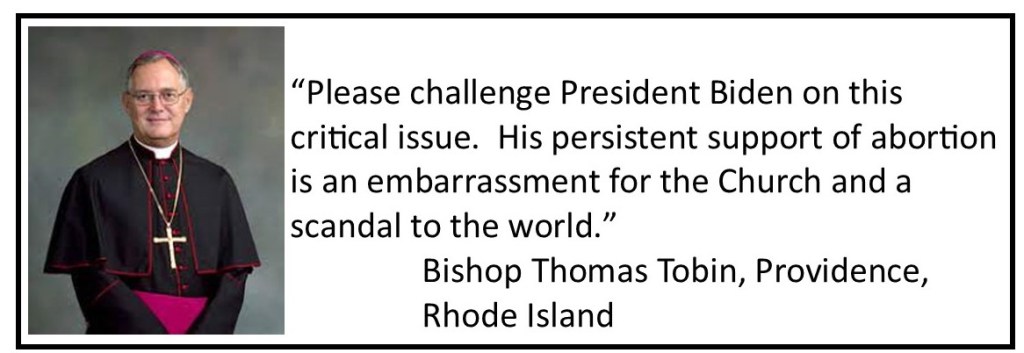




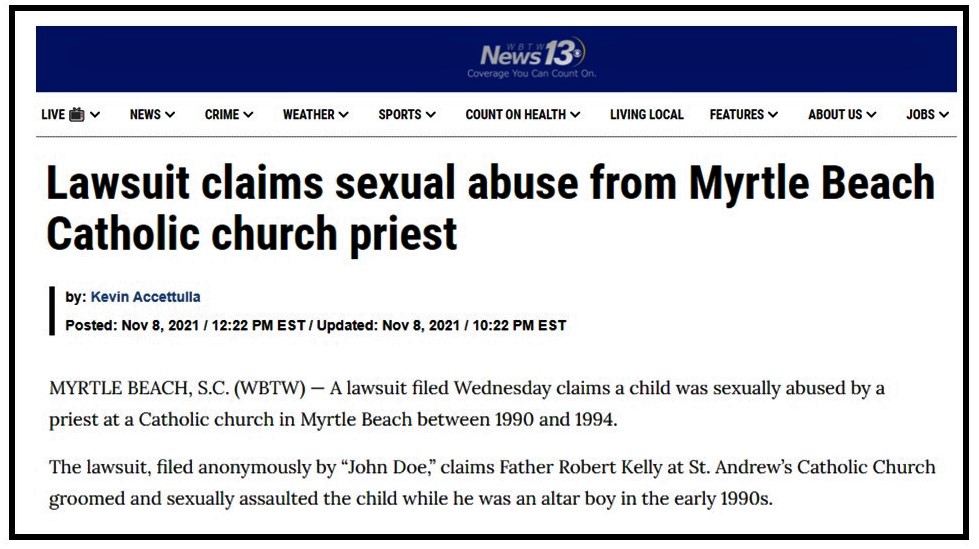







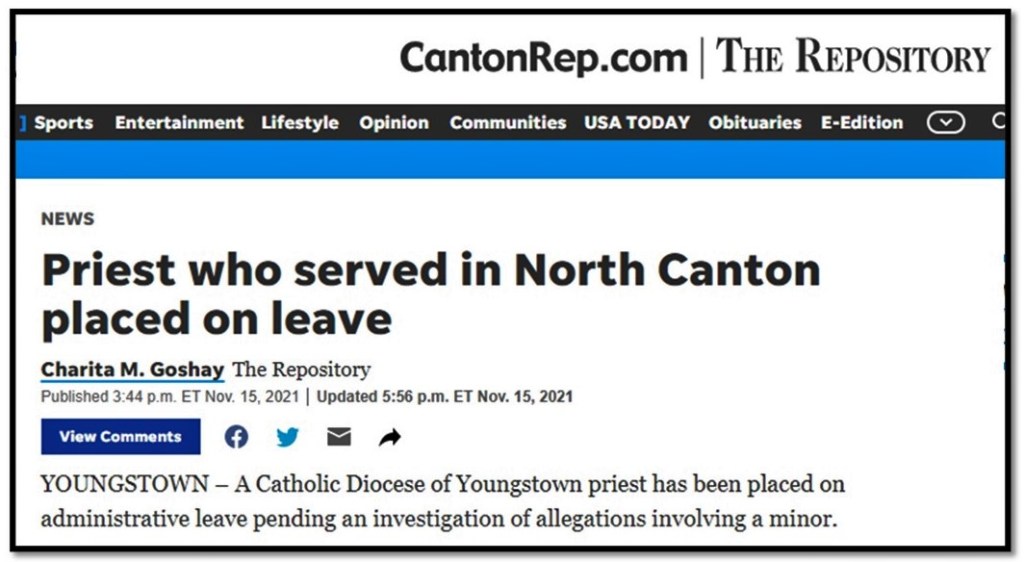























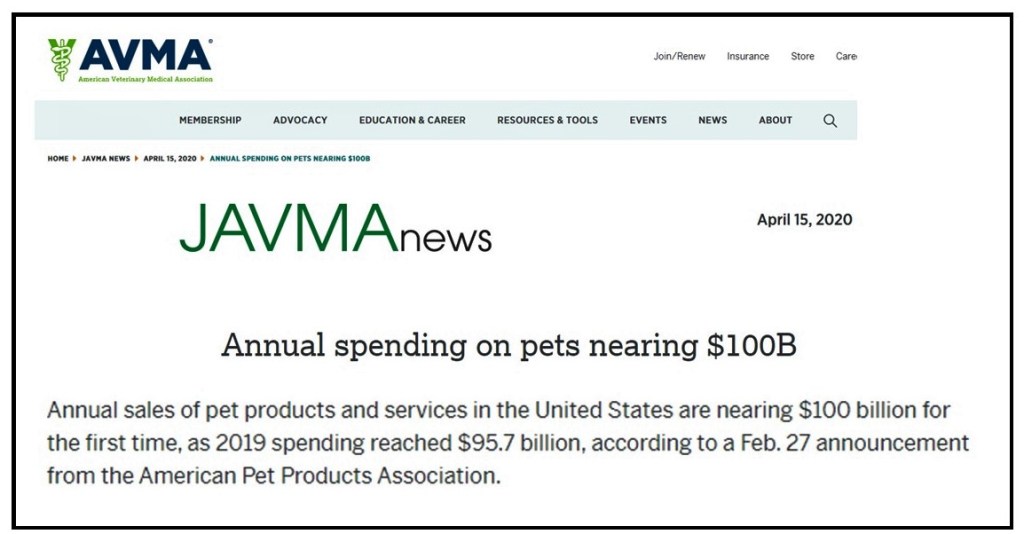























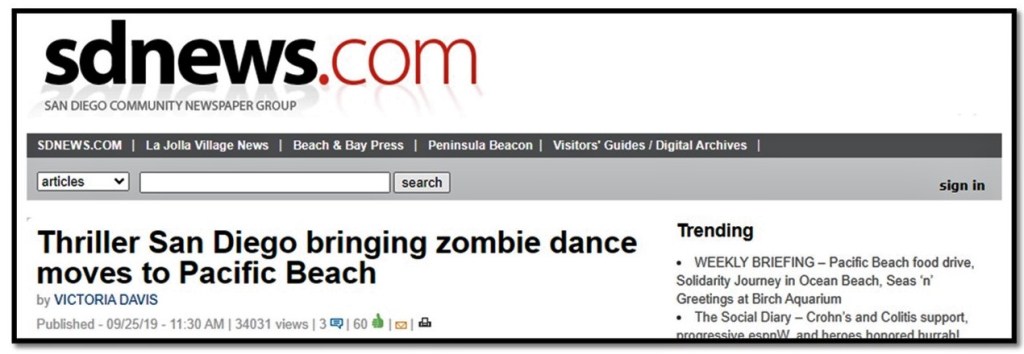











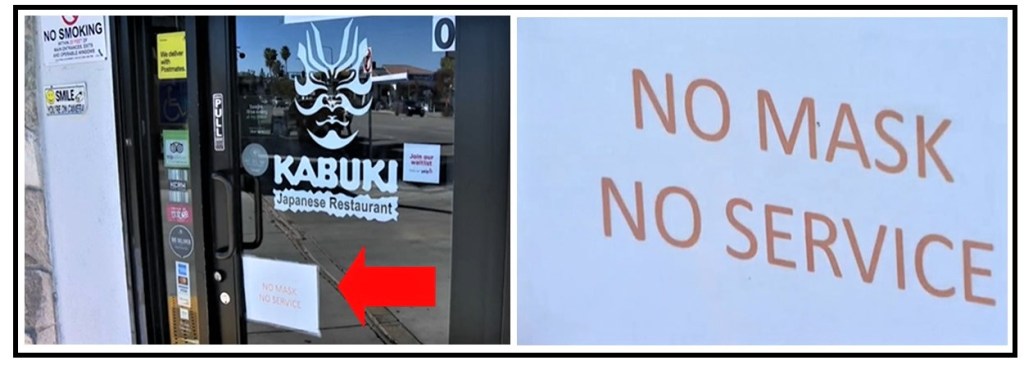






























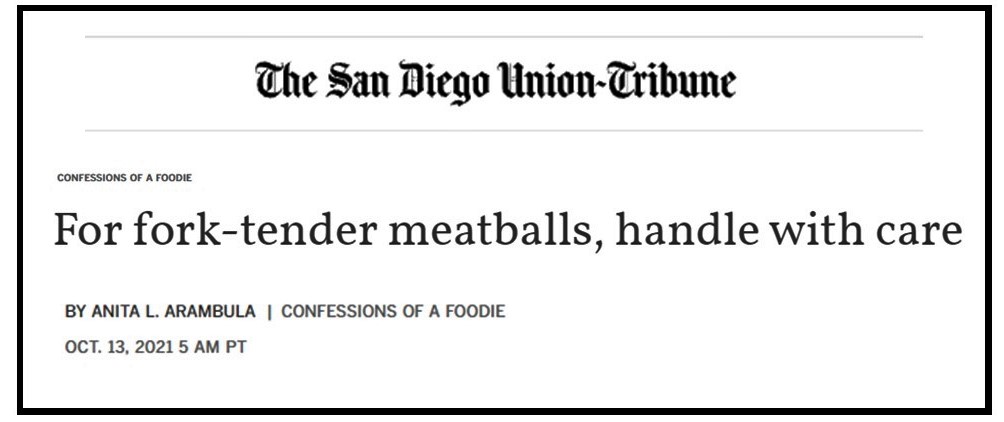



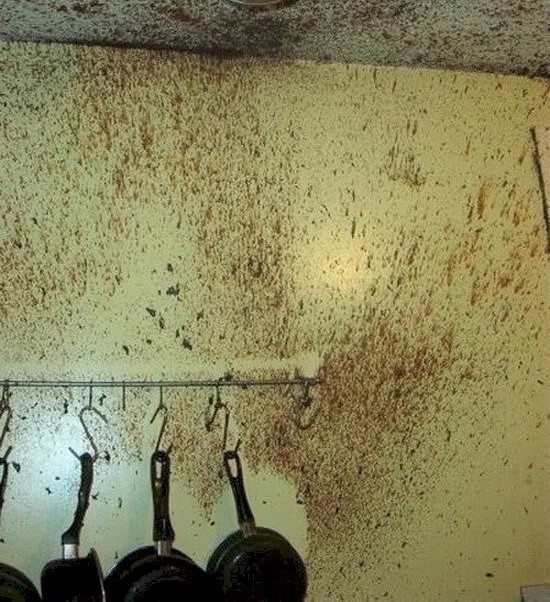
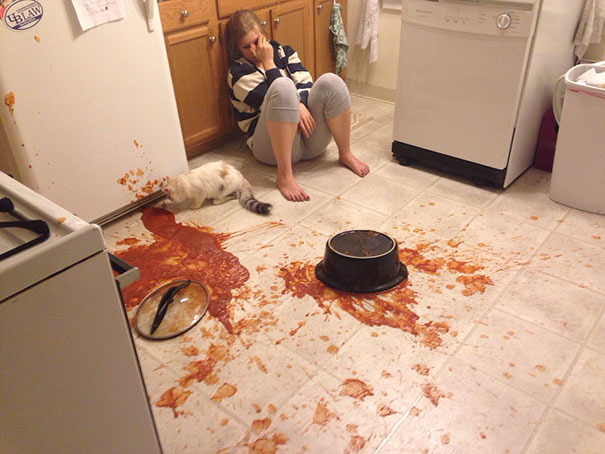





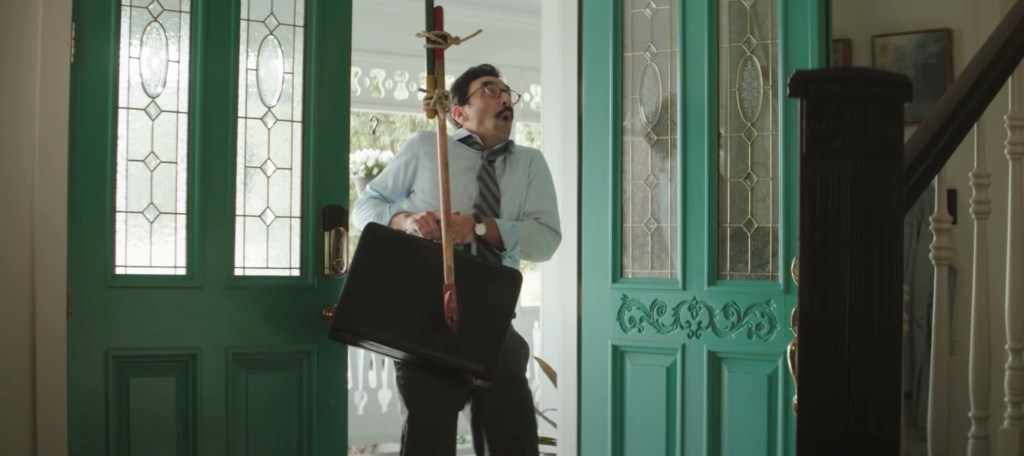



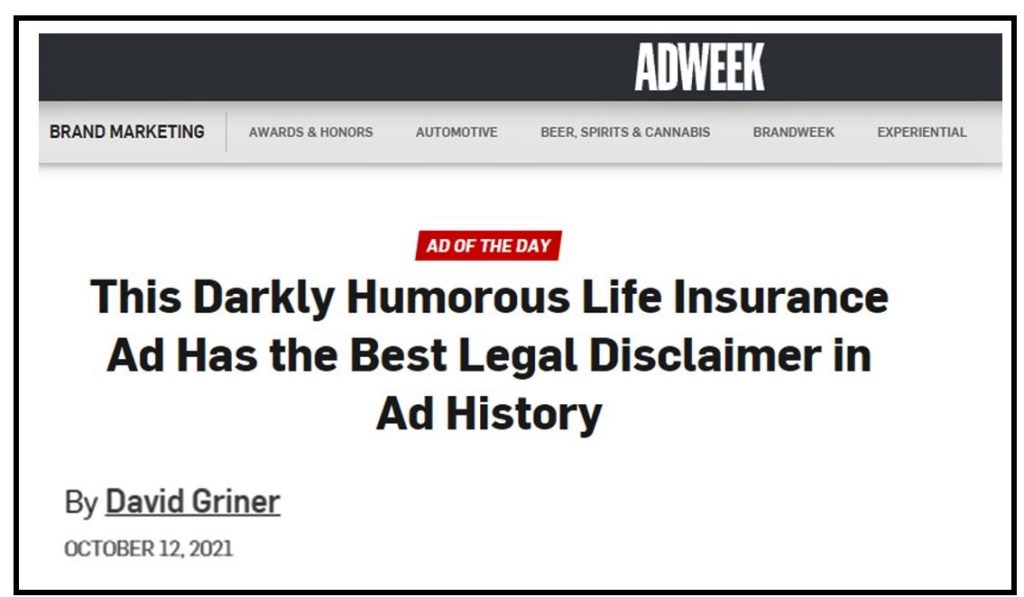
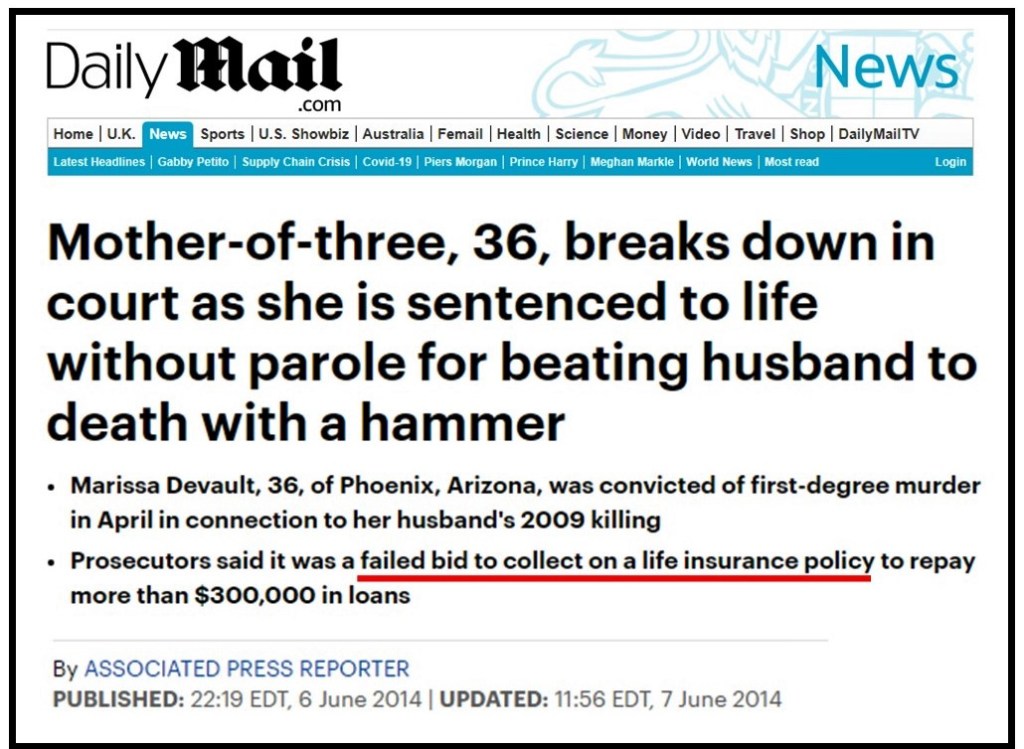

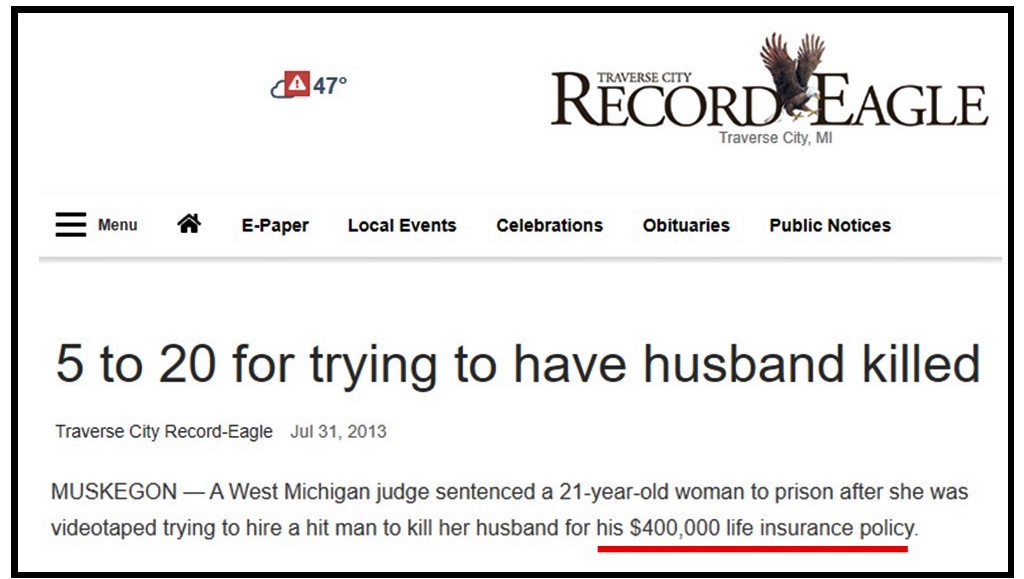
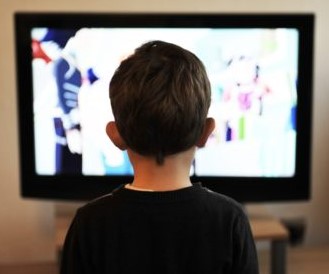














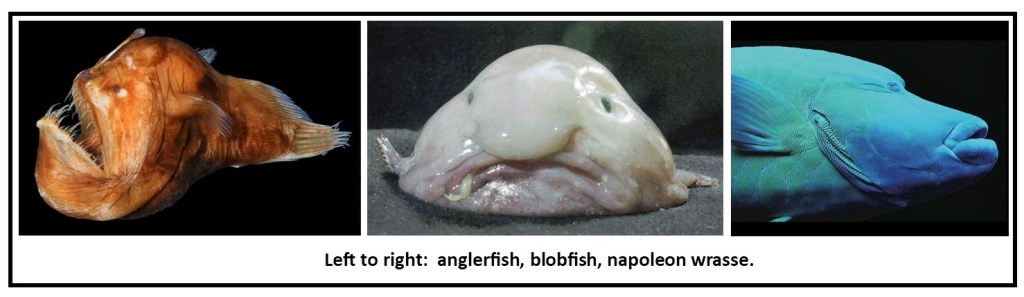





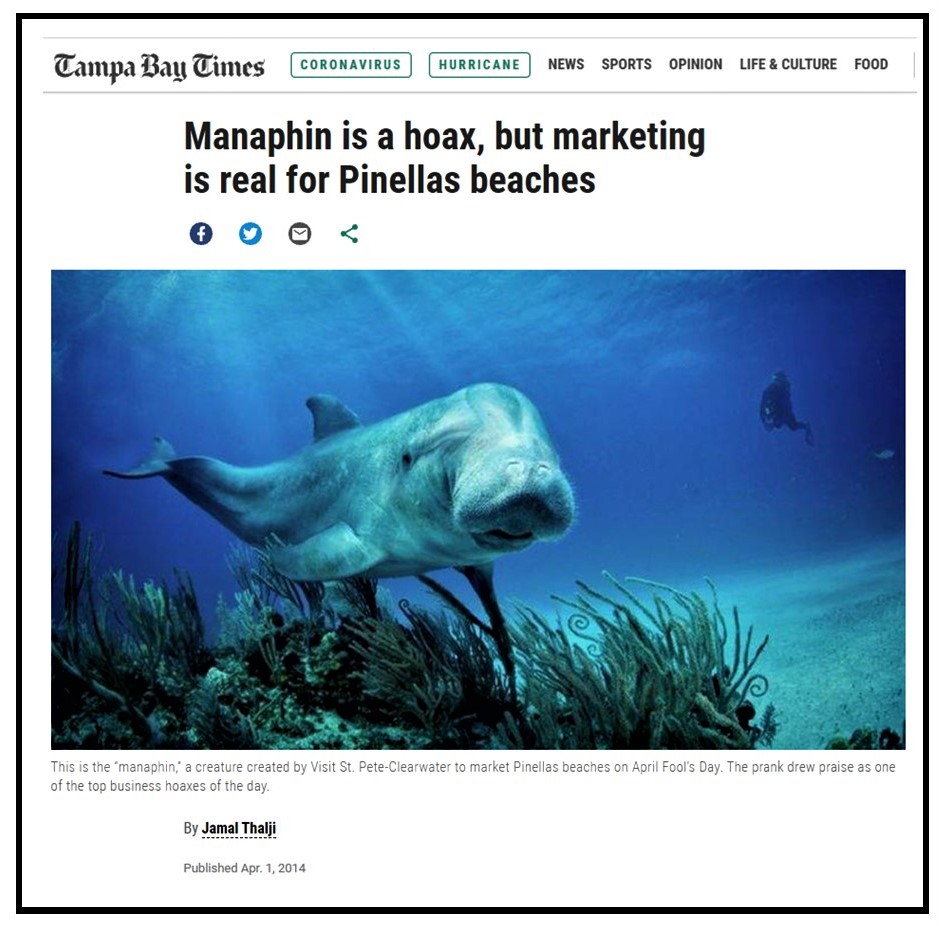
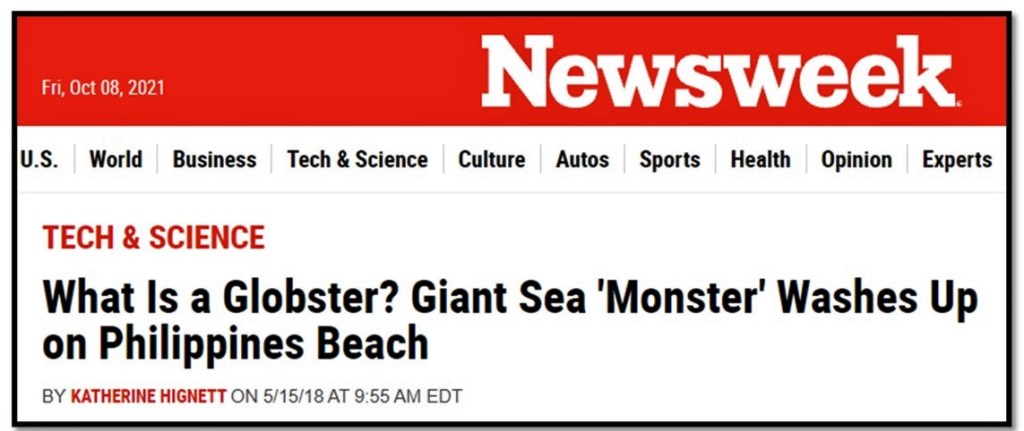
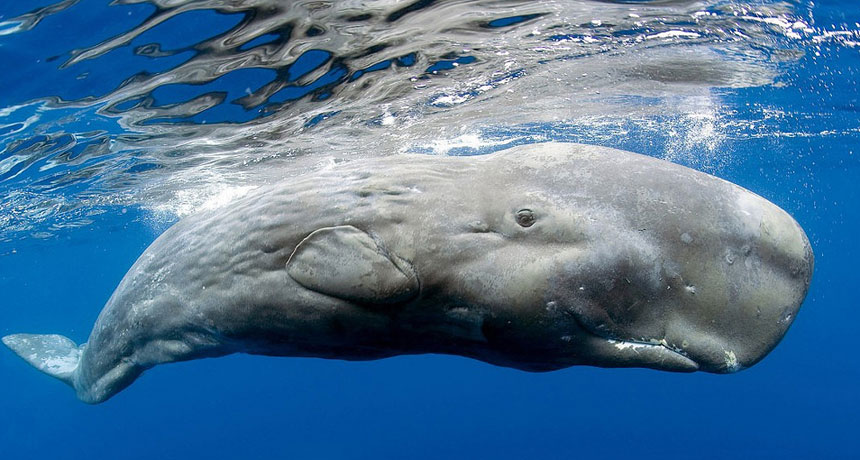

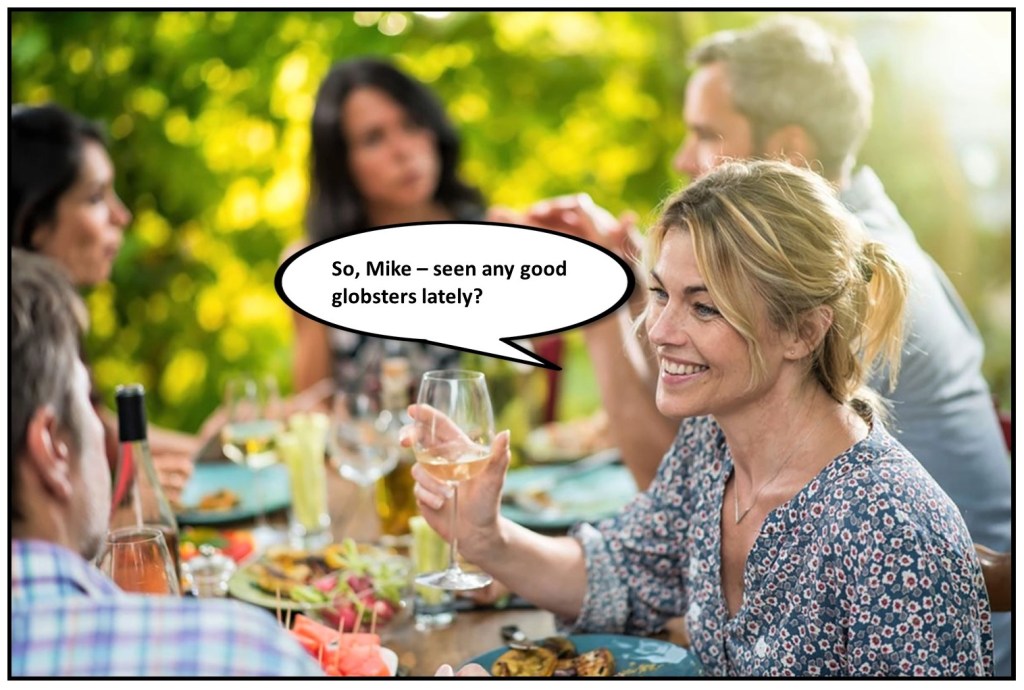



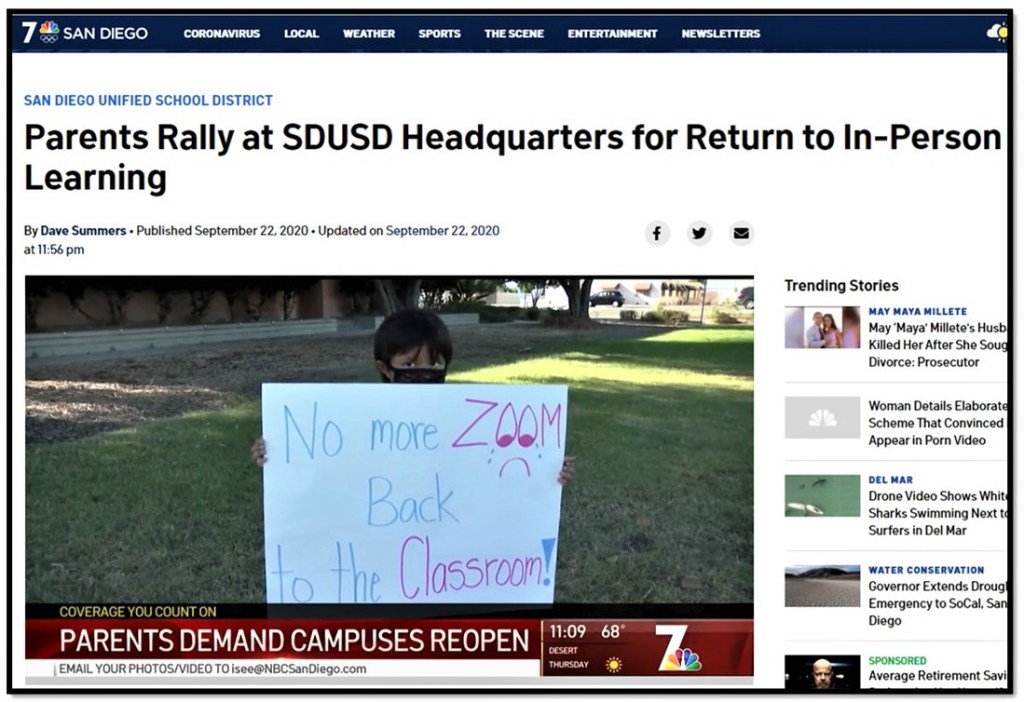

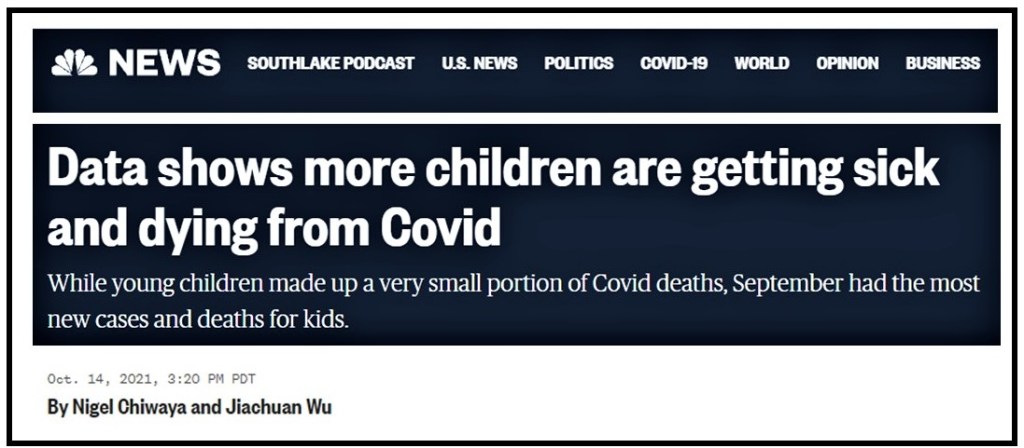








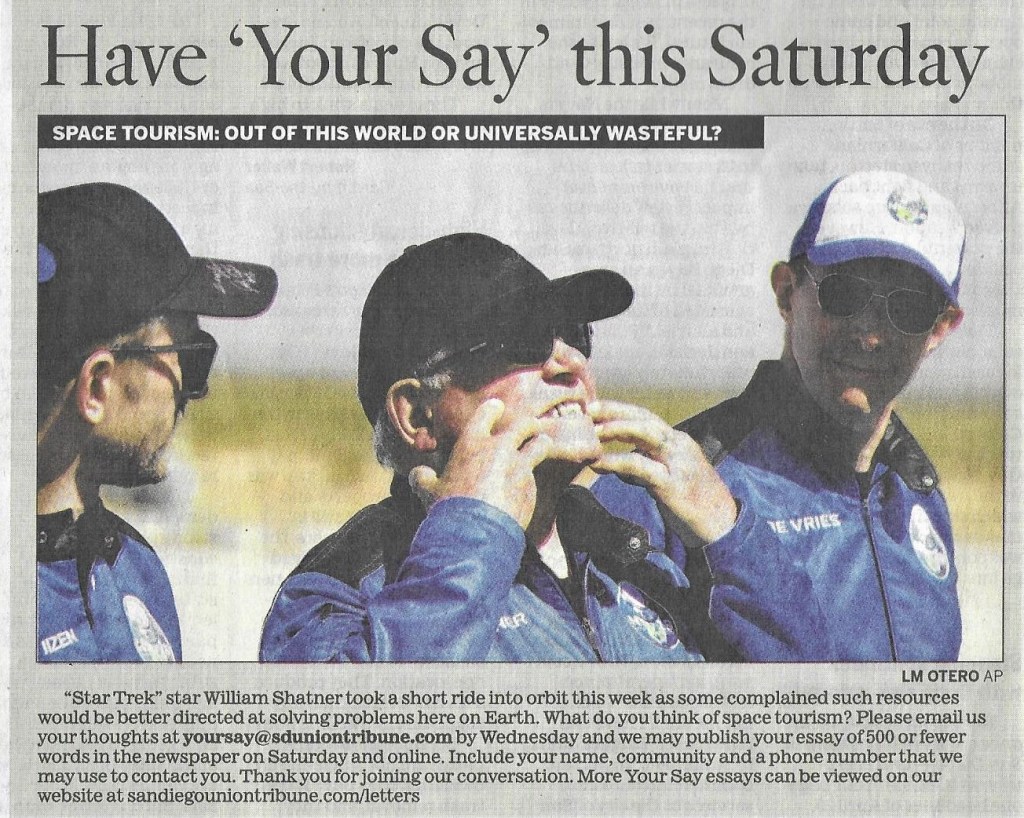





















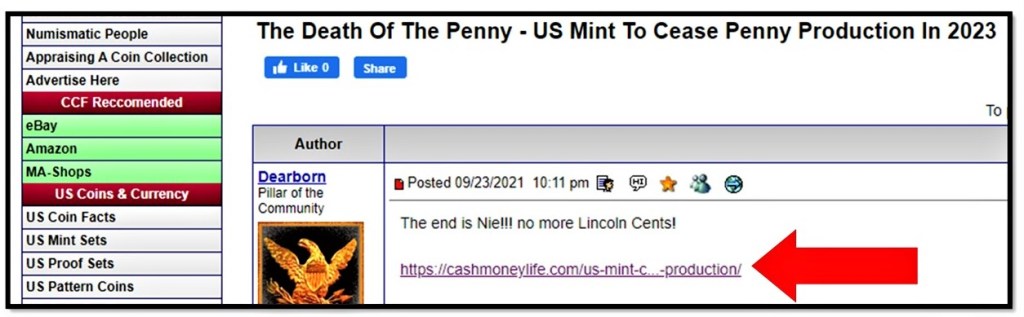



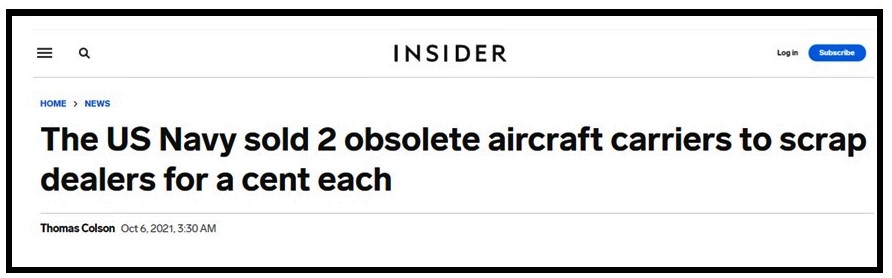














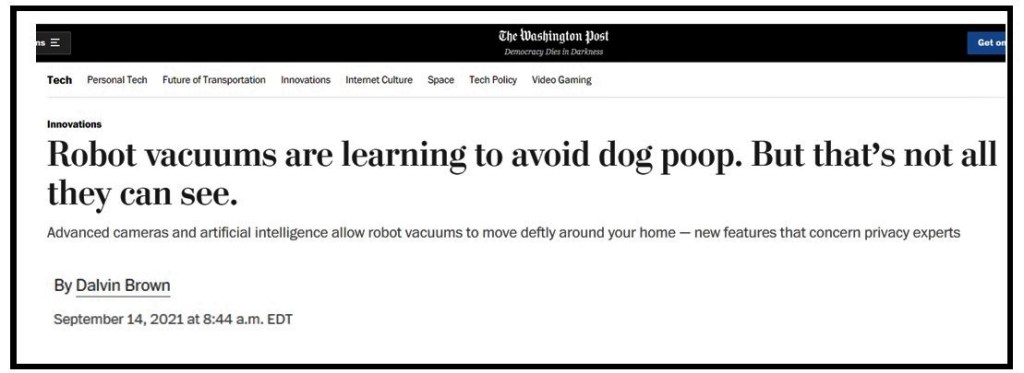














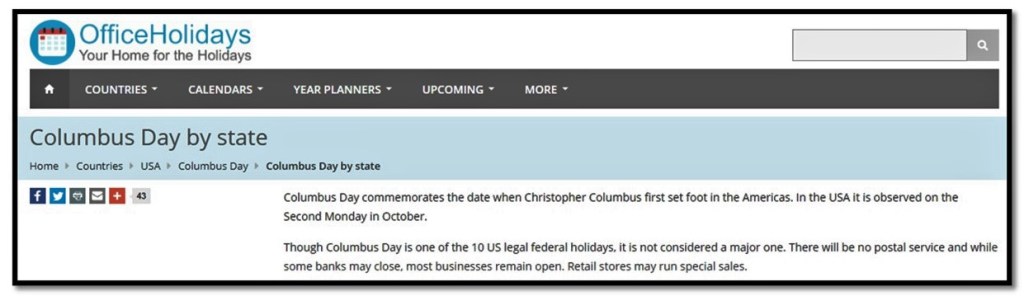
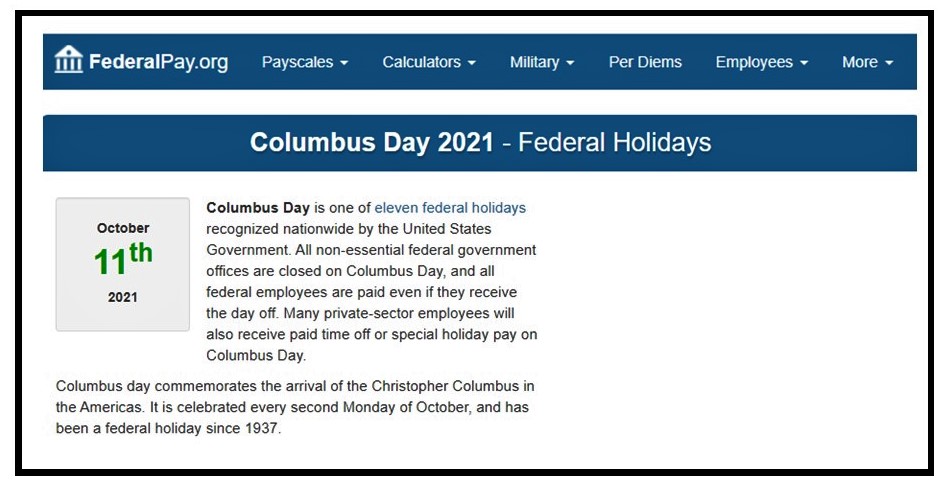
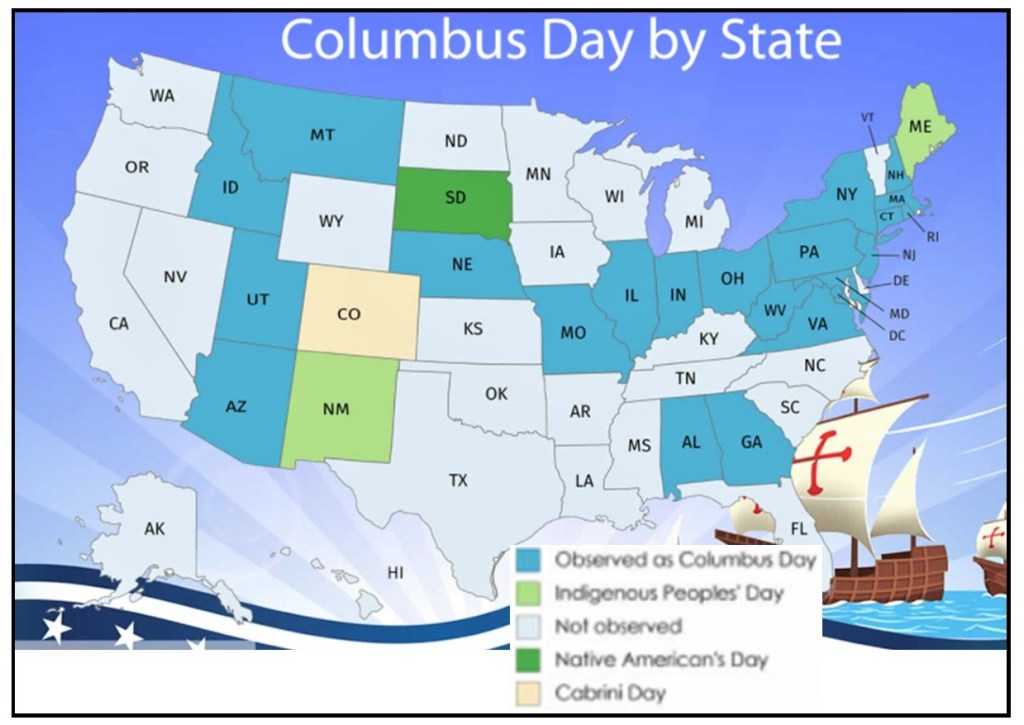









































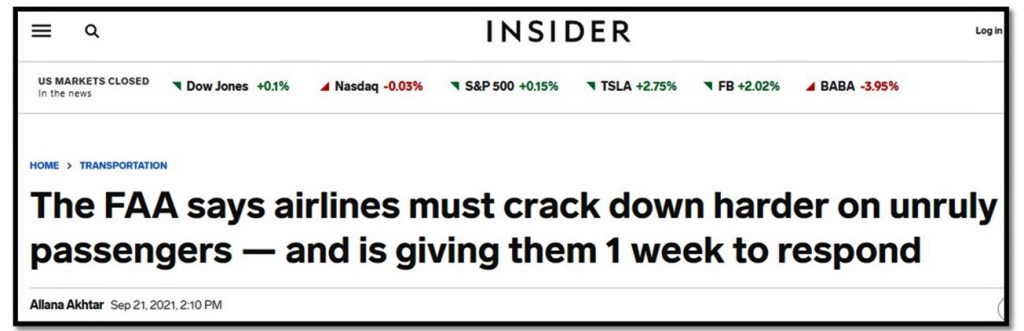

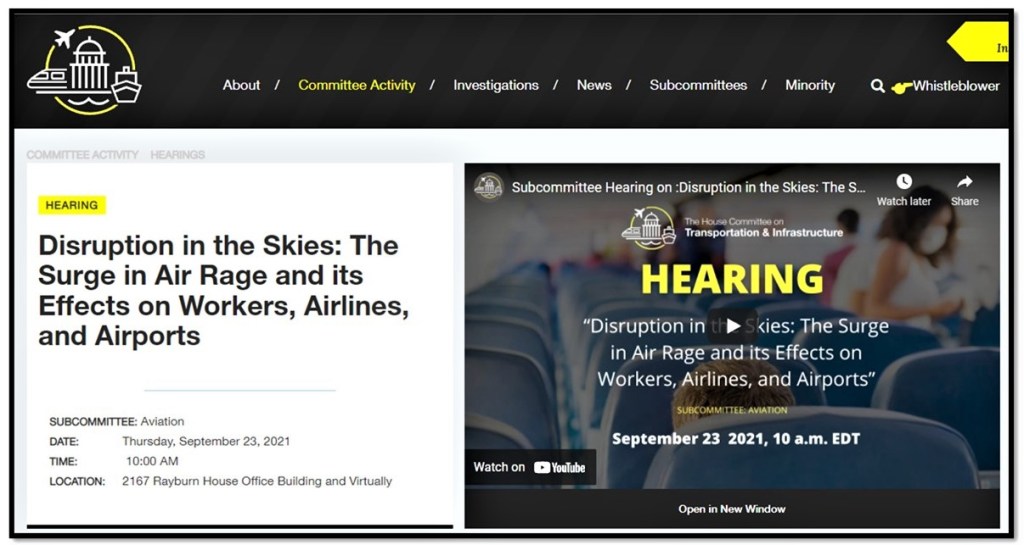



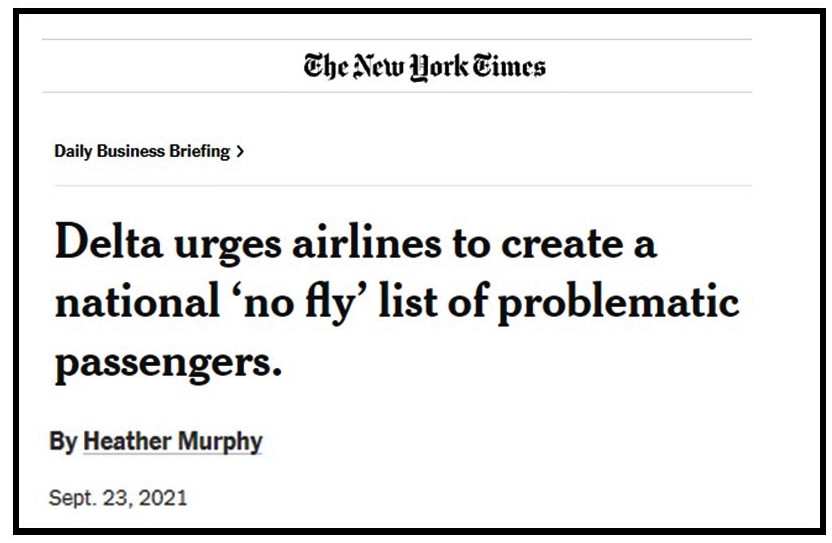






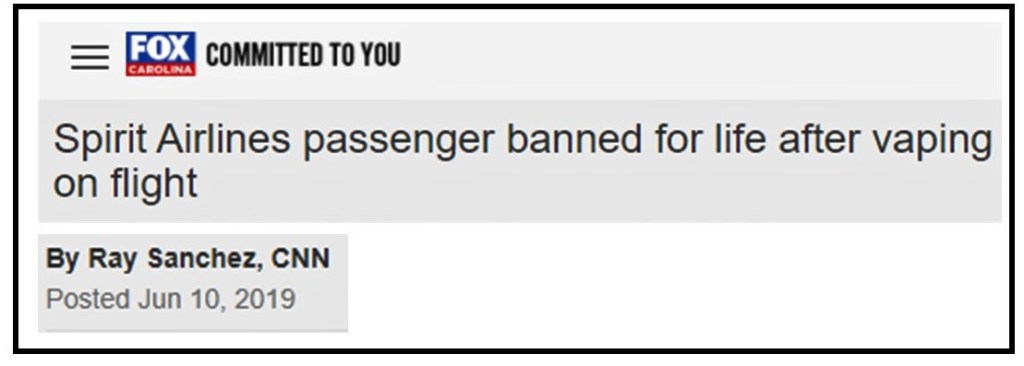
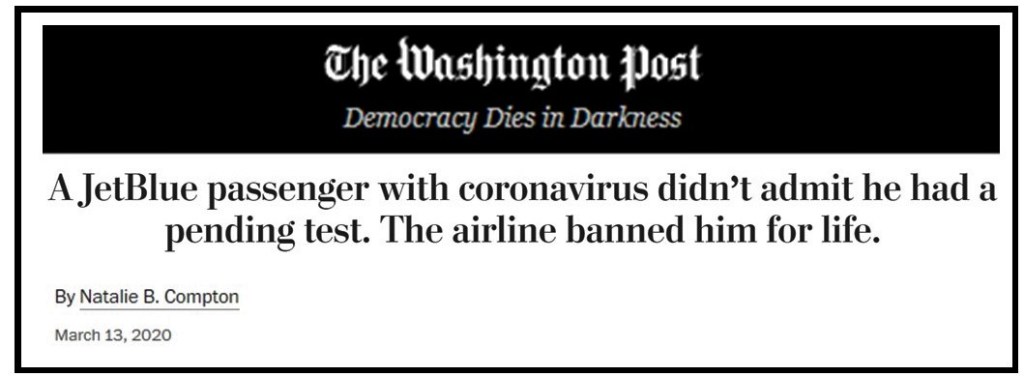




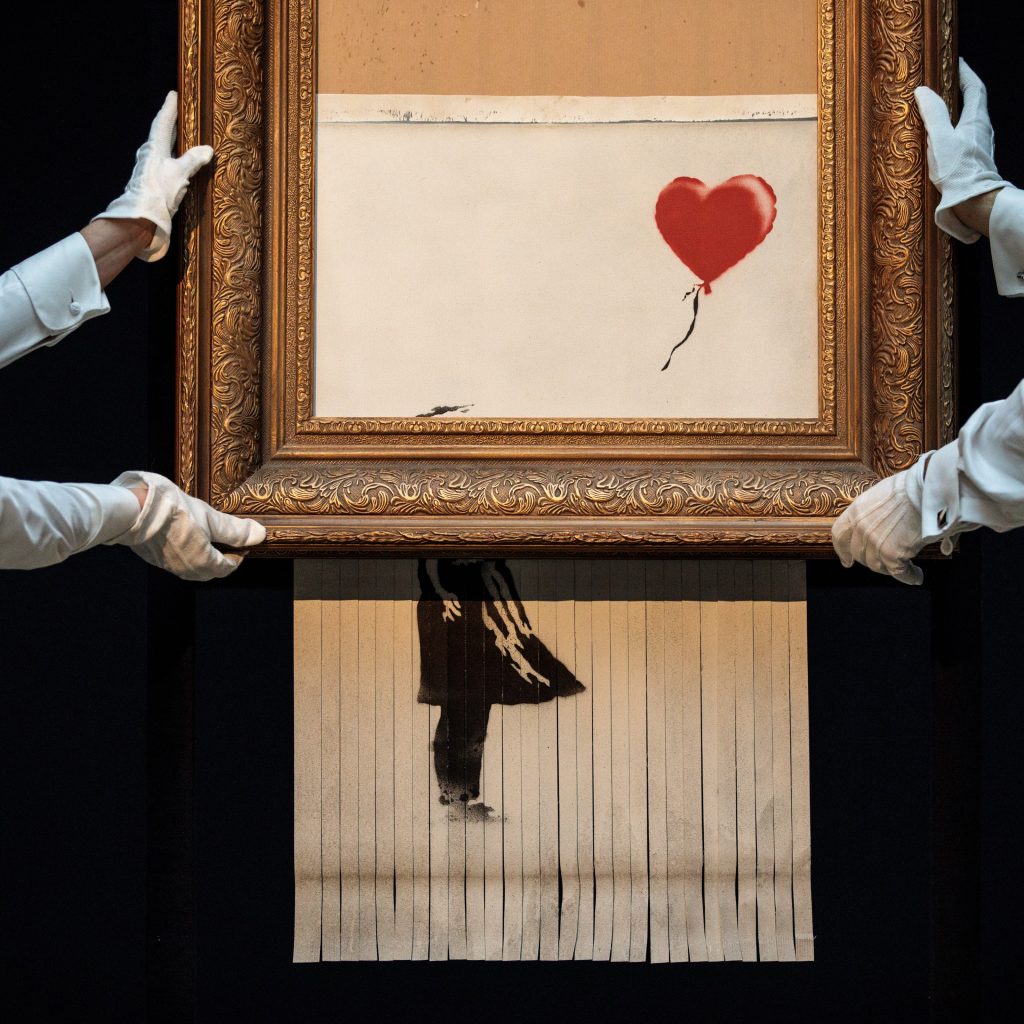


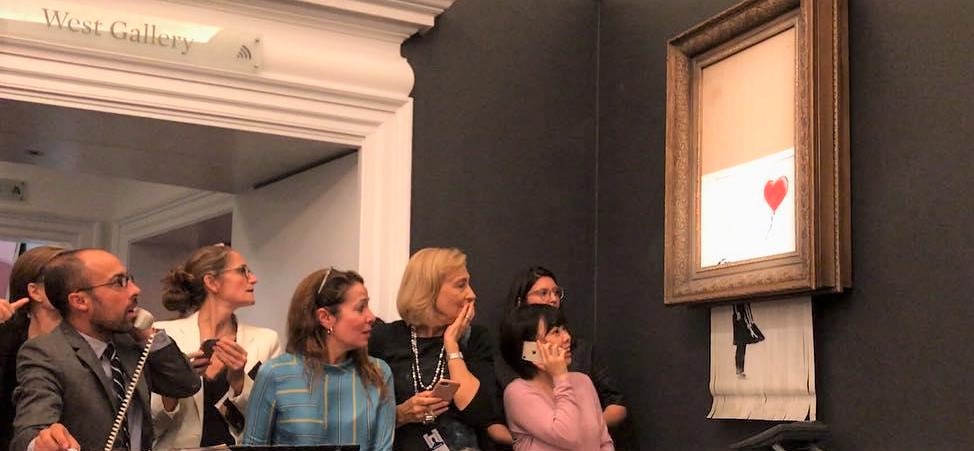
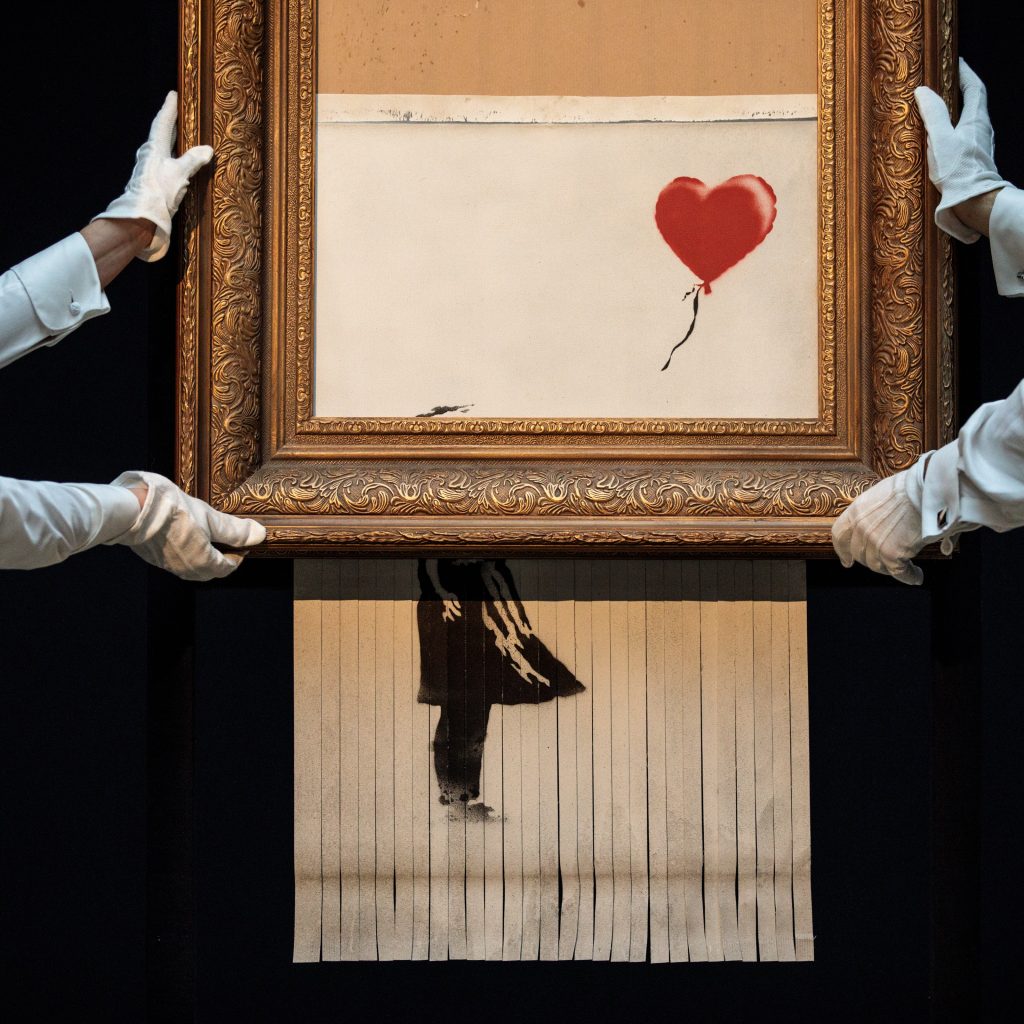

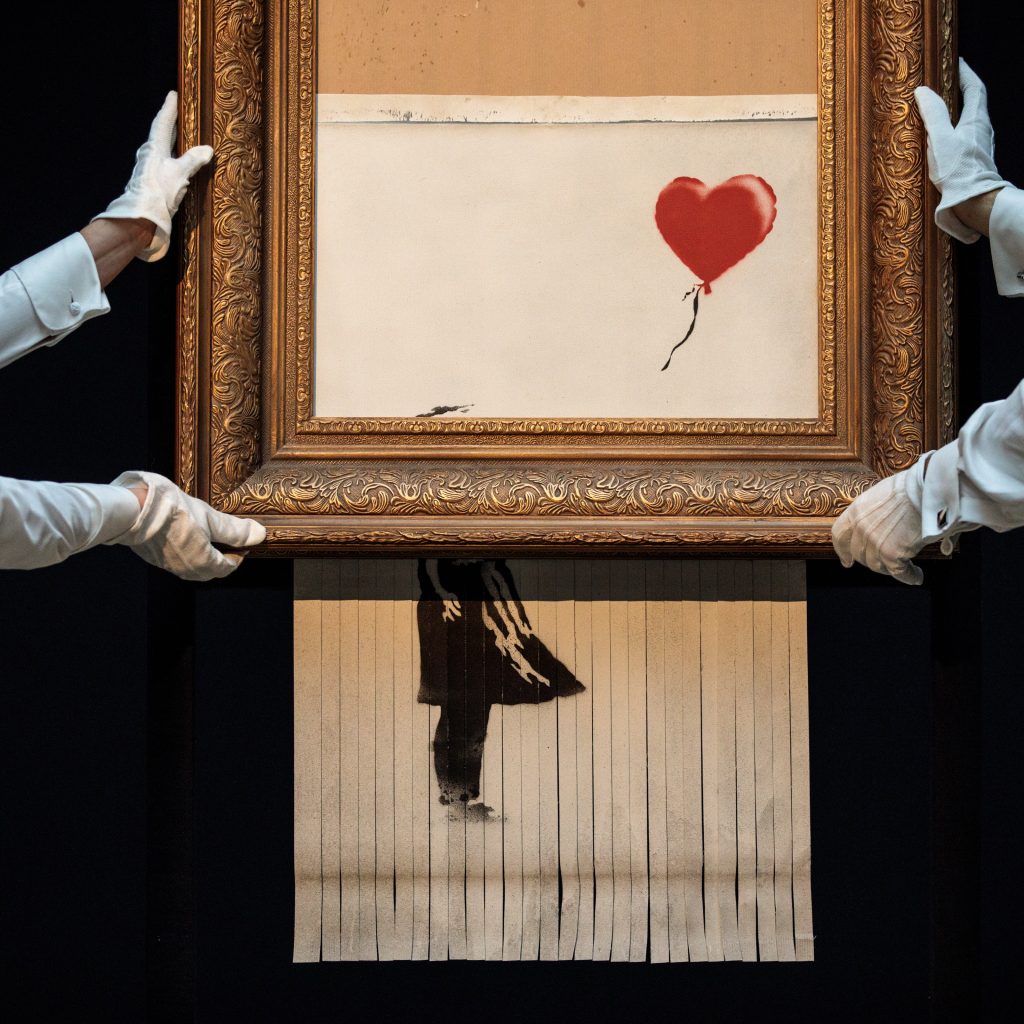

































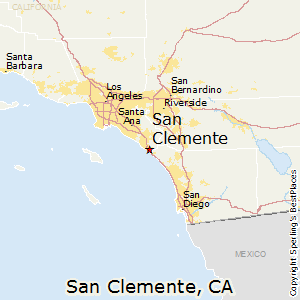

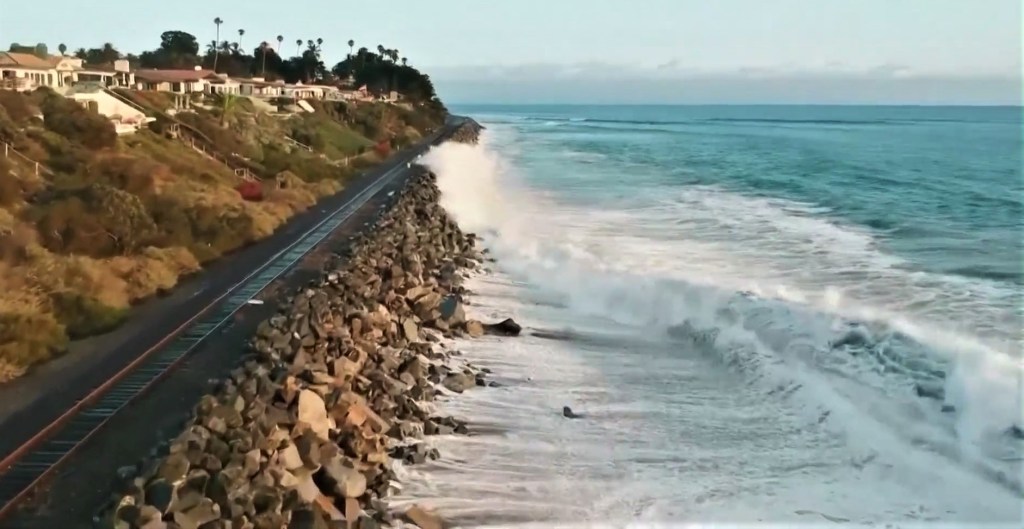


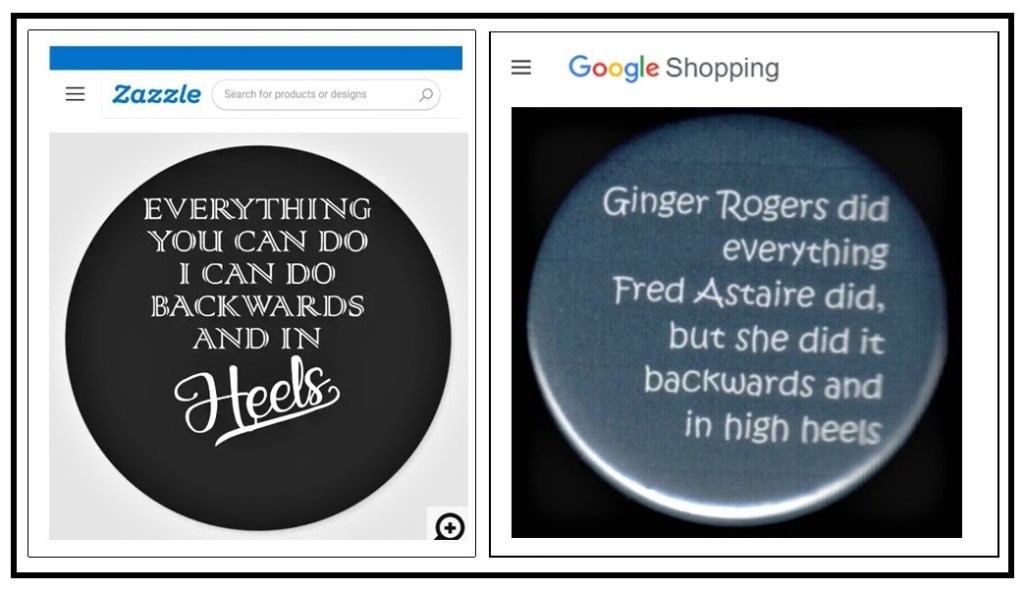
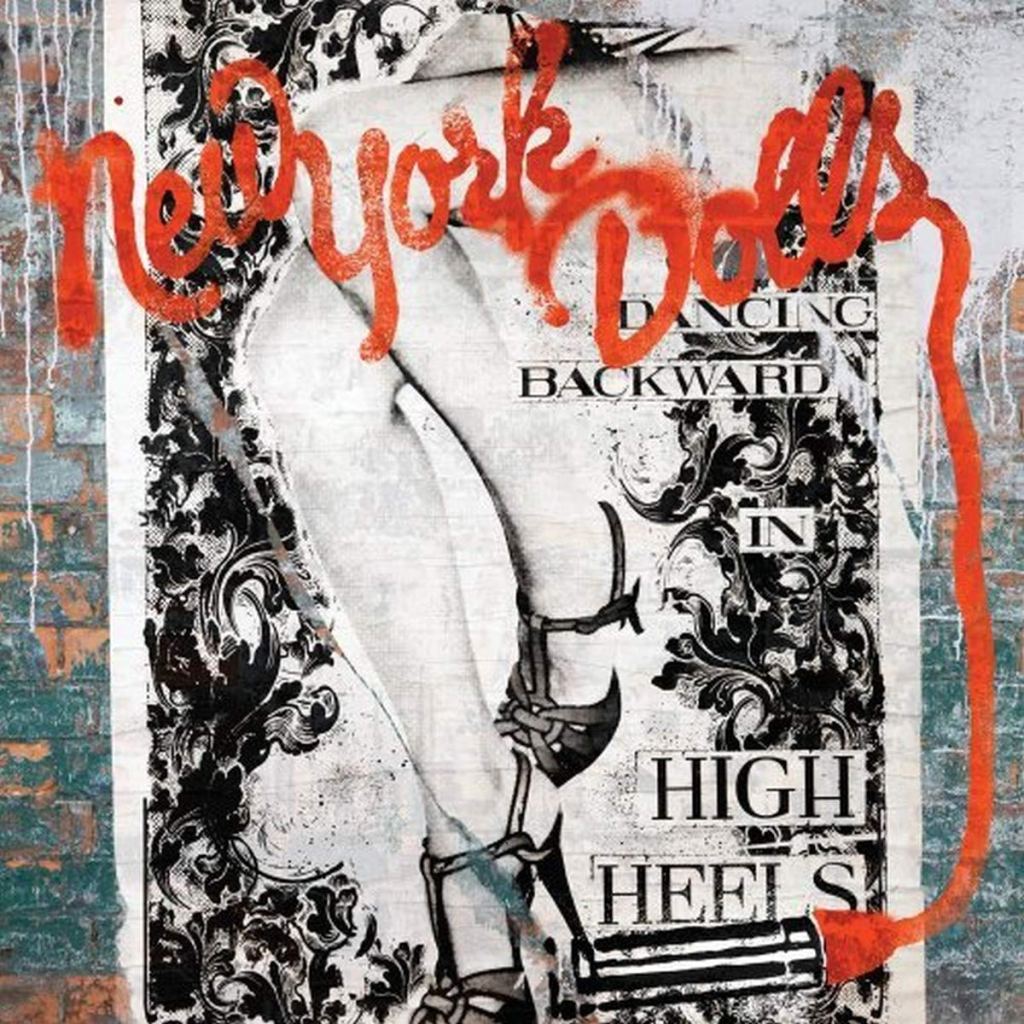











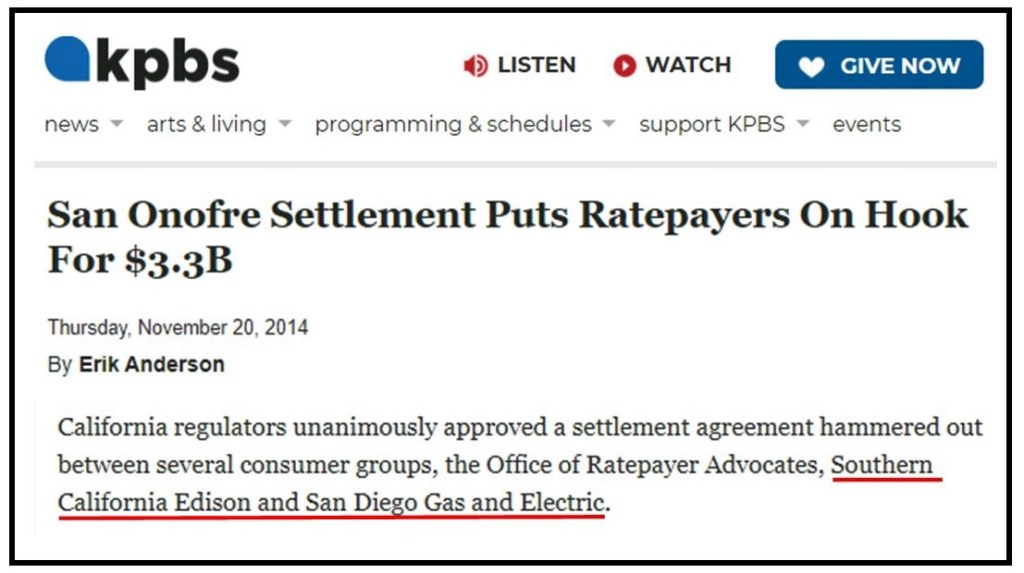





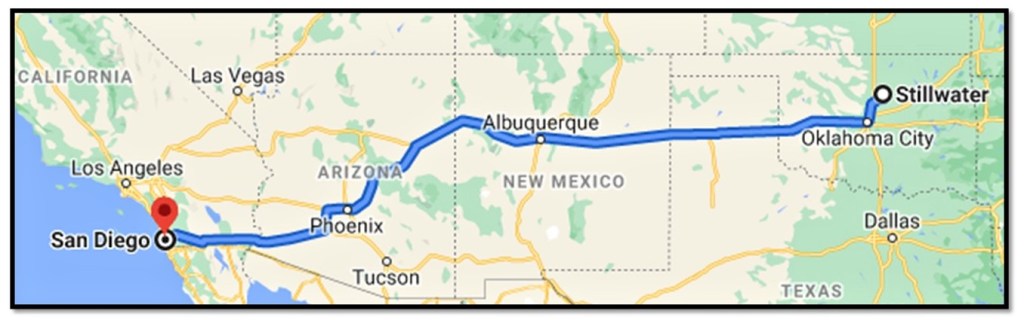




































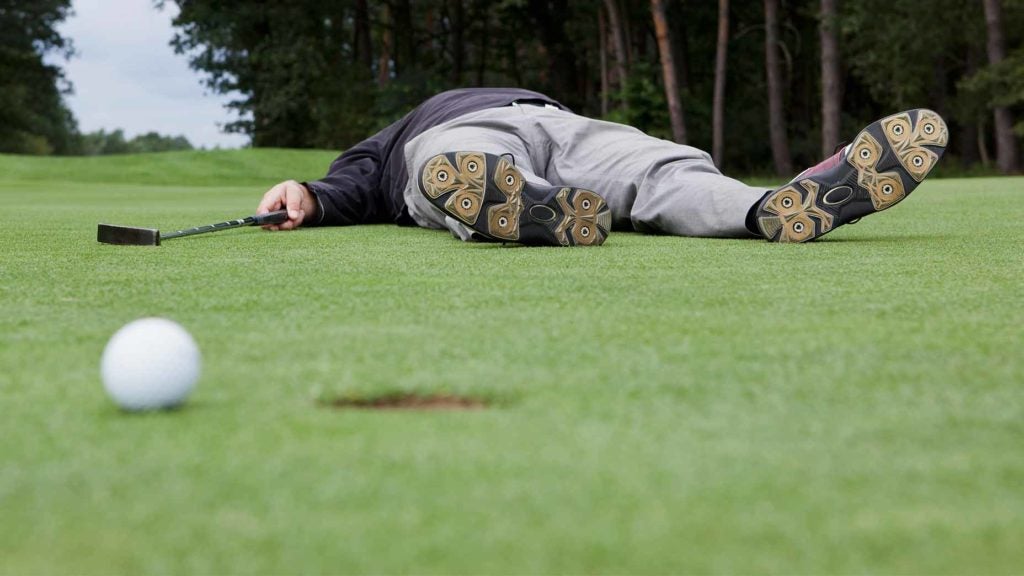


















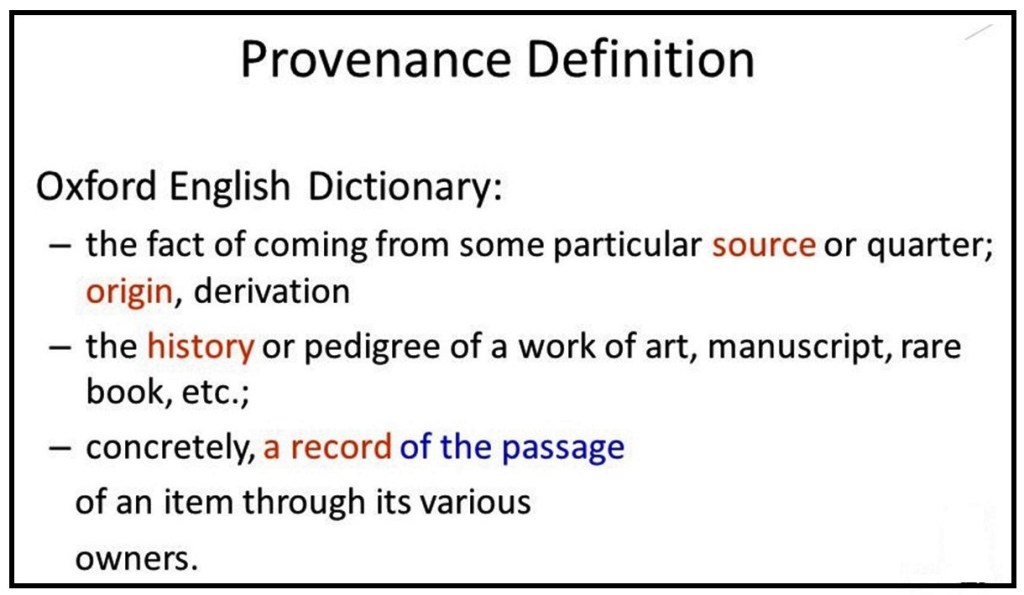












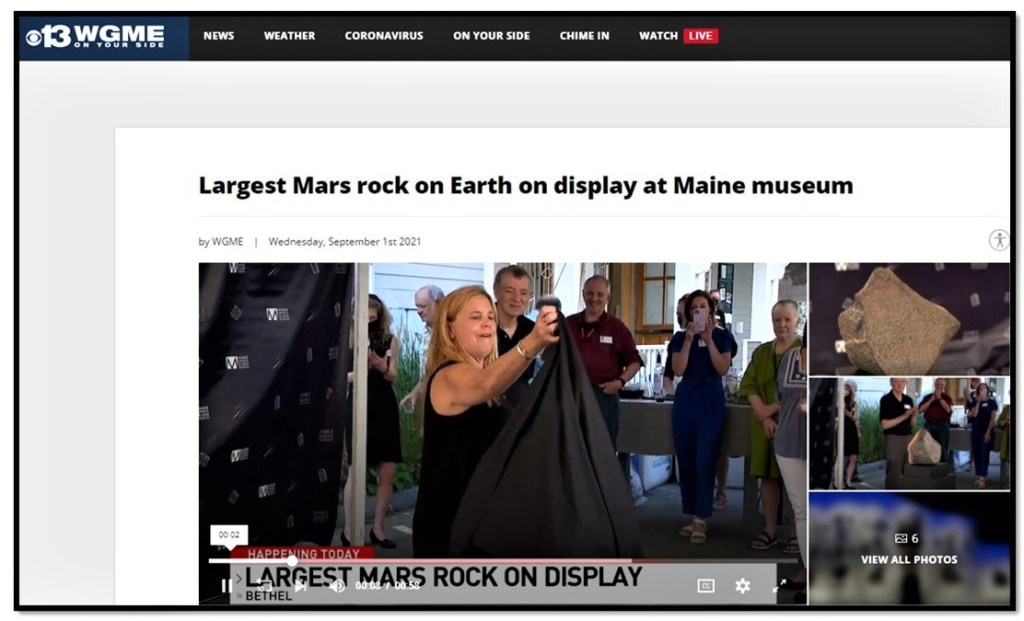


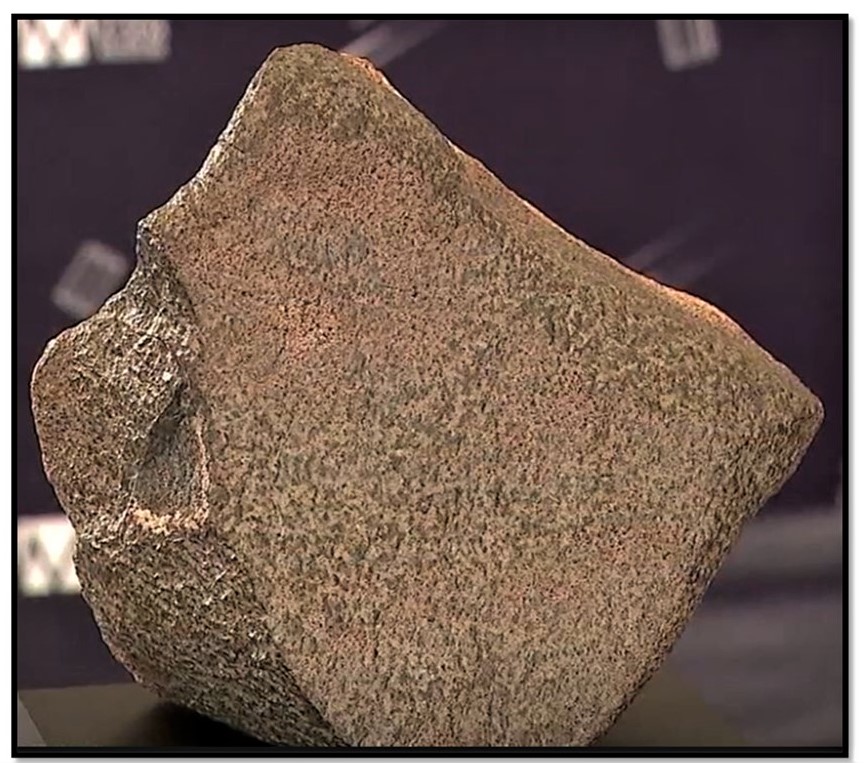
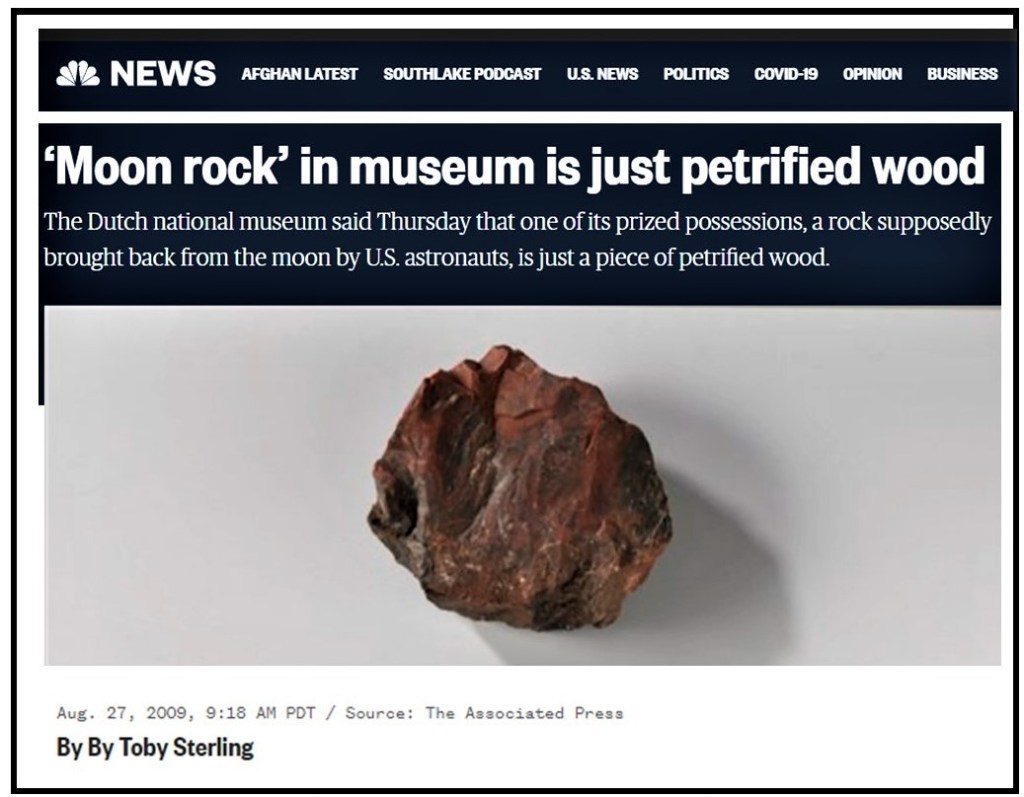




















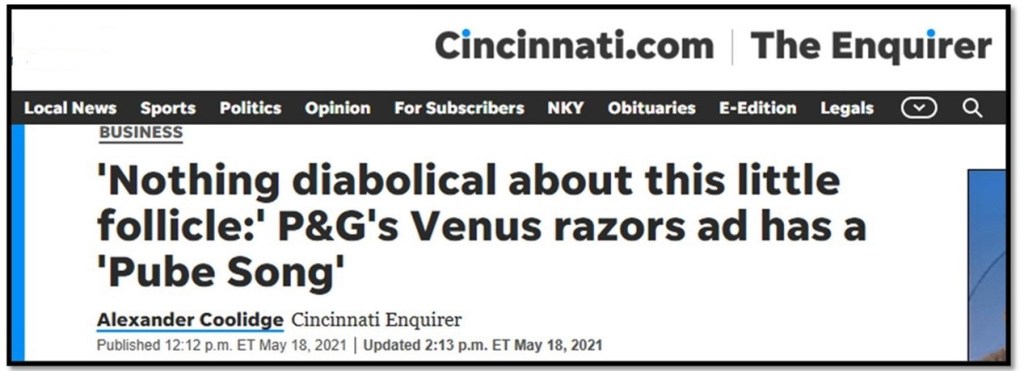
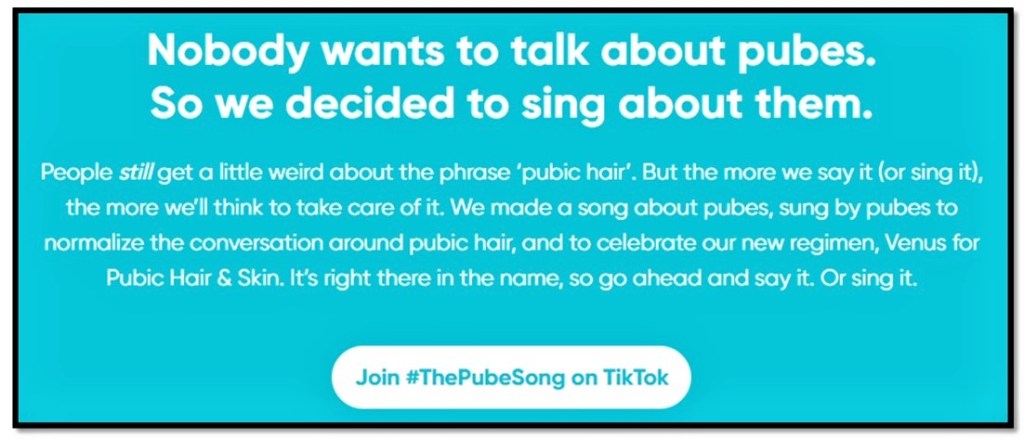












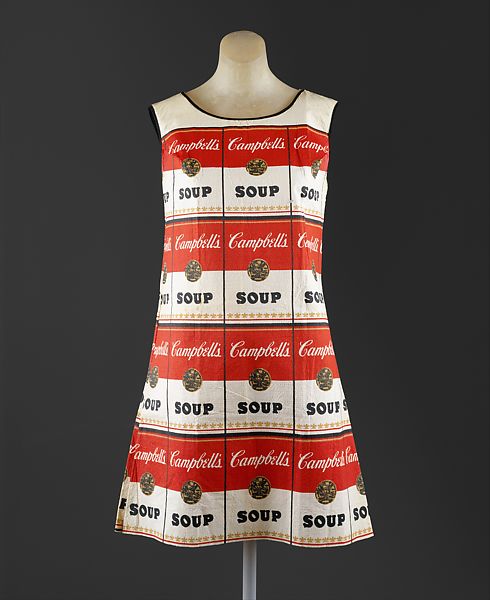



































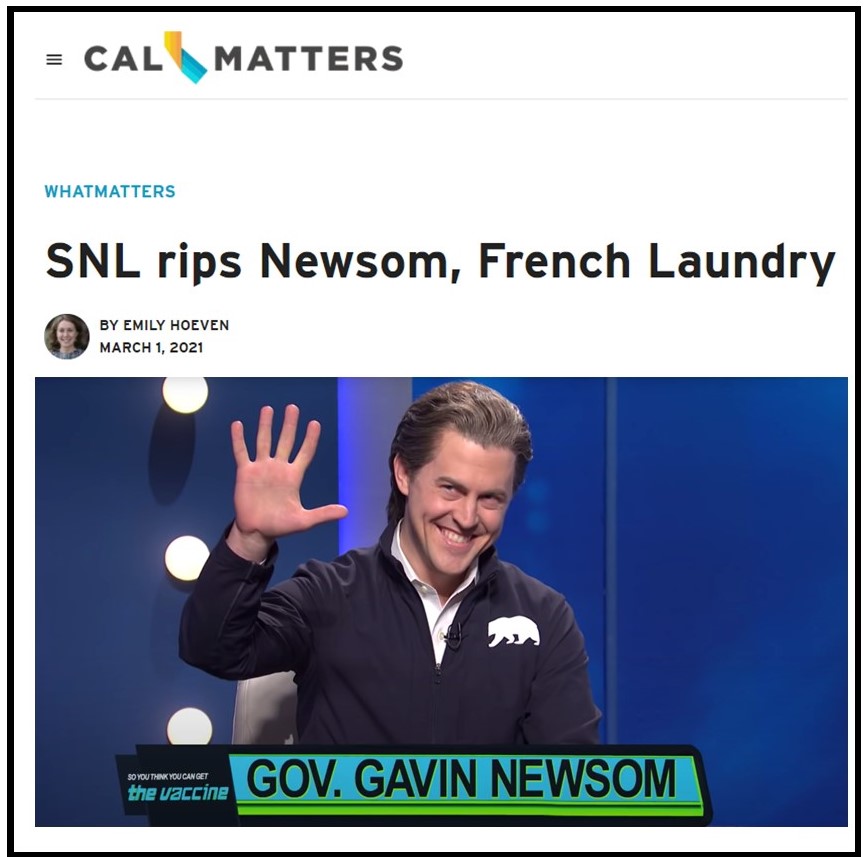
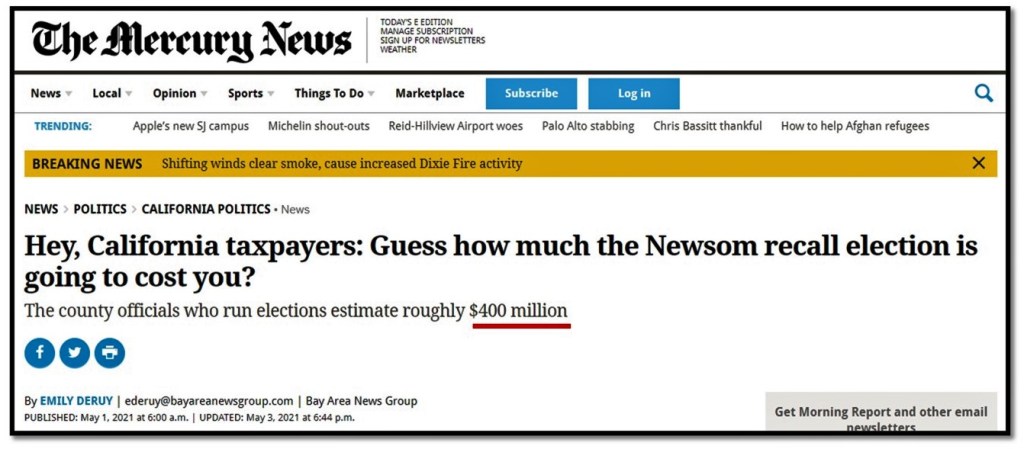








































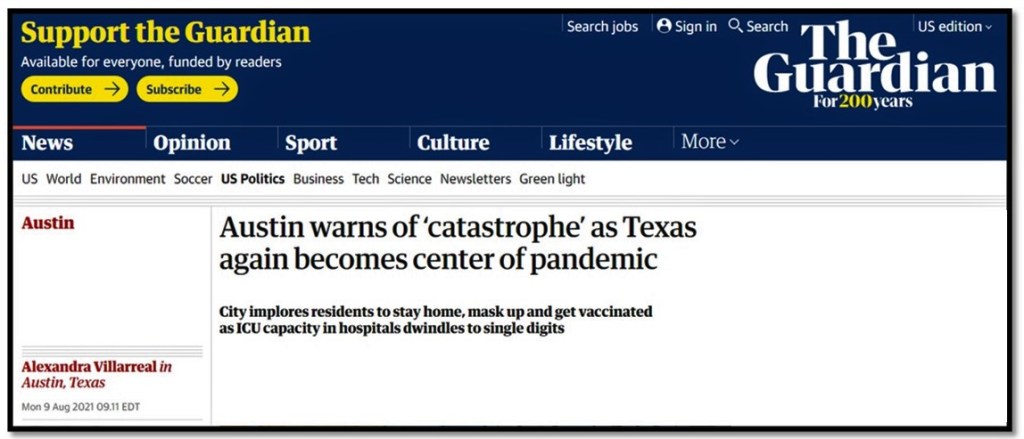























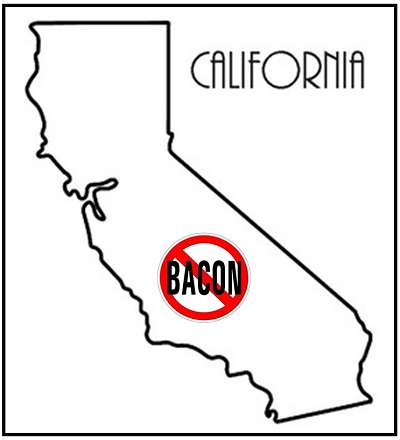
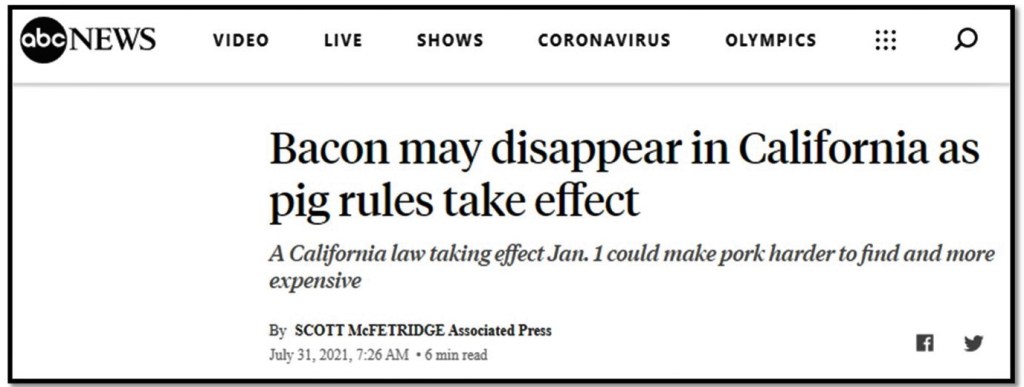






























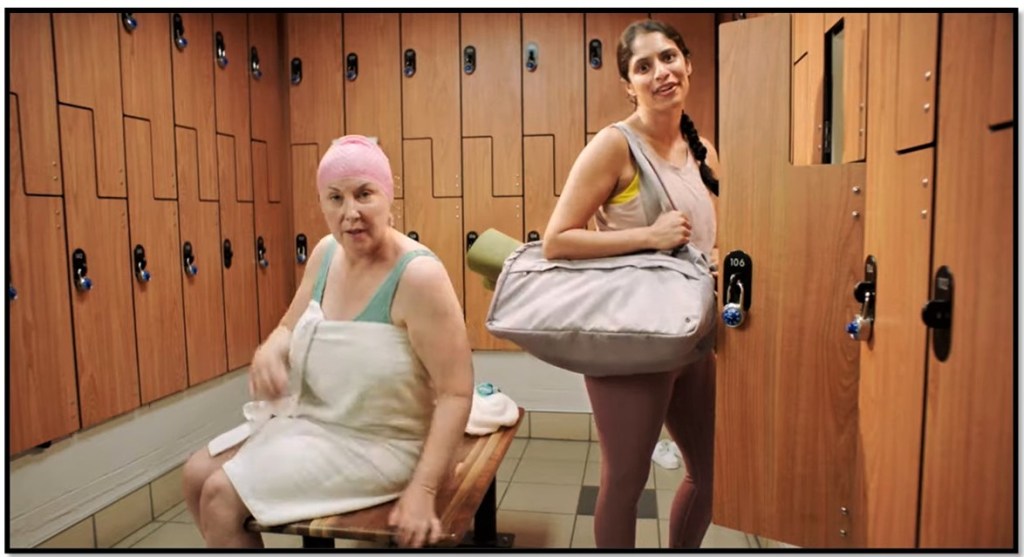



 I Hate Houseguests