The word “camouflage,” from the French camoufler, means “to disguise.”
And that’s exactly what the military has used camouflage for, for centuries – to disguise the presence of equipment, installations and, most importantly, military personnel, to blend in with their surroundings and hinder the enemy’s efforts to find them:
Animals use camouflage, too, and for the same reason – to blend in with their surroundings and hinder predators’ efforts to find them. Like this very cool leaf-tailed gecko:
The whole point of camouflage is to not be seen.
So why, I wondered, do civilians wear it?
Clearly these people want to be seen, preferable by many, many other people.
Those in the fashion-know call this print pattern “camo” for its resemblance to military camouflage.
And there’s an abundance of it out there for women…
Including – seriously? Wedding dresses:
And for men…
Kids…
(Guns…the perfect accessories.)
And, of course…
And we mustn’t overlook A$AP Rocky, who favors camo when he’s not languishing in a Swedish jail:
But camo isn’t worn only by the high-profilers – I recently saw a woman I’m pretty sure wasn’t a Kardashian or someone equally important, coming out of a restaurant wearing pants like these:
Are these pants sending a “don’t look at me” message?
So why camo?
There are plenty of articles online, and they seem to concur that camo became popular when civilians “started wearing the print with irony, as a counterculture statement against the Vietnam War. After that, it wasn’t long until Vogue wrote its first article on camouflage print clothing in 1971, saying it’s a ‘functional, practical, good-looking print and just as wearable as the everyday blue jean.’”
And the venerable Harper’s Bazaar, which considers itself the style resource for “women who are the first to buy the best, from casual to couture,” called camo “perhaps fashion’s most divisive print” and offered this advice:
“Don’t wear more than one piece at a time and keep the rest of your ensemble very simple.”
And the equally venerable Fashionista stated unequivocally that camo “is back for good”:
Bombshell also declared that camo “is back for good”:
And Glowsly included camo on their list of “Fall/Winter 2019-2020 Print Trends”:
Well.
With that reinforcement ringing in my ears, I’m off to visit my “nearest army surplus store,” and embrace my inner camo.
And I’ll try to refrain from wearing more than one piece at a time.
Apparently this model didn’t get the word about “Don’t wear more than one piece of camo at a time.”
Just a guess, but – I’m thinking this model didn’t find his outfit at the nearest army surplus store.
I try – and sometimes fail – to be a live-and-let-live kind of person.
Meet the vaquita, the world’s smallest porpoise. You’ll hear more about them soon.
I believe we can treat each other with respect, even when we don’t agree with choices of religion or politics or traditions.
As many people have said, “We can disagree without being disagreeable.”
But one of the instances when I fail to be that live-and-let-live person is the killing of animals to use their body parts for traditional Chinese medicine.
When there is no scientific evidence that any of these animal body parts has any medicinal value at all.
The catalyst for this thought was a review of a new documentary that opened in July, Sea of Shadows, a film that “fatally intertwines the destinies of two species of fish with very particular qualities.”
The film’s setting is the Gulf of California, and one of the species is the totoaba, “a fish whose swim bladder is so valued in China for its supposed miraculous medicinal powers that its nickname is ‘the cocaine of the seas.’”
The image above (just below the title) is black market totoaba swim bladders.
Totoaba swim bladders can sell for “upward of $100,000 each.”
The totoaba are caught in illegal gill nets, and so is the second species, the vaquita, the world’s smallest porpoise, which lives only in the Gulf of California. Both species are considered “critically endangered.”
The vaquita population was an estimated 30 when the film begins, and “fewer when it ends.”
National Oceanic and Atmospheric Administration (NOAA) Fisheries picture showing a vaquita, bottom, captured as bycatch along with a totoaba in Sonora, Mexico.
So the totoaba are killed for their swim bladders, and the vaquita are just peripheral damage, dying because they’re inconvenient.
How many animals, I wondered, are dying because of mythical medical beliefs?
Too damn many.
And some of those are on their way to becoming extinct, just like the vaquita and totoaboa.
I want to be a live-and-let-live respecter of traditional Chinese medicine, or TCM, as it’s referred to in this article on NationalGeographic.com:
The author describes TCM as:
“A system of health care that dates back to the third century B.C. It grew out of the writings of ancient healers, who began recording their observations of the body, its functions, and its reactions to various therapies and treatments, including herbal remedies, massage, and acupuncture.
“For more than 2,000 years, generations of healers and scholars added to and refined the knowledge. The result is a canon of literature dealing with practically every sort of health issue – from the common cold to cancer, pregnancy to old age.”
Compare that to “Western” or “European” medicine, where we’re talking mere centuries, not millennia.
Western medicine, in which the best they can do today for cancer is cutting, burning and/or poisoning.
So, I’m sure there is much to respect in TCM.
But I can’t reconcile that with this:
Bones, skin and meat from one tiger, black market: $70,000.
And this:
One rhino horn, two pounds, black market: $100,000.
And this:
One elephant tusk, 100 pounds, black market: $150,000.
Especially when the article goes on to say,
“Though China has long embraced science-based medicine, TCM remains popular throughout the country and is often offered in hospitals and clinics alongside science-based medical treatments.
“TCM has also become popular beyond China’s borders and can now be found in more than 180 countries worldwide, according to some counts, and has an industry value of more than $60 billion a year.”
So the demand for animals threatened by extinction – again, for unproven medicinal use – is growing. From a different source:
“Today [in China], the bulging upper and middle class are ready to pay more for these traditional remedies. The use of traditional Chinese remedies containing such animal components has become a status symbol amongst the rich in China.
“As demand increases, poachers in Asia, Africa and other parts of the world are only too willing to kill rare, endangered, and protected animals.”
Another of those animals is the pangolin, featured in this article:
The article describes the pangolin as “looking like a cross between an anteater and an armadillo but unrelated to either,” and it’s easy to see why:
This article goes on to say that the pangolin
“is the world’s most trafficked mammal: A million of them are thought to have been poached from the wild in just a decade.
“Already almost wiped out in China, the pangolin is fast disappearing from the jungles of the rest of Asia and, increasingly, from Africa to supply China’s booming market in traditional medicine.”
And it’s not just the pangolin, or the big animals – rhinos, tigers, elephants – that are killed for body parts for TCM. There are many animals in trouble; here are a few of them:
Banteng wild cattle are killed for their horns and skulls, used in TCM.
Chinese alligator meat is promoted as a way to cure the common cold and prevent cancer, and the organs are also said to have medicinal properties.
Chinese softshell turtles; poachers hunt them for their oil to treat night sweats and muscle spasms.
Musk deer; their musk is used for treating ailments of the circulatory and nervous system, and also as a sedative.
Saiga horn products are believed to be effective in reducing fevers, detoxification, assuaging epilepsy, and benefit the liver.
Seahorses are dried and used to treat erectile dysfunction.
Toad-headed geckos are gutted, beheaded, dried and crushed, and used to treat asthma, erectile dysfunction and the common cold.
Water buffalo horns are considered an alternative to rhino horns in the treatment of conditions ranging from fever to convulsions.
And the list of animals is not static; now we can add lions, which are being killed for their bones as an alternative to tigers:
And if you convince consumers your product is an aphrodisiac, your fortune is made. As this author on AllYouNeedBiology.com said of the image below:
It is very easy to find products made with lion bone online. Getting prices and easy ways to buy online did not cost me more than two minutes. These products promise to lengthen the penis and improve sexual potency.
So: Traditional Chinese Medicine.
What, exactly, is a “tradition”?
Tradition: The handing down of statements, beliefs, legends, customs, information, etc., from generation to generation, especially by word of mouth or by practice.
All people, all countries, all religions have traditions. And who am I to criticize the Chinese, when it comes to their traditional medicine?
Americans, after all, have many traditions, old and more recent, that I think are wrong. College hazing comes to mind. So does crucifying people on social media.
And then there’s lynching, a favored pastime for some from 1882 to 1968.
It’s just that when I see this:
Become this:
(Top) Lion skeletons and skull; (bottom) claws, and cleaned lion bones ready for export to southeast Asia.
For no other reason than mythical medicinal tradition…
I lose my live-and-let live attitude.
In a row of shops in Sheung Wan, on the western side of Hong Kong Island, seahorses are stored in plastic boxes and glass jars, their elongated, S-shaped bodies stacked like spoons. In traditional Chinese medicine, seahorses are believed to have Viagra-like powers. CNN, June 6, 2019.
For a few days in late July, this story was all over the news:
Here’s the image that goes with the headline:
I read many online versions of the story and they were consistent: One Dollar Zone, a regional chain, had stocked the dolls in their Bayonne, NJ store , but removed them after shoppers raised concerns, especially that the dolls were racist.
Called a “Feel Better Doll,” they were black, with red, yellow and green yarn hair, and came with these instructions attached to the doll:
Whenever things don’t go well and you want to hit the wall and yell, here’s a little “feel better doll” that you just will not do without. Just grab it firmly by the legs and find a wall to slam the doll, and as you whack the “feel good doll” do not forget to yell I FEEL GOOD. I FEEL GOOD
Below that were website and email addresses for Harvey Hutter, a company no one in the media could reach, and had apparently gone out of business.
Ricky Shah, the president of One Dollar Zone, said the inappropriate dolls making it to shelves was an oversight. “One Dollar Zone deeply apologizes for this incident,” he said.
The black rag doll story was in the headlines for a few days, then faded from view.
And that’s too bad, because this isn’t only a story about the doll.
It’s about us.
One of the online articles included a link to the Facebook page of Bayonne’s mayor, Jimmie Davis, on this subject:
It was the posts that followed that troubled me as much as the doll itself. There were very strong responses from two very different points of view, and as I read them I felt almost overwhelmed at how divided our country is.
Below is a sampling of the posts that I grouped together in terms of sentiment:
When did we get so divided?
Yes, we’ve always been a country of strong opinions – and even before we were a country. The pre-Revolutionary War colonists fought and argued among themselves, but united enough to fight against their common enemy, Great Britain, and win our independence.
And we’ve always been a country of different opinions: To enter World War I or not? To allow big monopolies or not? To install a stoplight at that intersection or not?
Pick any topic and we’ll have opposing opinions, and we feel free to express them. And that’s a good thing.
But we’re different now. Issues we used to talk about – now, we fight about. If you’re not with me, you’re against me.
Everything has turned into black and white with no gray areas, and no interest in even seeing if there is a gray area.
When did we get so divided?
A Trump supporter trades blows with an anti-Trump protester in the street during a pro-President Donald Trump rally and march at the Martin Luther King Jr. Civic Center park, March 4, 2017 in Berkeley, CA.
When Trump was elected.
Because while Trump isn’t smart, and he isn’t well-read, and he’s certainly no student of history, he has mastered a tactic that’s been around for thousands of years:
Divide and conquer.
Even in his ignorance – which is endless – Trump knows that the “divide and conquer” tactic has been around for so long because it works.
What is “divide and conquer”?
The policy of maintaining control over one’s subordinates or subjects by encouraging dissent between them.
To make a group of people disagree and fight with one another so they will not join together against one.
To keep control over people who might oppose you, by encouraging disagreement or fighting among them.
Tom Condon of San Francisco, center, a Trump supporter, becomes entangled in the center of a fight after attempting to push protesters back with his cane during a pro-President Donald Trump rally and march at the Martin Luther King Jr. Civic Center park March 4, 2017 in Berkeley, CA.
Where does the black rag doll story fit in?
That story – and the no-gray-area opinions – are a microcosm of Trump’s use of divide and conquer:
Author Robert Reich said it better than I ever could:
Trump has forced all of us to take sides, and to despise those on the other. There’s no middle ground.
It’s the divide-and-conquer strategy of a tyrant.
Democracies require sufficient social trust that citizens regard the views of those they disagree with as worthy of equal consideration to their own. That way, they’ll accept political outcomes they dislike.
Trump’s divide-and-conquer strategy is to destroy that trust.
Nothing could be more dangerous to our democracy and society.
A counter demonstrator uses a lighted spray can against a white nationalist demonstrator at the entrance to Lee Park in Charlottesville, VA on Saturday, August 12, 2017.
I like the old saying, “The best-laid plans of mice and men often go awry.”
That saying came to mind when I was reading this article:
The article talks about Charles Schwab’s annual Modern Wealth Survey, which involved a national sample of 1,000 Americans between the ages of 21 and 75.
Schwab published the results on their website, and there are references in the survey to “Millennials” and “Generation (or Gen) Z.” To remind myself who was in which group, I checked the guidelines:
Millennials: Were born between 1980 and 1994. They’re currently between 25-39 years old.
Gen Z: Were born between 1995 and 2015. They’re currently between 4-24 years old.
These two groups are “digital generations” – they are tech savvy, and computers, cell phones and gadgets are as normal to them as breathing. Facebook, YouTube, Instagram, Twitter and other social media platforms are part of their daily – hourly – lives.
So it was interesting to learn that while Millennials and Gen Z can’t wait to go on Instagram and see what their friends posted about what they had for breakfast – or what their dog had for breakfast – these same groups rank social media as the biggest “bad” influence when it comes to how they manage their money.
They see pictures of their friends on expensive vacations or eating at trendy restaurants, and they want to do that, too.
There’s even a name for it: FOMO.
Fear Of Missing Out.
But here’s where it gets really interesting. The Millennials said they weren’t worried, and despite their bad spending and saving habits, “they plan to be wealthy within one to 10 years.”
Millennials are those 25- to 39-year-olds, and they often get knocked in the media. Like in this Time magazine cover story that called them “The ME ME ME Generation: Millennials are lazy, entitled narcissists who still live with their parents.”
And while that’s certainly stereotyping and possibly unfair, I wondered how this Schwab-surveyed group – how any group or individual – can “plan to be wealthy within one to 10 years.”
What, exactly, is their “plan”? Their path? Their strategy?
They weren’t saying they’d like to be wealthy or hope to be wealthy or want to be wealthy.
No, this group just “plans to be wealthy.”
So I decided to do my own survey to see just how Millennials “plan” to do this.
Here are some of their answers:
“I’m going to invent a phone with no cord that fits in your pocket!”
(Um…I think that’s already been done?)
“I’m going to get adopted by Bill Gates!”
(Hmmm. Does Bill Gates know about this?)
“I’m going to the Olympics, I’ll win a gold medal, and get lots of sponsor deals!”
“What sport will you play?”
“I haven’t figured that out yet!”
OK, I’m kidding.
Sort of.
In turns out that the Schwab survey did suggest that Millennials do have a strategy:
“Ignore their friends’ social media posts.”
That’s right. No more checking out what their friends – or their friends’ dogs – had for breakfast. No more looking at photos of people hanging 10 in Hawaii or schussing in Switzerland. No more videos of happy groups dining on kelp noodles and seaweed butter at the latest hot spot.
No more FOMO.
Millennials are going to ignore social media posts.
Of all the sad situations in our world – and there are many – I think one of the saddest is of students who want to go to college, are qualified to go to college, and would make the most of college, but can’t…
Because they can’t afford college.
When a lack of money stops someone from becoming an outstanding teacher, a brilliant doctor, an amazing technology expert, or whatever career they aspire to, not only do they lose out, but so does our society and our world.
So it especially saddened me when I saw this story:
SDSU – San Diego State University – is part of the California State University (CSU) system, which is comprised of 23 campuses offering higher education to almost a half-million students.
And according to this story, over the past 10 years SDSU has failed to award $20 million in available scholarships to deserving students – who want to go to college, are qualified to go to college, and would make the most of college, but can’t…
For some, no becoming leaders…
Because they can’t afford college.
Let’s do the math. According to the article, the current annual cost of tuition and fees at SDSU is $7,488.
So four years of tuition and fees would run about $30,000.
If we take that $20 million and divide it by $30,000, it equals 666.
By my reckoning, 666 students could have attended SDSU for four years, their tuition and fees paid with that $20 million.
That’s 666 people on their way to becoming teaches, doctors, tech wizards and more – SDSU offers 95 bachelor’s degrees in everything from Accounting to Japanese to Women’s Studies.
..no walking to class…
But that didn’t happen, and that’s an incalculable loss.
Why did SDSU fail to give away all that scholarship money?
According to the article,
“Campus officials said SDSU has been hobbled by an outdated scholarship management system that can make it difficult for students to find and apply for the awards.”
It’s clear that SDSU has known about this system failure for a long time.
The article goes on to say,
“Until the early 2000s, SDSU students typically had to visit an office on campus and thumb through large binders to see which scholarships were available. They would file a paper application if they located one.
…no experiencing life on campus…
“SDSU later developed its own scholarship management software, which worked for a while. But school officials say the current version can be confusing, time consuming and incomplete.”
And to this day, students are still required to file an application for every award they seek.
So the school officials knew their system sucked.
…no posing for graduation pictures.
But wait – it gets worse:
SDSU is adopting the Blackbaud Award Management System, which is used by 19 other CSU campuses.
If 19 of the 23 campuses in the California State University system were already using this system – what was SDSU waiting for?
A hand-written invitation from those 19 other campuses?
SDSU President Adela de la Torre says she’s been working on the problem with faculty and staff, noting that, “We all agreed that the fund distribution sitting below 70 percent for several years was not acceptable.”
“Not acceptable”? How about careless? Negligent? Egregiously negligent?
Madam President, do you know the difference between “we will endeavor” and “we COMMIT”?
Madam President also said that “the university will endeavor to award at least 90 percent of its scholarship money each year.”
“Endeavor”? Is that like “try”?
How about “The university will award…”
How about “The university commits to awarding…”
How about “As president, please must hold me accountable for awarding…”
And sadly, Madam Pres, you’re too late for those 666 future teachers, doctors and tech wizards.
Perhaps they went to another college.
Perhaps they didn’t go to any college.
The California State University system’s lengthy mission statement includes the following:
To provide opportunities for individuals to develop intellectually, personally, and professionally.
To encourage and provide access to an excellent education to all who are prepared for and wish to participate in collegiate study.
To that – for SDSU – I would add:
To maximize those opportunities and access, we award scholarships to eligible students, but it’s too bad our system is confusing, time consuming and incomplete.
Review, short version: Two roses out of four for the wisdom; two skunks out of four for the whining.
Review, long version:
Even the title is whiny: Fifty Things That Aren’t My Fault.
“Aren’t my fault!”
“Aren’t my fault!”
Can’t you just hear a four-year-old whining that?
On the other hand, as author/cartoonist Cathy Guisewite lists those fifty things in chapter one, I had to admit I agreed with some of them:
“It’s not my fault I was raised to think everything is my fault!”
Cathy and alter ego “Cathy” – the early days.
“It not my fault that women’s magazines have covers declaring we should embrace our beautiful natural curves, but 16 articles inside on how to get skinny!”
“It’s not my fault that things that shouldn’t matter – still matter.”
Whiny or otherwise – she’s right.
So Guisewite has some good things, and wise things, and funny things to say.
But still, in between chapters one and 48 it seemed like there was a whole lot of…
Whining.
About her life then, when she was so busy with her comic strip, and her life now, which has gotten even busier:
“I thought than when I quit my job, the pace of all the change would slow down. But it didn’t. It sped up.”
About her weight, which involves a lot of body self-shaming:
“I remember the morning of a big meeting when I couldn’t get my ‘fat’ skirt buttoned. Couldn’t get anything buttoned. Nothing fit except for my bathrobe.”
About her relationships with her mother, father, friends, the husband who became her ex, other men, and this, to her daughter:
“Is it too much to ask you to spend five minutes brushing your hair before you leave the house?”
About life in general, which isn’t fair to women, and the women’s movement, which didn’t deliver as promised:
“My days are too short, my lists are too long. People aren’t where they’re supposed to be. Everything’s changing without my permission.”
Then again, maybe it isn’t all whining. Sometimes Cathy even sounds like me.
The reason Cathy sounds like me and many other women is that her comic strip, Cathy, was the first to speak humorously and directly to a female audience. On everything from trying on bathing suits to boyfriends, she spoke the truth in a funny, relatable way. She let women know they weren’t alone in their struggle in a world that was radically changing – ready or not.
Guisewite was born in 1950, which means she was coming of age at the same time as the women’s movement. She got a degree in English from U of M, then worked in various advertising agencies, and drew funny pictures about her work and life and relationships “in which to dump all my aggravations,” as she says on her website.
Her doodlings led to a comic strip, Cathy, in 1976, eventually appearing daily in 1400 newspapers, before she retired the strip in 2010. That’s a remarkable 34 years, a long life for a comic strip, and even more remarkable because this was – and is – a field where men far outnumber the women.
Guisewite started her “Cathy” comic strip in 1976, and as technology evolved, so did “Cathy.”
Tackling a book project sounds like a bad idea for someone whose life has already “sped up,” but Guisewite says Fifty Things was a chance to reconnect with her comic strip readers, now “in our grown-up years.”
So grab a glass of wine, skim the whining, and enjoy the wisdom.
As a public service, the Washington Post provides “The Fact Checker,” a “running list of the false or misleading claims Trump says most regularly.”
According to the Post website, the “column first started on September 19, 2007 as a feature during the 2008 presidential campaign,” and was revived as a permanent feature on January 11, 2011.
On January 20, 2017 The Fact Checkers got very busy, and they’ve busy ever since.
That’s the day Trump was inaugurated, and told his biggest lie of all:
“I, Donald John Trump, do solemnly swear that I will faithfully execute the office of President of the United States, and will, to the best of my ability, preserve, protect and defend the Constitution of the United States, so help me God.”
The Post periodically publishes Fact Checker updates, the latest on June 10:
But The Fact Checker website pages provide much more than periodic updates of the ever-increasing number of Trump’s false or misleading claims.
There’s this handy graph, an excellent aid for visual learners like me:
Then they go deeper – when I scroll down the page I can “Search the database,” filtering by “topic” or “source.” I chose “Biographical record” and up came 354 matching results:
A little further on was this Trump lie – excuse me, false or misleading statement – one of my favorites:
Going back to the “Search the database” image, you’ll see a small image that looks like this:
This is the “Fact Checker rating” and here’s how it works:
A little more exploring brought me to “Bottomless Pinocchios”:
Explanation:
In December 2018 The Fact Checker introduced the Bottomless Pinocchio. The bar for the Bottomless Pinocchio is high: Claims must have received Three or Four Pinocchios from The Fact Checker, and they must have been repeated at least 20 times. Twenty is a sufficiently robust number that there can be no question the politician is aware that his or her facts are wrong.
The Bottomless Pinocchios are maintained on their own landing page, so of course I immediately went there:
Now we’re really going deep. I can “Jump to a claim,” and then, when I “Hover over Pinocchio to read a claim,” we go interactive:
It’s going to take me awhile to explore all this.
I can imagine how exhausted The Fact Checkers must be – they’re the ones doing all researching and checking and compiling.
So it’s understandable that their last published update was back on June 7. There’s so much material to work with, because Trump’s lies – I mean, his false and misleading claims – never stop.
And because I know they’re so busy and exhausted, I thought I’d pitch in and help The Fact Checkers with some fact checking of my own.
The term “poll tax” has been in the news recently.
And while I’ve heard the term many times, I had only a vague idea of what it was.
Research time.
“Poll,” which – appropriately – rhymes with “stole” – appears to be an old English word that meant “head.” If you wanted to know how many people lived in your town, you did a “poll” count, or head count.
In the American colonies, governments implemented a “poll tax” by taking a head count, and charging a fixed sum on every liable individual. In other words, if you were alive, you were taxed for it, and the poll tax became a major source of government revenue.
Poll taxes fell out of favor in some states as populations grew, settled land, land values grew, and governments realized they’d make more money charging a property tax.
But poll taxes still hung around, sometimes in the form of hunting or fishing license fees and later, driver license fees. And we still pay those fees; they just go by a different name.
If you didn’t like it, the various local governments simply shrugged and said, “Hunting and fishing and driving are optional. Just – don’t pay it, and don’t hunt or fish or drive.”
Where it got ugly was in locations in which, if you wanted to vote, you paid a poll tax.
Again, voting? Optional. Can’t afford the poll tax? Then don’t vote.
After losing the Civil War (1861-1865), former Confederate states set up poll taxes of $1 or $2 per year between 1889 and 1966 as a prerequisite to voting. This Jim Crow-era tool was used to disenfranchise those who couldn’t pay – first, African Americans and then, poor white Americans.
The end of the voting poll tax was the 24th Amendment, which passed in 1964.
But we still use the word “poll” in several different ways:
A record of the number of votes cast in an election: “Apathy might cause the poll to be unduly low.”
The places where votes are cast in an election: “The polls have only just closed.”
To take a sampling of attitudes or opinions: “The latest Gallup poll indicates…”
Which brings us current and using “poll” in news headlines.
First, Florida voters passed Amendment 4 in November 2018:
Which led to headlines like this:
Which has now led to headlines like this:
Let’s start with:
Why are felons deprived of their right to vote?
Depriving someone of their right to vote when they’ve been convicted of a serious crime is a tradition that goes back to ancient Greek and Roman times, transitioned to Europe in the Middle Ages, and survives right up to our current day.
It was a form of “civil death,” the reasoning being that people who commit what we now call “felonies” have “broken” the social contract, thereby giving up their right to participate in a civil society.
As Europeans emigrated to the American colonies, they brought the tradition with them, and as the colonies became states, they began to formalize “civil death.” In 1792 – nine years after the end of the American Revolution – Kentucky became the first state to establish criminal disenfranchisement when it ratified its constitution, which included this language:
“Laws shall be made to exclude from…suffrage those who thereafter be convicted of bribery, perjury, forgery, or other high crimes and misdemeanors.”
In one form or another, other states did likewise.
Then, over the last few decades, the trend turned toward ending – in various degrees – felony disenfranchisement. It’s a state-by-state policy choice, which eventually created a morass of rules that look like this:
The Brennan Center for Justice, a non-partisan law and public policy institute, put it this way:
“Navigating this patchwork of state laws can be exceedingly difficult, especially because election officials often misunderstand their own states’ laws.”
Now let’s talk about former felons in Florida.
In November 2018 the people of Florida approved Amendment 4, which restored voting rights to former felons who had served their sentence, excluding those convicted of murder and sex felonies.
The amendment passed by a 30-point margin – 64% of voters – which made the will of the people of Florida very clear.
In June 2019 the Florida legislature passed, and Governor DeSantis signed, SB7066, which requires people who are eligible to vote under Amendment 4 to complete “all terms of sentence” before they can vote.
The legislature and governor’s SB7066 defined “all terms of sentence” as including payment of all restitution, fines, fees, or outstanding costs associated with the conviction.
It’s estimated Amendment 4 would affect 1.4 million felons. Reports show that about 500,000 of them have unpaid fees or fines that could prevent them from registering to vote, due to the amended amendment.
Just hours after DeSantis signed the bill, the American Civil Liberties Union, the ACLU of Florida, the Brennan Center for Justice, and NAACP Legal Defense and Educational Fund filed a federal lawsuit.
The lawsuit claims that SB7066 creates two classes of returning citizens: a group wealthy enough to afford their voting rights, and another group who cannot afford to vote.
Other civil rights groups suggest that SB7066 violates the prohibition against poll taxes enshrined in the 24th Amendment – the amendment that ended the pay-to-vote system.
And many people point out that those 64% of Florida voters passed Amendment 4, which never made any mention of court fines, fees or restitution.
The voters of Florida didn’t ask for court fines, fees or restitution, but the Florida legislature and governor did.
Why did the legislature and governor do this?
Just doing our jobs, says Republican State Senator Jeff Brandes:
“I think via this legislation, we are doing our constitutional obligation to define those undefined terms in the amendment.”
Anti-poll tax button, 1940s.
The ACLU and many others disagree:
“The right to vote should not come with a price tag. Florida’s new law is un-American and unconstitutional.”
And many see it as blatant racism, given the disproportionate number of African Americans in prison.
Amendment 4 could have enfranchised thousands of African Americans, who tend to vote Democrat.
Florida has a Republican governor and a Republican majority in its legislature.
It’s a critical “swing” state in presidential elections.
So – “just doing their job,” or implementing a poll tax?
“Unamerican,” or sadly, very American, considering today’s bipolar politics?
We have a rather skewed sense of what to keep private and what to reveal.
Two recent news stories brought this thought to mind.
In one story we reveal more than we should, and in the other we reveal less than we should.
Revealing More Than We Should:
In early June, someone bought a lottery ticket in California and won the $530 million Mega-Millions jackpot.
That person has a year to claim their prize, and if they do, her or his name will be online, on TV, on everything and everywhere.
In California, as in many other states, rules decree that the names of lottery winners must be made public.
The reason given by lottery officials has to do with transparency.
They say things like lottery spokeswoman Patty Mayers told the Milwaukee Journal Sentinel in April 2019 – that the agency favors a policy which “protects the integrity of the lottery” and is “rooted in a tradition of transparency.”
Public figures love talking about transparency. Usually when they’re demanding it from someone else, but not of themselves.
The rational is that showing an actual winner demonstrates that the game is fair: “Look! My neighbor won the lottery!” And that everything is above board: “See that big check? They’re really getting all that money!” But most importantly, it boosts sales: “I never bought a lottery ticket, but now I will!”
Unfortunately, along with the money, winning a lottery can also bring heartache, financial ruin, and even death.
We’ve all heard the horror stories – the Internet abounds with them:
The guy who make bad financial decisions, and end up broke and living in a storage unit. The woman whose windfall allows her to invest in the wrong thing, like heroin or meth, until an overdose kills her. The people who make good decisions, even charitable decisions, but die at the hands of a greedy family member or friend or someone they don’t even know.
It’s easy to say, “Anonymity won’t protect people from the greedy if the winner tells them about winning,” and that’s true.
But if the winner is anonymous, then telling is the winner’s choice.
And it should be their choice, not the state’s.
Happily, I’m not the only one who thinks so:
Revealing Less Than We Should:
Even if you haven’t participated, you’ve probably seen the commercials for 23andMe.com and other companies – they’re called “direct-to-consumer DNA technology.” You submit a saliva sample and get results about your genetic information.
If you want to take your results further – do deeper genealogy research – you can upload your results to GEDmatch.com and compare your results with others who have done the direct-to-consumer test and added their results to GEDmatch.
I’d never heard of GEDmatch until April 2018, when California law enforcement announced the arrest of a man suspected committing at least 13 murders, more than 50 rapes, and over 100 burglaries in California between 1974 and 1986. Dubbed the “Golden State Killer,” 72-year-old Joseph DeAngelo was arrested with the help of GEDmatch and genetic genealogy:
At the time I thought, “What a great use of technology! Here’s a new tool to help law enforcement catch criminals.”
And in fact, it has. According to a June 7 Associated Press (AP) article, picked up by other media, since DeAngelo’s arrest at least 50 other killings and rapes have been solved nationwide by using this strategy:
And each time I heard about one of these cases, I thought, “Good! One less criminal on the streets, one more person and/or family with some measure of resolution.”
But the American Civil Liberties Union (ACLU) and other critics started making waves. According to that AP article, “They believe broad genetic searches violate suspects’ constitutional rights.”
And ACLU attorney Vera Eidelman wrote, “Blockbuster investigations, as gratifying as they are, shouldn’t obscure the very real dangers of government access to sensitive information”:
So GEDmatch has updated its policy to establish that law enforcement only gets matches from the DNA profiles of users who have given permission. Users have to opt-in:
The AP article described this as a “95% reduction in GEDmatch profiles available to police.”
Leading investigative genetic genealogist CeCe Moore said, “We can be sure there are hundreds of cases that would have been solved in the coming months or years that very well won’t be now.”
I think this is crazy.
Thanks to social media, we’ve become a society – a world – where we give away our privacy, much of it “sensitive information,” on a daily basis.
In many public places, security cameras follow our every move. Satellites in space track you through your phone. We talk to our Alexa and other virtual assistants.
Our data is collected, sold to third parties – think Facebook and Cambridge Analytica – and used for all sorts of purposes.
Our data is stolen, as in this recent story:
Privacy, schmivacy.
We’re so busy giving away our privacy that we barely think about it anymore.
So the ACLU is concerned about “suspects’ rights”?
How about the victims’ rights?
This one story says it better than I ever could:
In April 2018 in southern Utah, 79-year-old Carla Brooks was sleeping when a man she didn’t know came into her house and woke her up, put a cloth in her mouth and sexually assaulted her.
Son Barton, Mom Carla.
It was genetic genealogy that identified Spencer Glen Monnett, 31, who faces first-degree felony counts of rape and object rape, along with a second-degree felony burglary charge and misdemeanor charges of sexual battery and simple assault.
Carla’s son Barton Brooks, 47, said he’s shocked by the DNA privacy debate.
“If my fourth cousin gets caught because of my DNA, that’s his problem. He shouldn’t have committed a crime,’’ Barton Brooks said.
Update
In spite of the ACLU and others, this important work continues:
Are you excited about NASA opening up the International Space Station (ISS) to tourists?
Well…
Because I care about you, there are just a few teensy-weensy things I’d like to mention before you start packing:
Part 1: Before You Go To The International Space Station
According to AP News, “private astronauts will have to meet the same medical standards, training and certification procedures as regular crew members.”
I wondered what “medical standards” the private astronauts will have to meet, so I went looking and found this:
It’s an 83-page document that includes topics such as “Fitness-for-Duty Orthostatic Hypotension Standard” and “Permissible Outcome Limit for Microgravity-Induced Bone Mineral Loss,” but I decided to start with this section on page 26, subtitled “Pre-flight”:
Do you know what the hell the “JSC FMC” is? How about “MORD”?
Apparently you’ve forgotten how much our government loves acronyms.
Before you read anything in this manual, you need to go to pages 12-14 and memorize the list of 83 acronyms. Here’s a sample:
Then, and only then, you’ll know that JSC is “Johnson Space Center,” FMC is “flight medicine clinic” and MORD is “Medical Operations Requirements Document.”
Got that?
Oh, no! What’s a “CMO?”
It’s crucial that you know your acronyms and their meanings. What if there’s an emergency on your spaceship and the captain orders you to “Get the CMO, bring me the AED, and stand by for ACLS/ATLS!”
You can’t very well say, “Dude, I’ll have to go get my acronym list to understand what you just said.”
A response like that will get you bounced from ISS training faster than you can say, “STD,” which in NASA-speak means “standard,” and not “sexually transmitted disease.”
Now read all 86 pages of the NASA SPACE FLIGHT HUMAN-SYSTEMS STANDARD.
You will be tested in the morning.
Part 2: Before You Go To The International Space Station
Brace yourself: I have some bad news, and some bad news.
The AP article says that NASA “has contracted with Boeing and SpaceX to fly future crewed missions to the space station.”
You’re certainly aware that Boeing is the maker of the 737 Max, and that all 737 Max aircraft have been grounded since March – all 394 of them. Here are just a few:
737 Max jets parked in Seattle.
In mid-June Boeing CEO Dennis Muilenburg conceded the company’s “mistake”:
Muilenburg expressed confidence that the Boeing 737 Max would be cleared to fly again later this year.
What’s “later this year”? August? Halloween? Bartender Appreciation Day?
(The latter being December 1, in case you have a bartender you’d like to appreciate.)
So suppose your flight to the space station is on a Boeing spacecraft, and it gets you there…
And then Boeing realizes they made a “mistake”:
They don’t know how to bring their spacecraft back to Earth.
The launch was great fun and went really well, but then, when it’s time for the return trip…
Will CEO Muilenburg once again express confidence that Boeing will have your return trip figured out “later this year”? Next year? Some day?
Hope you had travel insurance.
The other bad news: SpaceX is also the builder of spacecraft for ISS trips.
SpaceX is owned by Elon Musk.
I googled “Elon Musk crazy” and got 10,900,000 hits:
I’ve never considered “Elon Musk” and “rocket scientist” as synonymous.
Do you really want to go to the ISS – or anywhere – on a spacecraft built by a company whose owner has said,
“I don’t love the idea of being a house cat, but what’s the solution? I think one of the solutions that seems maybe the best is to add an AI layer. A third, digital layer that could work well and symbiotically with the rest of your body.”
And,
“I would like to allocate more time to dating, though. I need to find a girlfriend.
Sure, Elon. Whatever.
“That’s why I need to carve out just a little more time. I think maybe even another five to 10 – how much time does a woman want a week? Maybe 10 hours? That’s kind of the minimum? I don’t know.”
And,
“I’m not an alien…but I used to be one.”
Still not convinced?
Then read on:
Looks like your ride to the Space Station isn’t going anywhere soon.
Part 3: Before You Go To The International Space Station
Here’s the last thing I’ll mention about your trip to the International Space Station:
As of today – and we know this will increase – the cost of your round trip is $58 million.
And once you get to the ISS, you’ll be paying for your own life support, food and water.
As of today – and we know this will increase – it’s estimated that will cost you $35,000 a night.
Your stay on the ISS can be up to 30 days, and because you’re a take-it-to-the-limit kind of person, you’ll go for that 30 days.
So, 30 X $35,000 = $1,050,000.
But here comes the really expensive part:
That $35,000 per day does not include Internet, which will cost $50 per gigabyte.
Whoa!
Wow, that science experiment looks…um…interesting.
Now, according to NASA’s website, here’s what astronauts do on the space station:
“The station crew spends their day working on science experiments that require their input, as well as monitoring those that are controlled from the ground. They also take part in medical experiments to determine how well their bodies are adjusting to living in microgravity for long periods of time.
“Working on the space station also means ensuring the maintenance and health of the orbiting platform. Crew members are constantly checking support systems, cleaning filters, and updating computer equipment.”
Boring, boring, boring.
Wow, that food looks…um…interesting.
And the food?
“An astronaut can choose from many types of foods such as fruits, nuts, peanut butter, chicken, beef, seafood, candy, brownies, mac and cheese, and spaghetti. Available drinks include coffee, tea, orange juice, fruit punches and lemonade.”
Talk about boring! No burgers, no beer, no marijuana-laced muffins?
And because it’s so boring, you’ll want to spend time on the Internet, posting pictures of yourself floating around in that microgravity, working on those experiments, eating that yummy spaghetti.
Want to post this picture of you floating in microgravity? That will be $50, please.
But at $50 GB, you’ll get only 51 hours on Facebook!
And you’ll want to show all your friends how you’re cleaning those filters, but one GB gets you only a measly four hours on Skype.
As for watching TV – $50 is only 10 episodes of your fav show, hardly enough to qualify you as binge watching.
Review, short version: Thumbs up for FRONTLINE, thumbs down for Facebook.
Review, long version:
The Facebook Dilemma, a two-hour FRONTLINE documentary, aired on PBS in October 2018.
I recently watched it.
FRONTLINE, on air since 1983, describes itself as a “long-form news and current affairs series.” I find their programs to be very well-done, professional, and most importantly – credible.
I also found this one to be sickening.
It should have come with a warning:
I can’t determine which part of the program made me the sickest, so here are just a few:
The Facebook robotic talking heads, who were so adept at toeing the company line while disavowing any responsibility for putting profits above peoples’ lives; for Facebook’s involvement in our recent and future elections; and for their continued enabling of the spread of inaccurate information and deliberate misinformation.
What the hell is a “Vice President of Social Good”?
These employees have titles like Vice President of Social Good, Vice President of Global Policy Management, and Product Manager for News Feed Integrity. Those titles all translate into: Zuckerberg/Sandberg Ass Kisser.
The numerous people from all over the world – the U.S., Egypt, Ukraine, the Philippines, Myanmar, England and elsewhere – who raised their hands and tried to tell Facebook about the consequences of its failure to acknowledge problems and fix them. Here are a few of their statements:
“I tried to talk to people who are in Silicon Valley, but I feel like it was not being heard.” – Wael Ghonim, Arab Spring activist
“You see years and years and years of people begging and pleading with the company, saying, ‘Please pay attention to this,’ at every channel people could find, and basically being ignored.” – Zeynep Tufecki, UNC Chapel Hill
“I think the main response from Facebook was, ‘We’ll need to go away and dig into this and come back with something substantive.’ The thing was, it never came.” – David Madden, Tech entrepreneur
Sheryl Sandberg, Facebook Chief Operating Officer, in the documentary and elsewhere:
“At Facebook we have a broad mission: We want to make the world more open and connected.”
“We are focused on privacy. We care the most about privacy. Our business model is, by far, the most privacy-friendly to consumers.”
“I don’t have that specific answer but we can come back to you with that…Again, we don’t know, I can follow up with the answer to that…I can get back to you on the specifics of when that would have happened.”
“Lean in!”
The Man Himself, Mark Zuckerberg, who somehow manages to say – to us, to the media, and yes, even to the U.S. Congress – stuff like the following with a straight face:
“Our mission: Making the world more open and connected.”
“We’re a technology company. We’re not a media company.”
“At Facebook, of course, we believe that our users should have complete control of their information.”
“We’re not going to share people’s information, except for with the people that they’ve asked for it to be shared.”
“So if you believe, like I do, that giving people a voice is important, that building relationships is important, that creating a sense of community is important, and that doing the hard work of trying to bring the world closer together is important, then I say this: We will keep building.”
Are you feeling sick yet?
Sick because you know – as I do – that since The Facebook Dilemma aired last October, nothing has changed.
Oh, sure – the Federal Trade Commission (FTC) has been poking a stick at Facebook for the past year over the Cambridge Analytica scandal and other screw-ups – at least, those Facebook has been caught at.
This past April numerous media reported that Facebook said it expects an ongoing investigation from the FTC could result in fines ranging from $3 billion to $5 billion:
Since Facebook’s estimated worth is $500 billion, that fine doesn’t seem like much more than Zuckerberg’s lunch money.
And in June we learned that the Department of Justice (DOJ) is joining the FTC to step up the government’s scrutiny of the world’s biggest tech companies, including Facebook:
The New York Times story said that Representative David Cicilline (D-RI), chairman of the House Judiciary’s subcommittee on antitrust, plans a set of hearings, testimony from executives from top companies, and subpoenas for internal corporate documents over the next 18 months.
Of course, we’re seeing how well House Democrats have been doing with hearings, gathering testimony, and getting results from subpoenas:
The New York Times article went on to remind us, “If you’re big enough to be drawing antitrust heat, you’re big enough to have a lot of lobbyists, lawyers and employees in congressional districts all around the country.”
“A lot of lobbyists”? According to OpenSecrets.org – which drew the information from the Senate Office of Public Records – in 2018 Facebook spent $12,620,000 juston lobbying:
Back to The Facebook Dilemma, which clearly is OUR dilemma.
There is no doubt that Zuckerberg, Sandberg et al will go on thinking that rules are for fools, and will follow their own rules despite all the saber rattling by Congress, the FTC, DOJ, other agencies and regulators.
And what are those rules? They’re…
Update, June:
Not yet afraid of the damage Facebook is doing?
Then be afraid of this:
“Deepfake video.”
This is a new term for video that’s been doctored to show the same person but saying different words.
It uses AI – artificial intelligence – and it’s called “AI-manipulated media.”
This Zuckerberg video was created by two artists and shows a computer-generated image with an impersonator voicing Zuckerberg saying, “Imagine this for a second: One man, with total control of billions of people’s stolen data, all their secrets, their lives, their futures…”
The artists uploaded the deepfake to Instagram, and in June the video was seen around the world.
It’s not a perfect replication of Zuckerberg, but it’s close.
Close enough to fool the people who believe that anything they see on Facebook is true.
Because if it was fake – Facebook would take it down, right?
Wrong.
Facebook does not prohibit false information from being shared on Instagram or its main Facebook service.
There will be more deepfake videos. The technology will get better, the videos and voices of higher quality.
We’ll see deepfake videos of world leaders, of politicians in our 2020 election. We’ll reach a point where we can no longer discern what’s deepfake and what’s real. As one expert put it, “A deepfake could cause a riot; it could tip an election; it could crash an IPO.”
Facebook knows deepfakes are misinformation.
And misinformation does not violate their policy.
Update, July:
Earlier I talked about Facebook saying it expects an ongoing investigation from the FTC could result in fines ranging from $3 billion to $5 billion.
As I was perusing the July 13, 2019 New York Times Best Seller Hardcover Fiction list I got to the end and thought…
I read it again to reconfirm, and then one more time to re-reconfirm.
My eyes had not deceived me:
NINE OF THE 15 HARDCOVER FICTION
BEST SELLER AUTHORS ARE WOMEN!
Nine of the 15 – that’s WAY COOL!
AND YES, I know all-upper case is online shouting, but this really is something to shout about.
See for yourself: Here’s my less-than-perfect reproduction of the July 13 list with my count added in red on the right.
Read ‘em and smile:
I went online to find out if this huge disparity had happened before.
No one seemed to be talking about this happening before, or if this was a first.
Then I googled to find out who else was celebrating this, and so far, sadly…
No one was.
And that’s too bad.
Because the New York Times Best Seller lists are pretty much the first and last word on the books people are buying, and the staying power of each book.
Like #1 Delia Owens’ Where the Crawdads Sing – 42 weeks on the list.
That’s staying power.
Plus new books by already published authors – #4 Danielle Steel, Lost and Found.
And new books by first-time published authors – #15 Linda Holmes, Evvie Drake Starts Over.
Wow – not bad for a first novel!
Here’s another reason it’s too bad no one has (yet) taken notice of those nine out of 15:
This article is from 2017, when author Rosie Cima did a fascinating exploration of “gender balance” on the New York Times Best Seller list, which Cima called “the equivalent of the Billboard Hot 100 for literature, tracking the weekly 10-15 best-selling books since the 1940s.”
Cima crunched a lot of numbers and provided a lot of visuals, including this one:
And this one:
At the end Cima concluded, “The gender ratio on the Best Seller list has been frozen at under 50% since the early 2000s. The statistics suggest publishers and critics aren’t giving these new young authoresses the chance they deserve.”
Cima’s numbers covered decades.
I won’t focus on decades.
I’m focusing on just this one amazing week:
The week of July 13, 2019.
When WOMEN dominated the New York Times Best Seller Hardcover Fiction list:
The Catholic church made all sorts of headlines in June:
Whew!
Item #1: The U.S. Conference of Catholic Bishops: Nothing Has Changed
The bishops’ conference was June 11-13, an assembly of nearly 300 members in Baltimore. Its focus was the Catholic church sex abuse scandal, and it came practically on the heels of the bishops’ conference in Rome in February, which was also about – guess what – the sex abuse scandal.
Whew! Those poor guys barely had time to unpack and get over their jet lag!
At the Bishops’ conference in Baltimore: Every one of these guys is on his phone and missing the ya-da, ya-da, ya-da.
So all the guys sat around for three days and talked, which – when it comes to the church and sex abuse – they’re really good at.
Talking.
This time around there was a lot of ya-da ya-da ya-da about bishops holding each other accountable for committing sexual abuse, and for covering up the crimes committed by their fellow bishops.
“In the past, only Rome was involved in the investigation of bishops, and the process was surrounded by secrecy,” said an article in the National Catholic Reporter (NCR).
In that same article, I learned about the new and improved reporting process, which sounds neither new nor improved.
The bishops came up with the idea of a toll-free phone number for receiving reports of “certain complaints” against bishops.
Why only “certain” complaints was not made clear.
Also, allegations will now be reported to the “nuncio,” an Archbishop named Christopher Pierre, the pope’s representative in the United States, who lives in Washington, DC. He’s also referred to as “His Excellency.”
Papal Nuncio Christopher Pierre; just call him “His Excellency.”
His Excellency Christopher reports to the Vatican, then sits around and waits for the Vatican to empower him to do an investigation.
If that happens, His Excellency then investigates.
Maybe.
NCR noted that this new and improved system “has no provisions providing for transparency.”
As far as I can ascertain, the system has no provisions for reporting allegations to local law enforcement, either.
Since I’m talking about the bishops’ conference and how nothing changes, I’ll include this:
This is Cardinal Daniel DiNardo, president of the US Conference of Catholic Bishops, looking holier-than-thou at the conference.
Just before the conference began on June 11, DiNardo was making his own headlines.
DiNardo is head of the Archdiocese of Galveston-Houston, and it was to him that Laura Pontikes came in December 2016 to report that his deputy in the Galveston-Houston archdiocese, Monsignor Frank Rossi, had manipulated her into a sexual relationship that had gone on for years.
DiNardo’s solution? He simply allowed Rossi to take a new job as pastor of a parish two hours away in east Texas.
On June 4, 2019 – three years after the meeting with DiNardo and a week before the conference – the church temporarily removed Rossi, announcing in a statement that he was being placed on administrative leave.
Item #2: The Vatican’s New Document: Courtesy Of The Know-Nothings
Speaking of the Vatican, that brings us to Item #2, the June 10 release of its document with the lofty title of “Male and Female He Created Them: Towards a Path of Dialogue on the Question of Gender Theory in Education.”
According to the Washington Times, the document is “intended to help Catholic teachers,
The Know Nothings: Versaldi (above) and Zani (below).
parents, students and clergy address what the Vatican’s Congregation for Catholic Education called an ‘educational crisis’ in the field of sex education.”
Let’s start with a basic.
Catholic clergy, from priest to pope, take a vow of celibacy. The definition of celibacy is “abstention from sexual relations.”
Yet somehow these guys are positioning themselves as experts “in the field of sex education.”
Somehow these guys feel they’re qualified to “help” Catholic teachers, parents, and students deal with the very complicated issues around sexual relations and sexual orientation, issues that even the most highly educated experts grapple with.
Upon what do the Catholic clergy base their qualifications as sex experts?
They’ve read about sex in books, maybe?
The document was co-signed by Cardinal Giuseppe Versaldi, the head of the department charged with overseeing Catholic education, and Archbishop Angelo Vincenzo Zani, the secretary.
A cardinal and an archbishop.
Two more celibate know-nothing sex experts.
Item #3: The Lord’s Prayer: Is Nothing Sacred?
While all this was going on – the pope’s conference about sex abuse and the pope’s document about sex education – somehow the pope wasn’t too busy to say the Lord’s Prayer.
That is, change what is said in the Lord’s Prayer.
Which, you’ll be relieved to know, has nothing to do with sex.
The pope has officially approved changes in the wording of the Lord’s Prayer, probably the most famous prayer in Christianity.
Instead of saying “lead us not into temptation,” people should now say “do not let us fall into temptation.”
After the announcement, an explosion of controversy erupted:
“Very upsetting!” said one commentator.
“It just makes you wonder, where does it stop?” said another.
“I was shocked and appalled,” said yet another. “It is not only deeply problematic, it’s almost breathtaking.”
Perhaps those who don’t like the changes, and anyone who’s unhappy, should call that toll-free hotline that the bishops at the conference are creating to field complaints.
The July 4 event in Washington, DC was both a waste of our tax dollars, and Trump’s salute to himself – and the dictators he so admires:
Washington DC, July 4, 2019
Germany, 1939
Washington DC, July 4, 2019
Russia, 2017
Washington DC, July 4, 2019
North Korea, 2018
Washington DC, July 4, 2019
China, 2017
Despite persistent queries from the media – and we taxpayers – about the cost of Trump’s “Salute to America” presidential vanity project, the government has not responded.
I suspect it’s because the government doesn’t actually know what the cost was.
But then, our government spends all sorts of taxpayer dollars and has no idea what they’re spending it on.
Remember this one:
And this one:
I did my own estimate so we schmucks, who paid, can read it and weep:
I confess I’m disappointed that despite the president’s earlier promise about military hardware on view on July 4…
“But we have the brand-new Sherman tanks and the brand-new Abram tanks and we have some military equipment on display. Brand-new. And we’re very proud of it.”
There were no Sherman tanks, brand-new or otherwise.
Possibly because the Army hasn’t used Sherman tanks since the 1950s?
And – more disappointment, this time in myself. In Trump’s July 4 speech he recounted a Revolutionary War event that somehow I’ve missed in my research:
“Our army manned the air, it rammed the ramparts, it took over the airports, it did everything it had to do…”
I didn’t know there were airports in the 1700s.
But these folks did:
The president called his July 4 “Salute to America” the “greatest political journey in human history.”
I think it was probably the greatest rip-off in human history.
Or then again, maybe that was…
Those $640 toilet seats.
On the left is what’s purported to be the Pentagon’s actual $640 toilet seat; shall I let them know I found this nice one on the right at Home Depot for just $12.36?
Our U.S. Supreme Court – SCOTUS – receives more than 7,000 requests to hear cases per year.
That’s a lot of requests.
SCOTUS agrees to hear between 100 and 150 of those petitions.
Whoa! That seems like so few out of so many.
And the people/groups filing those petitions have already been through a lot, including slogging through our labyrinthian court system, where nothing happens expeditiously and everything costs a great deal of money.
Here are two cases, one of which hopes to go to SCOTUS and shouldn’t, and one I hope will go to SCOTUS and win.
Rip-Off Attempt #1: The Case SCOTUS Should Skip
SDG&E – San Diego Gas & Electric – is our not-so-beloved utility company. It is, in my opinion, best-known for trying to squeeze every possible penny from its customers, while paying maximum amounts of money to itself and its shareholders.
In this case, SDG&E has filed their SCOTUS petition because they believe the California Public Utilities Commission and the 4th District Court of Appeal and the California Supreme Court violated their constitutional rights by denying the company permission to charge customers $379 million in leftover wildfire expenses.
“Leftover”? What does that mean?
It means money SDG&E owes to plaintiffs and wants to screw out of its customers.
The dispute over the $379 million dates back more than a decade, when SDG&E first applied to recover the money from customers. This was following three of the worst wildfires in a devastating firestorm in San Diego County in October 2007.
San Diego County, October, 2007.
The three fires combined to kill two people, injure 40 firefighters and destroy 1,300 homes.
Investigations into the causes of the wildfires found they were sparked by SDG&E equipment that had not been properly maintained.
SDG&E was confronted by plaintiffs alleging more than $5.5 billion in damages, but resolved those claims for $2.4 billion. It recovered $1.1 billion from insurance and $824 million from legal settlements with third parties, leaving $476 million in unrecovered losses.
Read: The “leftover.”
So SDG&E filed an application to charge customers $379 million, which – when I do the math – still leaves around $100M unaccounted for.
Perhaps SDG&E is planning to sneak that part of the “leftover” into the nebulous category of “other charges” that appears on my bill each month?
To that $379M SDG&E want to collect from us, let’s add that $100M, plus beaucoup bucks in lawyer$$$$$$ fee$$$$$$, for a case that one opponent called “a Hail Mary pass,” and another described as both “specious” and frivolous.”
If SCOTUS agrees to hear this case, I hope they tell SDG&E to…
Rip-Off Attempt #2: The Case SCOTUS Should Hear – And Agree With Me
No one is disputing that the painting by French Impressionist Camille Pissarro, Rue Saint-Honoré in the Afternoon, Effect of Rain, once belonged to the Cassirer family. Julius Cassirer, a German industrialist and part of a prominent Jewish family in Berlin, acquired the artwork in 1898, the year after Pissarro painted it.
“Rue Saint-Honoré in the Afternoon, Effect of Rain,” Camille Pissarro, 1897.
No one is disputing that Lilly, Cassirer’s daughter-in-law, inherited the painting in 1926 after her husband’s death, or that the painting belonged to the family for four decades.
Nor is anyone disputing that, as the persecution of Jews escalated, Lily needed to get out of Germany. In 1939 as she tried to leave, a Nazi official forced her to surrender the painting in exchange for the exit visa she needed.
And Rue Saint-Honoré became another of the estimated 600,000 paintings acquired, confiscated, and stolen by the Nazi government.
The painting passed through many hands before it was purchased in 1976 from a New York gallery by Baron Hans Heinrich Thyssen-Bornemisza, a Swiss art collector and descendant of a German steel empire family. In 1993 Rue Saint-Honoré was then acquired from the Baron as part of a $350 million purchase of his collection by his soon-to-be-namesake museum, Madrid’s Museo Nacional Thyssen-Bornemisza.
So here’s the dispute.
Did the Baron know or suspect that Rue Saint-Honoré was owned by a Jewish family and confiscated by the Nazis?
Did the museum know or suspect the same?
The Third Reich amassed hundreds of thousands of pieces of artwork – worth billions of dollars – and stored them throughout Germany.
The descendants of Lilly Cassirer say the Baron and the museum knew, or should have suspected.
But in a trial in Los Angeles that concluded in late April, U.S. District Judge John Walter sided with the museum.
Now, the baron was no slouch when it came to art collecting. Among other red flags, the Cassirer descendants claimed that the baron was a sophisticated art dealer, and that he purchased Rue Saint-Honoré for $275,000, approximately “half of what would have been expected in a dealer sale,” according to their expert. The expert concluded that, “There is no reasonable explanation for this price other than dubious provenance.”
Another red flag: The baron who, when indicted in 1972 by Italian authorities for illegally exporting art from Italy, allegedly joked, “I buy the stuff in Switzerland and the United States, but how it gets there I don’t know. I can’t check all that.”
The judge, on this issue, seemed to agree: “There were sufficient suspicious circumstances or red flags which should have prompted the baron to conduct additional inquiries” about the provenance of the painting.
Also at issue: There are international agreements – though non-binding – that appeal to the moral conscience of participating countries to return confiscated art works, and encourage public and private institutions to apply them as well.
Claude Cassirer as a young boy with his grandmother, Lilly Cassirer. She was forced by Nazis to surrender the painting in exchange for a visa to flee Germany.
But the judge concluded that the museum had purchased the painting in good faith, and “The court…cannot force the Kingdom of Spain or Thyssen-Bornemisza [museum] to comply with its moral commitments.”
So for now, Rue Saint-Honoré continues to hang in the museum in Madrid.
And instead of passing the painting from generation to generation, Lily Cassirer’s descendants have passed the lawsuit. From Claude, the grandson she raised who began the lawsuit in 2005, then to Claude’s daughter, and then to her son, David.
I believe the baron knew. I believe the museum knew.
I hope David Cassirer continues his slog through our labyrinthian court system – where nothing happens expeditiously and everything costs a great deal of money.
I hope his case reaches SCOTUS, and becomes one of those few out of so many that the justices agree to hear.
And I hope that after more than 80 years, Rue Saint-Honoré in the Afternoon, Effect of Rain will once again grace the wall of a Cassirer home.
The Pissarro painting, “Rue Saint-Honoré in the Afternoon, Effect of Rain,” hanging in Lilly’s parlor in Germany in the 1920s, where Claude Cassirer played as a child.
I love English royal history, and British writer Alison Weir has been one of my go-to authors for years, for both non-fiction and fiction.
With her non-fiction books – 19, according to her website – I count on Weir for her great writing, meticulous research, and presenting only the facts as facts.
With her fiction books, I knew she still used that research, but could expand into what-ifs and might-have-beens. Weir has written nine novels, and authors of novels are free to imagine, to tell the story any way they choose.
So I guess I shouldn’t have been surprised that Weir let her imagination run free in her latest novel, Anna of Kleve: The Princess in the Portrait.
Anna is the fourth in her series about the six wives of Henry VIII, and here’s where Anna fits into that old saying about the fates Henry’s wives:
Top row left to right: Divorced – Katherine of Aragon Beheaded – Anne Boleyn Died – Jane Seymour
Bottom row left to right: Divorced – Anna of Kleve Beheaded – Catherine Howard Survived – Katherine Parr
We should also add “survived” after Anna’s name, since she did, in fact, survive Henry VIII’s disgust, rejection, and anger.
Back then, people could – and did – lose their heads for less.
As in her earlier books, Weir used her research throughout Anna of Kleve. As always, her writing and storytelling were good. And as always, with her fiction, I believed that Weir was telling the story based both on what she knew to be true, and what she thought could be true.
In this case, I think she may have gone overboard.
Or as Weir said in her Author’s Note, the book has “a storyline I suspect will provoke some controversy.”
I was well acquainted with Henry VIII’s disgust with, rejection of, and anger at Anna after their marriage.
But Weir is the first author I’ve read – ever – to suggest that Henry’s reactions were caused by his discovery on their wedding night that Anna, never married and supposed to be a virgin, had instead given birth sometime prior to their marriage.
This is the storyline Weir was referring to above. She then weaves in a complete fiction about who Anna had sex with, where and when she gave birth, the sex of the baby, what happened to it afterwards, her ongoing relationship with the child’s father, a second pregnancy by him, and revealing her identity to that now grown-up first child just before Anna died.
Yup, that’s an imagination running free.
So free, that not long after the book’s publication, two British newspapers made headlines out of it:
In the first article Weir says, “Was some scandal locked away in Anna’s past? It is inconclusive and speculative, but I think you might find it convincing.”
I didn’t, but I’ll allow it’s possible.
And it’s possible Weir felt she needed to spice things up to make Anna’s life more interesting to the reader. I sometimes think of Anna as Henry VIII’s forgotten wife – not noteworthy, like being his first wife or last; not the mother of his only legitimate son, like Jane Seymour; not sexy like Anne Boleyn, or sexy and unfaithful like Catherine Howard.
So perhaps to some, Anna may seem rather dull. She was German and barely spoke English, so no reputation for witty remarks handed down through the ages. She’d led a quiet life, and was getting on in years for that era – age 25 when she married Henry. Seven months later Anna agreed to an annulment, she remained unmarried, lived the rest of her life in England, and died of an illness at age 42.
She was mostly a No-Drama-Anna.
But did she or didn’t she? Was she or wasn’t she?
Weir says Anna did, and she wasn’t.
I say only Anna knows for sure, and even now, after more than 400 years…
The Department of Homeland Security (DHS) has many responsibilities, that, according to its website:
…Require the dedication of more than 240,000 employees in jobs that range from aviation and border security to emergency response, from cybersecurity analyst to chemical facility inspector. Our duties are wide-ranging, and our goal is clear – keeping America safe.
With a to-do list like that, it’s no surprise that DHS almost overlooked this crisis on our southern border:
A one-mile long section of the border wall was in need of paint.
Specifically, in need of paint “to improve the aesthetic appearance of the wall.”
This is according to an email sent by DHS to Congress in early June. And if there’s one word that comes to mind when I think of “DHS” and “Congress,” it’s…
To give you an idea of the scope of this project, it involves not only DHS, but also the Department of Defense (DOD), members of the U.S. military, and Customs and Border Protection (CBP), according to CBS News:
A Customs and Border Protection official confirmed the assignment to CBS News, indicating the Department of Defense was asked to conduct the “application” of the paint, with CBP financing the paint and “associated materials.” The estimated cost of the paint and equipment is approximately $150,000, the official added.
CBP also stated that improving “the aesthetic appearance of the wall” was “the primary objective of the operation.”
So let’s start with that “primary objective.”
“Aesthetic” means “concerned with beauty or the appreciation of beauty.”
Next, let’s do a quick Q&A:
Q: Who’s idea was painting the wall?
A: An unidentified…um…aesthete at DHS noticed the wall’s lack of…um…aesthetics.
Q: Where is this happening?
A: More or less around Calexico, California.
Q: Where is Calexico?
A: West of San Diego, around 120 miles. No, wait – that’s the ocean. Maybe east of San Diego?
Q: How much wall will be painted?
A: Probably a mile, give or take.
Q: How long will it take?
A: About 30 days or so.
Q: How many U.S. military does it take to paint one mile of wall in 30 days?
A: Could be 100, maybe more, maybe less.
Q: Is this costing U.S. taxpayers money?
A: Maybe. Sort of. Give or take.
Q: I heard it was $150,000.
A: You can’t put a price on aesthetics.
We’re very big on wall painting in San Diego, so I wondered if something like this was the DHS and DOD and CBP’s “primary objective of the operation”:
San Diego – 4223 30th Street
La Calors – 1955 Julian Avenue
Year of the Rooster –
2596 Violet Street
Colossus –
National Ave & S. Evans Street
Alas, no. Apparently they’re going for basic black.
That’s according to a reporter from Vice News, who visited the wall – I mean, the “operation” – talked to these military personnel, and posted this video:
Notice those spiffy, spotless, military-issue painter’s overalls? I wonder if those were part of that $150,000 for the “estimated cost of the paint and equipment”?
The military personnel were polite, but not exactly forthcoming when the reporter asked, “Why are you painting the wall black?”
If you’re wondering why the above images are rather dark – it’s because the military is conducting the “operation” at night. The reporter – logically – asked, “Why are you painting at night?”
Shortly after that, an authoritative voice summoned the personnel away from the “operation” and – end of interview:
I do hope that those aesthetically minded folks at DHS are so pleased with the “aesthetic appearance” of their operation that they’ll decide to make the entire wall more…um…aesthetic.
After all, you wouldn’t paint part of one wall in your home and just leave the rest…um…unaesthetic, would you?
Now let’s do the math.
Currently, there are barriers of one form or another along 654 miles of our southern border.
At $150,000 per mile, painting those 654 miles would be just $981,000,000.
And like the man said, “You can’t put a price on aesthetics.”
That dramatically changed on June 24, and what happened was all over local radio and TV, plus TV stations in Philadelphia, New York and Houston, Yahoo, YouTube, Twitter, UPI, and something called “FARK.com,” which describes itself as “a news aggregator and an edited social networking news site.”
All that attention on little ole Lemon Grove!
And it is little – the population is only about 27,000, and it encompass slightly less than four square miles, about a mile east of San Diego.
In the center of town you’ll see this:
That’s a 3,000 pound, 10 feet x 6 feet statue built as a parade float in 1928, then preserved to remind us that before Lemon Grove was a town, it was, in fact, a lemon grove.
If you could tear yourself way from that and head for the intersection of Washington and Lincoln Streets, before June 24 you would also have seen this:
That’s right – a quiet intersection, homes and trees, nice, but nothing remarkable.
But on June 24 the city of Lemon Grove had its annual contracted street rehab project in the works, and part of that project included the contractors’ subcontractors repainting what are called “sign legends.”
That somewhat faded STOP painted on the street pictured above was on the list for repainting.
And when the contractors’ subcontractors’ hard day’s work was done, the sign legend at Washington and Lincoln Streets looked like this:
Apparently the subcontractors neglected to use spellcheck before they wrapped up and went home.
And they did have a spellcheck of sorts. See the red STOP sign?
Did it occur to anybody to say, “OK. According to the city work order, what we paint on the street needs to match the red sign right there. That sign says S-T-O-P. You got that?”
Or how about, “OK. What we paint on the street needs to match what’s already painted there. On the street it says S-T-O-P. You got that?”
Apparently they did not.
A picture of the STPO started making the rounds on social media, the city got the word, and contacted the contractors, who contracted the subcontractors, and at some point the next morning the street looked like this, with the PO painted over:
I guess the city, or the contractors, or the contractors’ subcontractors, were concerned that someone would have approached the intersection, see both the STPO on the street and the red STOP sign, and not know what to do:
“Oh, no! Do I STOP? Or do I STPO? I’m so confused!”
Resulting in a miles-long traffic jam:
The next morning, the subcontractors returned. They painted over the ST:
Later they returned, laid down stencils, and repainted STOP:
And on that same Tuesday at 1:45 pm, City Manager Lydia Romero assured the public – well, the world really, and FARK.com – that the sign legend had been fixed by Statewide Stripes, Inc.
“Gerrymandering” has been in the news a lot lately.
But why?
And what is it?
I was vague on answers to both, so I did some research. I discovered the answers to both are pretty interesting.
Let’s go with the “what” first.
The word “gerrymander” has been around for more than 200 years, and is used by whichever U.S. political party in in the minority. The minority accuses the majority of gerrymandering until the majority party becomes the minority.
Then it’s their turn to hurl accusations of gerrymandering.
Gerrymandering has to do with the process of redistricting, that is, redrawing legislative districts. The recent news stories have to do with congressional redistricting, that is, the U.S. House of Representatives.
The Constitution requires congressional seats to be reapportioned among the states after each census with each federal district having an equal population “as nearly as is practicable.” After the 2010 census, here’s how the congressional districts looked:
If the 2010 census had revealed that California had lost half its population and all those people moved to Vermont, then California would lose a lot of U.S. Representatives and Vermont would gain a lot.
On the other hand, the U.S. population is always increasing, but the number of U.S. Representatives is not. That number is 435, and it was etched in stone in 1929 with the Permanent Apportionment Act. So while the number of Representatives stays the same, the number of people they represent increases.
Hey – I said it was “interesting,” not that it made sense.
In a majority of states, legislators and governors redraw the boundaries of U.S. House districts.
Poor Governor Gerry – what a legacy.
And sometimes those doing the redrawing can get, well…let’s say “creative.”
Like back in 1812. Then, as now, there were two major political parties: the Federalists, and the Democratic-Republicans. That year the state of Massachusetts adopted new constitutionally mandated electoral district boundaries.
The Massachusetts legislature, controlled by the Democratic-Republicans, had created district boundaries designed to enhance their party’s control over state and national offices, leading to some oddly shaped legislative districts.
The practice wasn’t new. But here comes the new name for it.
Although the governor, Elbridge Gerry, was unhappy about the highly partisan districting, he signed the legislation. In a Boston newspaper the odd shape of one of the state senate districts in Essex County was portrayed as a salamander with claws, wings and a dragon-type head, and dubbed the “Gerry-mander,” a combination of Gerry and salamander:
This political cartoon in an 1812 Boston newspaper, depicting a state senate district in Essex County, MA, satirized its strange shape and named it a “Gerry-mander.” The image on the right shows the district’s shape and location in Massachusetts.
Sadly for Governor Gerry, the name and all its negative connotations caught on, and that’s about all he’s remembered for. And since then, the redrawing of districts perceived to be favorable to one party over the other has been called gerrymandering.
Today, gerrymandering has evolved to have its own lexicon including:
Cracking: Diluting the voting power of the opposing party’s supporters across many districts.
Packing: Concentrating the opposing party’s voting power in one district to reduce their voting power in other districts.
Homogenization: Essentially a form of cracking where the majority party uses its superior numbers to guarantee the minority party never attains a majority in any district.
And speaking of getting creative, it wasn’t only 19th century newspapers mocking the practice of gerrymandering; a few years ago ProPublica, a nonprofit investigative organization, introduced their music video, “The Redistricting Song.” You can see it on YouTube:
Now comes the “why” gerrymandering has been in the news recently:
On March 26 the Supreme Court considered challenges to congressional district maps in North Carolina, drawn by Republicans, and in Maryland, drawn by Democrats.
On April 25 a federal court in Michigan ruled that the state’s Republican-controlled legislature unfairly drew some of Michigan’s state legislative and U.S. House district lines. The court says the legislature must pass and the governor must sign into law new maps by August 1; otherwise the court will draw the new maps itself. Republicans vowed to appeal the decision to the Supreme Court, which could issue a stay pending a decision this summer on the North Carolina and Maryland redistricting cases.
On May 3 a federal court in Cincinnati tossed out Ohio’s congressional map, ruling that Republican state lawmakers had carved up the state to give themselves an illegal partisan advantage and to dilute Democrats’ votes in a way that predetermined the outcome of elections. The ruling ordered new maps to be drawn by June 14 to be used for the 2020 election. The ruling will go directly to the United States Supreme Court for review.
So in Maryland, Republicans are accusing Democrats of gerrymandering.
In North Carolina, Michigan and Ohio, it’s the Democrats accusing the Republicans.
And now front and center is the Supreme Court, which has long restricted gerrymandering based on race, but has never struck down a voting map as being too partisan.
According to a May 3 article in The New York Times,
In the cases now before the Supreme Court, a central issue is whether courts can draw a bright line between acceptable political maps and ones whose partisan aims overstep constitutional bounds, a question the justices have struggled with for decades.
Chief Justice John Roberts has openly worried that the court could be perceived as acting in a partisan way if it intervenes in such inherently political decisions.
But, the article continues,
After a series of lower courts have thrown out partisan maps, “it’s becoming harder and harder for the Supreme Court to claim that there’s no possible way for courts to manage claims like these,” said Justin Levitt, the associate dean of Loyola Law School in Los Angeles. “It shows that courts can and do manage these cases just fine, with reasonable opinions that don’t look simply like the judges are wearing partisan hats.”
The whole gerrymandering and redistricting problem could be, if not solved, then at least alleviated if the redistricting was done by independent commissions:
An independent redistricting commission is a body vested with the authority to draft and implement electoral district maps. The composition of independent commissions varies from state to state. However, in all cases, the direct participation of elected officials is limited.
And six states do have those independent commissions for both congressional and state legislative redistricting: Alaska, Arizona, California, Idaho, Montana and Washington.
But that’s only six. Here’s how the congressional redistricting process looks as of 2017:
The seven states (light grey) marked N/A have one congressional district each, so redistricting is unnecessary.
In two states (dark grey), politician commissions draw the lines.
In four states (yellow), independent commissions draw congressional district lines.
In 37 states (red), state legislatures are primarily responsible for congressional redistricting.
Let’s get real here. See all those red states? Allowing state legislatures to do their own redistricting is like asking the proverbial fox to guard the hen house.
Remember those four states with gerrymandering cases either before or soon-to-be-before the Supreme Court? If a majority political party had its way, here’s how the federal redistricting maps in those four states – and all states – would look, with the minority party’s district in red:
North Carolina
Maryland
Michigan
Ohio
But change is coming. Six of the red states in the above map have passed amendments to change their redistricting process to reduce the likelihood of gerrymandering.
However…those changes won’t happen until after the 2020 census is complete.
The results of the 2020 census won’t become available until December 31, 2020.
So the changes these six states make in their redistricting process won’t affect the 2020 election.
But what the Supreme Court decides about North Carolina, Maryland, Michigan and Ohio will affect the 2020 election.
So, I say this to our Supreme Court justices:
Pull up your big-boy and big-girl pants, wade into this morass, drain this swamp, and set redistricting guidelines.
Isn’t this why we pay you the big bucks? And give you jobs for life? And big, fat pensions? And three months paid vacation every summer?
To make the tough, important decisions?
Justices, do your job.
And I mean now, before for the 2020 election.
Update:
The Supreme Court is is due to issue a number of rulings before the end of its term this week.
One of those rulings will be about the partisan manipulation of electoral district boundaries – gerrymandering:
This decision will affect us for the next 10 years –
until the next census – and far beyond that.
Every now and then I feel compelled to ask myself those existential questions:
What is the meaning of life?
Is our existence a sequence of random events or is this all meant to be?
Are there bacteria in my belly button?
While I, like most mere mortals, continue to grapple with #1 and 2, fortunately, there is an answer to #3:
Thousands.
Thousands of bacteria live in our belly buttons.
This knowledge is not new, though it was new to me.
What else is new: Many of those bacteria were heretofore undiscovered.
Doing the discovering was a group of North Carolina-based researchers who published the results of their Belly Button Biodiversity (BBB) project:
And how this one missed the Nobel Prize for Science – well, perhaps that’s another existential question.
According to Rob Dunn of North Carolina State University, the project began two years earlier – two years that they spent swabbing the navels of 500 volunteers and then identifying their findings.
I can’t help but wonder – how did they advertise for those people?
Once those 500 were swabbed, the team somehow narrowed down their samples to focus on just 60 individuals.
I can’t help but wonder – how did they do that?
Dr. Rob Dunn: I like the squiggly stuff!
Fellow Scientist: OK, but I want that purply thing!
Within those 60 samples the team found 2,368 species of bacteria, 1,458 of which may be new to science. Altogether, the researchers found that the average belly button among study participants contains 67 different types of bacteria.
Our navels are a veritable wildlife park!
Though the simile Dr. Dunn prefers is “like rain forests. It’s quite beautiful. And it makes sense to me as an ecologist.” And to support his belief in that beauty, he offers this image at rondunnlabcom:
I think this looks like what comes in a box of Pepperidge Farm Chocolate Collection cookies, but what do I know?
And another scientist described our navels as “a cache of a lifetime of little treasures,” that “lifetime” probably referring to those volunteers who rarely bathed and/or ignored their belly button hygiene.
Not only did the team possibly discover almost 1,500 new species, but they learned that some bacteria appear to be arriving in our navel niches from unlikely places:
One bacterium residing in a belly button, Marimonas, had only been found in the ocean before.
Two types of bacteria more typically thrive in ice caps and thermal vents.
Another species, called Georgenia, had only been found living in the soil – in Japan – though the volunteer had never been there:
So – a wildlife park, a rain forest, a cache of little treasures? Which are you?
Take a look, and you decide.
I still say they look like cookies:
(Can you tell which is the cookie and which is the Bacillus bacteria?)
I was watching the PBS NewsHour on the evening of Trump’s recent rally in Orlando, when they teased an upcoming story about the rally and the above image appeared.
What the hell?
Is that our U.S. flag with an image of a thumbs-up Trump embedded in it?
With “Making American Great Again” across the bottom?
What the hell?
I have never heard of, or seen, or imagined anyone desecrating our flag in this manner.
As I sat there, stunned, that same image appeared at 39:58 into the program:
And again at 40:27 into the program:
My feeling was, “How could PBS show not once, not twice, but three times an image that so politicizes our flag?”
And, “How could that person at the rally politicize our flag like that?”
It turns out, whoever was displaying that flag didn’t have to do it themselves.
It’s for sale online:
The flag is “Dye-sublimated with beautiful bold colors” and “Printed on one side all the way through the fabric,” and I’ll bet it’s made in a foreign country.
A country which may be familiar with, but is paying no attention to, the U.S. Code, Section 8, Rule g, “Respect for flag”:
I went online to see if any of the media coverage mentioned it, and found this image on Politico.com:
And this variation on PBS online, Aljazeera and no doubt elsewhere:
With no comment about the flag’s alterations.
No outrage like I felt.
Nowhere.
Further online searching brought me only one other similar flag-altering incident, on Snopes.com from back in 2012. Someone had asked,
Is this a real flag with Obama’s picture on it or merely a photo-shopped picture for negative publicity? Was it really flown over Democratic headquarters in Lake County?
Snopes’ answer:
Origins: This image of a U.S. flag flying in conjunction with another U.S. flag in which the traditional fifty stars in the blue canton have been replaced with an image of President Barack Obama came to public attention in March 2012. The latter flag had been flying for several months over the headquarters of Florida’s Lake County Democratic Party but was taken down on 13 March 2012 after complaints from veterans.
Review, short version: Three roses for the writing; multiple skunks for the subject.
Review, long version:
You’ve heard the expression, “Wash your mouth out with soap”?
After I finished this book I wanted to wash my brain out with soap.
I’ve deliberately avoided books about Donald Trump, figuring that the authors would either deify him or crucify him. Everyone is entitled to their points of view, but I wasn’t interested in reading them.
And author Vicky Ward certainly has her point of view about Ivanka Trump and Jared Kushner in Kushner, Inc.: Greed. Ambition. Corruption.
But I decided to read Ward’s book because I was curious about the “First Daughter” and “First Son-in-Law.” They’re not in the headlines as much as the president, and I wanted to know what was going on behind the scenes.
Well, now I know.
*****
When a potential couple meets, it’s good to discover things in common.
It might be they’re both from the Midwest, or they have the same model of phone, or they both hate math.
Here’s what Ivanka and Jared discovered they had in common:
They were both raised to believe the rules don’t apply to them.
And as adults, that was and is a core belief.
Her “chest size seemed to change suddenly, and significantly. She would later say she was a ‘curvy’ person and told GQ that rumors she had gotten breast implants were ‘absurd.’” Ivanka: Why lie?
It was a match made in…
Well, “Heaven” isn’t quite the word I’m thinking.
I’d like to write off Ivanka and Jared as innocuous, vacuous, and, ultimately, not dangerous nonentities.
Unfortunately, I can’t.
They are Senior Advisors to the President, and this position is important. Distinguished, intelligent members of both parties have held this role honorably, treated the role respectfully, and served our country honestly.
Our presidents have always had advisors because no president – no matter how intelligent or well-informed – can know everything about everything.
But our current president has two Senior Advisors who know nothing about anything…
Except self-aggrandizement.
Allowing Jared any active role in our country’s politics, considering his lack of experience, is like telling someone they’re qualified to do brain surgery because they’ve seen a picture of a brain.
Allowing Ivanka to advise the president – the most powerful person in the world – about anything beyond accessorizing an outfit is like inviting a blind person to race in the Indie 500.
And Ivanka is adept at accessorizing – she even launched a fine jewelry line in 2007.
This is relevant because in November 2016, after her father won the election, the Trump family appeared on 60 Minutes.
The next day Ivanka’s company sent out a press release to promote the $10,800 yellow gold and diamond bracelet that she wore during the show:
As the Hollywood Reporter put it, “This isn’t the first time Ivanka has used a political forum to promote one of her own designs…but given Ivanka’s dad’s new role, it would be a conflict of interest for her to be using his presidency for personal profit.”
For me, Ivanka can be summed up by her behavior at the G20 Summit in 2017. The Summit is an international conference for heads of governments and banks, foreign ministers and other VIPs who meet to discuss international financial stability.
At one point during the proceedings President Trump left the room, and, as Ward puts it, Ivanka “took her father’s seat…between British Prime Minister Theresa May and Chinese President Xi Jinping”:
“The gesture,” Ward continues, “seemed to send the message that the U.S. government was now run on nepotism. Senior State Department officials and a senior White House official agreed it was inappropriate.”
Inappropriate?
Egregiously so.
And Jared?
In 2005 Jared’s father, Charlie Kushner, pleaded guilty to 18 counts tax evasion, witness tampering and making illegal campaign contributions, and served time in federal prison. Like father, like son?
Jared was, says Ward, his father’s favorite of four siblings, the “Chosen One.” When his GPA and SAT scores didn’t warrant his getting into Harvard, his father, Charlie Kushner, “pledged $2.5 million to Harvard…He also got New Jersey Senator Frank Lautenberg, who was an investor in at least one of his projects and to whom Kushner Companies had donated more than $200,000, to make a call to Senator Ted Kennedy, who, in turn, phoned Harvard’s dean of admissions.”
And just like that, Jared was in.
Kushner, Inc. quotes many people about Jared, some of them named and some of them not. Jared’s former employee, Elizabeth Spiers, said, “Jared doesn’t care about ethics. It’s not an issue of him not understanding what the ethics are. It’s him deciding they don’t matter.”
New York Times columnist Frank Bruni said that Jared is “integral when there’s the hope of credit, invisible when there’s the certainty of blame.”
Jared, Ivanka, and photo props. I mean, children.
From Ward: “Whatever the right word to describe his meddling in foreign affairs…‘Potentially dangerous’ is a phrase I heard used by a…recently retired, very senior State Department official…”
From a former senior White House official: “Jared never understands the details of anything. He’s just impressed by names.”
Again, from Ward: Jared is “clearly, his father’s son in so many ways, including a disdain for rules, for ethics, for honesty.”
And this, from one U.S. political consultant in the Middle East: “They caught the Saudis talking to each other about how Jared would give them information.” And another Middle East political consultant: “They [the Saudis] think he’s just the worst human being they’ve ever met.”
Ward frequently uses the media’s nickname for Jared and Ivanka – “Javanka” – including in her acknowledgments:
“…the story of Javanka’s rise and their corruption was essential reading for all those truly seeking insight into this bent administration and who fear for our country’s future in their hands.”
Well, now I have some insight.
Javanka: “A toxic mix of arrogance and ignorance.”
One serial adulterer awarding the Presidential Medal of Freedom to another serial adulterer?
That’s what’s wrong with this picture.
And all you have to do to get our country’s highest civilian award is win a golf tournament.
I won a Tiddly Winks tournament once – would that qualify me?
Well, then, what are the qualifications?
The Presidential Medal of Freedom was established in 1963 by President John F. Kennedy. Recipients are selected by the president, either on the president’s own initiative or based on recommendations.
Golf buddies, business partners and serial adulterers. The have so much in common, it’s a – phenomenon!
The prestigious award isn’t limited to U.S. citizens, and in the ensuing 56 years nearly 600 people have been recipients.
Considering that our planet’s population is seven billion, that’s a very exclusive club, indeed.
The Presidential Medal of Freedom recognizes individuals who have made “an especially meritorious contribution to the security or national interests of the United States, world peace, cultural or other significant public or private endeavors.”
I’m not getting how Tiger Woods qualified for this.
Oh – maybe it was that “private endeavors” thing?
And in late 2009 we started hearing just how many private endeavors. After that crazy car crash near his home, it was like a dam burst – and we were flooded with stories of Woods’ affairs with multiple women, including but not limited to the following:
Tabloids claimed New York nightclub promoter Rachel Uchitel had secret meetings
Jamie Jungers
with Woods in New York, Las Vegas and Australia, but she denied the reports.
Porn actress Holly Sampson allegedly told The Sun she gave Woods “a birthday to remember,” but her lawyer said that Sampson had nothing to say on the matter.
A “source” said Cori Rist, a fixture on the Manhattan nightclub scene, was booked into hotel rooms next to Woods’ so they wouldn’t be seen together.
Los Angeles cocktail waitress Jamiee Grubbs claimed she had a 31-month affair with Woods.
“Pancake waitress” Mindy Lawton said she had sex with Woods in a church parking lot as well as at his home during their year-long affair.
Jamie Jungers, an aspiring model and Las Vegas cocktail waitress, was alleged to have had an affair with Woods that lasted 18 months.
Veronica Siwik-Daniels
Kalika Moquin, a marketing manager for a Las Vegas nightclub, would neither confirm nor deny a relationship.
Porn star Veronica Siwik-Daniels was described as Woods’ “full-time mistress.”
A one-night stand with neighbor Raychel Coudriet allegedly took place on a couch in his office, near a crib for one of his kids.
Former Playboy pinup Loredana Jolie’s lawyer denied that she had sex with Woods, but that he gave her money and jewelry.
Woods was also plagued by health issues. I think golf looks like a simple game for wimps, but even I know that at Woods’ level it can be brutally hard on the body. He had multiple surgeries, and kept playing in tournaments.
Loser
And kept going home with a big “L for Loser” on his forehead.
Home, that no longer contained his wife, Elin, and their two children. She divorced him in 2010, took the kids and the money, and ran.
His sponsors ran, too.
Before the scandal, Woods was the #1 ranked golfer in the world. He reached an all-time low of #1,199 in December 2017.
How low can you go? Woods was there.
Then came April 2019, and Woods won – WON! – the Masters in Georgia. Suddenly, everyone wanted to be his friend again. Headlines hailed his “comeback”:
And in May, the president gave Woods the Presidential Medal of Honor.
From one serial adulterer to another.
Since Woods’ big win there’s been lots of buzz in the media about “redemption,” though how winning a golf tournament “redeems” the pain and humiliation Woods inflicted on his wife and family is a mystery to me.
“C’mon, now,” you’re thinking. “People learn from their mistakes. People change.”
I agree – people can, and people do.
But a leopard doesn’t change his spots. And…
Addendum:
If you, too, would like to get a Medal of Freedom but don’t play golf, consider writing a flattering book about the president.
Arthur Laffer, co-author of Trumponomics: Inside the America First Plan to Revive Our Economy, is slated to receive the Medal of Freedom on June 19.
Apparently Laffer’s co-author, Stephen Moore, was not deemed medal-worthy.
I have no faith that the church – from priest to Pope – will change how clergy sexual abuse is handled.
And it appears that others felt, and feel, the same way. Well before the Pope’s February 2019 sex abuse summit in Rome, law enforcement agencies across the country were no longer sitting on the sidelines and waiting for church higher-ups to cooperate:
August 2018: A Pennsylvania grand jury released a 900-page report that compiled testimonies from victims alleging decades of abuse by clergy and other church officials. After a review of internal church documents, the report said there were “credible” allegations against more than 300 “predator priests” in Pennsylvania who sexually abused more than 1,000 children in cases going back to the 1940s.
“OMG, Pennsylvania, what have you done?”
Pennsylvania Attorney General Josh Shapiro told reporters that the testimonies also pointed to a “sophisticated” cover-up by top church officials.
The report’s findings prompted attorneys general in other states – including Arkansas, Florida, Illinois, Maryland, Michigan, Missouri, Nebraska, New Jersey, New Mexico, New York, Pennsylvania, and Vermont among others – to pursue their own investigations into the issue.
October 2018: Police seized clergy misconduct records from all of Michigan’s Catholic dioceses. The searches took place as part of the Attorney General’s Office investigation into the dioceses’ handling of clergy sexual abuse of minors.
Attorney General Bill Schuette began an investigation in August into all allegations of sexual abuse and assault by Catholic diocesan and religious order priests, as well as any attempts to cover up those actions dating back to the 1950s in Michigan.
December 2018: Illinois Attorney General Lisa Madigan released preliminary findings of her ongoing investigation into the Catholic Church. While the six dioceses in Illinois have now publicly identified 185 clergy members as having been “credibly” accused of child sexual abuse, Madigan’s investigation has found that the dioceses have received allegations of sexual abuse of at least 500 additional priests and clergy members in Illinois.
The investigation revealed that allegations frequently have not been adequately investigated by the dioceses or not investigated at all. In many cases, the Church failed to notify law enforcement authorities or Department of Children and Family Services of allegations of child sexual abuse.
Headache, Pope Francis? Take two aspirin, then call your church pals in the morning and tell them to start cooperating.
Among the common reasons the dioceses have provided for not investigating an allegation is that the priest or clergy member was deceased or had already resigned at the time the allegation of child sexual abuse was first reported to the diocese.
Those were prior to the Pope’s February 2019 summit. Following the summit, it appears that plenty of clergy still weren’t raising their hands and cooperating.
So state attorneys general and local law enforcement continue their investigations:
February 2019: Authorities in Nebraska have issued subpoenas to more than 400 Catholic churches and entities requesting records related to child sexual assault, according to the state’s Department of Justice.
The office of Doug Peterson, the Nebraska Attorney General, said, “The department believes that subpoenas are necessary in order to ensure all reports of impropriety have been submitted to the appropriate authorities. It is our goal that all reports of abuse are subject to complete law enforcement review and investigation as warranted.”
February 2019: The three Catholic dioceses of Colorado will open their records to an independent investigator in an effort to provide a full accounting of sexual abuse of children by priests through the decades.
The investigator will compile and make public a list of priests with substantiated allegations of abuse, including where the clergy were assigned and the years when the offenses were alleged to have occurred, under the initiative announced by the Colorado Attorney General’s Office.
Colorado’s former U.S. attorney, Bob Troyer, will lead the independent investigation.
The plan is a hybrid of what has been done in other states. It doesn’t fully involve law enforcement – no subpoenas or a grand jury investigation – and it doesn’t allow the church to investigate itself. Troyer’s report, which will be public, is expected this fall.
April 2019: Georgia attorney general Chris Carr announced that the Catholic Church in Georgia is being investigated by his office over its handling of sex abuse cases. The investigation will be undertaken by the Prosecuting Attorneys’ Council of Georgia, the group which represents district attorneys in the state.
“I think people should be prepared for some bad news, revelations that some people don’t want to come out,” said attorney Darren Penn, who represents an unidentified man in a lawsuit alleging abuse at the hands of former Dalton priest Douglas Edwards.
But, Penn said, in his experience, the church still clings to secrecy and obfuscation. “Hopefully, it’ll be different with the state involved,” he said.
May 2019: Dallas police searched the headquarters of the Catholic Diocese of Dallas and other properties as part of the church’s widening sex abuse scandal, police and church officials said.
In a search warrant affidavit, a police investigator said the diocese had failed to reveal a full picture of sexual abuse allegations against a handful of its priests and, in some instances, handed over to authorities incomplete records on the accused.
“Geez, I’m exhausted. OK, bishops, let’s try this again. Offuscazione? In English, that means ‘obfuscation.’ Ostruzionismo? That means ‘stonewalling.’ You got that?”
“Despite assurances from the Diocese’s attorneys that the priests’ files were complete and accurate, I also detailed specific examples where those files were not complete and accurate,” Dallas police detective David Clark wrote in the affidavit, adding that efforts to obtain files about sex abuse claimants were “thwarted” by church officials.
At least 298 clergy members across the state have faced “credible abuse” allegations going back to the 1940s, according to the lists compiled by the 15 Texas dioceses.
May 2019: The California Attorney General’s Office has launched a statewide investigation into Catholic Dioceses over the handling of child sexual abuse allegations – a broader inquiry than was first known.
A spokesman for the California Catholic Conference confirmed that all 12 Catholic dioceses in California were mailed letters from the AG’s office, instructing them to either preserve or hand over documents related to abuse handling.
Mike Reck, an attorney who represents clergy abuse victims, said California’s investigation won’t just hold abusers accountable, but the church leaders who protected them. “It’s not just focusing on individual perpetrators. It is scrutinizing the cover-up and the conspiracy of silence at the highest levels.”
My focus has been on the U.S., but there are investigations going on in many countries. Here are just a few examples, from a February 2019 Associated Press article:
Australia: The government launched a four-year national investigation into all forms of institutional abuse, Catholic and otherwise. The landmark survey found 4,444 people were abused at more than 1,000 Catholic institutions between 1980 and 2015.
Chile: Chilean criminal prosecutors have staged a series of raids on the church’s secret archives to seize documents. They have opened more than 100 investigations into abusive priests and have questioned the current and former archbishops of Santiago about allegations they covered up crimes.
Poland:
In October 2018 the Have No Fear Foundation presented a map showing Poland and 255 documented cases of sexual abuse of minors by the country’s Catholic priests . The foundation said that some priests who were convicted of abusing children served time in prison, then were reassigned to new parishes when they got out. The group is demanding that the church stop protecting predator priests.
Germany: Last September the German Catholic Church released a devastating report that concluded at 3,677 people were abused by clergy between 1946 and 2014. The researchers who compiled the report complained they didn’t have access to original files, and said there was evidence that some files were manipulated or destroyed.
At the same time, much of the developing world has escaped a public explosion of the scandal, as have conflict zones and countries where Catholics are a minority. That doesn’t mean clergy sexual abuse isn’t happening in these places, only that at present it’s below the radar.
And here’s a final, ironic note:
Vatican City – home of the Pope and seat of the Catholic church – is an independent city-state, governed as an absolute monarchy with the Pope at its head.
Vatican City has no policy on its books to protect children or require reporting of sex crimes to police.
“Guys, this is bad. It’s worse than bad. Siamo inculati.”
Update:
It looks like law enforcement aren’t the only people coming after the church.
Catholics are making their objections known in the best possible way to get the church’s attention – by withholding their money:
In February 2019, the Pope hosted his clergy sexual abuse summit in Rome.
In the meantime, the church had devised another way to protect predator clergy.
I call this strategy “pay and they’ll go away”:
In mid-May, six of California’s Roman Catholic dioceses announced a new program to compensate victims of clergy sexual abuse.
The basis of the program is, a victim of clergy sexual abuse who has not yet received a financial settlement through litigation can apply for financial compensation.
Participants in the program who accept settlement then forfeit their ability to go to court. If states change their statute of limitation laws – and some states are considering this – victims also forfeit the right to sue later.
The program is modeled on one adopted in 2016 by the archdiocese of New York and extended to other East Coast dioceses:
What that program, and the California program, also have in common is administrator Kenneth Feinberg, a lawyer best known for settling victims’ claims after 9/11, and his co-administrator, Camille Biros.
Compensation for the victims – or families of victims – of 9/11 came from a fund created by Congress. Our government – and the victims – had no recourse against the 9/11 perpetrators. Yes, we knew who the hijackers were, and where they came from. But you couldn’t sue the dead hijackers, and suing the governments of Saudi Arabia, Egypt, the United Arab Emirates and Lebanon would be an exercise in futility.
That isn’t the case with the Catholic church. The church and its deep pockets – there is good reason to believe it may be wealthiest institution in the world – is very much within legal reach.
And the church hierarchy covered up the wrongdoing of its clergy. That makes the institution as responsible as the individual perpetrators.
Two years after the New York Archdiocese began its Independent Reconciliation and Compensation Program, the New York Post reported that almost $60 million had been paid to victims:
For those who accepted the compensation in New York, for those in California and possible future locations who accept the compensation, I say:
If this helps you heal, you made a good decision.
Camille Biros and Kenneth Feinberg. Biros says, “It’s very difficult to listen to men who are 65 years old and older…explain what happened to them, and it’s as if it happened yesterday.”
For those who decline the compensation and choose to pursue their legal options, I say:
You have a long, uphill battle against a powerful, wealthy institution that’s perfected the art of stonewalling.
My sincere wish is that you succeed in whatever way is meaningful to you.
It’s true that Bishop Robert McElroy, head of the San Diego diocese, said the diocese would follow the standard procedure when a priest is accused. A private investigator checks the allegation and reports to a review board consisting of priests and lay people, including one survivor of clerical sexual abuse. That board makes a recommendation to the bishop.
“If it’s credible, then the name would go on the list, absolutely,” McElroy said, referring to the list the diocese publicly posts of credibly accused priests. “And we must file a police report.”
Well, Your Eminence, or whatever you call a bishop, that just leaves me with more questions:
Once the review board makes a recommendation to you, the bishop, who, exactly, is accountable for following up with you, the bishop?
Who, exactly, is accountable for making sure that police report gets filed?
Who, exactly, is accountable for that list of credibly accused priests that the diocese publicly posts?
And, Bishop McElroy, where is “the list” you referred to? I went to your diocese website and found nothing to indicate it was available there:
I do see a big red button to “Donate,” but no list of credibly accused priests.
So I did some more searching, and found a database of publicly accused priests at Bishop-Accountability.org:
In my research I also came across this article from September 2018:
It lists the names of eight “credibly accused” priests with connections to San Diego.
One of those eight is J. Patrick Foley.
He was accused of abusing two Sacramento-area boys. In 2011 there was a “canonical trial” with an “unclear” verdict, as opposed to a trial in a criminal court of law.
“We suspended him and took away his faculties, which means he wasn’t allowed to publicly function as a priest,” said San Diego Diocese Vice Chancellor Kevin Eckery.
Well, guess what, Kevin? Foley is alive and well in Northern California, and has a website where he promotes himself as the “Itinerant Papist Preacher:
“Papist,” in case you’ve forgotten, means “Catholic.” As you can see in the above image, Foley is dressing like a Catholic priest. He describes himself as “a diocesan priest, ordained in 1973.”
And he conducts, among other things, “retreats” for “young adults.”
Is anyone paying attention here?
I have no faith that the church – from priest to Pope – will change how clergy sexual abuse is handled.
I’ll talk about that in Part III, my last installment.
“HOW much have we paid for this pay-and-go-away thing? Holy #@%/!#&*! New York, New Jersey, Pennsylvania, California … ”
Back in February the Pope – who, like Cher and Beyoncé, needs no last name – hosted an event which the media called the “sex abuse summit,” and the church called “The Protection of Minors in the Church.”
Catholic bishops in the U.S. had been planning their own shindig at an earlier date, but the Pope said, “No, no! Wait and come to my boys’ club party! It’ll be a lot more fun! And you’ll go home saying, ‘That was even more fun than the Inquisition!’”
So the U.S. bishops waited and then joined other bishops in Rome, more than 100 all told.
After three days everyone went home, promising to “pray and meditate” on the matter of Catholic priests and hierarchy either engaging in the sexual abuse of minors and adults, or covering up for the clergy who did so.
Nothing else happened.
Until this announcement in early May:
The Pope’s mandate was sent in a letter called a “Motu Proprio.” Apparently that’s Latin for “Own Motion,” but I think that first word sounds like it would work really well in that old song, “The Name Game”:
And if that sounds ridiculous, it’s in keeping with the high point of the Pope’s letter:
No reporting of clergy sexual abuse to local authorities is required.
“Polizia? We don’t need no stinkin’ polizia!”
That’s right.
There’s all sorts of whoop-de-doo about requiring all priests and nuns to report clergy sexual abuse and cover-ups by their superiors to church authorities…
And requiring whistleblower protection for anyone making a report…
And requiring all dioceses to have a system in place by June 1, 2020 to receive the claims confidentially…
But no requiring the crimes to be reported to the police.
And who are those “church authorities” the priests and nuns are supposed to report to? They’re guys like…
Surprise!
Plenty of them are the same bishops and cardinals who for decades:
Covered up for clergy sexual abuse of minors and adults, and/or
Committed sexual abuse of minors and adults.
And while assorted church lawyers and church hierarchy sang the Pope’s praises, I thought Anne Barrett Doyle of Bishop-Accountability.org put it best:
“Bishops watching bishops does not work.”
In the meantime, the church had devised another way to cover its nates (Latin for “buttocks”).
I’ll be talking about that next time, in Part II.
“Whaddya mean, ‘another way’? I had that sex abuse summit! I was doing things MY way!”
She was everywhere: CBS, ABC, NBC, CNN, YouTube, The New York Times…
…the Washington Post, Time, USA Today, People, Associated Press, local print and television.
And it was more than 15 minutes:
As I wrote this, we were at 10 days and counting.
And all she had to do was…
Something dumb:
She got lost.
Amanda Eller, 35, a resident of Maui, decided to go for a hike on May 8 in the Makawao Forest Reserve.
She got lost, was found on May 24, and no one can dispute that she suffered an ordeal during that time.
Since then, we’ve been inundated with information about Eller. Here are just a few items from the tsunami of coverage:
“I don’t really know what happened,” Eller said. “All I can say is that I got out of my car, it’s like, you know, I have a strong sense of internal guidance, whatever you want to call that, a voice, spirit – everybody has a different name for it, heart.
“My heart was telling me, ‘Walk down this path, go left,’ great. ‘Go right.’ It was so strong,” she continued. “I’m like, great, this is so strong that obviously when I turn around and go back to my car it will be just as strong when I go back, but it wasn’t.”
So Eller, like, listened to that “voice” – or whatever you want to call that – and like, got lost for like, 16 days.
The Makawao Reserve is rugged land, and Eller stumbled, fumbled, walked, crawled, fell, broke her leg and/or injured her knee, depending on who you’re reading. And one night:
Eller said she was able to keep warm by seeking shelter inside the den of a wild boar:
“This is the Chinese New Year, this is the year of the boar, I’m a boar,” Eller explained to reporters. “So I’m like finding myself sleeping in a boar’s home. And they were like trailblazing for me.”
Let’s recap:
Ooooooookay!
While Eller was wandering, a search was underway. From various media sources:
Eller’s rescue followed an enormous search effort, which included hikers, helicopter and drone pilots, free divers, and data analysis experts.
Fire rescue crews and more than 100 volunteers mounted an intensive land and air search of the area. The effort expanded to high-tech GPS mapping and the dispatch of a team of hiking dogs.
There was a Facebook page offering a $50,000 reward, and a Go Fund Me page dedicated to helping fund her family and friends’ search raised more than $77,000.
“Searchers braved relentless sun, flooding rivers and unforgiving terrain that they took head-on with the business end of machetes. They picked through the intestines of the boars they slew to look for human remains.”
One rescuer was reported injured, and another, Chris Berquist, says he lost his job because he refused to return to work while the search was ongoing.
A few days after her rescue, Eller and her family held a press conference:
Seriously? A press conference for getting lost?
During the press conference, CNN carried live updates:
Seriously? Live updates on CNN for getting lost?
Come on! This woman didn’t find the cure for cancer, or find the path to world peace, or even find Waldo.
The media even aired a surveillance video of Eller shopping at Haiku Market for a Mother’s Day gift just before she went on her hike:
At first, we couldn’t find her.
Then, we couldn’t get away from her.
Her boyfriend made the news:
Her car made the news:
Even her feet made the news:
See what I mean?
She was everywhere.
Follow-up:
Eller lost weight during her ordeal, and she’s considering writing a book, How To Lose 20 Pounds in Less Than 20 Days – The Listen-To-That-Voice-And-Get-Lost Diet!
A memoir about her experience is also in the works, and several prominent Hollywood moguls are in a bidding war for the movie rights.
A lead actress has not been named, but Eller’s feet will portray themselves:
Guaranteed: Here’s the formula to get your own 15 minutes – or endless days – of fame:
I’m sitting here slurping my first cup of morning coffee, normally a most enjoyable experience.
But not this morning.
My enthusiasm has been – shall we say, watered down? – since I learned I’d missed the opportunity to pay $75 for a cup of coffee, “the world’s most expensive,” says a recent issue of Time magazine (right) and other media.
Instead of rushing out to Klatch Coffee in San Francisco to drink in this opportunity, I just sat here, ignorantly sipping my already-ground-coffee-that-comes-in-a-12-ounce-can and costs about 20 cents a cup.
Since I couldn’t sample the $75-a-cup brew myself, I consoled myself with reading about it.
Last month Klatch Coffee secured 10 pounds of Elida Natural Geisha 803 coffee beans:
And what’s that?
The “803” part is easy – at auction the coffee beans went for $803 a pound, a new world record.
The “Elida Natural Geisha” is a bit more complicated. According to the Klatch website, “Elida” is an estate in Panama where the coffee is grown.
“Natural” refers to the coffee bean processing.
“Geisha” has nothing to do with geishas, as in Japan. It’s is a variety that originated in Gesha, Ethiopia, was planted in Costa Rica, and later in Panama which, at the moment, is the best growing place. Today it’s marketed as Geisha or Gesha.
And at $75 a cup, Klatch sold out to about 80 people. Here’s one of them:
“It tastes like fruit”?
If I want something that tastes like fruit, I’ll eat an apple.
Not a cup of coffee for $75.
A bit more research, and I learned that Elida Natural Geisha 803 isn’t the only expensive coffee around.
You can get a one-kilogram (about two pounds) bag of Indonesia’s Kaya Kopi Luwak for $449, marked down from $649 on their website.
Their process includes using partially digested coffee cherries, eaten and defecated by the Asian palm civet:
You looking for something? My poop? It’s down there.
Whose idea was this? I’m imagining the conversation:
“Damn, we’re out of coffee!”
“Hey! Let’s follow that civet around until it poops, and use that!”
Not to be outdone, a kilogram of Thailand’s Black Ivory Coffee is going for $2,000 on their website.
It’s made from undigested coffee beans consumed by elephants and collected from their droppings:
In go the coffee beans and out comes the…um…coffee?
Conversation:
“Honey, can you make some coffee?”
“We’re out – go find an elephant!”
While Kaya Kopi Luwak and Black Ivory don’t – perhaps, understandably – include “natural” in their names, all three coffee brands do have something in common besides being expensive:
Their extravagant descriptions:
Elida Geisha: Known for its floral, tea-like and stone fruit (peach or apricot) flavors with jasmine, bergamot, and sugar cane being common flavor notes… and mixed fruit notes like strawberry, raspberry, or blueberry.
Kaya Kopi Luwak: Has a complex flavor profile that is smooth, earthy and sweet. You may taste and smell hints of citrus, jasmine, honey and/or chocolate depending on your batch and the current harvest season.
Black Ivory: With notes of floral, chocolate, malt, spice, and a hint of grass and without the burnt or bitter taste of regular coffee…smooth like chocolate with hints of cherry, and a bit earthy.
I look at my plain, ordinary 20-cents-a-cup cup of coffee. No stone fruit. Not a hint of citrus. Nothing remotely resembling grass.
Even a pound of Starbucks French Roast Coffee (“our darkest, most decadent roast”) costs $17 on Amazon, more than twice the cost of my brew. And I’d have to grind that myself!
And speaking of Starbucks, did you see this one?
Awhile back there was a rumor that Starbucks was going to start offering elephant poop – I mean Black Ivory – coffee, and in Puyallup, WA this coffee aficionado in the white SUV decided to jump ahead in line before Starbucks ran out:
The driver allegedly said, “I’ve tried that civet crap coffee, but the elephant poop’s notes of floral, chocolate, malt, spice, and a hint of grass are way better.”
Clearly – a true coffee aficionado.
Well, since the Elida Natural Geisha 803 was sold out…
And I’m iffy about getting in line at Starbucks…
And I’m really iffy about the civet/elephant poop thing…
Maybe I’ll just stick with my 20-cents-a-cup stuff.
We have something in the English language called passive voice.
While it doesn’t make you a bad person to use passive voice, it’s generally considered a grammar “don’t.”
Active voice is preferred.
Here are some examples:
Passive Voice: Your bicycle was damaged.
Active Voice: I damaged your bicycle.
Passive Voice: Mistakes were made.
Active Voice: We made mistakes.
Passive Voice: A request was made.
Active Voice: John made the request.
The tricky thing about passive voice is that it hides the identity of the person doing the action.
This came to mind when I saw coverage of the president’s – POTUS – recent state visit to Japan.
POTUS had a list of what to see:
See Japan’s new Emperor Naruhito face-to-face.
See a sumo wrestling tournament and present a trophy.
See his steak grilled well-done at a robatayaki restaurant.
But some White House officials thought it would be better if the president did not see the Navy’s USS John McCain guided-missile destroyer:
The ship is in Japan, docked at the base in Yokosuka, undergoing repairs.
To put it mildly, the Senator McCain and the president were not Best Friends Forever.
After POTUS returned to the U.S., the Wall Street Journal broke this story:
Suddenly the media stopped talking about emperors and sumo wrestlers – this was all anybody wanted to talk about.
And this is where that passive voice comes in:
“A request was made to the U.S. Navy to minimize the visibility of USS John S. McCain, however, all ships remained in their normal configuration during the President’s visit,” Rear Admiral Charlie Brown, chief of information, said in a statement to NBC News.
See that “request was made” passive voice stuff? See how the person/persons who made the request is/are not identified?
The U.S. military is very big on passive voice.
In addition to minimizing the visibility of the ship, the Navy has also been trying to minimize the impact of this story:
If they’d just talked to me, I could have given the Navy some suggestions for minimizing the whole thing:
Option 1: Find a big tarp:
The USS McCain is 505 feet long, so make sure it’s a VERY big tarp.
Option 2: Find a floating boat canopy:
Before you lower the canopy please note: Those pontoons have to clear the ship’s 60-foot width.
Option 3: Find someone with very large hands:
You’ll want to advise her or him to make sure their nails are clean.
Option 4: Consider installing a “No” symbol:
The military had that “Don’t ask, don’t tell” policy – this is “Don’t look, don’t see.”
Option 5: How about a nice dome lid:
Notice the flap on the front, for easy entrance and egress?
Any one of my suggestions could have been implemented with much less fuss than we’ve seen since the story broke.
For a number of years, on its last page Time magazine has published a 10 Questions interview with someone they consider, well…Time-worthy.
I usually read this article, and one October day five years ago I reached that last page and began reading.
At first, I didn’t recognize the person being interviewed. But I was barely into the article and already thinking, “Who is this twit?” When I finally realized who I was reading about, I was inspired to write a response.
The person featured in the interview was author Elizabeth Gilbert, who in 2014 was promoting her new book, The Signature of All Things. Ms. Gilbert has a new book due out in June, so it seemed like an appropriate time to revisit my response:
Dear Ms. Gilbert:
I read your 10 Questions interview in the October 14 issue of Time.
I also heard your interview on NPR, so I’m inferring that you’re doing an author’s tour, which I understand has become an event…
As rare as a Loch Ness Monster sighting.
Of course, your status as an author of – well, status – is without doubt.
According to Wikipedia, your book Eat, Pray, Love spent something like seven million weeks on the best seller list…
And was made into a movie starring Julia Roberts.
Talk about status!
And you were included on a Time 100 list the of most influential people in the world –
not just the United States, mind you, but the world –
along with other movers and shakers like Sarah Palin,
Lady Gaga,
and Larry the Cable Guy.
With regards to the Time article, I couldn’t help but notice – and can’t help but comment on – the following:
Your statement: “I was late [to this interview] because my hairdresser wanted to tell me about…”
Ms. Gilbert, regardless of your status, it is not OK to be late – to an interview, a lunch date…
A sighting of the Loch Ness Monster.
It’s a tacky power play sending the message that you’re more important than the person you kept waiting.
And you kept Time magazine waiting. Who’s next?
The Pope?
Your sweater: It looks like you were on your way out the door and thought, “Gosh, I need a sweater.
“Oh, look, here’s the pile of stuff I’ve been meaning to give to Goodwill for the past eight months. I’ll just dig down here and…
“Oh, that beige thing! Perfect!”
Your frock:
Wow, is that an actual A-Line from the late 60s? Judging by its lack of style and shape I’m guessing…Yes!
Your knees: Are ugly. We women reach a point when it may be prudent not to reveal certain body parts except in the privacy of our bedroom or gynecologist’s office. Knees are on that list…
Along with the stuff that accumulates on the underside of our upper arms and keeps moving even when we’re standing still.
You’re 44 and your knees show it. Stop showing them.
Your ankle boots: Are you serious? Ankle boots with a dress?
If you’re 24: Hot.
If you’re 44: Not.
Your new book: The Signature of All Things.
I haven’t read it and I’m doubtful I’ll tackle a 512-page tome about… moss.
And speaking of moss, have you read Kate’s book?
Now, she’s got some nice knees!
Update:
Ms. Gilbert, your new book, City of Girls, comes out in June.
But forget your newborn baby and leave it in a taxicab?
It appears Mom and Dad forgot to check the back seat for all their personal belongings.
Earlier this month a couple in Hamburg, Germany were traveling home from the hospital with their new baby. The dad had brought along their one-year-old, Emma, to meet her new sibling.
The taxi arrived at the family’s house, they paid the fare, gathered up Emma and exited the cab, which drove away.
Then the parents realized they’d left their newborn in the cab.
I’m imagining the conversation just before the couple’s cab arrived at their home:
Wife (to husband): You forgot to bring my purse to the hospital even though I told you three times! So you’ll have to pay the cab driver. Husband: I didn’t forget! You forgot that I told you I didn’t want to walk around with your purse. And I was busy getting Emma ready to go!
Wife: And that’s another thing you forgot – Emma’s bottle. I told you to bring her bottle! Husband: And I told you we’re out of formula, because you forgot to buy it! And she’s fine, so forget about it!
Wife: Well, excuse me for forgetting to buy formula when I’m nine months pregnant and taking care of a one-year-old! Husband: And why do we have a one-year-old? Because you forgot to take your pill!
Wife: I didn’t forget! You forgot to pick up my prescription! Now pay the driver!
The newborn slept through all this.
And continued sleeping as the taxi departed, father chasing the cab and shouting. The baby slept on as the driver went to a parking garage, left (slamming the cab door) to go eat lunch, returned to the cab (another door slam), and drove to the airport.
That kid was one sound sleeper.
It was only at the airport that the taxi driver picked up another fare, who discovered the baby and was annoyed that the taxi already had a passenger.
A now awake and crying passenger.
Parents and baby were reunited, no harm done.
Mother: You forgot the baby! Father: No, I was paying the cab fare, you forgot the baby…
Thus are headlines made:
Speaking of parents…
Here’s a parent I’ll bet never forgets about a newborn:
Hard to overlook a newborn that’s 6 feet tall and weighs 154 pounds.
This is the newest Masai giraffe at the San Diego Zoo and her mother Domibella. The baby was born May 19 and both are doing well.
Which I find amazing, considering the mother endured a 15-month pregnancy, and then gave birth standing up.
Which meant the baby had a head-first six-foot drop to the ground.
Memorial Day is an American holiday, observed on the last Monday of May, honoring the men and women who died while serving in the U.S. military.
Originally known as Decoration Day, it began in the years following the Civil War and became an official federal holiday in 1971. Many Americans observe Memorial Day by visiting cemeteries or memorials, holding family gatherings and participating in parades.
And this was nothing like father and son bonding time.
Last month Joseph Tilton, 39, of Lewiston, ME asked his dad to drive him to the bank to cash a check.
The dad, Keith Tilton, agreed, and drove Joseph to the Androscoggin Bank in Lewiston.
Joseph was inside the bank just a few minutes, then got back in the car and asked Joseph to drop him off in another part of town.
Dad agreed, and did so.
Lewiston police pull over the black sedan “getaway” car.
Dad’s homeward route took him back past the bank, where he noticed a number of police cars.
When Dad was about a block past the bank, the police pulled him over.
A bank teller had recognized the car and identified it to police.
It turns out that during those few minutes Joseph was inside the bank, he’d robbed it.
And then Dad, unknowingly, drove the getaway car.
Joseph and his attorney in court.
Now, this is a story with a sad background. According to prosecutors, Joseph has a lengthy criminal record and had recently been released after serving time at a Maine prison. He’s described as a transient, has a drug problem and is suspected of dealing drugs.
Joseph is in jail facing felony charges of robbery, punishable by up to 10 years in prison, and theft, which carries a maximum penalty of five years in prison.
But still…
To con your dad into driving the getaway car after you rob a bank?
That’s low.
Part 2:
Grand Haven is a nice town on the eastern shore of Lake Michigan. The population is around 10,000.
The town has one zip code, and one highway runs through it – US 31.
It was on that highway, late last month, that a box with $30,000 in cash fell off the back bumper of a truck and brought people together with one shared goal:
To steal the cash.
Let’s pause for a moment because this scenario begs the questions:
Why was this still-unidentified man driving around with $30,000 in cash?
Why has he chosen to remain unidentified?
What had so befuddled his brain that he forget he left the box full of cash on the truck’s bumper?
Back to our scenario.
I’d like to think the people who suddenly appeared en masse to grab the $20s and $50s flying through the air were driven by desperation:
A single mom who’d just lost her job.
A recent college grad, drowning in debt.
A parent of a child with a terrible disease who couldn’t afford the child’s lifesaving medication.
Maybe. I think not.
Sometimes, when we humans have a chance to get something for nothing – even at someone else’s expense…
We get it.
As it rained cash, people abandoned their cars and caused a traffic jam on Highway 31. The Grand Haven Department of Public Safety was called, and they and some witnesses retrieved $2,470.
The truck’s driver eventually returned to the scene and told police what happened.
And it appears that a few people had grabbers’ remorse:
So far, one woman has returned $3,880 and two 17-year-olds handed in $630.
As worldly-wise as I sometimes think I am, I’m delighted to say that I can still be surprised. Here are two recent instances:
Note to Michael and Michelle: This is a snake (left) and this is a frog (right).
Surprise #1: I’ve Heard Of Ants In Your Pants, But…An Alligator?
Michael Clemons, 22, and Michelle Marchan-Le Quire, 25 may not be what you’d call nature knowledgeable.
On a recent date night, instead going to a boring old restaurant, they decided to go find a nice underpass in Punta Gorda, FL and collect some wildlife.
No ho-hum restaurant food for them!
At around 3:15am, collecting complete, the couple were enroute to somewhere else when they were pulled over by police for running a stop sign. They told the deputies they’d been collecting frogs and snakes.
Note to Michael and Michelle: This is a turtle (left) and this is an alligator (right).
There were several bags in the car, and after asking Michael for his license and registration, one of the deputies asked if they’d mind opening their bags so he could see what wildlife they’d collected. Michael opened his bag – just clothing and personal items.
Then Michelle opened her backpack and – here’s the evidence that these folks are not nature knowledgeable. Instead of frogs and snakes, Michelle’s backpack contained…
Dozens of little turtles!
The deputy asked Michelle if she had anything else…
And she pulled out a small alligator…
From her pants!
Clearly Michael and Michelle don’t know the difference between “frogs and snakes” and “turtles and alligators.”
The collected animals are native to Florida but are regulated, so Michael and Michelle were cited for having them and for violating bag limits, and got a warning for the stop sign violation.
I do wonder about the conversation after they were stopped, those blue and red police lights flashing in their rear window, police about to approach their car:
Michael: Shit! Busted! Michelle: I gotta zip up my backpack. Here – take the alligator! Michael: The alligator was your idea! YOU take the alligator! Michelle: I’m not taking it! What am I gonna do with it? Michael: I don’t know! Put it in your pants! Michelle: I’m not putting no gator in my pants! Your put it in YOUR pants! Michael: Geez, here come the cops! Put it in your damn pants! Michelle: Bite me! Alligator: OK!
Surprise #2: I’ve Heard of “Staycation” But…Fakecation?
Here’s the perfect idea for those:
Whose lives begin and end with social media on their phones.
Who’ve lost their jobs because they spent so much work time on their phones.
And cannot, therefore, afford to go on vacation.
That’s right: Fake a Vacation.
On the level: This is a Nebraska company whose website says,
Fake a vacation with pictures. Make your friends envious of where you were and have them thinking of being where you are. Fake vacation is a perfect Meme for bragging to your friends. Select from destination packages available or we can create a custom package just for you. Ready to the excitement.
I’m not sure what that last sentence means, but I am sure of this:
Now, instead of your social media buddies (and I know you’ve got thousands!) feeling sorry for you because you’re an unemployed loser, they’ll be green with envy because you went on a fabulous vacation – and they didn’t!
Just upload a few photos of you to Fake a Vacation, choose your destination – Disneyland, the Grand Canyon, Hawaii and others – and in no time at all you’ll be on Instagram and Facebook with pictures of you having the time of your life:
Without the bother of all that fun and relaxation.
The packages also include some facts – a cheat sheet – about each destination to help you concoct the story of your fake vacation.
So when your friends tweet, “Wow, your vacation in the Grand Canyon – very cool!”
You won’t tweet, “We had a blast! We went on every ride, and had our picture taken with Mickey Mouse!”
Here’s another good reason to go with Fake a Vacation:
Lots of people do it. And isn’t that always the best reason?
It’s a fact, according to TechTimes.com. In April they reported that a new study surveyed more than 4,000 adults from the United States, and revealed that 10 percent of the respondents have already posted fake travel photos on their social media accounts.
So what are you waiting for?
Fake a Vacation is ready to fake you into your dream destination, without ever leaving the comfort of your couch.
My first thought when I saw this headline on the splashy, full-page story in the Arts section of the Sunday Union-Tribune was:
“The Rise of Spain” – on the backs of how many?
Spanish soldiers were called “conquistadors,” which means “conquerors.” The native people in the Americas were no match for Spain’s superior weaponry, diseases – and greed.
This was the San Diego Museum of Art announcing its new exhibition, “Art & Empire: The Golden Age of Spain.”
My next thought:
“Golden Age” – for whom?
Certainly not for hundreds of thousands of indigenous people in South America, Central America, North America and elsewhere.
People the Spanish conquered, stole from, enslaved, raped, murdered, infected with diseases, and ultimately, in some areas, destroyed.
“Golden Age,” my ass.
I read the extensive article, curious to see what spin the museum put on glorifying Spain’s “Golden Age.”
To the newspaper reporter’s credit, she addressed this issue in the second paragraph:
Spain’s colonization of the Americas (in red).
“…the Spanish Golden Age, when Spain laid claim to land around the world, including vast swaths of North and South America, parts of Italy and the Netherlands, as well as the Philippines. Spain’s global expansion that began around 1500 brought a shift in the world order with the conquest of land, the subjugation of people and the demise of many societies.”
But then came…the “but.”
“But there was also a broadening of culture that led to a brilliant era in the arts, producing what are still considered among the finest works of art in history.”
So, what are we saying here? That “conquest,” “subjugation” and “demise” are fine, as long as we got some paintings along the way?
I read on.
“The Spanish empire marked the first major globalization in history.”
A fleet of Spanish ships transporting treasure from the Americas to Spain sank off the coast of Florida in 1622. Nearly 400 years later some of that treasure was recovered, including jewels, precious stones, silver coins, and 39 of these gold bars; total value today: $387,000,000.
“Globalization”?
I think the correct word is “colonization.” Because that was Spain’s goal: To colonize as much of the New World as possible for the purpose of expanding its territory, filling its coffers with gold, silver and other treasure, and converting the “savages” to Catholicism – for their own good, of course.
And if this meant eliminating the native people who objected to being colonized and converted, well – it was all in the name of God.
Further along the article says,
“A gold cross with pearls and four large emeralds tells the story of conquest and conversion. The four emeralds were mined in Colombia before the Spanish arrived and would have been used in jewelry.”
That’s a way of saying, “The native Colombians mined the emeralds and owned them.”
“After the arrival of the Spanish, the gems were incorporated…”
Wait. Stop right there. “Incorporated”? You mean stolen, don’t you?
“…incorporated into a diminutive four-inch cross, made for a crown for a statue of the Virgin Mary.”
So the Spanish stole the emeralds, put them into a cross, and that made everything OK?
No.
Emeralds and gold weren’t the only treasures “incorporated” by the Spanish during the “Golden Age.” In the silver mines of South America, both enslaved natives and Africans produced as much as 100,000 metric tons of silver between 1500 and 1800. One of the most famous South American mines was in Bolivia on the mountain of Potosí, where the average working life of a miner was six to eight years.
One of the exhibition’s five section is entitled “Splendors of Daily Life,” and I suspect this was not referring to the “splendors” in the daily lives of the people Spain was conquering and killing.
The exhibition includes this painting by Diego Velázquez, “Kitchen Maid With the Supper at Emmaus,” 1619-1620. Was the kitchen maid contemplating the “splendors of her daily life”?
The article winds down with the quote I used in my title from the museum’s executive director, Roxana Velásquez: “We want to make the story as clear as possible.”
OK – let’s “make the story as clear as possible” about Spain’s “Golden Age.”
The Spanish Conquest of the Americas: This began in 1497 with the arrival of Christopher Columbus in the Caribbean and continued for three centuries. The Spanish Empire would expand across the Caribbean Islands, half of South America, most of Central America and much of North America including present day Mexico, Florida, and the Southwestern and Pacific Coastal region of the U.S.
The indigenous population plummeted by an estimated 80% in the first century and a half following Columbus’s voyages, primarily through the spread of diseases.
The native populations were also decimated by superior Spanish technology and weaponry:
Mexico, 1521: Historians estimate that between 100,000 and 240,000 Aztec warriors and civilians were killed during the three months that Hernán Cortés laid siege to Tenochtitlan, the capital of the Aztec empire.
The Spanish Inquisition: Over these same three centuries, beginning in 1478, these same fine folks were conducting the Spanish Inquisition, “to purify Catholicism in all their territories.”
Circa 1500, a prisoner undergoing one of many forms of torture at the hands of the Spanish Inquisition. A monk in the background waits for his confession with quill and paper.
This “purification” included torture and execution, with a death toll estimated at tens of thousands of “heretics.”
California: In 1769 another great land grab began under order of the Spanish king. Sea and land expeditions departed Mexico for what would become California, meeting in San Diego where the first fort and mission were established to serve as frontier outposts. The King sent military troops and Franciscan missionaries to the new land to colonize the territory and convert its indigenous inhabitants to Catholicism.
Twenty-one missions were established between San Diego and Sonoma, mainly built by native populations under the threat of whippings and imprisonment and, according to one visitor in 1786, “whose state at present scarcely differs from that of the negro inhabitants [slaves] of our colonies.”
Indigenous people strike back: Attacking and killing Franciscan Padre Luis Jayme in 1775 at Mission San Diego de Alcalá. The Franciscans’ treatment of the natives included whippings, torture, imprisonment, and many also died of European diseases.
In the 65 years between establishment of the missions in 1769 and their secularization by the Mexican government in 1834, more than 37,000 California Indians died at the missions. Around 15,000 of those deaths were due to epidemics aided by the missions’ crowded conditions, while a significant number of the rest succumbed to starvation, overwork, or mistreatment.
Estimates place the pre-Spanish coastal native Californian population between 133,000 and 300,000. By 1890, thanks in a large part to Spain, it had fallen to under 17,000.
Transatlantic Slave Trade: As busy as the Spanish were, from the 1500s to the 1800s they still found time to capture an estimated half-million people from Africa and transport them, primarily to Spanish colonies in the Caribbean and South America. Those that survived the horrible conditions on slave ships faced brutal lives of captivity, enforced labor, beatings, disease and death:
Spain’s “Golden Age” included enslaving and transporting a half-million Africans to plantations in the Caribbean and South America.
Now let’s return to present-day San Diego and the museum’s “Art & Empire: The Golden Age of Spain.”
I’m sure visitors will flock to the exhibition, enamored by the works of Diego Velázquez, Peter Paul Rubens, El Greco and others.
While they’re there, I hope they’ll spend an extra bit of time with the weary young woman – “The Kitchen Maid” – and remember that for many, Spain’s “Golden Age…”
I enjoy reading a good book and learning something from it, too.
Patrick Radden Keefe’s Say Nothing is a good book and I learned a lot, but I can’t say I “enjoyed” it.
This isn’t a criticism of the writing – Say Nothing is very well-written. For all its many characters and complications, Keefe’s deft touch meant I had no problem keeping track of who people were, what they were doing and why.
So when I say I didn’t “enjoy” Say Nothing, I’m referring to the tragic subject matter: the “Troubles” in Northern Ireland. The book covers the time period of the late 1960s/early 1970s to the present, with the focus on the 30 years leading up to the Good Friday Agreement of 1998.
Irish killing British: In December 1983 the IRA detonated a car bomb at Harrods department store in London, killing five people and injuring 90.
If the words Northern Ireland, Belfast, IRA, Gerry Adams, paramilitaries, bombs, and murders resonate with you, then you know what I’m talking about.
If those words don’t resonate, and you want to know what the hell was going on in Northern Ireland and why, Say Nothing is where to learn more.
Say Nothing is about the conflict between Ireland and Great Britain and that, in itself, is not new. It had been going on for at least 800 years, with the Irish viewing the English as cruel conquerors, and Great Britain viewing the Irish as ignorant peasants in great need of civilizing.
That civilizing would, of course, include exploiting Ireland’s people and resources for the benefit of Great Britain, with little or no benefit at all to the exploited, from the Irish perspective.
Over the centuries the conflict led to rebellions, which led to suppression, which led to more rebellions, and eventually led to the partition of Ireland in 1920. Six counties in the north elected to remain part of Great Britain and became Northern Ireland, while the remaining 26 counties became the Irish Free State.
British killing Irish: In January 1972, British paratroopers opened fire on peaceful protesters in Derry, Northern Ireland, killing 13 and wounding 15 others. This became known as “Bloody Sunday.”
But many people in Northern Ireland were dissatisfied; they wanted a united Ireland, one country on one island, free of British taint. They wanted a republic of Ireland, and they were proud republicans, ready to fight, murder and die for their cause.
The lead characters in Say Nothing are rebels in their late teens and early 20s, brought up to believe as their parents and grandparents had: That the British were an occupying force and the Irish had the duty to expel the British by any means. That this was the year, and they were the new generation who would bring British oppression to an end forever. That a united Ireland was worth killing for, worth going to prison for…
Worth dying for.
Irish killing Irish: In Belfast in 1978, the bombing of the La Mon restaurant with a device containing a napalm-like substance killed a dozen people and horribly burned 30 others.
And so began the Troubles.
Say Nothing starts with a mystery: Belfast, Northern Ireland, 1972. The 38-year-old widowed mother of 10 is abducted and vanishes. The “Why?” and “Who did it?” are woven throughout the book.
The abduction was just one of many in Northern Ireland, where people were “disappeared,” never seen or heard from again. Making people disappear was just one option in the toolbox of the Irish Republican Army (IRA), originally founded in 1919 but mostly dormant by 1969.
As the IRA was revived by the new generation of fighters, it developed other tools including bombings, especially car bombs – in both Northern Ireland and England – and murder, of both Irish and English people.
As Keefe put it, eventually the IRA
“…was carrying out a dizzying number of operations, often as many as four or five each day. You would rob a bank in the morning, do a ‘float’ in the afternoon – prowling the streets in a car, casting around, like urban hunters, for a British soldier to shoot – stick a bomb in a booby trap before supper, then take part in a gun battle or two that night.”
And the IRA didn’t limit itself to killing British soldiers on Irish soil. They killed British people in England. And they killed Irish people in Ireland, all in the name of a united Ireland.
Under the leadership of Gerry Adams, the IRA became very good at terrorism. Later on, Adams became equally good at denying he was ever a member of the IRA.
Ireland – still two countries on one island.
And the English government and military became very good at counterattacking and denying, as well.
In the end – though there is really still no “end” – it was, as Keefe says, “Three decades of appalling bloodshed and some 3500 lives lost.”
And after all the savagery, the bloodshed, the maiming, the deaths, the lives and property damaged or destroyed, today Ireland remains two countries on one island. Northern Ireland is still part of the United Kingdom.
And, says Keefe,
“…the border between Northern Ireland and the Republic has seemed, at times, to have virtually disappeared. The soldiers and sandbagged checkpoints are long gone, and every day, tens of thousands of people and countless trucks full of goods crisscross the national boundary in one direction or the other.”
So the same old question: What was all the killing for?
And the new question: Brexit?
Will Brexit, postponed yet again until October 31, bring about a united Ireland?
Or will it spur yet another generation of young people to fight, kill and die?
And Jean McConville, the 38-year-old widow and mother who was “disappeared”? Keefe does offer his thoughts on the “Why?” and “Who did it?”
Belfast, Northern Ireland, 1972: Jean McConville, the 38-year-old widowed mother of 10, was abducted and vanished. Shellinghill Beach, Republic of Ireland, 2003: Her remains were found near the site of previous searches. The crime has not been solved by police – but perhaps by the author?
And his thoughts on Gerry Adams, as well. Adams, who transitioned from IRA leader to leader of Sinn Féin, the left-wing political party in Northern Ireland.
Adams, still very much alive, now retired from politics, and still denying he was ever a member of the IRA.
Adams declined an interview for Say Nothing, and Keefe closes with this:
“The downside of denying something everyone knows to be true is that the value of anything you say inevitably starts to depreciate.”
I’m hoping something much more scathing is carved on Adams’ tombstone.
The many lives of Gerry Adams (left photo, in glasses): As a 25-year-old “republican in 1973, forming part of an IRA guard of honour at an IRA bomber’s funeral.” And in 2018, age 70, as an author, touting his “Negotiator’s Cook Book.”
And in between…
In public and in private, Adams continues to deny he was ever a member of the IRA. He has repeated the same denial for presidents, prime ministers, even to the families of IRA hunger strikers.
If you were writing a history of the last 40 years of the IRA, Adams would appear on almost every page but he would have us believe he was somehow an innocent bystander who just happened to be in the room.
We lose things all the time: Our wallets, our keys, our phones.
Losing things is not unusual.
But losing a lawn…?
Well, what is a lawn?
It’s a habit:
I think both definitions are fair. We have lawns because all our neighbors have lawns, everybody has lawns, we’ve always had lawns.
And some people are addicted to their lawns:
They lavish them with attention: watering, fertilizing, cutting, edge trimming, weed killing, installing lawn decorations of questionable appeal, bragging when the lawn is lush, despairing when it’s dry and brown.
But what purpose does a lawn serve?
Other than soaking up your time, energy, and water?
Enhance the appeal of your water-guzzling lawn with items like these!
If you like spending your time and energy on an expanse of vegetation that you can’t even eat, well – that’s one thing.
But the water – that’s another.
I live in a very dry state: California. But it’s not the only dry state – from Hawaii to Washington to the Southeast to New England, drought is part of our reality. In fact, in a 2013 survey the Government Accountability Office (GAO) said 40 states expect to see water shortages in at least some areas in the next decade.
That’s right now.
And if you live in one of the handful of states that don’t experience drought, watering a lawn is still a problem because…
That water costs money. And watering a lawn is just money down…
When did our love affair with lawns begin?
Up until the 1700s, most homes looked like this – no lawn:
If you actually had property around your house it was used for growing food and livestock.
But as the European upper class became more upper in the 1700s, the rich got richer and built magnificent country homes to prove it. To further display their wealth, they surrounded their homes with lush, green lawns, to show everyone they had so much land that this area was not needed for growing food or sheep. The lawn became the perfect status symbol of The Good Life:
1700s: Castle Howard, Yorkshire, England: They added a lake to go with their lawn.
1800s: Highclere Castle, Hampshire, England: The setting for the popular TV series “Downton Abbey.”
This “love my lawn!” was by no means limited to Europe – Americans built their share of big houses, with big lawns to go with them:
1800s: The Breakers, Newport, RI
1900s: Swannanoa, Blue Ridge Mountains, VA
Fast forward to 1945. American military are coming home from the Second World War, ready to settle down and raise families. That was the American dream. The dream included a home of their own, and that home included…a lawn:
There was a housing boom, and just about every one of those new houses had a front yard, a back yard, and lots of lawn:
Fast forward to 2014.
California was in its now-normal drought condition. I read an article that said, “The average residential customer spends about 60% of their water bill on outdoor irrigation.”
Sixty percent?
I asked my husband, “Honey, do you love our lawn?” When we agreed we didn’t, and considering the ever-increasing cost of water, it was easy to take the next step and think about parting with it. All of it.
And so we did.
We hired a landscaper who dug up the lawn, replaced sprinklers with drip irrigation, replaced lawn with mulch, and replaced most of the shrubs with drought-tolerant plants.
Here’s our front yard before:
Front yard after:
And our back yard, before:
Back yard, after:
I thought – and still think – our “after” yards look lovely.
So did – and does – our water bill.
The difference between our June 2014 and June 2013 water bill was 10 units of water. One unit is 748 gallons. That’s a decrease of 7,480 gallons of water:
Enough to fill the average above-ground swimming pool:
Plus, we cut our water cost by half.
And saving money is good, no matter where you live.
Saving more money is even better.
In 2014 California had a rebate plan: SoCalWaterSmart paid residents $1 for every square foot of lawn removed. Here’s our rebate check:
And guess what? BeWaterWise.com is now offering $2 per square foot for lawn removal:
If your area isn’t yet offering lawn removal rebates – it will. Remember that prediction above from the GAO?
We have seen the future.
And it is dry:
May 2018: Extreme drought along the coast of Washington? And in New England? And in Minnesota, the “Land of 10,000 Lakes”? Yes – and it could be coming to your area, too.
Life without a lawn: Less work, more money in your pocket, more time for other things.
Everybody dislikes commercials, but nobody dislikes these two like I do.
Commercial #1:
Summer 1961:
John Kennedy is president, gasoline costs 27 cents a gallon, and stretch pants promise women to “sharpen your figure to a leaner, smoother line.”
It was summer, school was out.
And everyone was dancing to Ricky Nelson’s #1 hit, Travelin’ Man:
And who wouldn’t? You could dance fast, dance slow, and even cha-cha-cha.
And those lyrics – well, they had every red-blooded male yearning to be just like Ricky: a “Travelin’ Man” with a girl in every port.
“At least one lovely girl,” no less: a Señorita in Mexico, an Eskimo in Alaska, a Fraulein in Berlin, a China Doll in Hong Kong, a Polynesian Baby in Waikiki…
Yup, that song was #1 in the summer of 1961.
In 1961: Hot.
In 2019: Not.
I can’t speak for everyone, but I’m pretty sure that today, the Travelin’ Man lyrics would offend, or annoy, or at least baffle a great many people:
I’m a travelin’ man
I’ve made a lot of stops all over the world.
And in every part I own the heart
Of at least one lovely girl.
I’ve a pretty Señorita waiting for me
Down in old Mexico.
If you’re ever in Alaska stop and see
My cute little Eskimo.
Oh, my sweet Fraulein down in Berlin town
Makes my heart start to yearn.
And my China doll down in old Hong Kong
Waits for my return.
Pretty Polynesian baby over the sea
I remember the night,
When we walked in the sands of Waikiki
And I held you, oh so tight.
Seriously, this is what folks were listening to and loving in 1961.
Seriously, isn’t this like fingernails on a chalkboard?
These lyrics push all the buttons: fear of commitment, stereotyping, trivializing, racism, sexism, and claiming to “own” multiple female hearts?
And the nerve to brag about it in a song.
So I’m puzzled as to why Toyota chose this song for its new Corolla hybrid ad.
I suppose the ad is cute. A man and woman kiss good bye at a train station:
As she gazes wistfully out the window of the moving train, he’s racing like hell in his Corolla to – where?
To some further train station along her route, where she leaps out, they embrace, she reboards the train, and then he’s racing like hell somewhere else.
I guess that qualifies him as a travelin’ man.
Near the end, a male voice-over intones, “The first-ever Corolla hybrid. Let’s go places.”
And you can hear the lyrics about owning the heart of at least one lovely girl, and the “pretty Señorita waiting for me down in old Mexico.”
Ick.
An article Ad Age magazine, which has been around since 1930 and certainly knows more about advertising than I do, suggested the commercial
“…portrays a light-hearted pursuit, backed by music from Ricky Nelson. The spot shows how the hybrid’s high fuel economy performance can take drivers farther than ever, to the point of chasing a loved one because you’re not a fan of goodbyes.”
Apparently somebody at Toyota’s ad agency thought this was a good idea. And somebody at Toyota thought this was a good idea.
They’re probably the same people who thought stretch pants were a good idea, too.
Commercial #2:
The cashier who’s ringing up my groceries suddenly turns, and says to a colleague, “If I hear this commercial one more time today, I’ll scream!”
I hadn’t been aware of anything audible coming from the store’s public address system.
Now, I can’t hear anything else.
The cashier, the entire store team, all the customers – and I – are a captive audience subjected to the following musical enlightenment:
My hiney’s so Charmin shiny
My hiney’s so Charmin shiny
My hiney’s so Charmin shiny
Ick.
A breathy female voice is singing, accompanied by music that’s got an insistent beat that makes you want to…
Leave your groceries at the checkstand, rush home, fire up YouTube, and listen to this entire masterwork for yourself.
Which I did.
Here it is, in its entirety:
(Male voice-over:) They say you shouldn’t talk about going to the bathroom. So here at Charmin, we decided to sing about it.
(Breathy female voice, singing:)
No ifs or ands, just cleaner butts
Charmin Ultra Strong, oh yeah
Ultra Strong gives me the cleaner than average hiney,
It’s super shiny.
My hiney’s so Charmin shiny
My hiney’s so Charmin shiny
My hiney’s so Charmin shiny…
(Deep male voice:) My hiney.
(Male voice-over:) We all go. Why not enjoy the go with Charmin?
Well.
To think that I’ve been walking around with a hiney that’s only average clean, due to my lack of awareness.
I wonder if the ad agency that thought this was a good idea, and Charmin, which also thought this was a good idea, are aware that “shiny hiney” is a registered trademark…
Of a company that makes hygiene products for, well…
Let’s not go there.
Literally.
Come to think of it, if we bought both Charmin Ultra Strong and Shiney Hiney, we’d really have a…
I recently read a book that was memorable only for this information:
For years, McCall’s magazine had been advertising Lysol as a “feminine hygiene aid for nervous wives,” and everyone knew what they were really promising:
No pregnancy and no disease.
Wait. What?
Lysol?
Lysol, as in, what I use to clean my toilet?
Was advertised as birth control?
This called for further research. Naturally I started with Wikipedia which, though I’ve been known to knock it, is a place to start. I was assured that, yes:
In the late 1920s Lysol disinfectant began being marketed as a “feminine hygiene” product by maker Lysol, Inc. and distributor Lehn & Fink, Inc.
It was claimed that vaginal douching with a diluted Lysol solution prevented infections and vaginal odor, and thereby preserved youth and marital bliss. This Lysol solution was also used as a birth control agent, as post-coital douching was a popular method of preventing pregnancy at that time.
This led to further research, and I found plenty of information out there including this 2013 article from the estimable Smithsonian magazine:
Which included a link that led to this 2012 piece in MotherJones:
Both articles feature what they call “vintage ads” touting Lysol as the solution “if married love begins to cool,” and other euphemisms to that effect:
Well, an unintended pregnancy can certainly put a damper on love, “married” or otherwise.
And people have being trying to prevent unintended pregnancies since – well, one article suggested “15,000 B.C. in France; the first known depiction of people using a condom was found in a French cave drawing”:
Researchers argue that the 15,000 B.C. carvings found in the French Grotte Des Combarelles caves represent an ancient person wearing a condom.
Ever since we figured out how pregnancy happened, we’re been looking for effective birth control.
And birth control was illegal in the U.S. until 1965 for married couples, and 1972 for single people.
Shocking? I hope so.
So, during the time period of the book I referred to earlier – the late 1920s and into the 1930s – it’s no surprise that Lysol’s widespread advertising campaign made it “the best-selling method of contraception during the Great Depression,” according to another link in the Smithsonian article.
All Lysol did was find a need and fill it, disregarding facts including (a) Lysol did not prevent pregnancy and, (2) Lysol could cause serious damage and even death for women
By 1911 doctors had recorded 193 poisonings and five deaths as a result of douching with Lysol.
It wasn’t until the 1960s that douching with Lysol began to fall out of popularity, as more birth control methods became available for women to access. By then, Lysol had changed to a less toxic formula and began marketing itself as the common household cleaner we recognize in our cabinets today.
And in my toilet.
Here are more Lysol “vintage” ads.
Perhaps funny to us now, but back then – deadly.
Email: My preferred way of communicating with family and friends. I can write an email at my convenience, and save it for later edits, additions and deletions before sending. I spend time and thought on my emails, as opposed to telephone conversations which are in-the-moment and not necessarily thoughtful. Yes, I talk on the phone, but my preference is email.
Research and Writing: I’m a writer, and the Internet is a great resource for research. It’s rare that I look for something online and can’t find it. I don’t consider the information on the Internet infallible, but as a research tool – invaluable. Without the Internet I’d have to go to a library (when it’s open), or check the encyclopedia (remember those?), or try to contact subject matter experts by telephone, and wait for them to get back to me (never).
Lifestyle: On the Internet I can schedule a dentist appointment or plumber, buy anything from toothbrushes to furniture, rent a video, pay bills, and manage my finances. In my jammies and robe, if I wish.
Games: I have a few games I play regularly and enjoy them all.
So: Internet dependent?
No doubt about it.
And when my Internet connection fails, I’m reminded just how dependent I am.
Fails, as it did early on the morning of Sunday, April 14. One minute I had nine tabs open and was using all of them at different times.
And then, WHAM! My computer freezes and nothing – nothing – was available.
I was able to close the Internet, restart my computer, and open the Internet.
And then…
No email. No research. No writing. No bill paying. No games.
I called my service provider, Cox, more formally known as Cox Communications, less formally known as “Your Friend in the Digital Age.” They provide my Internet connection along with my cable TV and phone landline. Cox has millions of subscribers spread across 18 states, and around 20,000 employees, a number of whom I talked to over the next 10 days.
Why 10 days? Because April 14 wasn’t the last time I lost my Internet connection.
Just the start of it.
On April 14 Cox offered to send a technician to my house, but – of course – not until Monday. That left me with no Internet for 30+ hours, and it was, if not painful, then certainly a pain in the ass.
I felt:
Helpless – there was nothing I could do to fix this.
Frustrated – there was nothing I could do online.
Angry – that I felt helpless and frustrated.
The technician finally got the problem fixed Monday afternoon. Normal life resumed.
Until a brief outage on April 16 and multiple brief outages on April 17. I called Cox and the customer service person (CSP) made some internal adjustments and my connection stopped disconnecting.
Then on April 24 the connection died, and so did my landline. And this time it wasn’t brief – it was more than three hours. I called Cox, and instead of getting through to a CSP, I got a recording that advised “service is not working in your area right now.”
Like I didn’t know that.
And there was no option to select so I could talk to a CSP, so there was nothing I could do but sit, wait – and hope my Internet and phone would start working again.
Which eventually they did.
But during that outage I felt:
More helpless – there was nothing I could do to fix this.
More frustrated – there was nothing I could do online.
More angry – that I felt helpless and frustrated.
Why did this keep happening? Was it going to continue happening? I thought those were reasonable questions, so…
On April 25 I called Cox. The CSP acknowledged the outages in my area, saying they were “unusual.” And this helpful tidbit: “There is nothing we can do to stop outages.”
Unsatisfied, I asked to speak to a supervisor. The CSP said she could send a “ticket” up the chain requesting a supervisor call me, and I’d get the call “within 72 hours.” However, when she clicked her “Send” button, she learned she “wasn’t authorized” to send that message.
This completely unsatisfactory call called lasted more than 30 minutes and she put me on hold five times. During the last one, I hung up.
I was still angry and frustrated, but I’d had enough of feeling helpless. Next time I’d insist on speaking to a supervisor, and this time I’d get some satisfactory answers.
I called Cox later that day. I told the CSP that I’d requested a call from a supervisor and he agreed to put me through to one, though later I realized that this “Lee” in Omaha could have been a supervisor or the janitor, for all I knew.
Lee was the ultimate in useless. He could see that there had been outages, but “didn’t know what the problem was.” He “didn’t know if it had been fixed.” If it had, Lee “didn’t know who fixed it.” But “the district manager would know,” Lee assured me.
I asked for the name and number of the district manager. “That person isn’t available to the public,” said Lee.
End of conversation.
Back to being:
Helpless
Etc.
Etc.
And, according to Useless Lee in Omaha, I had no way of finding out if the cause of the frequent Internet disconnects had been addressed.
So much for my “Friend in the Digital Age.”
At this point you’ve tired of my whining and say, “Dump Cox. Cable is going the way of the dinosaur. There are plenty of other providers out there – just change companies.”
And you’re right. I’m on the Internet right now and I’m going to research companies and
I’ve done more than 30 book reviews on my blog and a half-dozen movie reviews.
I wrote one of those movie reviews – about Isn’t It Romantic – without ever seeing the movie because I knew I’d hate it.
But I did read every one of those books. The few I didn’t finish, I read enough to form an opinion.
Now I’m going to do a book review without reading the book.
I hadn’t even contemplated reading the book. The first time I read about it on Amazon, I thought “Nope,” and moved on.
Then I noticed that the book – Where The Crawdads Sing – was on The New York Times best seller list.
Week after week after week.:
That’s significant to me.
And I started wondering, “What am I missing here?”
Back to Amazon, where as of today, Crawdads shows five – FIVE! – stars, and more than 10,000 reviews.
Then on to GoodReads: 4.5 stars and more than 20,000 reviews.
I wanted some background, so I googled Crawdads and first up was this March 17 story on CBS Sunday Morning that described the books as “a phenomenon”:
And since the author, Delia Owens, is now 70 and had never written a novel before, I’d say “phenomenon” is not a stretch.
I encountered lavish praise is this March 29 New York Times article:
“Rules the Best Seller List”? Really?
And more praise in this January article in Britain’s The Guardian:
The article’s author gushed over Crawdad being “boosted by the cherished trinity of New York Times bestsellerdom, a frenzied foreign sales fight, and a film in development by Reese Witherspoon (her online book club picked the novel in September 2018).”
Ooooohhhhhhkay. But…
Did the authors of these articles read the book?
Because I know who did: Amazon reviewers.
Back to Amazon.
Here’s are excerpts from three recent five-star reviews:
And equal time for three recent one-star reviews:
To be fair – admittedly not a great concern of mine – only 2% of the reviews were one star. A whopping 86% were five-star reviews.
That 86% is an overwhelming number, and gave me pause: What’s the likelihood of them being wrong and me being right?
So maybe…shouldn’t I at least read an excerpt, to see what those reviewers are raving about?
GoodReads offered a slew of excerpts, including this one, apparently about firefly mating habits:
Suddenly Kya sat up and paid attention: One of the females had changed her code. First she flashed the proper sequence of dashes and dots, attracting a male of her species, and they mated. Then she flickered a different signal, and a male of a different species flew to her. Reading her message, the second male was convinced he’d found a willing female of his own kind and hovered above her to mate. But suddenly the female firefly reached up, grabbed him with her mouth, and ate him, chewing all six legs and both wings.
Please, PLEASE, don’t make me keep reading this!
And this, I guess a bit of Kya’s overwrought wisdom:
I must let go now. Let you go. Love is too often the answer for staying. Too seldom the reason for going. I drop the line and watch you drift away. All along you thought the fiery current of your lover’s breast pulled you to the deep. But it was my heart-tide releasing you to float adrift with seaweed.
And finally – I guess an explanation for the book’s title:
“What d’ya mean, where the crawdads sing? Ma used to say that.” Kya remembered Ma always encouraging her to explore the marsh: “Go as far as you can – way out yonder where the crawdads sing.”
Tate said, “Just means far in the bush where critters are wild, still behaving like critters.”
Everyone has used a portable toilet at least once in their life.
OK – if you haven’t used them, you’ve certainly seen them.
Portable toilets perform a necessary role in our lives.
If you don’t know what I mean, just think of the alternative:
Thousands of people attending an outdoor rock concert with no place to relieve themselves except…
Construction crews working on the house next door with nowhere to go except…
You’re walking through the park and simultaneously realize that you didn’t use the bathroom before you left home and you need to go now…
In every instance, portable toilets are the much better alternative.
So we have multitudinous reasons to be grateful to the companies that provide this service.
And I am, especially when I think the challenges these companies deal with. They’re in the business of providing a place for, and then picking up and removing, and then disposing of…
Our human waste.
And there are guidelines for disposing of that waste. The portable toilets’ contents must be disposed of at authorized sanitation cleaning facilities that will treat the waste safely and sanitarily. Related fees are paid by the portable toilet providers.
With this exception:
Diamond Environmental Services (DES) in San Marcos, CA.
From 2009 to 2016, DES owner Eric De Jong and Chief Operating Officer Warren Van Dam used an alternative system they’d devised to avoid those authorized sanitation cleaning facilities and related fees:
They dumped the waste into municipal sewer lines.
At all five of their facilities in Southern California.
Of course, this arrangement was unknown to the municipal sewer districts. Which meant that for years, the districts (read: we taxpayers) were paying for the waste treatment, rather than DES paying.
How much illegal disposal was happening?
At just one of those facilities, on just four days in June 2016, DES employees dumped the contents of 15 to 19 900-gallon-capacity trucks of portable toilet waste each day into the sewer. Multiply that by five facilities and seven years and…
That’s a lot of shit.
And it’s some serious shit, because we’re talking about breaking a federal law.
Facing felony charges, in 2017 owner De Jong pleaded guilty and was sentenced to five months in federal prison. Van Dam pleaded guilty to similar criminal counts. In 2018 De Jong was ordered to report to federal prison in July, and was also handed a $15,000 fine and three years’ probation. Van Dam received five years’ probation and 250 hours of community service.
The two men and DES combined were ordered to pay a fine of $2.64 million and $2.25 million in restitution to five different sanitation agencies. The company also forfeited $2.2 million in illegal profits.
These guys were in deep shit.
But apparently not deep enough, because one week – just one week – after the sentencing, as many as two dozen FBI agents descended on two DES locations, searching for proof that the company was also skirting clean-air rules.
Yup – just as seen on TV: Men and women with “FBI” in big letters on the backs of their jackets, looking super-serious, hauling boxes and computers out of a building.
So that was May 2018. Fast forward to April 2019:
Specifically, on April 11 De Jong and Van Dam were indicted on “a slew of felonies” related to tampering with emission control devices on their fleet of diesel trucks.
Whew! Simultaneous felonies!
This time the felonies had to do with electronic control modules – ECMs – which have been required by the EPA in all heavy-duty diesel trucks since model year 2008. ECMs warn if the trucks’ emissions filters become too dirty.
And, our boys are charged not only with tampering – that is, removing the ECMs from their trucks and shipping them out of state to be reprogrammed, allowing the company to avoid the costs of removing soot and other particulate matter from the trucks’ filters.
They’re also accused of having employees punch holes in some of the trucks’ dirty filters to allow air to flow through without filtration, and prepare false smog test results to ensure trucks that were not operating properly could pass muster.
Whew! Thorough!
So, first – dumping their waste into our municipal sewers. Second – modifying their trucks to pollute our air.
I don’t know how the charges against DES came about. Perhaps there was – if you’ll excuse the expression – a stool pigeon in their midst?
I do know that when words like the “United States Department of Justice” and “a federal grand jury” and “six-count indictment” are involved…
I don’t know how the U.S. Supreme Court decides which cases to hear, and which to decline.
I do know that I would like to have been a fly on the wall when this august body discussed and then decided to hear a brand name trademark protection case.
I also know that when the case was heard on April 15, the justices declined to actually say the brand name in question.
The government’s attorney also declined, and the plaintiff’s attorney did likewise.
Examples:
Chief Justice John Roberts described the brand name as the “vulgar word at the heart of the case.”
Justice Ruth Ginsburg said, “Suppose in the niche market that these goods are targeting, the – the name is – the word is mainstream.”
Justice Stephen Breyer called it “the word at issue.”
Justice Samuel Alito called it “the word your client wants to use,” and later referenced the word three times in one breath: “It’s not used to express what the word literally means. It’s just used to say, ‘I’m mad, I want to get attention.’ It’s like shouting.”
Deputy Solicitor General Malcolm Stewart referred to the brand name as a “profane past participle form of a well-known word of profanity and perhaps the paradigmatic word of profanity in our language.”
The plaintiff’s lawyer, John R. Sommer, got the closest to saying the brand’s name, but ultimately wimped out, using the phrase “the F word.”
And it wasn’t only the Supreme Court justices et al who wimped out; so did members of the media:
The word in question:
FUCT.
FUCT is a clothing line created by designer Eric Brunetti, mainly hoodies, loose pants, shorts and T-shirts aimed at 20-somethings, all with the brand name prominently displayed.
Brunetti opened the line in 1990, and he’s been trying to get the brand name trademarked ever since. He says it’s an acronym for “Friends U Can’t Trust.”
Brunetti claims that other manufacturers are counterfeiting his clothes and he can’t fight them because FUCT isn’t trademarked.
And FUCT isn’t trademarked because the U.S. Patent and Trademark Office refused to grant trademark protection to the brand name.
They were “Acting unconstitutionally,” said Brunetti. And kept saying, all the way to…
The Supreme Court.
The justices went back and forth – which is in their job description – always considering “if the case could have national significance, might harmonize conflicting decisions in the federal Circuit courts, and/or could have precedential value,” which is also in their job description.
And they held, as one writer put it, “G-rated arguments over an R-rated word.”
But did they say FUCT in private, when they were deciding to hear the case? If that fly had been on the wall, would it have heard…
I don’t know how the Court will decide – a decision isn’t expected until summer.
I do know that in the 63-page transcript of the one-hour hearing not one participant said “FUCT.”
Ever since the 2016 election I’ve been trying to figure out how a presidential candidate can win the popular vote, and still lose the election.
So I started doing some research.
And I learned that 2016 wasn’t the first time this has happened – it’s the fifth:
And here’s what else I learned:
The Electoral College is so damn confusing that NOBODY does a good job of explaining it.
Starting with, but not limited to – the Electoral College is not even a college. It’s a process that elects the president of the United States.
Wait.
I thought we, the people, elected the president of the United States?
I looked at many websites trying to learn the why and the when and the how-does-this-work. Here’s one unhelpful bit of information from among many:
The Electoral College insulates the election of the President from the people by having the people elect not the person of the President, but the person of an Elector who is pledged to vote for a specific person for President.
Though the ballot may read “John McCain” or “Barack Obama,” you’re really voting for “John Smith” who is a McCain supporter or “Jack Jones” who is an Obama supporter.
But why “insulate the election of the President from the people”? Why not one person, one vote, period?
Are we too stupid to vote for a president, when it appears we’re capable of voting in all our other elections?
Aren’t all other national and local elections won by popular vote? Our members of Congress, governors, mayors, various propositions, all by popular vote?
I kept looking for answers.
And while I don’t consider myself a dummy…most of the time…in desperation, I went here, to CNN’s “Electoral College For Dummies”:
And even here, “The Electoral College: By Dummy For Dummies”:
Despite all my reading, it still just didn’t make sense to me.
And I’m not the only one who thinks so. Here’s an opinion from the nonpartisan Brennan Center for Justice at NYU School of Law:
The Founding Fathers favored slaveholders because two-thirds of them were slaveholders.
“The Electoral College is one of the most unique – and undemocratic – elements of the U.S. government. It was originally included in the Constitution as a means to thwart direct democracy. Many of the framers of the Constitution were uncomfortable with giving power to the people, and in part devised the Electoral College as a democratic bypass.
“The Electoral College was also designed to protect the influence of slave states. Under a provision that counted slaves as three-fifths of a person for purposes of representation in Congress, Southern slave states gained outsize influence in selecting the president.
“The system has endured despite the expansion of suffrage and the abolition of slavery.”
Why were many Founding Fathers interested in protecting “the influence of slave states”? Because a majority of them were slaveholders including George Washington, Thomas Jefferson and Benjamin Franklin.
A CNN commentator called the Electoral College,
“This archaic safeguard from our Founding Fathers, created to stop an unfit leader from becoming president but having the modern effect of blocking the will of the people…”
And one last opinion:
“…a disaster for a democracy…a total sham and a travesty.”
– Donald Trump, 2012
We don’t – can’t – elect the president by popular vote because the U.S. Constitution says so. In Article 2, Section 1, the Founding Fathers wrote:
Each State shall appoint, in such Manner as the Legislature thereof may direct, a Number of Electors, equal to the whole Number of Senators and Representatives to which the State may be entitled in the Congress…
At this point, wiser heads than mine – and there are legions of them – would say, “We might be better off without the Electoral College, but we’d have to pass a constitutional amendment to make that happen.”
Passing a constitutional amendment is a long and complicated process. First Congress proposes an amendment – and we all know how often the House and Senate agree to do anything together. Then the amendment must be ratified by three-quarters of the states. This can take a copious amount of time.
One example – and granted, it’s extreme, but still – the most recent amendment, the 27th, was ratified in 1992.
It was originally proposed in 1789
And some amendments simply languish in limbo. The Equal Rights Amendment went to states for ratification in 1972.
It’s still languishing.
So where does that leave us? Ending the Electoral College and any possibility of electing our president (and vice president) by popular vote seems like the proverbial pipe dream.
I’d just about reached the tearing-out-my-hair point, and then on March 16…
I learned about this:
The National Popular Vote Bill, or more formally, the National Popular Vote Interstate Compact (NPVIC).
What is it?
Unlike Electoral College explanations, this one is quite straightforward. The NPVIC is:
An agreement among a group of U.S. states and the District of Columbia to award all their electoral votes to whichever presidential candidate wins the overall popular vote in the 50 states and the District of Columbia.
The compact is designed to ensure that the candidate who receives the most votes nationwide is elected president, and it would come into effect only when it would guarantee that outcome.
More important, but easy-to-understand information:
This agreement takes effect only once the participating states together hold a majority of electoral votes (270 of 538) – guaranteeing that the winner of the national popular vote will win an Electoral College majority.
So where are we, in terms of what the states are doing?
State legislators have introduced NPVIC legislation in all 50 states and the District of Columbia.
As of March 2019, it has been adopted by 12 states and the District of Columbia. Together, they have 181 electoral votes, which is 33.6% of the Electoral College and 67.0% of the 270 votes needed to give the compact legal force.
But wait – it gets better.
As of April 3, 2019 the NPVIC has been adopted by two more states.
Together, they have 189 electoral votes, which is 35.1% of the Electoral College and 70% of the 270 votes needed to give the compact legal force.
That means only 81 electoral votes to go.
Here’s out it shakes out:
The green is the 14 states plus the District of Columbia that have enacted the NPVIC; yellow states have pending legislation, and I added in their number of electoral votes:
We can do this.
The National Popular Vote Interstate Compact was new to me, but it’s not new – the first state, Maryland, passed this back in 2007.
But – and this is critical – three states passed it in March and April, so it could be that momentum is building.
Only 81 more electoral votes.
So there may be – may be – a light at the end of the Electoral College Confusion Tunnel.
One person – one vote.
Regardless of your political preferences, doesn’t the National Popular Vote make sense?
It seems an odd way to start talking about a book, but on one level, that’s what it’s about.
A healthy man in his mid-20s goes to a sperm bank. He’s screened and if deemed acceptable, makes the decision regarding keeping his identity anonymous, or not.
He ejaculates and gets a little pleasure, a little money, leaves and forgets about it. He may do this more than once, leaving behind millions of sperm each time.
If the man’s sperm is used, he may become the biological father of one, 10, 50 or more children – a 2011 New York Times article cited a donor with 150+ offspring.
Most donors never know how many children are born with their sperm, and if those children discover the donor’s identity, he may or may not choose to connect with them. The children may or may not discover their half-siblings.
One of those sperm donor children – conceived in the mid-1960s – was Dani Shapiro, author of Inheritance: A Memoir of Genealogy, Paternity and Love.
At first, being a sperm donor offspring wasn’t part of the equation; all Dani knew was that the man she called “Father” was not her biological father.
She didn’t learn this until she was 54 years old.
I couldn’t empathize with Shapiro, but I could sympathize with her. She does a good job telling her story in a way that I was with her, step by step, steps backward and steps forward.
From the shock of an Ancestry.com DNA test – done more on a whim than any real curiosity about her history – along the often-painful path of trying to learn who she was and make some kind of sense of it.
Did her mother have an affair? Did her parents use a sperm donor? Why did they keep it a secret? Who was her biological father? Was he still alive? Would he want to know about her? Would he want to know her?
Shapiro’s discovery split her life into Before and After like an earthquake splits a two-lane highway into two halves. But a road can be put back as it was; Shapiro’s life could not.
One aspect I liked about Inheritance was Shapiro’s skillful use of similes and metaphors. After her discovery, the relatives she’d cherished all her life…
“…floated away from me like dozens of life rafts.”
“Our educated guesses had propelled the ride up – but we had no idea what would happen once we hurtled into the wild speed just on the other side of the crest.”
“He had the potential to be an arrow, pulled back tightly in its bow, aimed straight and true.
“I am the black box, discovered years – many years – after the crash.”
While struggling across the minefield of lies and secrets in her own history, Shapiro was also learning more about the process of sperm donation and about others who, like her, “felt exiled from their own identities, set apart by a lack of information.”
That included meeting with Cappy Rothman, M.D., co-founder of California Cryobank, the world’s largest sperm bank. One of the striking aspects of this meeting was Rothman’s complete lack of understanding about the possible – probable – trauma experienced by people making the same discovery that Shapiro did.
Shapiro: “It can be very traumatic. To not know. And then to find out.”
“Why is it traumatic?” Rothman looked puzzled. “You’re here, aren’t you?”
Clearly Rothman and others in his business are more interested in making babies – and money – than pondering the unintended consequences of what they’re doing.
No exact numbers are known, but it is known that thousands of babies are conceived through sperm donations every year.
That’s a lot of unintended consequences ahead.
Such as unknowingly marrying a half-sibling.
So Inheritance is part social commentary. But it’s also part mystery, part detective story, part tragedy and part…
OK: No spoilers.
Read it.
And then think about it, too.
Apparently California Cryobank has a line of other products besides sperm. This collection is called spermabilia.
This is in response to your advice to “Teen Girl Worries About Being At Prom By Herself.” First, her letter:
Dear Abby:
I’m a high school junior, and my school’s prom is coming up. I don’t have a date. I completely understand that I don’t need a date for prom to have fun. However, within my group of friends, we are organizing who will sit at our 18-person table, which means I’m the odd one out (eight couples plus me for a total of 17 seats filled).
I know I should try to have fun even if I’m the only one by myself, but the situation makes me feel so alone. I asked two different guys to go with me: One ended up going with a different girl and will be sitting at our table. The other didn’t want to go with me.
How should I handle this situation and be able to have fun at prom, even though I’ll be sticking out as the only person in our entire group who couldn’t manage to find someone to go with – even as a friend?
Anonymous in Pennsylvania
Then you, Abby, offered this useless pie-in-the-sky advice:
Dear Anonymous:
I understand why you would feel alone under these circumstances, but the truth is you WON’T be alone. You will be attending the prom with 16 friends.
If you concentrate on that, you CAN have a good time hearing music you enjoy, surrounded by friends who are supportive and dancing if you wish to.
Abby, you are wrong, wrong, WRONG.
Did you try for even just one minute to put yourself in Anonymous’ shoes? In her overpriced, stiletto-heeled CFM prom shoes?
Prom is a big deal. It’s not like a casual after-football-game gathering where people go with dates or don’t, and dance or don’t, and hang out. The point of prom is to get all dressed up, then ooh and ahh over each other’s dresses, then dance and pretend to be grown up and sophisticated.
So Anonymous has invested in a special prom dress and God knows what else (here’s an appalling checklist I found online), and she can do the ooh-ing and ahh-ing part, but then the dancing part comes and…
The other 16 people at her table head for the dance floor and she’s left at the table, alone.
And one of those people leaving the table is the boy she invited, who rejected her.
Abby, did you try for even 10 seconds to put yourself in her chair at that table?
If you had, you’d see where Anonymous’ evening is going. Oh, maybe she’ll get up during a fast song and dance – alone – and pretend she’s having a great time. Maybe she’ll head for the bathroom and fuss with her hair, crowded around by other girls fixing their hair…and talking about their dates.
And those other girls…the ones with dates…don’t ever doubt that they’re snickering at Anonymous. Remember how catty teenage girls can be? How mean? Get two or three of them together and you have a veritable meanness feast.
The movie Mean Girls was based on fact, not fiction.
Eventually the evening will end, and she’ll go home, and take off that special dress, where it will hang in her closet, a silent reproach reminding her every time she sees it:
You went to prom ALONE.
No pictures of her date sliding a corsage onto her wrist. No pictures of the group at the table where it’s not glaringly obvious that she was ALONE. No happy prom memories to retrieve and reflect on when she looks back on her high school years, and she will look back, we all do.
Most of us never forget high school, try as we might.
So here’s my advice to Anonymous:
Stay home.
Remember and applaud yourself for asking not one, but two boys to the prom. Good for you. The outcome wasn’t what you wanted, but that took courage, and you have that.
Save the money you would have spent on a dress (and who knows what else) and spend it on a treat for yourself. Even better, start a savings account with it. You’ll never be sorry you started that savings account.
And finally, you’ve experienced how sometimes life sucks. Everyone deserves to go to prom and have a great time. It didn’t work out for you, and in life, that happens.
You’ve learned something important that the prom kids didn’t, and in the wisdom department, that puts you way ahead of the prom kids.
Just wind me up and I’ll say anything Daddy wants me to!
Like…
· “My Daddy values talent! He is colorblind and gender neutral! He taught me the importance of a strong ethical compass!”
· “My Daddy said if I wasn’t his daughter, perhaps he’d be dating me!”
· “My Daddy is everyone’s favorite president!”
Here I am saying, um…something, in front of that painting of What’s-His-Name, everyone’s second favorite president!
Here I am when I was younger, with Daddy. Daddy is a very affectionate man!
Here I am more recently with Daddy. Daddy is a very affectionate man!
Before I became a White House Senior Advisor, I was hard at work, helping to build Trump Tower in New York.
Or is this Trump Tower Moscow?
I’m sure you’ve noticed that sometimes Ivanka Wanka The Wind-Up Doll’s wind-up key is silver and sometimes it’s gold!
That’s because I know how to dress for success, just like I talked about in my book, The Trump Card. Here I am, signing a copy of my book for some lucky fan!
So, what do you think – should I have worn the silver key with this?
And speaking of lucky, I just got back from a trip to Africa, and weren’t those folks lucky to meet me!
Here I am arriving the airport in Africa. Did you notice that Ivanka Wanka’s wind-up key is smaller? That’s because it’s…travel size! Get it?
And look at me, managing my own luggage – how proletarian of me!
First I met with…um…somebody for an interview! I told her I was visiting Ethiopia and the West Coast…um…I mean Gold Coast, to promote…um…some sort of White House global economic program for women!
When I met up with these gals, they began singing and dancing! Well, what else could Ivanka Wanka The Wind-Up Doll do but join in? And I’m telling you: It was my privilege!
If only I still had my Ivanka clothing line, just think how these gals could have improved their economic status by working in the sweatshops!
Whew! All this traveling and dancing and stuff is making Ivanka Wanka tired! I need my key cranked!
Here I am on my way to meet Ethiopia’s first female president! Imagine – a female president in this shithole country?
Hmmmm. Female president…I’ll have to ask Daddy about that! “Ivanka Wanka in 2024!” sounds good to me!
I’m home again, home again, and what a relief to get back to my regular-size key!
I suppose we’ll still be hearing about that Mueller thing. Of course, I knew that there was no collusion. I knew that there was no obstruction, and this was affirmed in the Mueller report and Attorney General Barr’s subsequent summary.
Pssst! Daddy? How’d I do?
And speaking of Daddy, and my Africa trip – I’ve been deeply, deeply inspired by my trip. And I think he will be as well.
You can see how much Daddy missed his Ivanka Wanka The Wind-Up Doll!
And home to the hubby – that’s What’s-His-Name in the red tie, walking three steps behind me, just where he belongs!
So, what do you think – should I have worn the gold key with this?
This is Ivanka Wanka The Wind-Up Doll saying “Kiss, Kiss!” and “Bye-Bye!”
Seriously, do you like my hair better up – or down?
Two recent headlines prompted a reaction in me that, I’ll admit – was not nice.
In fact, I’ll go so far as to say…
I may have been mean.
But…
Part I:
Here’s the first headline; Part II follows:
My first thought was, “Wow – that’s one for the underdogs.”
And it’s true: No matter how mighty the elephant, or how fierce the lions, when faced with the wrong human with the right weapon, all animals are the underdogs.
But it appeared that this time, the underdogs got the better of the top dog.
The story: In early April, five men entered Kruger National Park, described as “the largest wildlife conservancy in Africa.” “Conservancy” meaning “concerned with the preservation of nature, specific species, or natural resources.”
The men allegedly entered the park illegally, armed with unlicensed firearms and ammunition.
According to CNN, “An elephant ‘suddenly’ attacked” one of the alleged poachers and killed him.
Three of his suspected buddies were caught by police, who said the men “claimed to have carried his body to the road so that passersby could find it in the morning. They then vanished from the Park.”
Police looked for the body, but all they found was a skull and a pair of trousers. They believe the dead man was eaten by lions.
The three suspects were charged with “possessing firearms and ammunition without a license, conspiracy to poach and trespassing.”
The “conspiracy to poach” charge is based on the fact that poaching – which means killing – is widespread in Kruger National Park and other African parks. The target is frequently rhinos, more specifically, rhino horns.
The animals are brought down with bullets, the horn is hacked off, and the rhinos are left to bleed to death.
Why are rhino horns desirable? According to SaveTheRhino.org, rhino horn has been used in Asian medicine
“…for more than 2,000 years and is used to treat fever, rheumatism, gout, and other disorders… the horn could also cure snakebites, hallucinations, typhoid, headaches, carbuncles, vomiting, food poisoning, and ‘devil possession.’”
Never mind that rhino horn is composed mainly of keratin – like our fingernails – and has no known medicinal value:
So there’s the market. And what’s the motive? From another online source:
“On the black market in South Africa, the horn of the white rhino sells for up to $3,000 a pound, but on Asian black markets it wholesales for five to 10 times that, and retail prices can go up astronomically from there.”
The horns of African rhinos weigh on average about three to six and sometimes eight pounds. Do the math, and one horn is enough to feed a very large family for a very long time.
And the system is efficient; one source suggested that the horn can go from the dead rhino to the Asian market in as little as 48 hours.
So I understand why people kill rhinos, and I understand I should feel sympathy for the family of the man who was killed.
But still…
It is one for the underdogs.
Elephants and lions are more often photographed attacking each other, but in this case – were they a tag team?
Part II: The March 30, 2019 headline:
My first thought was, “Maybe it’s time for old rockers to get rocking chairs?”
And Mick Jagger, 75, isn’t the only one facing health issues; these days there’s practically an epidemic involving old rockers:
In early April the rock group Fleetwood Mack (group’s median age: 69) announced appearance postponements and cancellations due to the illness of lead singer Stevie Nicks, 70.
Ozzy Osborne, 2018.
Around the same time, Ozzy Osborne, 70, postponed all his shows for the rest of the year “as he recovers from an injury sustained while dealing with his recent bout of pneumonia.”
In March, Jerry Lee Lewis, 83, cancelled his upcoming appearances following a stroke.
In November 2018, Joe Perry of Aerosmith, age 68 (group’s median age: 68), cancelled his fall tour after being hospitalized with breathing problems.
Also in November 2018, Bob Seger (73) and his Silver Bullet Band resumed their Runaway Train Tour after Seeger had cancelled the earlier tour dates “due to his vertebrae issue.”
Bonnie Raitt, 2018.
In April 2018, singer Bonnie Raitt, 69, cancelled the first leg of her tour due to an “unspecified medical condition” that would require an “unspecified surgery.”
Also in April 2018, Huey Lewis (68) and the News canceled all of their 2018 tour dates after the singer revealed he was suffering from Meniere’s disease, an inner ear disorder.
Yet another in April 2018, the L.A. Guns “announced they are unable to perform” at the upcoming M3 Rock Festival. “No reasons have been given,” but I’m betting “unspecified health issues.”
Vintage Jagger, leather pants.
Now I, personally, have never hear of the L.A. Guns, described as “sleaze rock veterans.” But since the group was formed in 1983, I say they also qualify as old rockers.
So what is it with old rockers? Why doesn’t Mick Jagger just hang up his skin-tight leather pants or Jerry Lee Lewis settle down and marry another 13-year-old female first cousin?
These rockers sure don’t need more “gold” for their “golden years” – not after such long, lucrative careers.
So is it their need for the adulation from their fans? Fans, perhaps three generations of them?
Can’t you just hear it?
“C’mon, Bradley, it’s time to leave for the Rolling Stones concert!”
“OK, Grandpa!”
Perhaps Paul McCartney (76) spoke for all old rockers when he offered this simple reason for why he keeps on rocking:
Rock Royalty: Sir Paul, 2018.
“Once you get in front of an audience…it’s a charge. It charges your battery. It just turns you up to 11. So it’s great…And the audiences seem to like it. So there doesn’t seem to be any reason to not do it. That’s the thing.”
And maybe my earlier remark about “old rockers and rocking chairs” was mean.
And many Californians – to one degree or another – consider themselves the watchdogs of our coastline.
But it’s the California Coastal Commission (CCC) that has the official role of watchdog, and whose mission statement declares it is “committed to protecting and enhancing California’s coast and ocean for present and future generations.”
Established in 1972, it’s this “independent, quasi-judicial state agency” that’s charged with considering development applications along some 1,100 miles of California coastline.
And it’s five commissioners of the CCC who violated their own rules, ended up in court and…
But first let’s set the stage.
Sometimes we screw up, and sometimes we’re caught. And when we are, sometimes a fine is imposed on us.
It might be something as small and simple as a fine for an overdue library book, or complicated and expensive, like a Driving Under the Influence penalty.
Some of us choose to fight the fine, and most who choose to fight – lose. In the normal course of events, we pay the fine.
The equation so far is,
Not so fast.
Not so – for those five commissioners of the California Coastal Commission.
Those five commissioners screwed up, and were sued in 2016 by San Diego lawyer Cory Briggs, representing the non-profit organization Spotlight on Coastal Corruption (SOCC). The suit alleged the commissioners failed to properly disclose scores of private meetings and discussions with developers and lobbyists who had matters before them.
The case came to trial, and in February 2018 Los Angeles Times reporter Steve Lopez suggested that, “If the allegations against the commissioners are proved, each could face several millions of dollars in fines.”
How many millions? Here are the suggested fines, based on the SOCC court papers:
Steve Kinsey: $5,250,000
Mark Vargas: $5,625,000
Wendy Mitchell: $4,500,000
Erik Howell: $3,600,000
Martha McClure: $3,150,000
In spring 2018 a judge in California Superior Court found all five commissioners guilty.
Instead of that “several million dollars,” the commissioners were fined as follows:
Name/Current or Former Member
Amount
Steve Kinsey, former member
$30,300
Mark Vargas, current member
$13,600
Wendy Mitchell, former member
$7,100
Erik Howell, current member
$3,500
Martha McClure, former member
$2,600
The judge also ruled that the lawyer, Cory Briggs, was entitled to $930,000 in attorney’s fees, plus there was another $30,000 in court costs to be paid for.
Grand total of fines and fees: $1 million+.
It’s important to note that attorney Briggs did not sue the California Coastal Commission; the accused commissioners were sued as individuals.
And according to Briggs, each defendant was “individually responsible for the full amount of attorney fees and costs. You can see the judge wrote for costs and attorneys’ fees, each of the defendants is ‘jointly and severally’ liable. It means collectively and individually you owe the money.”
Repeat equation:
Justice served. Right?
Wrong.
The commissioners were guilty, but were not in the “Do the crime, pay the fine” mode.
Why?
In September 2018 reporter Lopez revealed that a pretrial decision had been made by the CCC to indemnify the commissioners against liability for payment if they lost.
Do you know what “indemnify” means? I didn’t. Here it is:
Indemnify: To secure (someone) against legal liability for their actions.
So if the five commissioners found guilty didn’t have to pay…
Who did?
According to the San Diego Union-Tribune, in a letter to lawmakers in early April, California’s Department of Finance advised that the Coastal Commission had requested an “Unanticipated Cost Funding Request,” and that the $1 million+ “come from the state’s General Fund.”
Wait. What?
Let’s take this one costly step at a time:
The California Department of Finance displays its mission statement on its home page. That mission statement includes the words “responsible resource allocation”:
The California Department of Finance also has a “Finance Glossary of Accounting and Budgeting Terms.” That glossary includes the definition of “General Fund”:
There is no way, and I mean NO WAY, that paying the fines, court costs and lawyer fees for five guilty members of the CCC is “responsible resource allocation.”
And it sure isn’t providing funds for “education (K-12 and higher education), health and human services programs, and correctional programs.”
But did you note where the money in the general fund comes from? Look at the area underlined in the image above.
Uh-huh. We taxpayers are on the hook for that $1 million+.
“Absorbed by taxpayers,” as they say.
And it doesn’t stop there.
The five commissioners were represented by the state Attorney General who, even though his side lost, asked the court to order SOCC to pay the Attorney General $649,000 to cover its legal costs.
The judge rejected that request.
So who’s on the hook for that $649,000?
Uh-huh.
But wait…there’s more.
Attorney Briggs is one busy guy.
Attorney Briggs has filed a second lawsuit against the Coastal Commission, which is still pending. Our friends in the Finance Department have advised lawmakers that an additional $200,000 will be required to cover costs related to that lawsuit.
Uh-huh.
I didn’t go into detail about what the five commissioners were accused of, or what the judge decided each commissioner specifically did and didn’t do.
The bottom line is, remember that equation that always seems to work when it comes to you and me? When we screw up and are fined for it?











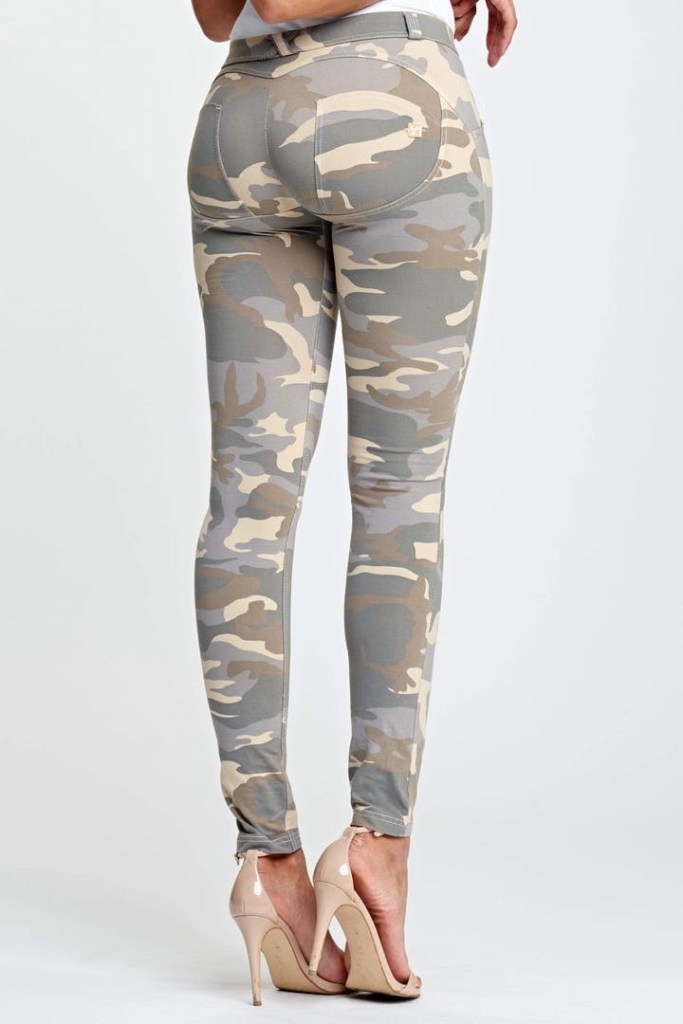






 qualities.”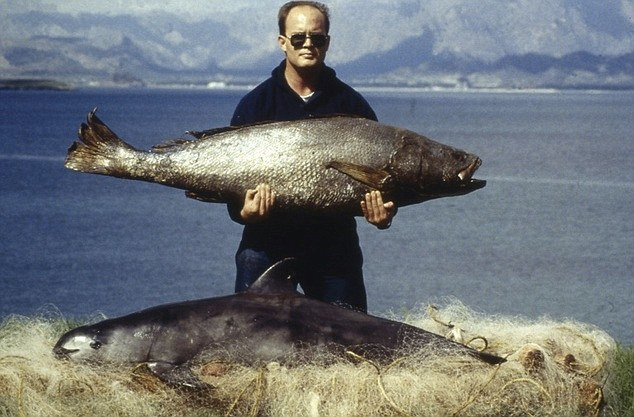


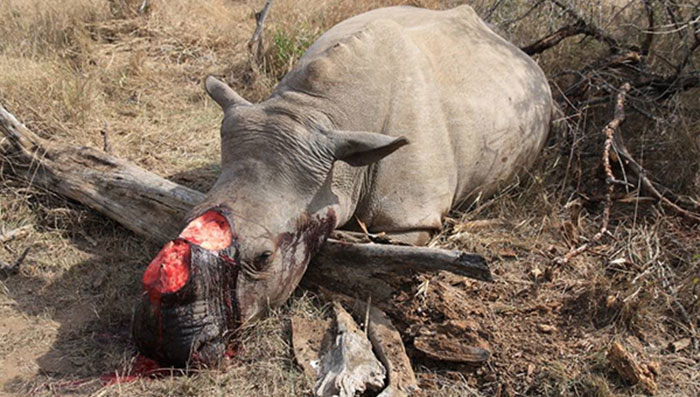

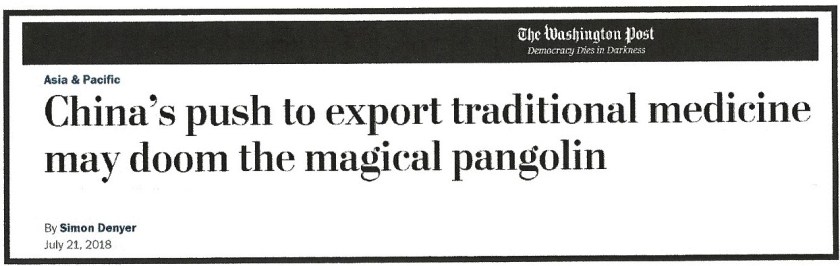








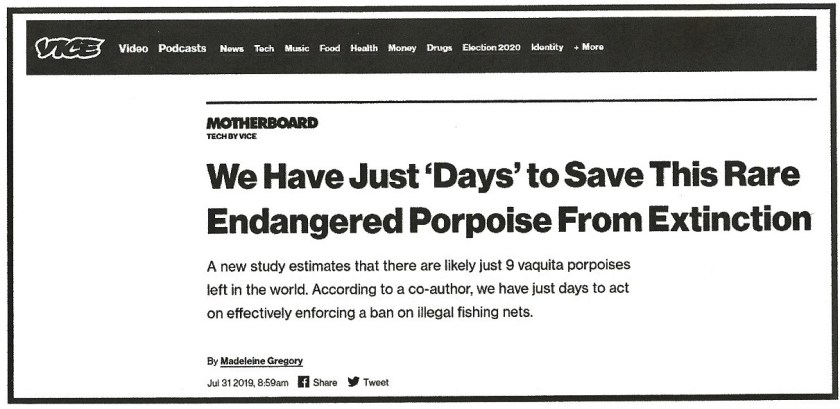

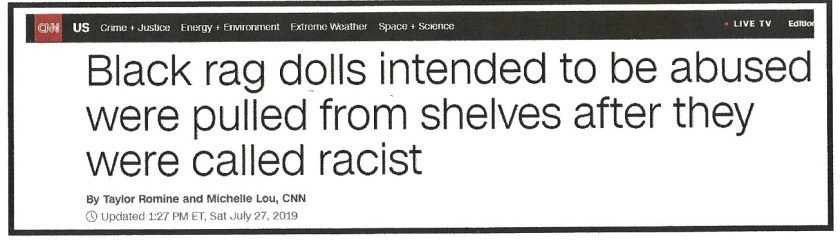

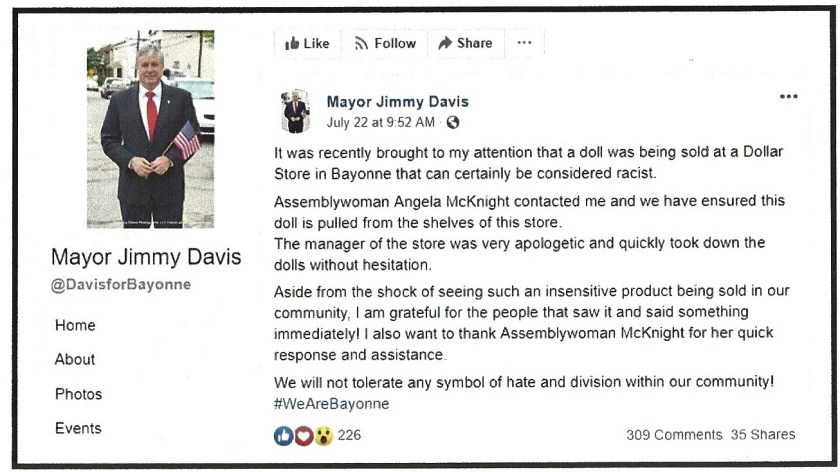

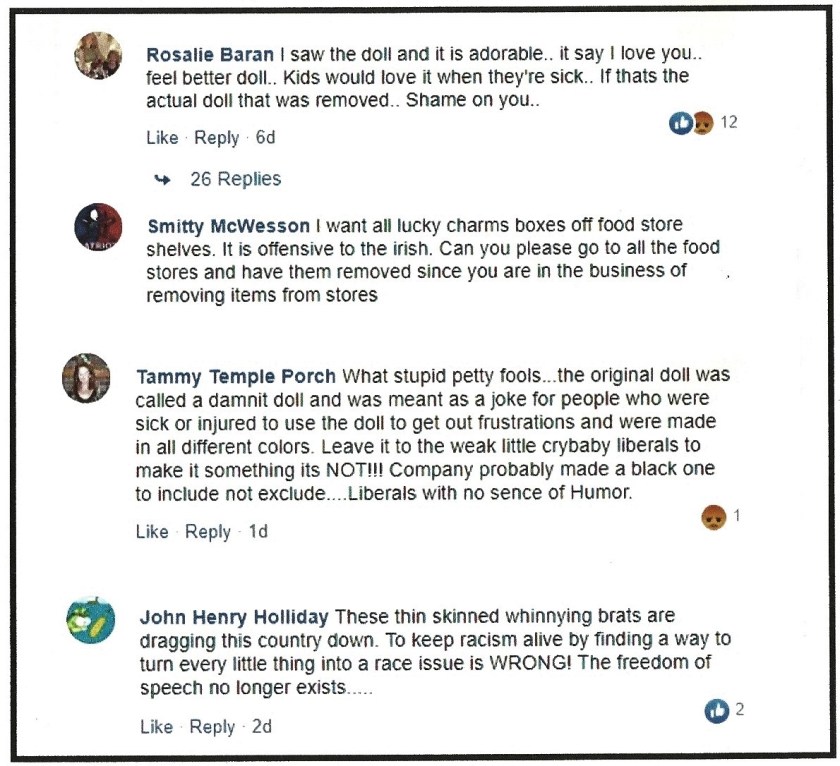





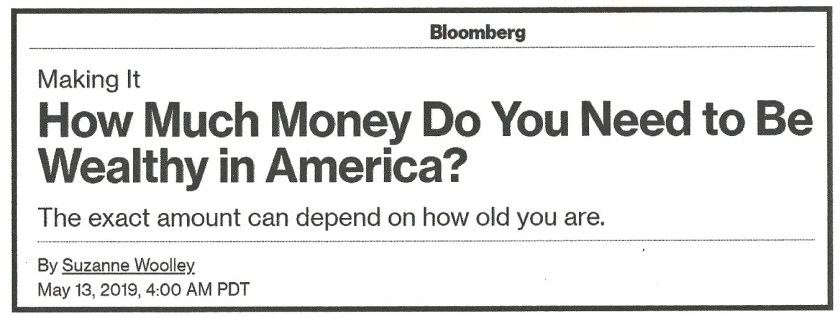
 Twitter and other social media platforms are part of their daily – hourly – lives.
 in this Time magazine cover story that called them “The ME ME ME Generation: Millennials are lazy, entitled narcissists who still live with their parents.”
 “Ignore their friends’ social media posts.”





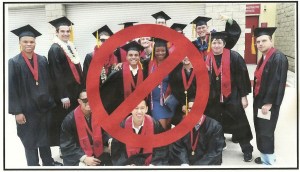

 And sadly, Madam Pres, you’re too late for those 666 future teachers, doctors and tech wizards.


 has gotten even busier:



 According to the Post website, the “column first started on September 19, 2007 as a feature during the 2008 presidential campaign,” and was revived as a permanent feature on January 11, 2011.








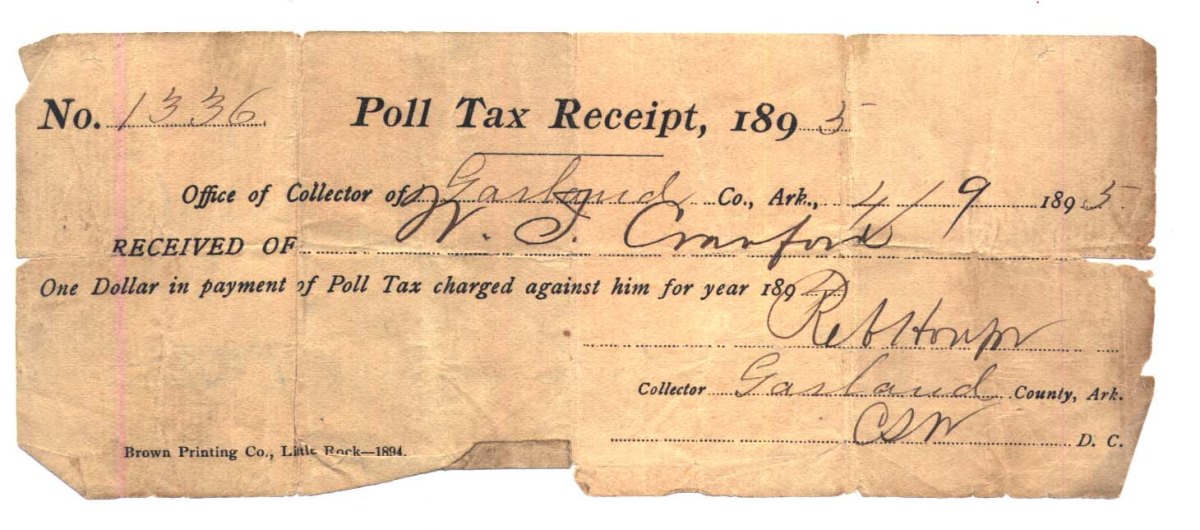

 After losing the Civil War (1861-1865), former Confederate states set up poll taxes of $1 or $2 per year between 1889 and 1966 as a prerequisite to voting. This Jim Crow-era tool was used to disenfranchise those who couldn’t pay – first, African Americans and then, poor white Americans.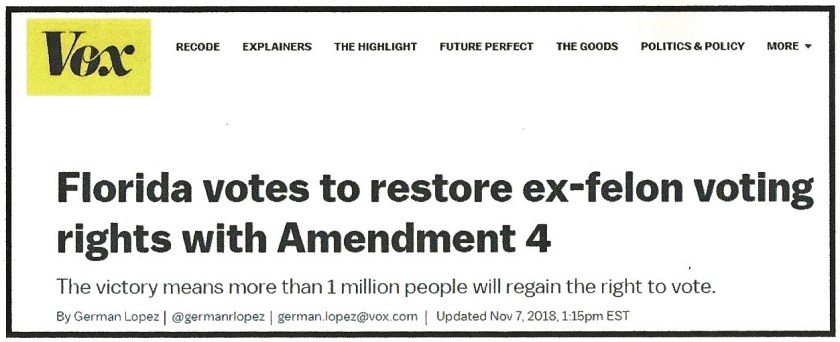

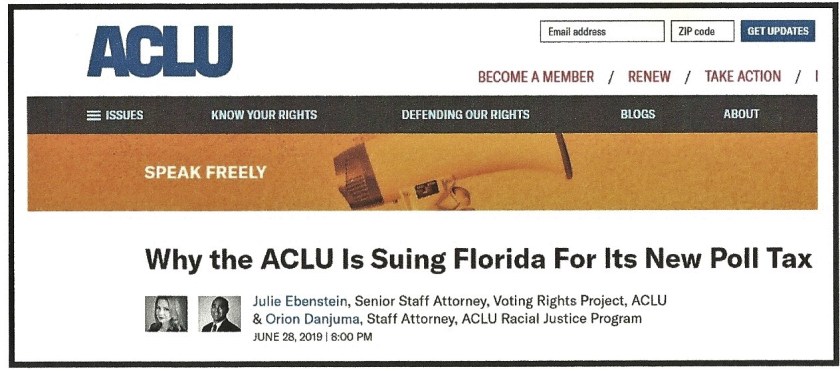
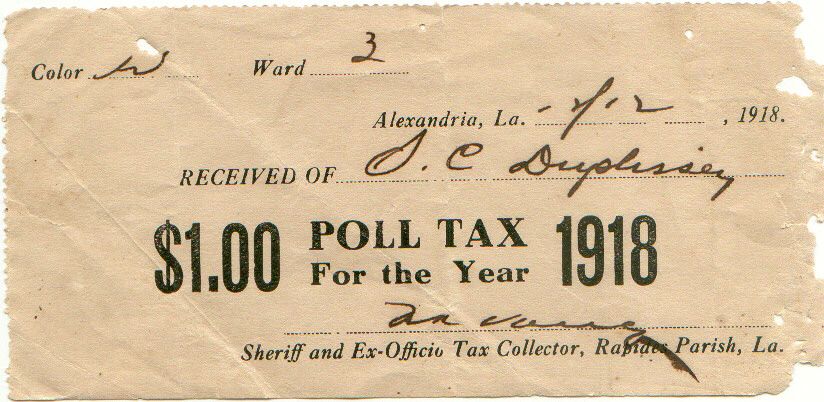
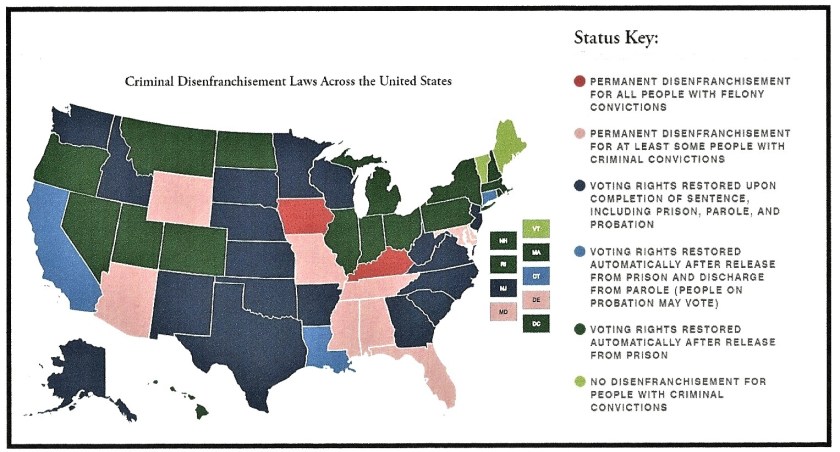

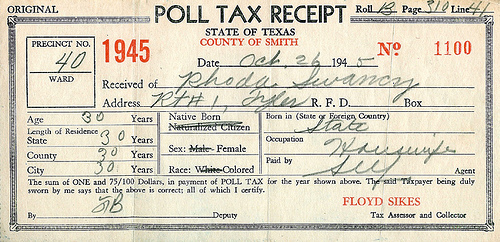
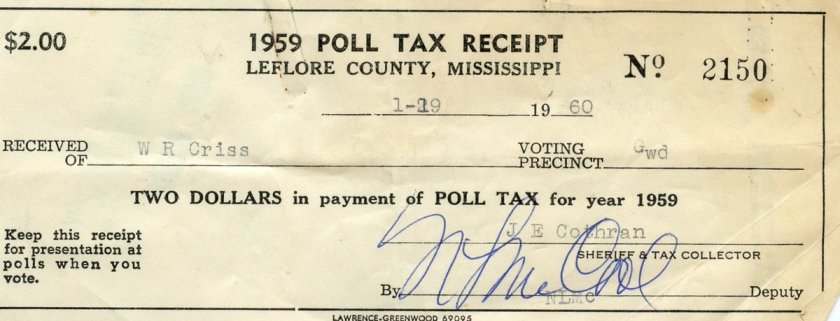



 Mega-Millions jackpot.
 My neighbor won the lottery!” And that everything is above board: “See that big check? They’re really getting all that money!” But most importantly, it boosts sales: “I never bought a lottery ticket, but now I will!”

 technology.” You submit a saliva sample and get results about your genetic information.

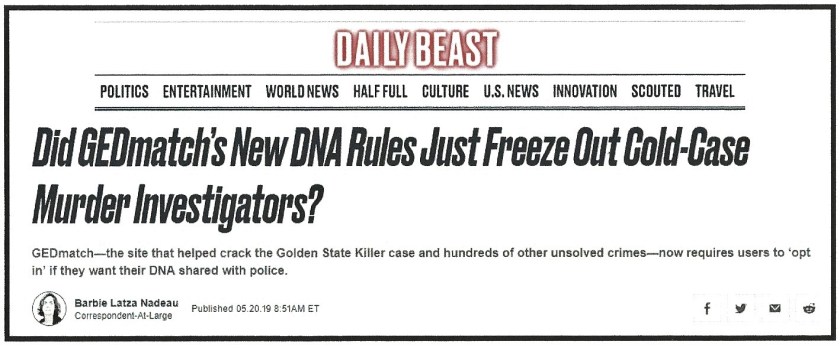



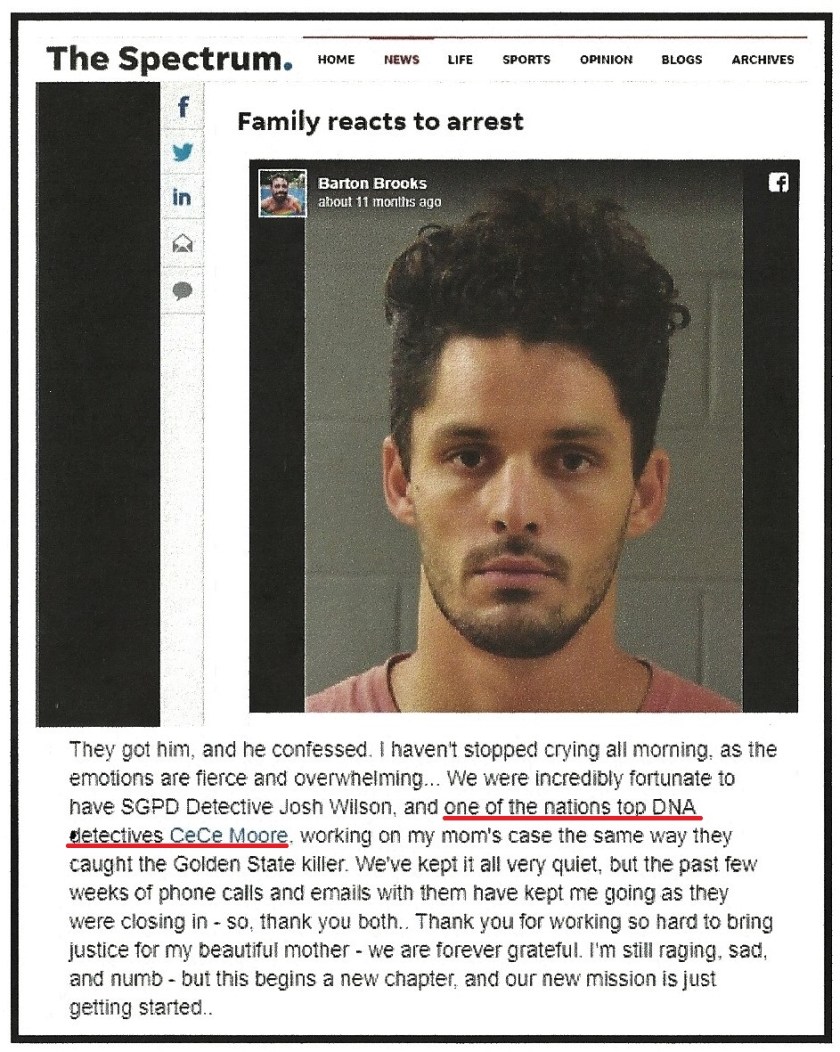


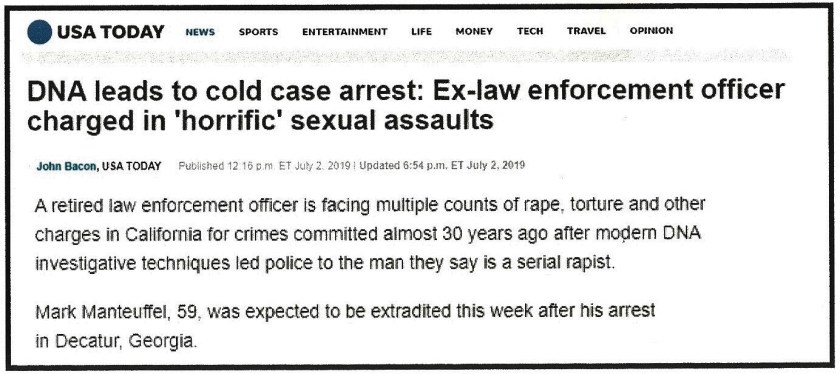

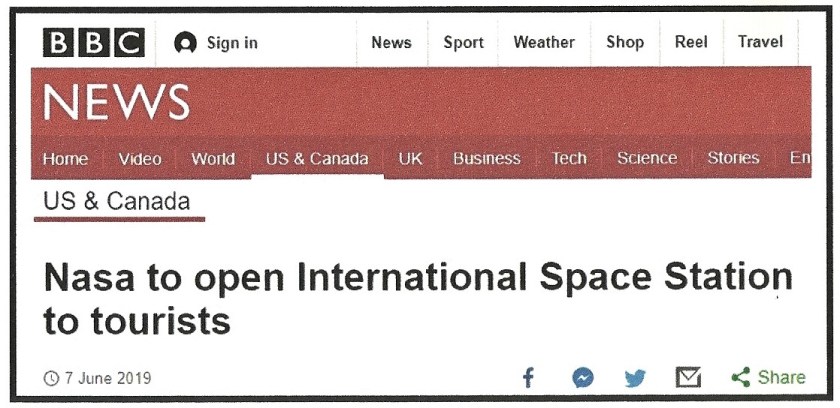


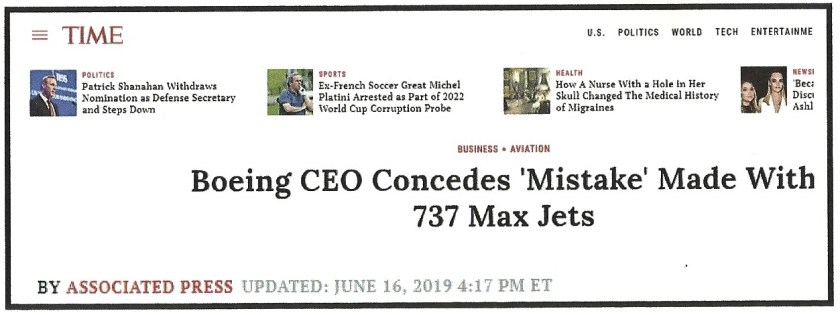

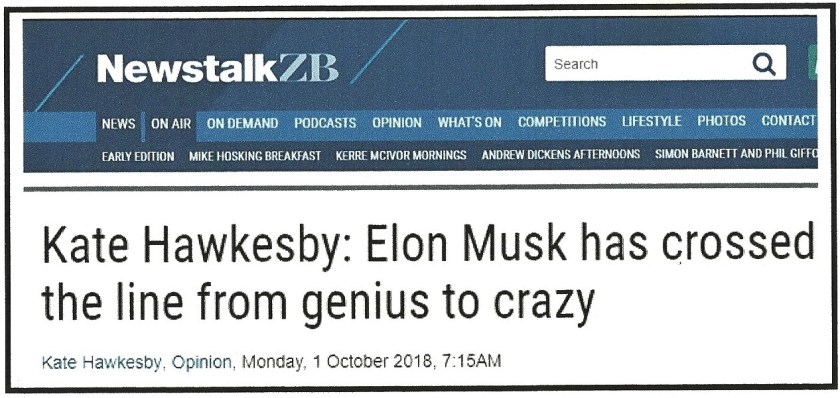










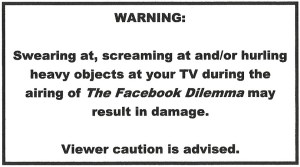


 connected.”


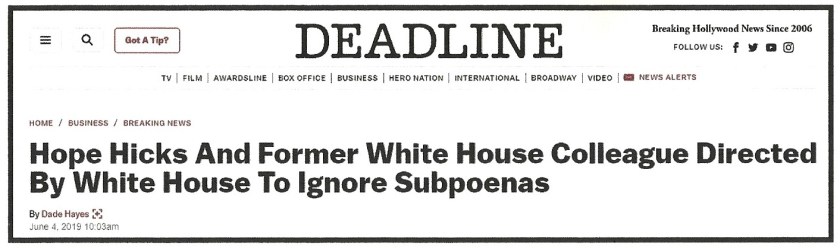

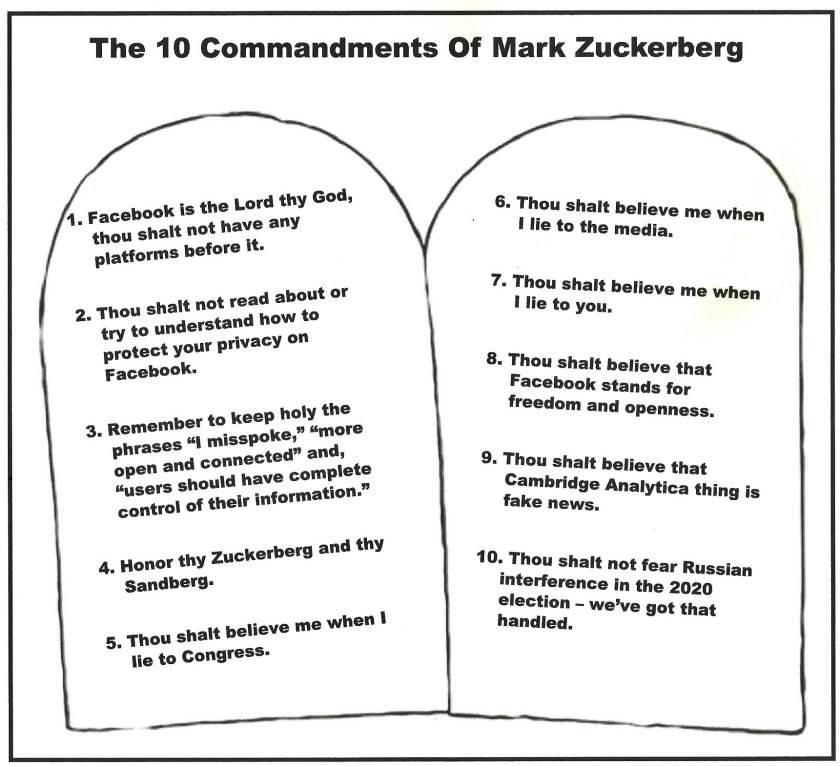


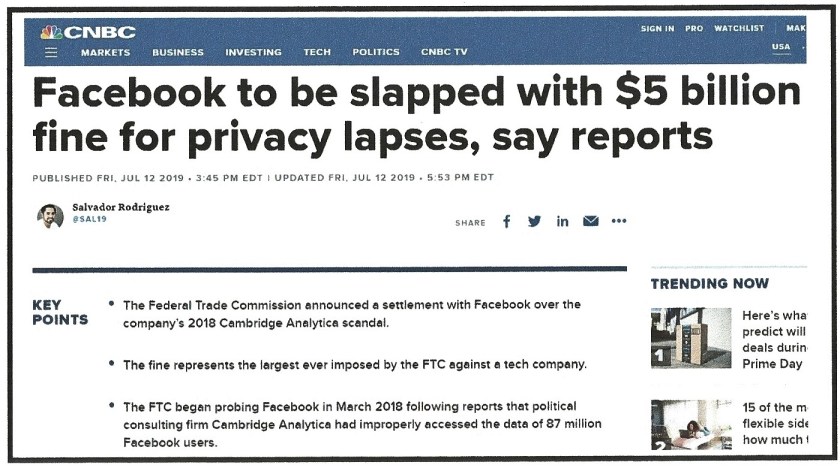
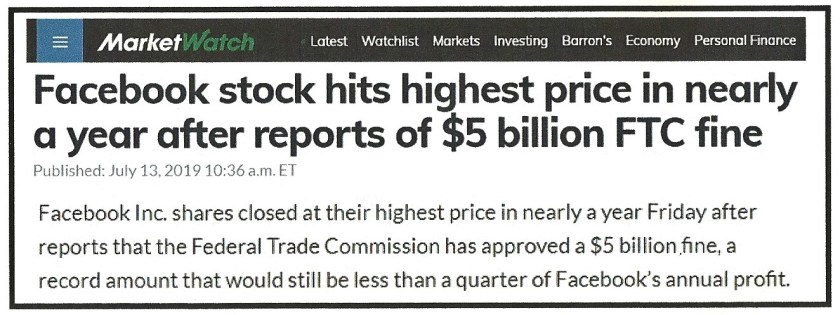



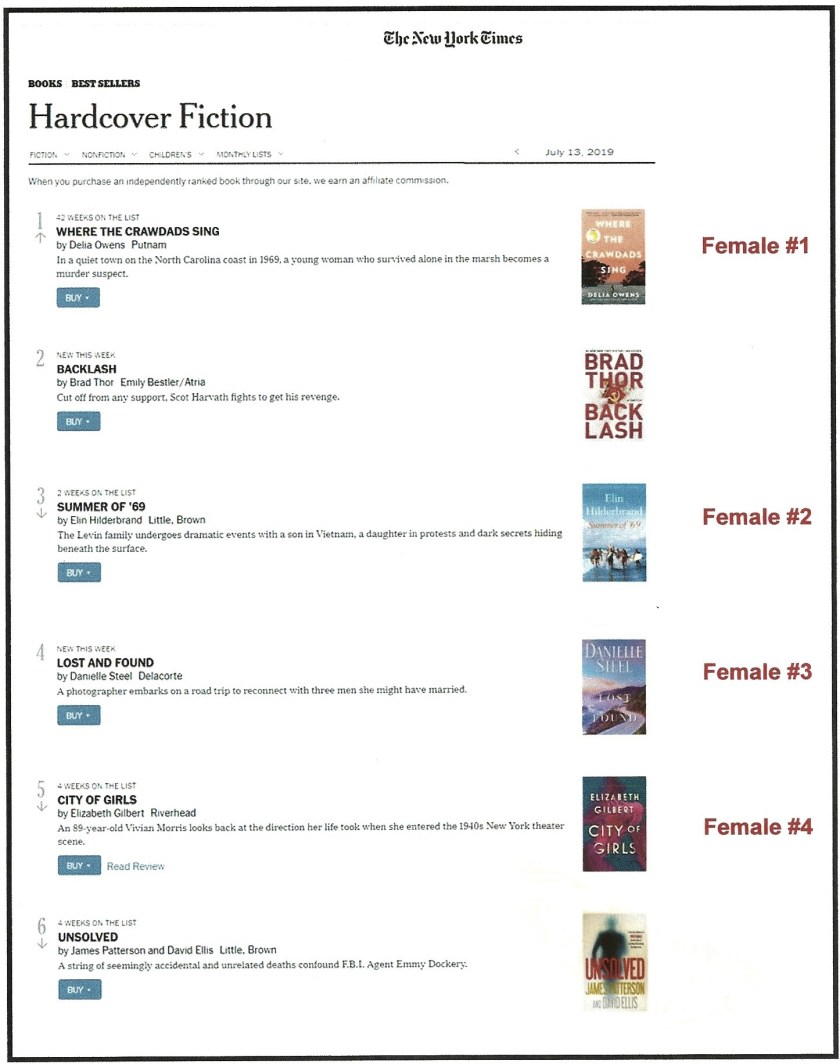
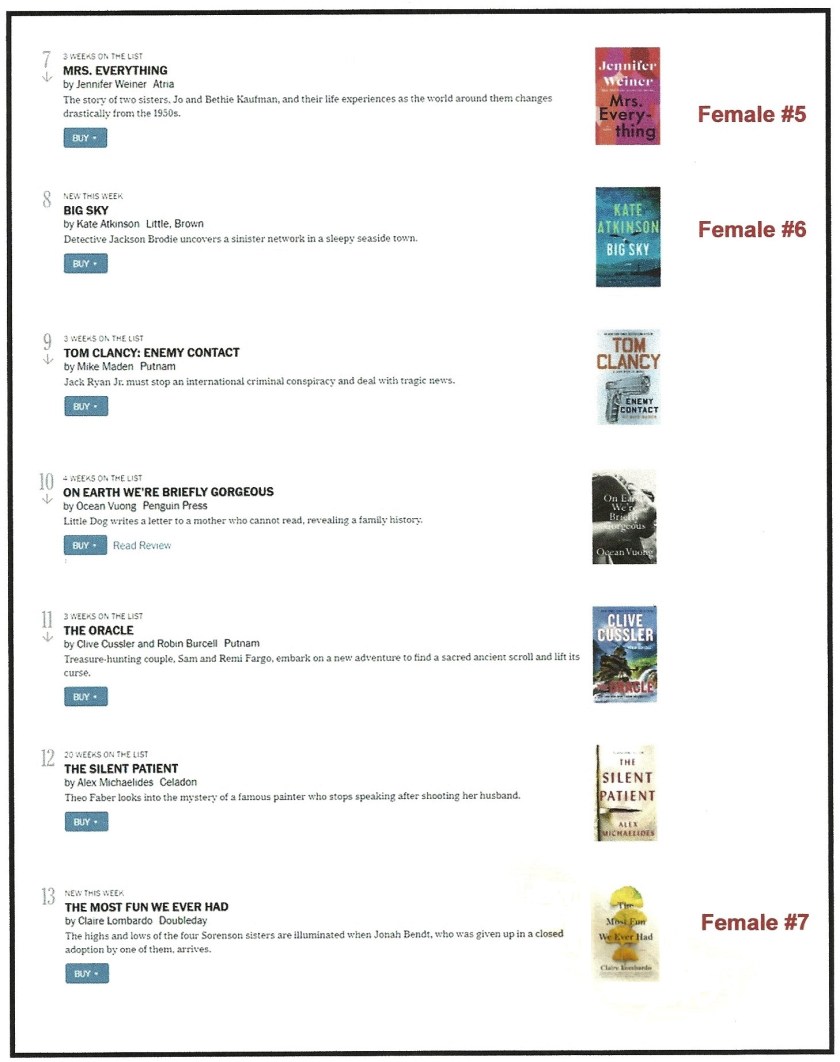


 Like #1 Delia Owens’ Where the Crawdads Sing – 42 weeks on the list.


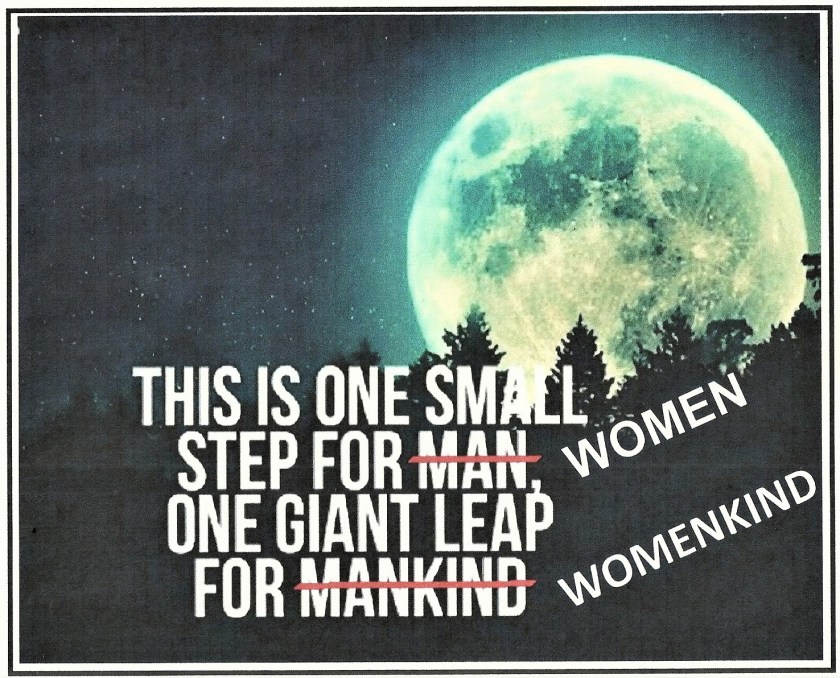






 orientation, issues that even the most highly educated experts grapple with.
 Which, you’ll be relieved to know, has nothing to do with sex.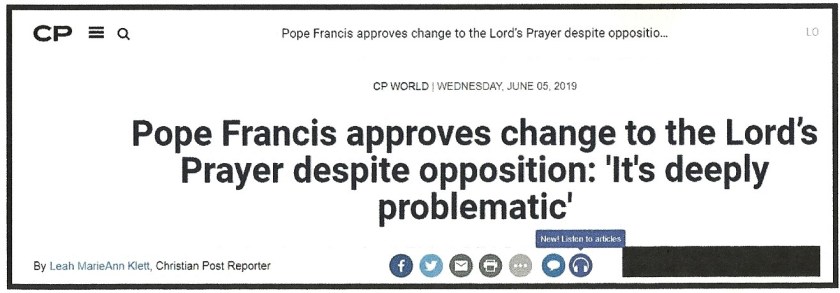

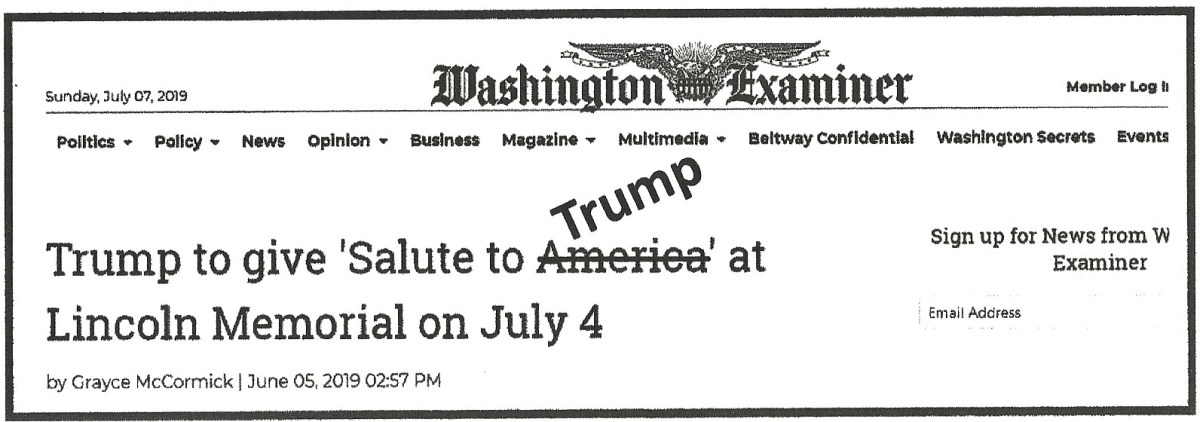










 That’s a lot of requests.


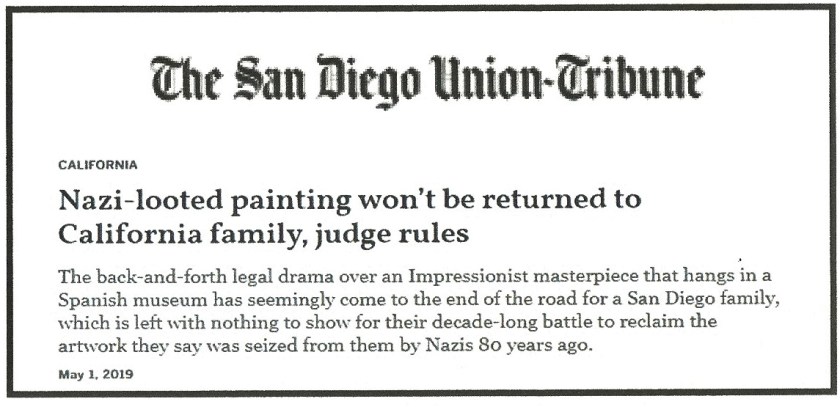







 As in her earlier books, Weir used her research throughout Anna of Kleve. As always, her writing and storytelling were good. And as always, with her fiction, I believed that Weir was telling the story based both on what she knew to be true, and what she thought could be true.


 So perhaps to some, Anna may seem rather dull. She was German and barely spoke English, so no reputation for witty remarks handed down through the ages. She’d led a quiet life, and was getting on in years for that era – age 25 when she married Henry. Seven months later Anna agreed to an annulment, she remained unmarried, lived the rest of her life in England, and died of an illness at age 42.

 clear – keeping America safe.


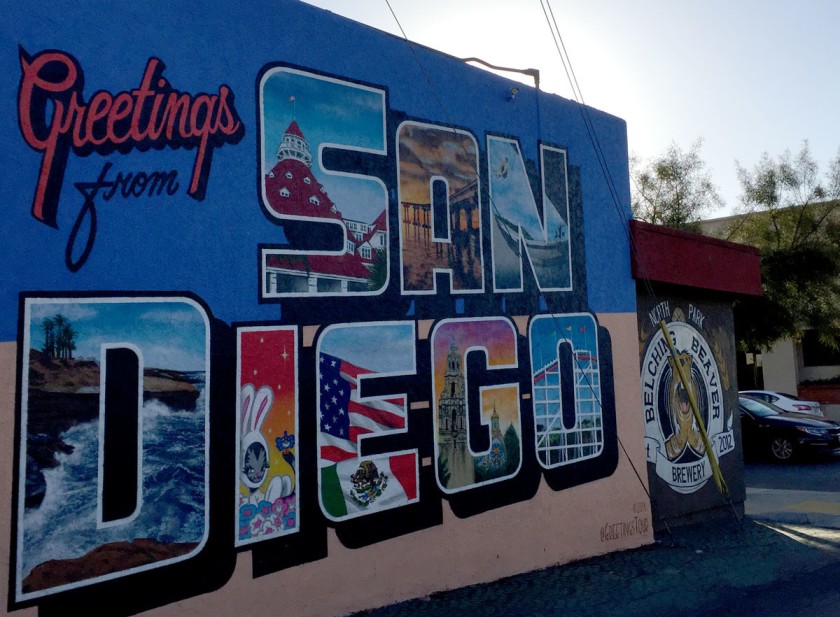










 are pretty interesting.


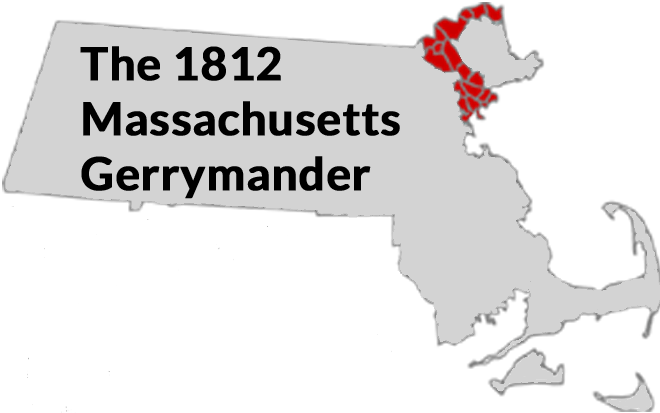






















 And all you have to do to get our country’s highest civilian award is win a golf tournament.






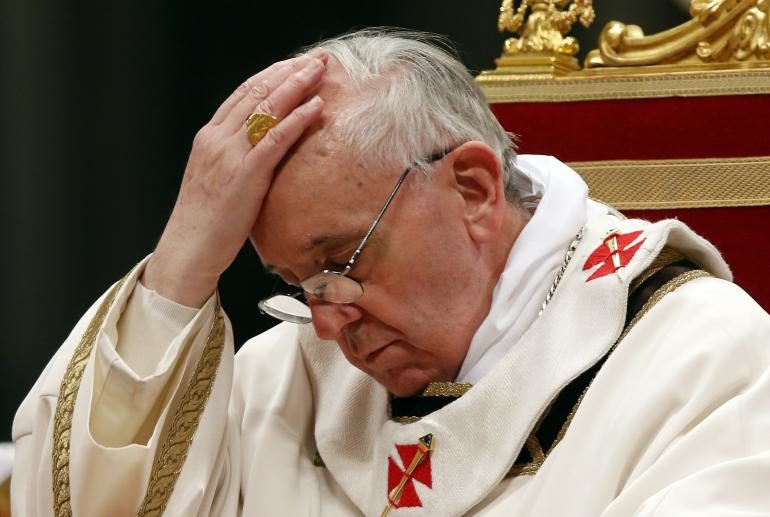





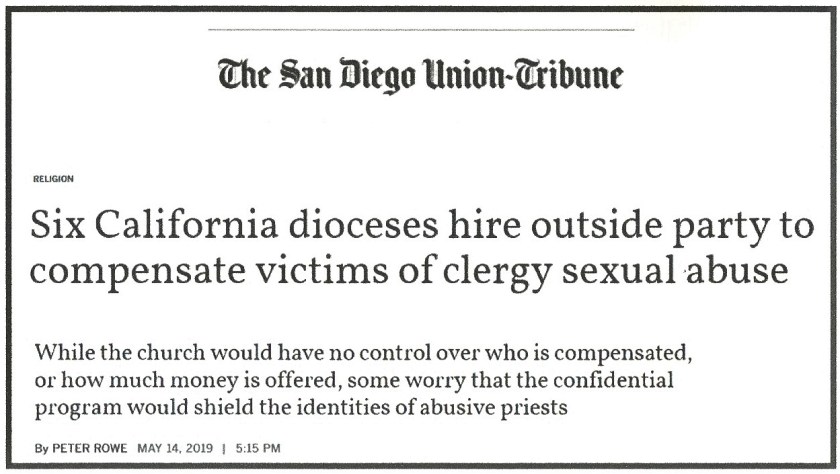

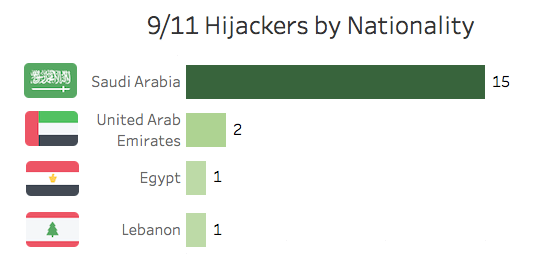


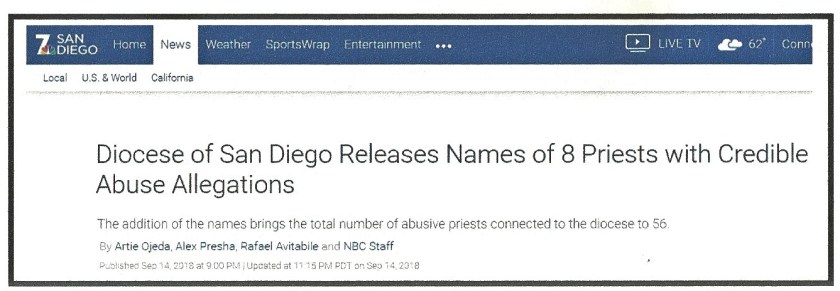


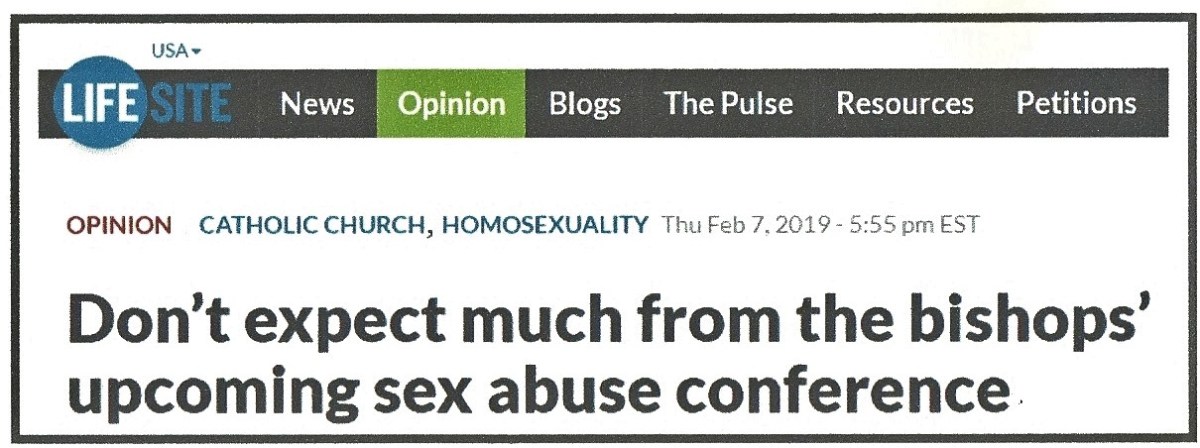




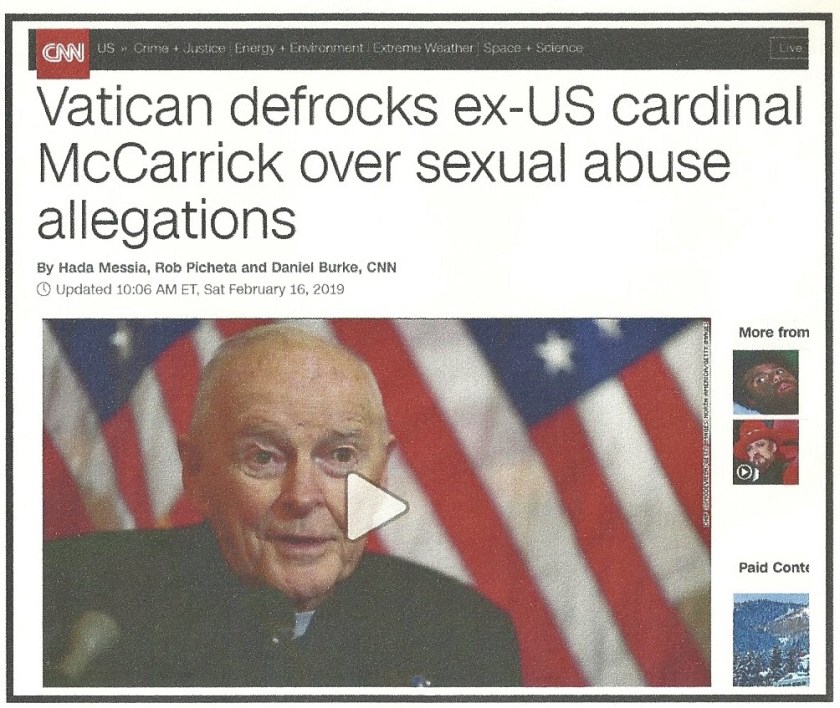



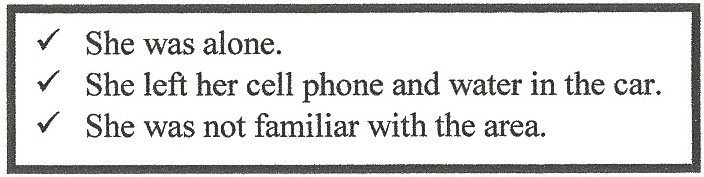



 of a team of hiking dogs.


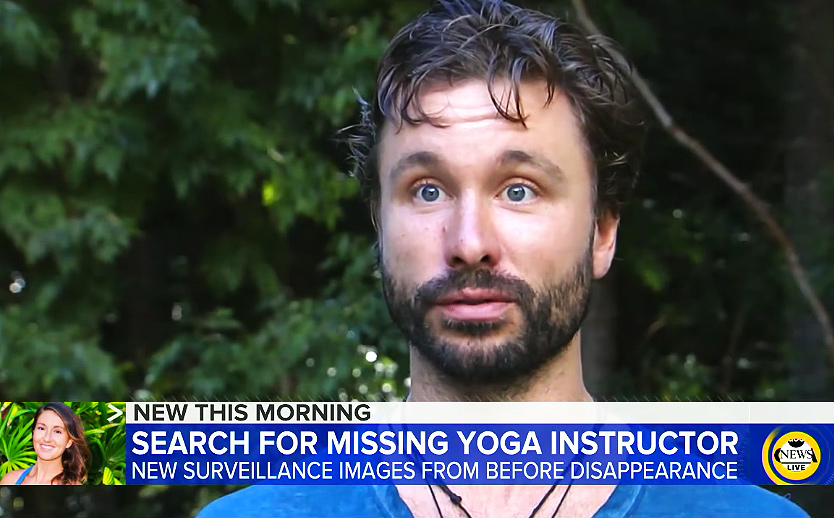


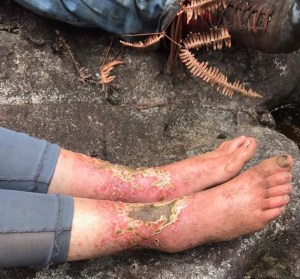


 experience.



 batch and the current harvest season.


 Here are some examples:








 I usually read this article, and one October day five years ago I reached that last page and began reading.








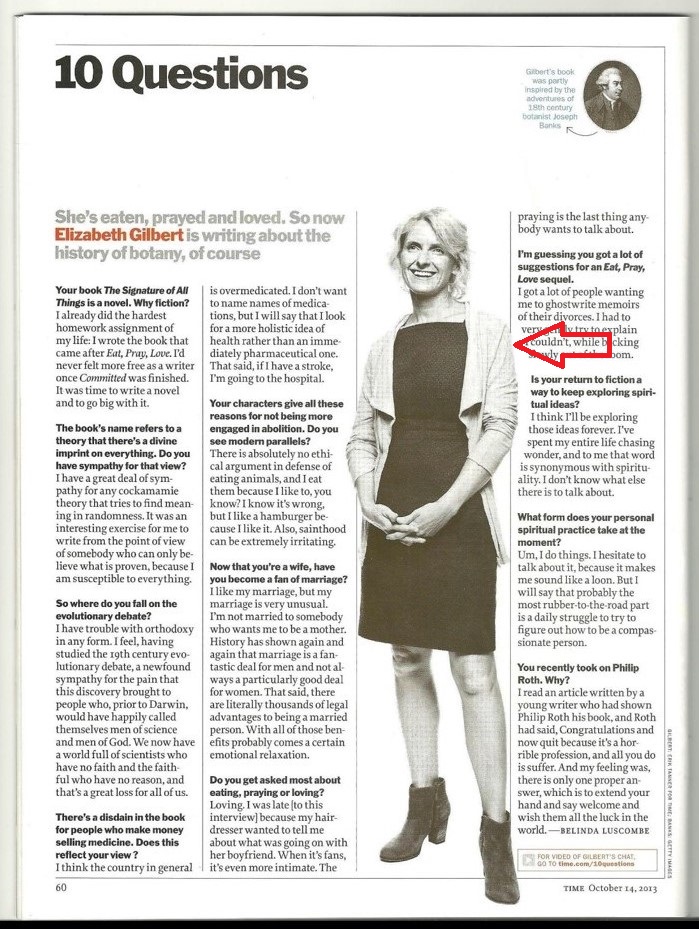







 We forget the name of someone we just met.
 bottle!
 It was only at the airport that the taxi driver picked up another fare, who discovered the baby and was annoyed that the taxi already had a passenger.















 It was on that highway, late last month, that a box with $30,000 in cash fell off the back bumper of a truck and brought people together with one shared goal:


















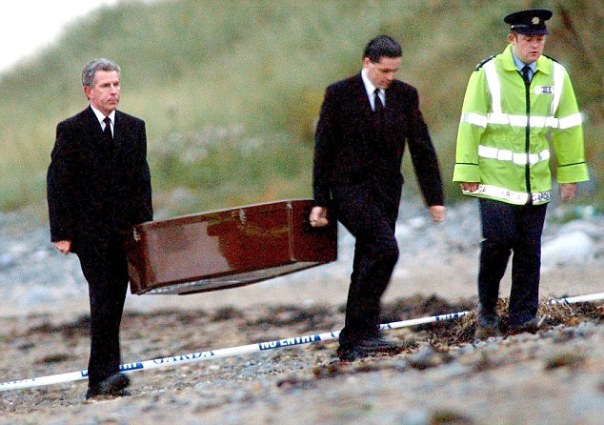








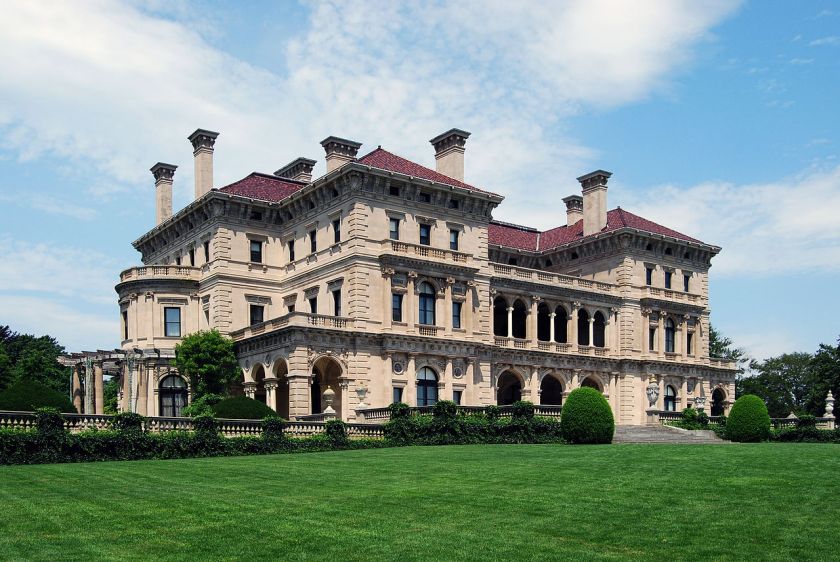














 Everybody dislikes commercials, but nobody dislikes these two like I do.




 “…portrays a light-hearted pursuit, backed by music from Ricky Nelson. The spot shows how the hybrid’s high fuel economy performance can take drivers farther than ever, to the point of chasing a loved one because you’re not a fan of goodbyes.”




 disease.

 All Lysol did was find a need and fill it, disregarding facts including (a) Lysol did not prevent pregnancy and, (2) Lysol could cause serious damage and even death for women


 which are in-the-moment and not necessarily thoughtful. Yes, I talk on the phone, but my preference is email.
 No doubt about it.
 formally known as “Your Friend in the Digital Age.” They provide my Internet connection along with my cable TV and phone landline. Cox has millions of subscribers spread across 18 states, and around 20,000 employees, a number of whom I talked to over the next 10 days.

 This completely unsatisfactory call called lasted more than 30 minutes and she put me on hold five times. During the last one, I hung up.
 frequent Internet disconnects had been addressed.
 opinion.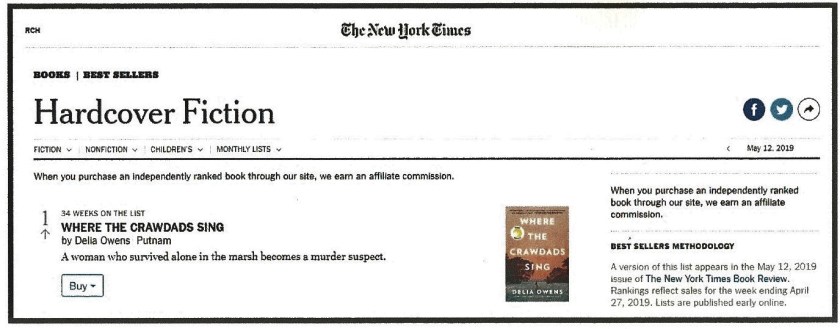

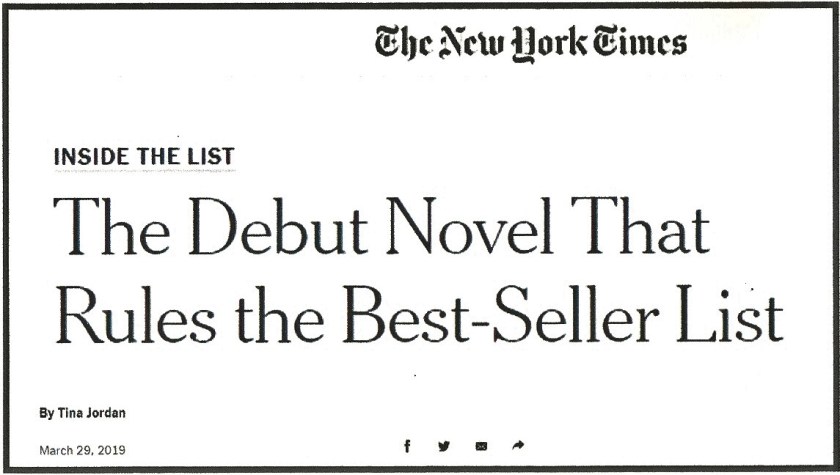
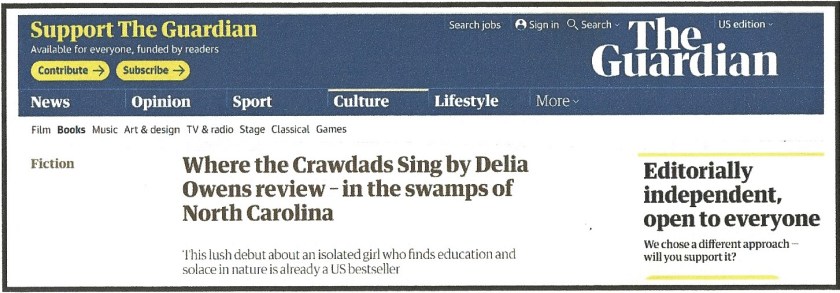
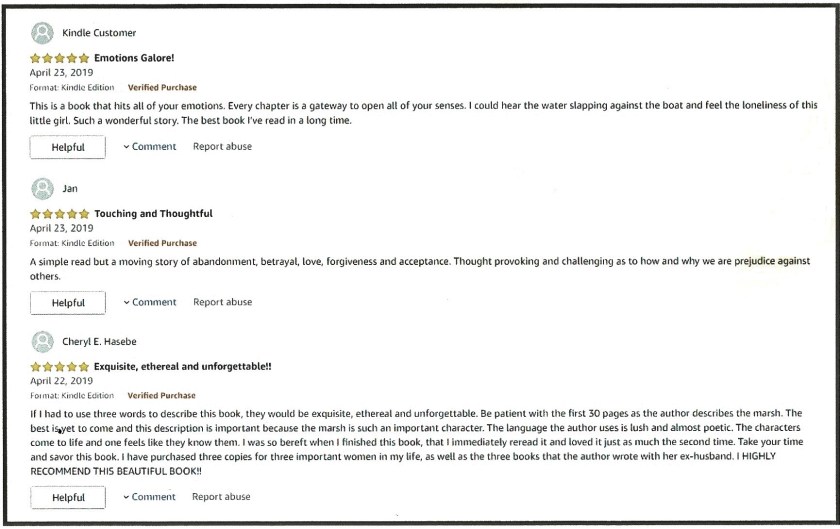




 Thousands of people attending an outdoor rock concert with no place to relieve themselves except…
 meant that for years, the districts (read: we taxpayers) were paying for the waste treatment, rather than DES paying.
 for proof that the company was also skirting clean-air rules.





 displayed.





 by having the people elect not the person of the President, but the person of an Elector who is pledged to vote for a specific person for President.


 leader from becoming president but having the modern effect of blocking the will of the people…”
 One example – and granted, it’s extreme, but still – the most recent amendment, the 27th, was ratified in 1992.
 popular vote in the 50 states and the District of Columbia.





 If the man’s sperm is used, he may become the biological father of one, 10, 50 or more children – a 2011 New York Times article cited a donor with 150+ offspring.
 lane highway into two halves. But a road can be put back as it was; Shapiro’s life could not.
 the world’s largest sperm bank. One of the striking aspects of this meeting was Rothman’s complete lack of understanding about the possible – probable – trauma experienced by people making the same discovery that Shapiro did.







 table, which means I’m the odd one out (eight couples plus me for a total of 17 seats filled).
 sophisticated.
 No pictures of her date sliding a corsage onto her wrist. No pictures of the group at the table where it’s not glaringly obvious that she was ALONE. No happy prom memories to retrieve and reflect on when she looks back on her high school years, and she will look back, we all do.








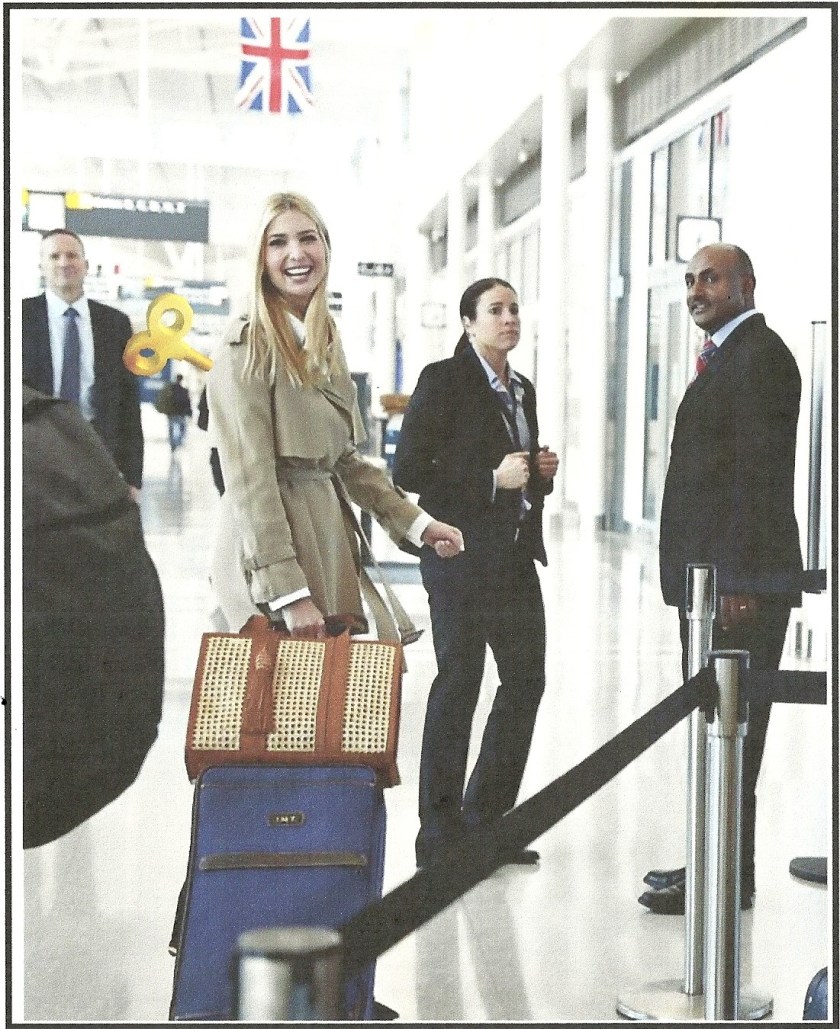









 The story: In early April, five men entered Kruger National Park, described as “the largest wildlife conservancy in Africa.” “Conservancy” meaning “concerned with the preservation of nature, specific species, or natural resources.”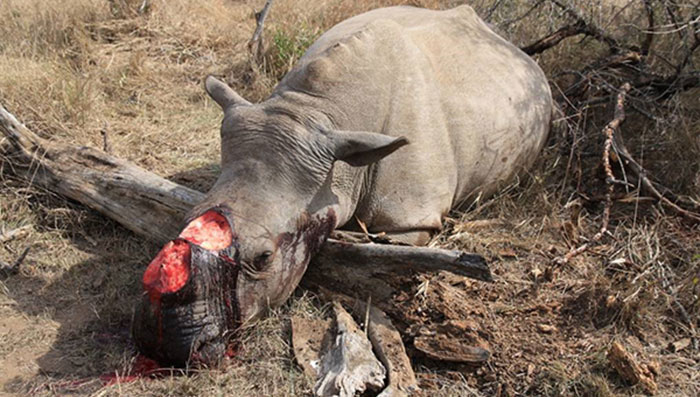
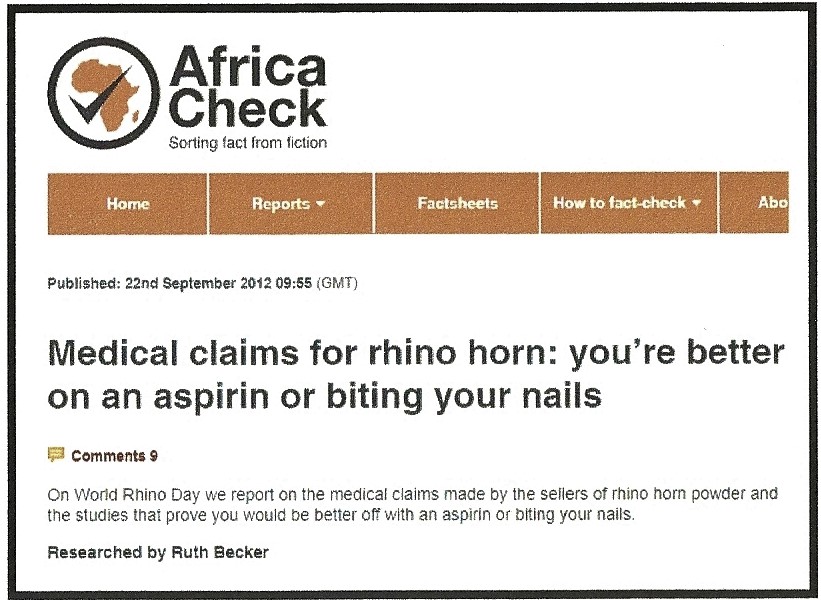
 The horns of African rhinos weigh on average about three to six and sometimes eight pounds. Do the math, and one horn is enough to feed a very large family for a very long time.






 California’s coast and ocean for present and future generations.”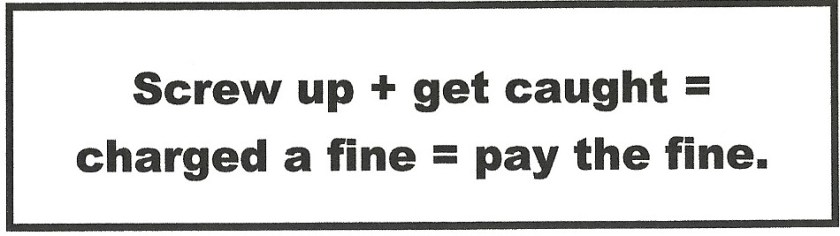






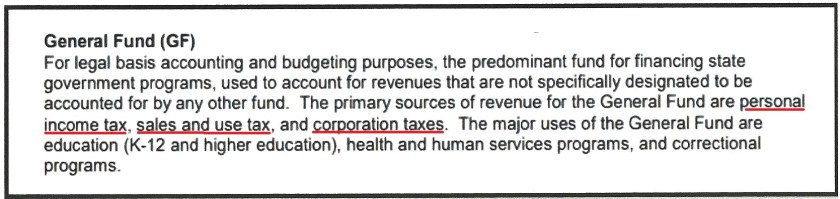
 underlined in the image above.
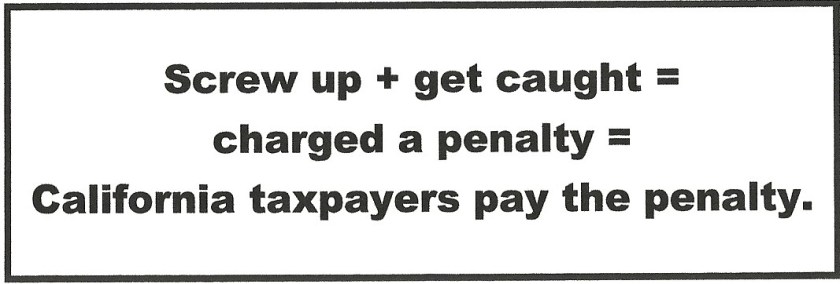

 I Hate Houseguests