The New York Times Best Seller List is something of a Holy Grail for book authors.
Holy Grail: a thing that is being earnestly pursued or sought after.
Few authors achieve a place on the list, and a few of those are totally undeserving of that distinction.
Case in point:
Donny-Wonny Trump Jr, aka “Mr. Ride On His Daddy’s Coattails.”
His book Triggered has been variously described as “forays into politics and views on liberals from the executive vice president of the Trump organization” and, “a reminder that people thought Mein Kampf was an excellent book, too.”
So here’s the book on November 23, in first place on The New York Times best seller list:
But wait.
Let’s look at that image again:
See that red arrow? It’s pointing to a little dagger.
What does that dagger mean?
This article from The New York Times explains:
That dagger means “bulk purchases of the book.”
That’s right! The Republican National Committee (RNC) spent almost $100,000 buying copies of Donny-Wonny’s book!
Which, the Times article point out,
“…is unusual in that the committee is promoting a book written by a candidate’s son who isn’t a politician and isn’t running for office.”
Well, hope you enjoyed it while it lasted, Donny-Wonny. Because it didn’t last long. Here’s The New York Times best seller list for December 7:
On the Friday before Thanksgiving – when many of us were thinking about family and food and a holiday weekend – a SeaWorld San Diego rescue team was thinking about something very different:
A humpback whale.
A 35-foot humpback whale that had become entangled in a 900-foot weighted fishing line off the coast of La Jolla, CA:
The SeaWorld team knew the whale was not able to swim freely and forage for food because of the line, and would have died if it had remained entangled.
The SeaWorld team also knew they were the only ones who could give a second chance at life to that whale.
A chance at life, so it would be free to do this:
And this:
And maybe this:
SeaWorld has gotten some of bad publicity, especially since the 2013 movie Blackfish. Its stock tanked in 2014, and again in 2017.
During all that, it was easy to lose track of the fact that SeaWorld as a company recently reached an impressive milestone:
36,000 animal rescues over the last 55 years.
SeaWorld San Diego alone has rescued more than 20,000 of those animals, which include sea lions, seals, dolphins, whales, turtles and birds. Their goal with every animal is to rescue, rehabilitate and return it to the wild for that second chance at life.
On November 22 the SeaWorld team was well-prepared for the humpback rescue. They have specific large-whale entanglement response training, and work under the authority of National Marine Fisheries Service, the government agency that oversees the Marine Mammal Health and Stranding Response Program.
The team walked their walk:
And after four hours, freed the whale to keep doing this:
And this:
And definitely this:
Good news for the whale, for us, and for the planet.
Just a few years ago, if you had told me, “You’ll choose not be friends with someone because of their politics,” I would have absolutely disagreed.
Pass on a friendship because of politics?
No way would I do that.
But – I did that.
Jane and I had worked for the same company, different departments, for several years. When we saw each other in the hall or lunchroom we’d chat, mostly about work. I enjoyed Jane’s sense of humor and her take on company politics.
Jane moved on to another company, but before she left, she invited me to lunch. I thought it could be fun, so we set a date.
And our lunch was fun.
Until Jane brought up politics:
“Did you hear what those dumbass Democrats did?”
I kept quiet as she then recounted the latest offensive things the “dumbass Democrats” said about Trump, the bills they were wasting their time passing in the House because Mitch McConnel (“Thank God for him!”) would never bring them to the floor, and sang the praises of Lindsay Graham (“Brilliant!”).
All of which I disagreed with. Vehemently – but internally.
I was resolved to “disagree without being disagreeable.” I thought Jane and I had a potential for friendship, and in the future we could just agree to disagree.
Right?
Then she said, “I wish people would just leave Trump alone to do his job.”
Well.
To say I loathe Trump would be putting it mildly.
And I was struggling with the hard evidence that Jane actually believed what Trump says, and lauds what he does.
Jane was an intelligent woman, after all.
I said, “You don’t think Russia interfered in the 2016 election?”
“No way.”
“Trump and Ukraine?”
“The Democrats failed in their first witch hunt and impeachment will fail, too.”
I paused, realizing I was about to put the last nail in the coffin of this potential friendship.
“And the 24 women who’ve accused Trump of sexual assault?”
“Thy’re lying.”
“All of them?” I said.
“All of them.”
Now Jane had a question of her own:
“What do you think of Trump?”
In my calmest tone I told her. Jane’s eyes grew wider as I used the words “psychopath,” “narcissist” and “misogynist.”
We sat in silence for a moment, then moved onto other topics.
But not for long. We split the bill, said good-bye, and before I’d even arrived at my car, I knew I wouldn’t see Jane again.
And I knew Jane felt the same way.
I just couldn’t respect a Trump supporter – and I believe respect is a critical part of any friendship, any relationship.
I’d passed on a friendship because of politics.
“Agree to disagree” doesn’t work anymore in a country as polarized as ours.
And it gets worse.
Because This Polarization Is Dividing Families, Too
My friend Deborah had been invited to lunch by her adult son. Deborah had had run-ins with her son before about Trump – he’s a strong supporter and she’s exactly the opposite – and she’d realized that if they were going to have quality time together, it was best to not discuss politics.
They met for lunch and all was going well. At some point Deborah started telling her son about a movie she’d seen – a good, safe topic, since they both loved movies.
The movie was Icebox, about the horrendous conditions that immigrant children are subjected to. “But immigrants come here and break out laws,” her son insisted, “and deserve to be locked up. What happens to their kids is their fault.”
“This was by far the worst run-in we’ve had,” she later said to me. “He threw all kinds of things at me verbally, then got up and walked out of the restaurant.
“I thought I was just talking about a movie.”
This wouldn’t have happened three years ago.
Where does this leave Deborah and her son?
Where does this leave any of us?
Right where Trump wants us:
I – we – have allowed Trump to divide and conquer us.
Thanksgiving 2019: Now Trump’s “Divide and Conquer”
Has Divided My Family
My younger brothers have always been close, and probably closer than most:
They’re identical twins.
They not only look alike, they share many personality traits and preferences.
But over the years, one way they’ve differed is politics.
And over the past three years, that difference has become much more pronounced.
One brother is conservative.
One brother is liberal.
Conservative is single.
Liberal is married and has a stepdaughter. His wife and stepdaughter are also liberals.
Liberal had invited Conservative for Thanksgiving and an overnight stay. Conservative had gladly accepted, and offered to bring the pie.
The four sat down together for a beautiful dinner of turkey and all the trimmings. “We turned off the TV,” Liberal told me later, “so we could talk and focus on each other.”
And everything went well.
Until someone mentioned Trump.
Voices were raised, then raised voices became shouting. Conservative insisted, “Why can’t you see the good things Trump has done?”
The three liberals insisted just as strongly that Trump does no good at all.
What started so well had deteriorated into a Trump-divided-and-conquered disaster.
Deteriorated so badly that Conservative packed his things back into his overnight bag, and left.
If you’re undecided about where to have Thanksgiving dinner, Newsweek offered the above photo and this story about Denny’s $8-$18 options:
And Newsweek wasn’t the only one.
Option #2:
A week before Thanksgiving the San Diego Union-Tribune ran this lengthy article:
The article listed 40+ restaurants and assured us that if we hadn’t yet made our Thanksgiving dinner reservations: “No problem.”
Here are a few of those restaurants and what you’ll pay on Thanksgiving:
Barleymash, San Diego; $45 per person.
Sea 180 Coastal Tavern, Imperial Beach; $59.95 per person.
Coasterra, San Diego; $64.95 per adult.
20|Twenty, Carlsbad; $89 per adult.
Morada, Rancho Santa Fe; $95 per adult. And…
Addison At Fairmont, San Diego; prix fixe Thanksgiving dinner, $235 per person.
I expect these restaurants will be very busy tomorrow.
And I think that’s great.
Option #3:
As I sit here on the day before Thanksgiving, another option occurs to me: Places where many people will go, if they can find their way.
And perhaps some – just some – of the people going to Denny’s or Addison or any restaurant might spare a thought, and a few dollars – just a few – and donate money to a non-profit offering Thanksgiving meals.
The average cost to provide a free Thanksgiving meal is $2 to $2.50 per person at, for instance, the the Salvation Army.
I have no doubt that Jared Kushner – son-in-law and advisor to Trump – has been of inestimable value during their White House tenure:
“Daddy-Don, I think the blue and red striped tie today.”
“Daddy-Don, I think your hair needs a touch more Goldy-Gold, and let’s lift the front swoosh a bit.”
“Daddy-Don, the Orange #23 makeup is better than the Orange #25 for a daytime Rose Garden press conference.”
Here’s Jared, thinking.
Yup, Kushner’s advice is priceless.
One recent day, Kushner was sitting in his plush office, debating the benefits of emphasizing “witch hunt” vs. “shame that shouldn’t be allowed” vs. “unconstitutional hoax” when an idea flashed across the dark void that passes for his brain:
Here’s Jared, excited.
“I can suck up to Daddy-Don and launch yet another fabulously successful career at the same time! I will be so successful that Daddy-Don will get re-elected, and I won’t have to think about getting a real job for another four years!
“We’ll set up cameras and stuff along the border to film the stupendous progress of Daddy-Don’s glorious border wall construction!
“Yeah, that’s it! I’ll direct the first-ever building-the-border-wall action film, and we’ll do wide distribution on Fox News! We’ll even livestream it!”
There were objections, of course – but no great artist ever pushes the boundaries without some fuddy-duddies raising pesky objections. Think of Da Vinci, Van Gogh, Picasso – they all faced objections and ignored them, and just like them, so is another great artist: Kushner.
He’s ignoring pesky objections about filming from:
Here’s Jared, ignoring.
U.S. Army Corps of Engineers.
U.S. Customs and Border Protection.
He’s ignoring pesky objections that broadcasting construction could:
Reveal “proprietary techniques” to competitors.
Cause outrage among Mexican officials if construction crews were seen straying south of the border.
So pesky!
Our Kushner pressed on, bravely continuing to push for his border wall livestream:
Here’s Jared, aggressive.
Why, one senior White House official even described Kushner’s demands as “aggressive”!
Now Kushner – or J.K., and he now prefers to be called on the film set – has the opportunity to really hone his directorial skills.
As you can see from this 11/12/19 Washington Post image:
Here’s Jared, doing the math.
The construction plan is for 166 miles to be completed in Texas before the end of 2020.
But less than four miles have been completed since 2017.
Let’s do the math.
That’s a rate of four miles in two years or two miles in one year.
At the rate of two miles per year, this stretch of construction will take 81 years – until…
That gives Kushner – I mean, J.K. – lots of time to triumph in his new directorial career!
And that gives smugglers lots of time to practice cutting through that new wall with $100 saws from their local hardware store:
Perhaps J.K. will meet some of those smugglers, and negotiate with them. He is known for his great negotiating skills.
I can just hear him saying to the smugglers,
¿Te gustaría trabajar como extra en mi película?(Would you like to work as extras on my movie?)
After all, J.K. has already demonstrated his negotiating skills – remember this?
June 25, 2019: Kushner and his Middle East Peace Plan. Wait a minute – this guy is smiling. Sort of. Is he a Kushner look-alike?
Just look at these examples of J.K.’s negotiating success in bringing peace to the Middle East!
So his negotiation skills will come in handy because guess what?
Again, from the 11/12/19 Washington Post, Daddy-Don’s administration has only acquired four miles of the 162 miles of land needed to put the new border wall on!
But no worries, because Daddy-Don has already paved the way, as it were, to acquiring the land:
So now, with Daddy-Don’s approval, J.K. can just cruise up to the property owners’ homes, and tell the owners,
“Daddy-Don said to take as much of your land as we want to build his wall so he can get re-elected and I won’t have to think about getting a real job for another four years!”
I can just hear J.K. on the film set now, giving his best directorial directions:
“Get a close-up of that guy in the white hardhat. No, not that guy, THAT guy! No! No! The OTHER guy in the white hardhat, you idiot!”“OK, guys, now that you’ve set up that one section of Daddy-Don’s glorious border wall – I want you to push it over for dramatic effect. It will look great livestreaming on Fox News!”“Who, them? Oh, those are just the owners of the land that Daddy-Don took, and their friends.”“What – Do I think they have guns? Idiot, this is Texas – everybody has guns!”
“Honey, I’ve found our next vacation destination!”
“Look! It’s Shedao Island, off the coast of China, it’s not crowded, it has beaches and lots of hiking opportunities!”
“Sweetie, that all looks great, except for one thing. Well, 20,000 things.”
“What do you mean?”
“That’s Snake Island. And the only inhabitants are 20,000 venomous pit vipers.”
(Long pause)
“OK! I’ll keep looking!”
But lucky me – I got to see Snake Island, thanks to the intrepid camera crews from NHNZ, the natural history unit of New Zealand media company Television New Zealand.
They came, they saw, and they filmed the island and the vipers – and so much more – for the documentary Big Pacific.
Big Pacific aired in 2017 on PBS, but I missed it the first time around. When I recently learned it was being rebroadcast, I was SO ready for it. I’m fascinated by our oceans, by how little we know and what scientists, divers and other explorers are constantly discovering.
I was amazed by what I watched – and by the risks taken in some cases, like Snake Island.
And by the masters of cinematography who went to I-lost-count-of-how-many locations, and captured gorgeous shots like this:
The nomura jellyfish can grow up to 6½ feet in diameter and weigh over 400 pounds.
And this:
Dugongs look like manatees, but they’re more closely related to the elephant.
And this:
No ocean program would be complete without great white sharks – but will we see them mate?
Love that in-their-face imagery!
It’s a fact: We know more about outer space than we know about what goes on in our oceans.
According to the National Oceanic and Atmospheric Administration (NOAA):
More than eighty percent unexplored!
But Big Pacific makes a glorious dent in our sea of ignorance with six+ hours of animals in and around the Pacific Ocean, in search of their next meal and/or next partner and/or next place to hide from predators.
They’re just living their lives, like these guys:
Now you see him – now you don’t. This longlure frogfish (left) almost disappears when he blends in with his surroundings.
The blue whale, the largest animal ever to live on earth. It presents a sleek 80-foot-long profile (left) until it takes in 12,000 gallons of water to filter out its food – tiny krill.
Sea otters may look cute to us – but not to red urchins. An adult sea otter can eat 1500 red urchins a day – about a third of the otter’s weight.
The narration of Big Pacific is fascinating and sometimes whimsical – like when they describe the ocean as a “liquid universe,” the eating habits of some residents as “gone in a gulp,” and the coastal fauna as a “cathedral of kelp.”
And so many species are featured – the fast and slow, the big and small, the ancient and the newly discovered, the male that turns into a female, and the female who mates – and then eats her partner.
“A true dinner date,” notes the narrator.
Here’s the PBS description of Big Pacific:
Episode 1: Mysterious
Man has explored land, the ocean’s surface, and large parts of the solar system, and in the 21st century we are just beginning to explore the depths of the Pacific Ocean. We yearn to unravel the mysterious Pacific – but she does not give up her secrets willingly.
Episode 2: Violent
Surrounded by the Ring of Fire, the Pacific Ocean is the epicenter of natural mayhem. Violence is part of life in the Pacific and creatures that live here must choose whether to avoid conflict or rise to meet it.
Episode 3: Voracious
There is plenty of food in the Pacific Ocean, but it is the challenge of finding that food that drives all life in the Pacific. In the voracious Pacific we meet a destructive army of mouths, a killer with a hundred mouths and the biggest mouth in the ocean.
Episode 4: Passionate
In the Pacific, the quest to multiply has spawned a stunning array of unusual behaviors and adaptations. There are forest penguins with a tenuous marriage, the secret rendezvous of great white sharks, and the tale of male pregnancy.
There’s also:
Episode 5: Behind the Scenes
Follow the adventures of the filmmakers behind Big Pacific. This “Making Of” special explores the highlights and challenges of wildlife filmmaking.
One last note.
Today it’s almost impossible to watch a nature show without hearing about the dangers threatening our environment, due to human impact including climate change.
There is some of that in Big Pacific, but it doesn’t drive the narrative.
The goal of Big Pacific is to “break the boundaries between land and sea, moving throughout the Pacific Ocean to present a broad range of locations, species, natural phenomena and behaviors.”
Goal: Met.
And exceeded.
This wolf eel looks like it’ s having a bad day, so divers, beware. Wolf eels can grow up to eight feet in length and inflict bone-crushing bites.
Here is what I see as an interesting confluence of recent events.
To get started we go back before that, to October 28, 2017.
To a story I completely missed, but sure have enjoyed since I learned about it.
Juli Briskman, then 50, was a single mother of two teens, living in Loudon County, VA, about a 40-minute drive from Washington DC. She worked for Akima, a government contractor. She was not, in the words of Washington Post columnist Petula Dvorak, “an activist, a protester, a radical or a meddler.”
On that October 28 around 3pm, Briskman was riding her bike, getting in her workout. From behind her came a familiar sight: a motorcade of black SUVs.
As area residents know, that’s how Trump travels.
He was returning from a round of golf at nearby Trump National Golf Club.
Catchy name, yes?
As the motorcade passed, Briskman raised her middle finger, and held the pose:
And repeated the gesture when she caught up to them in traffic.
A press photographer took pictures, posted them, and the image spread across social media. Briskman went from low-key suburban mom to national attention, becoming “the woman on the bike who flipped off Trump.”
Columnist Dvorak called it “the middle-finger salute seen around the world.”
Why did Briskman do it?
As the New York Times reported not long after, Briskman said her “blood started boiling” when Trump’s motorcade began to pass her.
“I just got angry. I lifted my arm and started flipping him off. I started thinking, You’re golfing again when there is so much going on right now.”
Briskman’s photo was embraced by Trump critics, including a local anti-Trump Facebook group. On their page they asked, “Who is this?” and Briskman replied in the comments that she was the cyclist.
The image passed “viral” and went stratospheric.
I love this story. I love what Briskman did. She was in a once-in-a-lifetime moment – on her bike, being passed by Trump’s motorcade. She could have just kept her head down, kept cycling and done nothing.
But she didn’t.
Would I have done that? Could I have done that? Flipped off Trump? And not just at Trump on TV – I do that often – but up close and personal?
I hope I would have.
I thank Briskman, for speaking for me and millions of Americans.
By October 30, Briskman had affixed the image on her Facebook and Twitter accounts. Neither account identified her as an employee of Akima, but she gave a heads-up to an HR official at Akima, her government contractor employer.
On October 31 Briskman was called into a meeting with the HR official and two other company executives.
“We have chosen to separate from you,” Briskman quoted one of them as saying to her, citing the company’s social media policy ban on “obscene content.”
She said she was told that she was not meeting the company’s code of conduct and that the officials feared “it could hurt business” because of their work related to government contracts.
Briskman was escorted from the building.
But…regrets?
None:
“I’d do it again,” she said.
When word got out, job offers flooded in.
Briskman’s story could have ended there. But it didn’t.
It got better:
And better:
Briskman was one of many Democrats in Virginia who won in November – taking control of the legislature, and in her case, running as a Democrat for the Loudon County Board of Supervisors and defeating the Republican incumbent who’d held the post for eight years.
“It’s not like I can run against him,” she’d said, meaning Trump. “But I can run.”
Again, according to Washington Post columnist Dvorak, Briskman said, “The last two years have been quite a ride. Now we’re helping to flip Loudoun blue.”
If Briskman wants to continue using “ride” and “flip” references, that’s fine by me.
So: Here we have a woman who never ran for office before, winning an election in 2019. She ran a professional campaign, defeated a Republican, and looks forward to working on issues including paying teachers in Virginia a living wage, supporting paid family and medical leave for county staff, and compensating firefighters so that they can live in the communities they serve.
Then we have the group of so-called professional politicians who ran, this time for a locked door, in what can only be called a pointless political stunt, to garner media attention and appease their leader.
It was October 23, and there were impeachment hearings going on behind that locked door. It was the door to the SCIF– Secure Compartmented Information Facility – an ultra-secure room used by congress for confidential business.
Around 30 Republicans had decided to storm the door, break into the room, and disrupt the hearings:
I’m figuring Matt Gaetz (R-FL) led the charge, since he sent this tweet:
I’m also figuring Gaetz tipped off the media. The media was there, and the stunt got lots of attention:
Including this post-charge photo of those Republicans, in which you’ll note that there is not a single woman visible:
More than anything, it reminded me of a bunch of guys back in medieval times, storming a castle:
If those medieval guys succeeded, they were the victors and took possession of the castle.
After the Republicans stormed the SCIF, all they did was order pizzas, and send out tweets about themselves, like this one:
And this one:
And this one:
And delay an impeachment hearing that simply resumed later.
Mind you, there were already Republicans inside that room, participating in the impeachment hearings.
So now it’s like the guys storming the medieval castle, only the Republicans have guys on the inside, already:
What’s up with that?
Couldn’t they have just waited until the hearing concluded, then the Republicans who were at the hearing could meet with the Republicans not at the hearing, and tell all, and then order pizzas and send out tweets about themselves?
So: A first-time, non-professional politician runs as a Democrat and wins. A bunch of professional politicians bust through a door and accomplish…?
But then, on November 9, the pro-Trumpers really came up with a significant step. Something so original, so awesome, so strategic – I’m humbled by the importance of it:
And to show us how brilliant and brave he was, the guy who did the slashing…
Did this in front of police officers…
Who promptly caught him…
As he tried to run away!
The 20-foot-high inflatable balloon was one of several “Baby Trump” balloons that have become a staple of worldwide protest:
July 2018: London, England
November 2018: Buenos Aires, Argentina
November 2018: Paris, France
January 2019: Los Angeles
June 2019: Dublin, Ireland
September 2019: Copenhagen, Denmark
The diaper-clad Trump is orange – of course – and holding a cell phone – of course.
The slashed Baby Trump balloon was part of an anti-Trump rally at an event held outside the Alabama-LSU football game in Tuscaloosa, Alabama on November 9.
Trump was attending the game rather than – oh, I don’t know. Rather than reading, instead of ignoring, the science on climate change? Helping our veterans get better services? Solving immigration? Sorting out issues in the Middle East? Addressing gun control issues? Revealing his Obamacare replacement that he talks about but doesn’t exist?
The alleged balloon slasher, Hoyt Hutchinson, 32, was charged with felony first-degree criminal mischief. He was booked into the Tuscaloosa County Jail and held on a $2,500 bond.
Hutchinson had posted a Facebook Live video hours before the incident saying he was “going down [there] to make a scene…I’m fixin’ to pop this balloon, without a doubt.”
Little did Hutchinson know that he was also “fixin’ to” create the image of Trump we’ll see on November 3, 2020:
Trump, crushed after November 3, 2020 elections.
Hutchinson was able to make bail and promptly called a syndicated radio program, the “Rick and Bubba Show.” Bubba? Perfect. Among other things, Hutchinson told the radio station he “keeps up with politics by watching Fox News and his two favorite anchors, Tucker Carlson and Sean Hannity.”
Also perfect.
So, there’s my confluence of recent events:
November 9: A pro-Trumper makes a gesture and commits a felony; definitely a…
October 23: A group of Republicans make a gesture, making themselves look like even bigger…
November 5: A woman makes a gesture, is motivated to run as a Democrat for her first election, and…
In a display of his “great and unmatched wisdom,” on November 15 Trump tweeted this about Ambassador Marie Yovanovitch:
I didn’t find myself wondering why Trump did this, because he is – to borrow from Rex Tillerson – a moron.
I did find myself wondering if Trump even knows where Somalia is.
So I showed Trump a world map and asked him to point to Somalia:
I said, “No, Somalia is actually in Africa, the continent behind you.”
Then I created a geography quiz, based on Yovanovitch’s 33 years in public service and Trump’s “Everywhere Marie Yovanovitch went turned bad.”
Does Trump know “everywhere” she went?
Of course not.
So, in chronological order – yes, Yovanovitch was stationed in Somalia early in her career in the 1980s, but her first foreign assignment was in Ottawa.
I asked Mr. Great-and-Unmatched-Wisdom to point to Ottawa on the map:
“No, Ottawa is in Canada. Remember, our ‘neighbors to the north’?
“Yovanovitch’s next foreign service was in Moscow, and I’ll bet you know where Moscow is, right? Where your best friend Putin lives, right?”
“Well, you’re pointing in the right direction, at least. Sort of.
“After Moscow, Yovanovitch served in London. I know you know where London is because you’ve been there, remember? You met the Queen? Go ahead and point to London”:
“Well, London is on an island. However, it’s not that island.
“You probably didn’t know that Yovanovitch’s next site of service was Ukraine, where she was Deputy Chief of Mission from 2001 to 2004.
“But for sure you know where Ukraine is, because you had that perfect phone call with Ukraine’s president. So let’s zoom in to make it easy for you to point to Ukraine”:
“Actually, you’re pointing at Crimea, which your friend Putin illegally annexed in 2014.”
Moving on!
“Let’s stay zoomed in, but this time I’ll make it really easy for you. Yovanovitch’s next two assignments were as U.S. Ambassador to Kyrgyzstan and U.S. Ambassador to Armenia. See if you can point to EITHER ONE of those”:
“No, that’s Turkey. You’re pals with that dictator as well, remember? Armenia is on Turkey’s northern border – can you see that? And Kyrgyzstan is to the far right and – oh, never mind.
“Yovanovitch’s next foreign assignment returned her to Ukraine in 2016 as the U.S. Ambassador. Since you already flunked Ukraine, I won’t test on this.
“Which leaves you at 0/7.
“So…I’m curious.
“When you were in college busy dodging the draft, did you ever study geography?”
Water has only two ingredients: hydrogen and oxygen.
A diamond has only one ingredient: carbon.
But this “breeze to put together” Cold Spicy Kimchee Noodles soup has 23 ingredients:
Twenty-three?
Oh, sure. It looks good.
And according to the recipe’s author, it tastes good – he says it’s “refreshingly and unapologetically hot and spicy, and perfect for lunch or dinner.”
“Unapologetically”?
You don’t think tempting me with yet another picture, this one a close-up:
And then telling me I must go to not one, but two stores – the regular grocery store and a Korean grocery, because “it’s more fun to see all the different types of kimchee…”
The gochujang is on the left. No, wait –it’s on the right. No, wait…
And spend eons chopping, peeling, cutting, slivering, slicing, toasting, boiling, and draining…
And being careful not to confuse the gochujang with the gochugaru…
And then dividing, topping and squeezing…
And you’re saying this soup recipe is “too easy, almost…”
You don’t think you owe me an apology?
I know I’m not what you’d call “adept” in the kitchen. And that I make the people on The Worst Cooks in America look like pros. And that the last time I made spaghetti…
But I really want that Cold Spicy Kimchee Noodles soup.
Maybe I can find a restaurant that delivers it.
While I was researching that, I came across this recipe for Chicken Francese, which looked much more my speed:
“Luxurious buttery lemon sauce turns meat from bland to grand!” says the headline, as though they were announcing world peace.
The recipe had far fewer ingredients than the soup, and three I could eliminate right away – the salt and pepper, which I prefer to add when I’m eating, and the parsley, which is just for looks.
Then there’s both olive oil and vegetable oil – surely I can use just one, not both?
And since I’m using lemon juice in the sauce, I don’t need those lemon slices, too, do I?
And, oh – I’ve got some chicken drumsticks in the freezer, I could use those instead of cutlets. Chicken is chicken, right?
And the half cup of white wine in the sauce – I’ll have to buy a bottle, and I’ll just finish the rest while I’m cooking.
I wonder why my Chicken Francese didn’t turn out like the picture?
Review, short version: Four roses for him, four skunks for her.
Review, long version:
The Flatshare by Beth O’Leary presented me with a conundrum:
To finish, or not to finish?
To finish: I really liked the lead male character, Leon. He’s a palliative care nurse working at a hospice. He’s kind and sensitive and considerate. And he’s on quests to help two people simply because he cares about them so much.
Not to finish: I really disliked the female lead. First, her name was “Tiffy.” And second…
Ah…Tiffy’s been decorating again.
Well, I really didn’t need a second reason. An adult woman choosing to go by the name of “Tiffy” was reason enough.
But there were plenty of other reasons to dislike Tiffy.
(OMG, I don’t even like typing her name.)
The story starts with Tiffy in desperate need of a place to live. She and boyfriend Justin had been living together, but he dumped her.
But not yesterday or last week – he dumped her three months earlier. But she’s still living at his place, even though Justin is now engaged to someone else.
Ah…Tiffy’s got a new outfit.
And she owes him three months back rent. The word “parasite” comes to mind.
Tiffy is self-centered, and clueless about social boundaries. She dresses in Bag Lady Chic (yes, there really is such a thing), I guess to demonstrate her free spirit.
Tiffy on Tiffy:
“That’s what I’m thinking, and that’s what comes out of my mouth.” (I don’t consider a lack of self-censorship admirable.)
“I am very good at not thinking about things, though, so I’ve just…resolutely not thought about it.”
“This rush of doing something ridiculously spontaneous – the total aliveness of whirling yourself off-plan and shutting up all the bit of your brain that tell you why this isn’t a sensible idea…God, I’ve missed this.”
The last was promptly followed by Tiffy running into the ocean, spraining her ankle and nearly drowning.
The premise of The Flatshare has possibilities – Leon is looking for a flatmate, and Tiffy is looking for a place she can afford. He works nights and is away weekends, while she works days. So, though they’d be living in the same space and sleeping in the same bed, their paths never need cross.
They start to leave each other notes, which, as time passes, become more personal.
The book’s point of view switches between Tiffy and Leon, both first-person narrators, and when the focus was Leon, I got very caught up in his story – the depth of his caring for his hospice patients, his worry about and love for his brother Richie, his backstory.
As for Tiffy…O’Leary introduces the plot device of Tiffy having been severely emotionally abused by Justin, and after she moves out, his abuse – now combined with stalking – continues. And while those circumstances brought on my sympathy, it was too late for me to like her.
After the final chapter, there’s a two-year-later Epilogue with Leon at his best and Tiffy still…Tiffy.
But – as if they’d simply vanished – there’s no mention of Richie, or Justin, or two other important characters, Mr. Prior and Johnny White. Important story lines but no resolution.
Perhaps O’Leary will write a sequel where they all end up living together, and call it…
Until recently, Katie Hill was a new member of the U.S. House of Representatives, defeating Republican incumbent Steve Knight in November 2018 as part of the Democrats’ “blue wave.”
She represented California’s 25th District:
From January 1, 2019 until her resignation at the end of October:
Whatever important things Hill did during her time in office, nothing garnered attention like the headlines that began in mid-October:
Unfortunately.
Stories like this began appearing after the website RedState.com, described as a “conservative political blog,” posted stories about Hill with nude photos, private texts, and headlines that included Bisexual Rep. Katie Hill Allegedly Left Her Husband For Her (Male) Legislative Director and, CA Rep. Katie Hill Allegedly Involved Female Staffer In 2-Yr ‘Throuple’ Relationship.
I haven’t read past those headlines, nor will I.
Another member of the U.S. Congress behaving badly?
Hill denied the affair with the (male) legislative director, Graham Kelly. He’s a House employee and a relationship with him would be a violation of House rules.
She did not deny the relationship with the campaign (female) staff member.
After the RedState.com stories appeared, Hill talked about “the pain inflicted by my abusive husband and the brutality of hateful political operatives who seem to happily provide a platform to a monster who is driving a smear campaign built around cyber exploitation.”
Hill and her husband of nine years, Kenny Heslep, are in the midst of an acrimonious divorce.
Knight lost to hill in November 2018.
As for her reference to “hateful political operatives,” on October 31 the Los Angeles Times stated that “The main authors of the articles were former campaign advisors to Steve Knight, the Republican congressman ousted by Hill a year ago.”
Knight denied having anything to do with anything, and didn’t respond to requests for interviews.
Heslep, who in September had told a podcaster that he was ready to talk publicly about his split with Hill, now wasn’t responding to requests for interviews. According to his parents, Heslep claimed his computer had been hacked just before the images of Hill were published.
Good times: Congressional candidate Hill speaks during her election night watch party, November 2018.
Events moved quickly. The House had adopted rules last year that bar members of Congress from having sexual relationships with subordinates – as Hill was accused of having with Kelly – and the House Ethics Committee began an investigation.
Hill admitted to a consensual relationship with the female campaign aide, but continued to deny a relationship with Kelly.
Hill decided to resign. Again, according to the Los Angeles Times, Hill advised House Speaker Nancy Pelosi that she planned to step down, but Pelosi urged her to say and fight, at least for a while longer.
Hill did:
“I am going through a divorce from an abusive husband who seems determined to try to humiliate me,” she said in a statement addressing the ethics inquiry. “I am disgusted that my opponents would seek to exploit such a private matter for political gain. This coordinated effort to try to destroy me and the people close to me is despicable and will not succeed.”
But the effort did succeed. Because they – the people who revealed the stories along with Hill’s photos and texts – succeeded.
In her resignation speech on October 31 Hill said, in part,
“Yes, I am stepping down, but I refuse to let this experience scare off other women who dare to take risks, who dare to step into this light, who dare to be powerful. The way to overcome this setback is for women to keep showing up, to keep running for office, to keep stepping up as leaders. Because the more we show up, the less power they have.”
She also said,
Bad times: Hill delivers her final speech to the House, October 31, 2019.
“I am leaving because of a misogynistic culture that gleefully consumed my naked pictures, capitalized on my sexuality, and enabled my abusive ex to continue that abuse, this time with the entire country watching. I am leaving because of the thousands of vile, threatening emails, texts and calls that made me fear for my life and the lives of the people I care about.”
And, at the end,
“So today as my last vote, I voted on impeachment proceedings, not just because of corruption, obstruction of justice, or gross misconduct but because of the deepest abuse of power – including the abuse of power of women.
“Today as my final act I voted to move forward with the impeachment of Donald Trump on behalf of the women of the United States of America.”
I think it’s worth pausing to think about what Hill did.
She was being investigated by the House Ethics Committee for a possible sexual relationship with a subordinate, which she denied. Nothing was proven or resolved before her resignation.
She’d had a consensual sexual relationship with a campaign staff member, which she admitted. That staffer may have been involved in a “throuple” with Hill and Heslep.
She’d posed for photos with and without that campaign staff member, and in some of them, Hill was nude.
She’d allegedly posted those photos, nude and otherwise, on an online site several years ago.
So far, none of this is illegal.
What it is – is dumb.
Dumb, dumb, dumb.
Hill forgot the #1 rule in our online world:
Once in cyberspace – always in cyberspace.
She had to know that posting nude photos of herself online, and of herself and the female campaign staffer, was leaving her vulnerable to future exposure. She ran for and won a political office, knowing those photos were out there, just waiting to be revealed by someone.
Heslep, the whiny husband.
Someone – perhaps the unemployed, vindictive husband she was divorcing, who had to borrow money from his parents to hire a divorce lawyer, and whined, “I am not looking for anything excessive, she is still fighting even basic spousal support.”
Someone – perhaps the vindictive Republican opponent whom she soundly defeated in 2018, capturing the last Republican-held U.S. House seat anchored in Los Angeles County.
Hill also forgot the #1 rule in our political world:
Do what you want, but don’t get caught.
Forgetting these two rules were Katie Hill’s only “crimes.”
And lest we forget, misconduct – sexual and otherwise – by politicians has been around as long as politicians have been around. Here’s a by-no-means-complete list of members of Congress who recently got caught:
Representative Ruben Kihuen (D-NV) was investigated by the House Ethics Committee amid allegations of sexual harassment. He completed his term and chose not to run for re-election.
Representative John Conyers (D-MI) resigned after paying a sexual harassment settlement to a former staffer.
Representative Trent Franks (R-AZ) resigned after multiple reports of inappropriate behavior toward female staffers.
Senator Al Franken (D-MN) resigned after eight women accuse him of sexual misconduct.
Representative Blake Farenthold (R-TX) resigned after news broke that he had settled a sexual harassment lawsuit with $84,000 of taxpayer money.
Representative Pat Meehan (R-PA) announced his resignation following reports that he used taxpayer money to settle a sexual harassment complaint with a former aide.
Representative Joe Barton (R-TX) acknowledged he both took and emailed nude photos of himself, then decided not to seek re-election after the photos were leaked.
Representative Timothy Murphy (R-PA), married and an outspoken opponent of abortion, resigned when he was revealed to have strongly encouraged his mistress to get an abortion.
Representative Duncan Hunter (R-CA) is charged with misuse of campaign funds, including financing romantic flings with lobbyists and congressional aides. His trial is set for January 2020.
Representative Chris Collins (R-NY) was never charged with sexual misconduct, but rather accused of, and plead guilty to, insider trading charges. He’s scheduled to be sentenced on Jan. 17.
My point?
Not all members of Congress resign when they’re caught. Some go through an investigation and are exonerated. Some are not. Some finish out their terms, some don’t.
Some are still members of Congress.
Hill could have stayed, and continued serving.
But the exploitation of Hill’s sexuality (she was the first openly bisexual member of the House), the supposedly “pornographic” photos, and the systematic, organized destruction of her professional and personal lives overwhelmed her. She was, understandably, afraid of more photos being released, more personal information revealed, more pain.
And her enemies were too strong, and totally committed to bringing Hill’s House seat back into the Republican fold.
I find it perfectly ironic that the among the first people to announce their candidacy for Hill’s seat is not Knight, her former opponent, but rather George Papadopoulos, Trump’s former campaign adviser and a convicted felon:
According to the October 29 Daily Beast,
“Former foreign policy advisor to President Trump and author George Papadopoulos is now running to put California’s 25th Congressional District seat back in Republican hands,” reads a statement on Papadopoulos’ newly minted campaign website. “Help fight back against Democrat corruption by joining George’s campaign today!”
Perfect: A Republican convicted felon fighting back “against Democrat corruption.”
The Hill story aftermath?
Hill has already been added to the online Congressional Misconduct Database, and Wikipedia’s list of Federal Political Sex Scandals in the United States.
She’ll be grist for the media mill for another week or two, then fade from the headlines.
Hill’s name will appear in stories during the Papadopoulos and other campaigns to fill her House seat, with many of those stories continuing to emphasize words like “bisexual” and “throuple” and/or “nude photos.”
For now, Hill is out of office, out of work, and I assume out of the home she shared with Heslep.
She will, at some point, start picking up the pieces of her life, and her life will go on.
So yes – I feel sorry for Katie Hill.
Just as I felt sorry for another woman named Hill who, 28 years ago, was also disrespected by men, battered by the media, and left to pick up the pieces of her life.
And I feel sorry about how little things have changed.
1991: Anita Hill at the Clarence Thomas hearings, and several members of the Senate Judiciary Committee. The Committee’s questions to Hill included “Are you a scorned woman?”
In late October and into November, California was once again being ravaged by wildfires.
And once again, Trump was being his usual ignorant self:
I think the November 3 San Francisco Chronicle did a fine job of refuting this. The words in bold are my emphasis:
Trump’s tweets have consistently failed to note that more than half of forested land in California is under federal control. Experts also note that forest management is just one of many factors that can affect wildfires’ severity.
Many of the blazes that have devastated California since 2017 have been brush fires, not forest fires, and many ran through large swaths of private land, including the Camp Fire.
Newsom’s office pointed out Sunday that the governor suspended permitting and regulatory requirements in March to speed wildfire fuel-reduction work in 35 high-hazard areas.
At the same time, it said, Trump proposed a $40 million cut in the hazardous-fuels reduction budget for the U.S. Forest Service, which manages much of the federal government’s forests.
Trump’s above tweet not only displayed his usual ignorance, but also his usual inaccurate self – he can’t even quote himself correctly.
November 2018: Newsom (left) and Brown flank Trump. They were so glad to see Trump…leave.
What he “told” then-Lieutenant Governor Newsom “from the first day” they met was NOT that “he must ‘clean’ his forest floors.”
It was back in November 2018, and Trump visited an area in California devastated by a wildfire.
During that visit Trump told Newsom and then-Governor Jerry Brown how the people of Finland prevents wildfires in their forests:
“They spend a lot of time raking.”
This supposedly from a conversation Trump had had with Finland’s president, Sauli Niinistö.
“That’s the guy! Niinistö! He said they rake!”
When asked, Niinistö said that he and Trump did discuss the California wildfires when they’d met the previous weekend in Paris, and he’d told Trump that “we take care of our forests.”
But nothing about “raking.”
The people of Finland promptly showed that though they were a small (population around 5.5 million) country, they had a big sense of humor.
And because I thought the Finn’s posts were so damn funny, I wanted to revisit the posts as a reminder that Trump HATES being laughed at – so let’s keep laughing.
We need laughter now, more than ever:
And this, more recent, same topic:
I’m pleased to give Governor Newsom the last word — his November 3, 2019 response to Trump’s ignorant tweet:
And at Halloween, nobody excesses like we Americans.
It’s an opportunity for adults to don costumes and extreme makeup, and pretend to be someone else for a night.
It’s an opportunity for kids to don costumes and maybe makeup, and pretend they won’t gorge themselves on candy throughout the night.
It’s an opportunity for Americans to spend almost $9 billion and make retailers very, very happy.
It’s Halloween.
At the risk of being a party pooper…
I think we could rethink the whole Halloween thing.
Not do away with it – I know Halloween is fun for a lot of people, and fun is a good thing.
But when I learned what Americans just spent on Halloween, it was so over-the-top, it stunned me:
Almost $9 billion.
For this:
And this:
And this:
And that $9 billion?
That’s more than twice what we gave to charities in 2018:
And the number of charities that are closing is increasing – from 2017 to 2018, charity closures increased by 27%.
Yes, there are a number of reasons why charities close – perhaps their mission was accomplished, or they became outdated, or they did something illegal.
But when a homeless shelter, or a battered women’s shelter, or an animal shelter closes due to lack of funding…
I find that very sad.
No, I’m not suggesting we cancel Halloween, take that $9 billion and give it all to charity.
But maybe next year, just maybe, we could do just one thing differently.
Just one.
Maybe next year, instead of spending that entire $2.6 billion on candy, what if we did something good for our communities, and then handed out these cards to the trick-or-treaters?
Before you thumbs-down the idea, stop and think:
Are parents going to get angry because you didn’t:
Contribute to their kids’ sugar rush?
Contribute to their kids’ potential dental problems?
Contribute to their kids’ potential weight issues?
I think not.
And if the trick-or-treaters get mad because you gave to a charity on their behalf…
Perhaps the parents will have the “Priorities” talk with their kids.
While we’re at it, why not one of these as a stocking stuffer?
Yeah, me neither. We changed our clocks yesterday due to damn Daylight Saving Time.
That time change scrambles up everybody’s sleep for awhile.
And that’s why, back in November 2018, we Californians voted to do away with the twice-a-year clock changing and all that “Spring Forward/Fall Back” stuff.
We voted on Proposition 7, and a clear majority of us – 60 percent – said, “Let’s stop this clock-changing crap.”
That was a year ago.
So why are we still doing the clock-changing crap?
Here’s one reason:
California Assemblyman Kansen Chu, Democrat, 25th District. More about him shortly.
Here’s the process:
For Proposition 7 to become a reality, a law must be passed by two-thirds of the California legislature.
For two-thirds of the California legislature to pass a law, there must be a law to pass.
That law took the form of Assembly Bill 7, or AB-7, introduced by Assemblyman Kansen Chu, a Democrat who represents California’s 25th Assembly District:
Chu introduced the bill on December 3, 2018.
It’s been languishing in the legislature ever since.
Languishing, like 19th-century woman on her fainting couch, in need of smelling salts to revive her:
AB-7 reads, in part,
Existing state law sets the standard time for California and sets Daylight Saving Time to begin each March and end each November. Existing law allows the state to set the standard time to year-round Daylight Saving Time if federal law authorizes the state to do so.
Existing federal law does not currently allow a state to set its standard time to year-round Daylight Saving Time.
This bill would set California’s standard time to year-round Daylight Saving Time after the federal government authorizes the state to do so, as specified.
So the passage of AB-7 would only happen if the California Legislature passed it by two-thirds and then federal government authorized it.
Strange but true – back in March, Trump said something I agreed with:
Me, agreeing with Trump?
Bring me the fainting couch!
So it appears that the federal government would authorize AB-7, and in California we could forget about changing our clocks and trying to adjust our twice-a-year sorry asses.
But…AB-7 isn’t going anywhere, and it appears the reason is none other than…
California Assemblyman Kansen Chu.
The guy who introduced AB-7 in the first place.
In September Chu announced that he was making a two-year bill out of AB-7. Chu said he made the call because he wants to further consult his constituents:
“As this is an issue that impacts all Californians, I want to take the next few months to ask my constituents their thoughts on permanent Daylight Saving Time vs. permanent Standard Time,” he said in a statement.
Wait. What?
AB-7 was very clear:
“This bill would set California’s standard time
to year-round Daylight Saving Time.”
Now Chu wants to cruise around the 25th District and ask people if they want permanent Daylight Saving Time or permanent Standard Time?
While he’s at it, is he going to “ask his constituents” if they want French fries or onion rings with that?
Says Chu,
“It is important to me that my constituents are heard, and putting a pause on moving the bill will give me the opportunity to do more outreach.”
Assemblyman Chu, your constituents have already been “heard.”
They didn’t hesitate. They didn’t prevaricate. They didn’t obfuscate.
In November 2018, your constituents were some of the seven million+ voters who said yes to Proposition 7.
In fact, if you look at this map of the Proposition 7 votes by county:
You’ll see that your 25th District voted solidly green – in favor of Proposition 7.
Proposition 7, the bill that “would set California’s standard time to year-round Daylight Saving Time.”
Assemblyman Chu, what part of this don’t you understand?
Well, while we’re waiting for Chu “to do more outreach,” the U.S. Congress has the opportunity to fix the clock-changing crap. And not just for California, but for the whole country.
It’s Senate Bill 670, the Sunshine Protection Act:
And in case you can’t read the fine print at the bottom, here it is:
S.670 was introduced by Senator Marco Rubio (R-FL) on March 6, 2019. On October 31, 2019 Rubio – fainting couch time again – also said something I agree with:
“It’s my hope that Sunday, November 3 will be the last time that we have to do this ridiculous changing of the clocks back and forth. It makes absolutely no sense, there’s no justification for it. It has strong support in the House and in the Senate, the White House, the president said he would sign it. I hope we can get this bill passed because I just think it makes all the sense in the world, and this changing of the clocks back and forth makes no sense at all.”
But Rubio introduced the Sunshine Protection Act back in March.
And since then it, too, has been languishing, this time in the Committee on Commerce, Science, and Transportation. That’s a standing committee made up of 14 Republicans and 12 Democrats.
So what the hell have these 26 people been so busy doing that they can’t move along a simple bill that “has strong support in the House and the Senate, and the White House”?
I guess they’ve been busy with this:
Because of this…
Looks like we’re stuck with Spring Forward/Fall Back.
Half-empty planes. If you didn’t want the middle seat of three, or if you preferred a window seat over an aisle seat, or if the passenger in front of you dropped his seatback down into your lap – you just moved to an empty seat. There were plenty of them.
If the plane was a widebody, you could stretch out across the four or five center seats for a nice, long nap. Pillows and blanket were free, and clean. I’d stretch out, cover up, and mumble, “Wake me up when the food arrives” to a passing flight attendant.
And that food – while never great, it was free. There were hot entrees, and you had a choice of entrees: “Omelet or fruit plate?” “Chicken or beef?” And I’m not talking just in first-class – free food for us peons in coach, too.
There was a charge for adult beverages, but juices and sodas were free. Now we’re lucky if we get a gratis glass of water.
That “now” brings me to “now” – and the latest in torture, I mean, in commercial air travel:
That’s right – in October Australian airline Qantas completed the first non-stop flight from New York to Sydney, Australia.
For 20 agonizingly long hours, passengers were trapped in a Boeing 787-9 for 10,200 miles of together time.
Now, this wasn’t a for-real commercial flight – it was a practice flight. It was a “let’s see if this plane can actually fly non-stop from New York to Sydney” flight.
I doubt that Qantas put it quite that way to the passengers.
After all, what if the answer was…
Qantas Captain: “Folks, I’ve got some good news…and some bad news. The good news is, we’re only 100 miles from the coast of Australia. The bad news is, this little experiment of ours has proven we can’t fly from New York to Sydney without refueling, so we’ll all be swimming those last 100 miles.”
As a hedge against this, the flight carried only 50 passengers and no cargo. Some of the passengers were Qantas employees, who, prior to going, were told by their managers,
Qantas Manager: “I’ve got some good news…and some bad news. The good news is, you’re getting a free trip from New York to Sydney. The bad news is, you’re getting a free trip from New York and we hope to Sydney.”
So, a few more practice runs and I guess Qantas will launch its regular service.
Well, I’ve got some bad news, too. An airline can’t make any money with only 50 people on an aircraft that can be configured to hold up to 330 passengers. And no cargo? No profits there, either.
So I figure Qantas will pack that Boeing 787-9 full and begin a new phase in torture, I mean, in commercial air travel:
Twenty hours of this:
And this:
And this:
And, as so often happens, the flights will be overbooked. But no worries – Qantas will accommodate you in the baggage hold with these passengers:
One, last, not-so-minor thing:
Qantas made this New York to Sydney trip in a practically empty Boeing 787-9. It needs a plane that can make the flight with a full load, and as one article noted, the new Airbus A350-1000 “may have the necessary potential.”
Considering that we’re talking about making this trip in a Boeing aircraft, and considering Boeing’s recent headlines and history, perhaps Qantas should go aircraft shopping…
When I first heard about International Sloth Day I was pleased, assuming there was finally a day honoring me.
After all, there’s an Umbrella Day (February 10), a Donald Duck Day (June 9), and a Bicarbonate of Soda Day (December 30).
If umbrellas get their day, shouldn’t I?
Alas, no.
International Sloth Day is not all about me.
But…but…sloths and I have so much in common:
We’re cute.
We’re cuddly.
We like sleeping 15 hours a day.
On the other hand, I’ll admit to some attributes I don’t share with sloths:
Sloths can hold their breath for up to 40 minutes underwater. I’m pretty sure I can’t do this.
Sloths live in the treetops, mostly hanging upside down. I’m pretty sure I wouldn’t like this.
Sloths like the green algae growing in their fur – it’s good camouflage for tree dwellers. I’m positive I wouldn’t like this.
And there are some other attributes sloths and I don’t share. For instance, there are six species, some with two front toes and some with three:
A sloth’s claws are perfect for hanging from tree branches, where they spend 90 percent of their time:
It’s hard to judge adult sloth size in pictures until you see how small one is next to a human:
Adults weigh only about eight to 17 pounds, and eat leaves, buds, twigs, fruits and occasionally, insects and rodents. And while they may resemble monkeys or bears, their closest relatives are the armadillo and anteater.
Finally, to dispel a myth – sloths are the slowest mammals on earth, but not because they’re lazy. Their incredibly slow metabolism requires them to conserve energy, and they’ve mastered this.
I often say the same, after a nice, long nap.
OK, I accept that Sloth Day wasn’t named after me. So why and when did sloths get their day?
International Sloth Day was established in 2010 by AIUNAU, a non-profit foundation dedicated to protecting all forms of wildlife. Describing sloths as “shy, quiet creatures,” the goals of AIUNAU include reminding us humans that while sloths may be adorable, they make lousy house pets. Sloths are best left alone in their Central and South American forests to survive and – hopefully – thrive.
And sloths are adorable. As I read about them, a song by Anthony Newley kept running through my head.
So, to all sloths: To show I don’t hold grudges, here’s my sloth tribute, with the lyrics from Newley’s Look at That Face:
Look at that face – just look at it,
Look at that fabulous face of yours,
I knew first look I took at it,
This was the face that the world adores.
Look at those eyes,
As wise and as deep as the sea,
Look at that nose,
It shows what a nose should be!
As for your smile, it’s lyrical,
Friendly and warm as a summer’s day,
Your face is just a miracle,
How could I ever find words to say?
The way that it makes me happy,
Whatever the time or place,
I’ll find in no book,
What I find when I look at that face!
You know that Capitol One slogan, “What’s in your wallet?”
I’m changing that to “What’s in your kitchen?”
For one French woman, it was a small, dusty old painting that had hung on the kitchen wall above her hotplate for years.
Now art experts believe it’s this long-lost 13th century masterpiece by Italian artist Cenni di Pepo, also known as Cimabue:
The experts also believe that when the painting goes to auction in October, it could sell for $6 million.
The woman, so far, is identified only as a resident of Compiègne, near Paris.
Though I’m betting she suddenly has more new relatives, best friends and acquaintances than you can shake a baguette at.
She’d had the painting for many years, and thought it was an old Greek religious icon.
She was right about the “old” – it was created in 1280. It’s 8” x 11”, painted on a wood panel, and called Christ Mocked.
Experts say it’s part of a larger Cimabue work – an eight-panel polyptych that would have been joined by hinges or folds, similar to this one:
Jan van Eyck’s 15th-century “Ghent Altarpiece.”
Here are two other paintings believed to be part of the Cimabue polyptych:
“Christ Mocked” is displayed in Paris in September 2019, alongside copies of two other Cimabue paintings thought to be part of the same polyptych. On the left is “The Virgin and Child with Two Angels,” which belongs to the National Gallery, and on the right is “The Flagellation of Christ,” which is part of the Frick Collection in New York.
Experts appear satisfied with their verification research, which ranged from highly scientific examinations with infrared light to the less scientific (but equally important) eyeballing of tracks in the panel made by wood-eating worms.
There’s “no disputing” its origin, they said, and, “We have objective proof” it’s by Cimabue.
I’m betting Madame No-Name said “Vends le!” (“Sell it!”) faster than you can say, “Pas de merde!” (“No shit!”).
I love these stories.
And this happens more often than you think. Here are three other recent discoveries:
Found in a closet, 2016:
Top: Apollo and Venus before and after restoration; the painting, by Dutch master Otto van Veen (1556-1629) was discovered in the closet of an art gallery in Iowa (below), and estimated at $4 million to $11 million.
Found in an attic, 2016:
A painting believed to be by Caravaggio (1571-1610), depicting Jewish heroine Judith decapitating Assyrian general Holofernes, was found in this attic in France. It was estimated at $115 million to $170 million.
Found in a garage, 2017:
A Jackson Pollock (1912-1956) painting found in this Arizona garage was expected to sell for up to $15 million at auction.
Of the Cimabue’s original eight panels, a curator at the Frick Collection in New York pointed out, “There are still five pieces out there waiting to be found.”
So, forget what’s in your wallet.
What’s in your closet?
Your attic?
Your garage?
10/28/19 Update:
Yesterday, October 27, the Cimabue painting sold for 24 million euros ($26.6 million):
Acteon Auction House sold the masterpiece to an anonymous buyer near Chantilly, north of Paris.
The expected sale price had been 4 million to 6 million euros ($4.4 million to $6.6 million).
Steve Eaton’s story starts with with an item we all know and use:
Shopping carts.
First introduced in 1937, shopping carts have been around a long time.
And in Steve’s situation, a lot of shopping carts have been around.
In his own collection, that is.
It seems that Steve was an avid shopping cart collector, his sources including:
From Walmart: Five.
From Kroger: Three.
From Dollar Tree: Two.
He was what you might call an equal opportunity collector.
And discerning, as well.
We’re not talking those plain-old-push-it-yourself carts – Steve was a true aficionado.
He collected only motorized shopping carts.
Discerning, yes?
Kentuckysportsradio.com displayed this tasteful montage of Steve and two motorized carts, though I was unable to ascertain if these were part of his collection:
Recently the Laurel County, KY sheriff’s office was dispatched to an apartment complex after receiving reports that a man – allegedly intoxicated – was riding a motorized shopping cart around the complex’s parking lot.
None of these no-motor numbers for our Steve!
When deputies arrived they found Steve – he’d selected a Walmart cart for this excursion – and determined he was under the influence. They also found the other nine carts that Steve had…um…collected.
Steve was charged with theft – and since motorized carts run (no pun intended) around $2,000 to $3,000 – the state of Kentucky may consider this a Class C felony theft.
And that could mean Steve may be saying “Bye Bye” for five to 10 years.
He was also charged with alcohol intoxication in a public place, and on a warrant for failure to appear in court on previous charges of alcohol intoxication in a public place.
Our Steve has shown the same thoroughness in his cart collecting as in his crime committing in recent years; he’d previously been found guilty of:
Public intoxication.
Criminal trespassing.
Resisting arrest.
Criminal mischief.
Terroristic threatening.
Fourth-degree assault.
Possession of a controlled substance.
Disorderly conduct.
Contempt of court.
To round out his record, back in 2017 Steve was accused of “cussing people out” in front of a Speedway gas station, which led to an alcohol intoxication charge, of which he was also found guilty.
Whoa!
Thanks to Steve, I now know that “cussing people out” in front of a Speedway gas station in Kentucky is a crime!
It might not get me five to ten, but when I’m in Kentucky I’d best be careful or…
Snap judgments can be lifesaving, but they can also be unfair.
Lifesaving: Fight-or-flight, a basic survival instinct. When confronted with danger, we make a snap judgment and act on it. Our instinct to avoid danger has contributed much to the survival of our species.
Unfair: We judge someone by her hair, his suit, their handshake. “Geez, that hair!” and “Geez, that suit!” and “Geez, that handshake!” and dismiss them.
I don’t like it when people make snap judgments about me, but I, in turn, am guilty of making snap judgments.
Like when I was reading A Selective List of Upcoming Fall 2019 Film Releases in the entertainment section of my newspaper.
(Did you just snap judge me because I read the newspaper? “Geez, what a dinosaur”?)
I love movies, but not all genres of movies. Here’s a partial list:
Horror: Never.
Sci-Fi: Not unless Raiders of the Lost Ark is considered Sci-Fi?
Coming of Age: Teen angst is, like, so, like, totally boring.
Overweight Actress Who Body-Shames Self. No, no, no.
Historical: Yes, with reservations. If I’m familiar with the actual history and the movie turns out to be wildly inaccurate, I do get miffed.
Rom-Com: Yes, with qualifications. The eight-millennial-couples-all-sleeping-with-each-other plot? No.
Documentaries: Yes, with exceptions. If I’m not interested in the subject, I’ll skip it. But that still leaves me with lots of documentaries to enjoy and learn from.
(Did you just snap judge me, based on my semi-summary? “Geez, how narrow-minded”?)
Back to the Selective List of Upcoming Fall 2019 Film Releases.
The new movies were listed in order of the release date with the title, and a one-sentence summary that included the leads, and sometimes the director.
There were 40 movies listed.
Here’s an example of my movie snap judgment:
September 6, It: Chapter 2: A sequel to the 2017 horror
is where I stopped reading.
September 20, Rambo
October 11, Gemini Man: Ang Lee directs this 3-D science-fiction
November 8, Doctor Sleep: An adaptation of Stephen King’s
Out of the list of 40, I ended up with eight I wanted to check out further.
Only one-fifth.
Perhaps there is something not quite right about snap judging a movie so quickly.
When I think of the time and money invested in movies, and the great hopes of the directors, producers, writers, actors, productions crews – all that for naught after I’ve read only a few words (or even just the title)?
But…life is short, and why waste time reading further about a movie I know I won’t see?
While I’m talking about that day’s newspaper’s entertainment section, here’s an observation:
On the front page, two-thirds was devoted to a lengthy article and color photos about the new movie Joker, starring Joaquin Phoenix.
The remaining one-third of the front page was a list of movies newly available on DVD.
One of them was Mary Magdalene, starring Joaquin Phoenix as Jesus.
I thought it was a nice juxtaposition:
Joaquin Phoenix as Jesus…and the Joker.
Joaquin Phoenix in Joker:
The catalyst for this post was the Selective List of Upcoming Fall 2019 Film Releases, yet not once have I used the word “film.”
I’ve often wondered why some people choose to say “film” or “movie,” and that left me with a vague sense of discomfort – as if one was somehow better than the other.
I went online to research that, and found opinion piece that seemed to agree:
A movie is more concerned with plot and easy answers. A film attempts to convey or explore something larger than itself. A movie is about giving the audience exactly what they want. A film forces the audience to grow in some way, to leave the theater slightly better humans than when they came in.
I read that far, and then…
(Did you just snap judge me? “Geez, you are so snap-judgmental”?)
Actress Felicity Huffman is one of the people involved in the “nation’s largest college admissions scandal.”
She pleaded guilty in May to one count of conspiring to commit mail fraud and honest services mail fraud, which don’t sound all that serious until you add in words like “felony conspiracy,” “money laundering” and “prison sentences.”
Huffman is one of a group of 52 people charged including parents, coaches and others, and the first to be sentenced; in mid-September a judge gave her fourteen days in a federal prison, a $30,000 fine, supervised release for a year, and 250 hours of community service.
Huffman had paid $15,000 to inflate her daughter’s SAT test score, an attempt to help her daughter get into a “better” college. It’s widely believed that kids who attend prestigious colleges like the University of Southern California, Yale, Stanford and Georgetown tend to earn more, make significant and long-lasting social contacts, and have more satisfying lives.
What parent doesn’t want that for their kids?
Huffman and daughter Sophia, 19.
Maybe not to the point of committing a felony, but still.
Part of me can see Huffman’s actions as an example of the road to Hell being paved with good intentions – Huffman was trying to help her daughter and didn’t personally stand to gain anything from this.
But the fact is that she broke the law, is being punished for it, and reported to federal prison October 15.
And that’s how our justice system works:
Investigation.
Accusation.
Trial, or
Guilty plea and sentencing.
That’s how it works sometimes.
So I say “Justice, Maybe” because of the stories that follow.
Justice, Maybe Never: Someone You’ve Never Heard Of
Entrepreneur Richard Zeitlin is on almost nobody’s radar.
Almost nobody, except for the Center for Public Integrity, “an independent, investigative newsroom that exposes betrayals of the public trust by powerful interests,” according to its website.
I’d never heard of Zeitlin until a recent story on National Public Radio’s The Takeaway with this headline:
The story’s intro says,
Nonprofit charities often raise money for important causes like cancer research and legislation. But according to new reporting, lax legal oversight also makes them easy targets for companies looking to takemoney from charitable giving for themselves.
This screen shot from the Center for Public Integrity’s website is the only image I could find of Zeitlin, with his brother Alan, though I don’t know which is which.
That’s what Richard Zeitlin appears to have done. Zeitlin is the founder of two telemarketing fundraising companies, Donor Relations and the now defunct Courtesy Call, and he and his companies are the subject of a new investigation by the Center for Public Integrity.
The nonprofit charities and political action committees that Zeitlin’s companies contracted with reported raising at least $153 million since 2006, but Zeitlin’s companies keptabout $133 million of that amount – that’s nearly 90 percent.
On the Center for Public Integrity’s website, the story notes that “…nonprofits and political committees are allowed to spend almost everything they collect on fundraising. What’s not legal: lying to prospective donors about how their money will be used.”
So let’s say you get solicitation letters from charitable organizations – and who doesn’t?
This is the Children’s Leukemia Support Network website:
“just cancer”? Would you give money to an organization with this website? People did, and do.
The letter you received from the Network says, in part, that it will:
“provide the parents of children stricken with Leukemia emotional support and information on new discoveries and cutting-edge treatments” and “continue the fight for further funding and research.”
The letter caught you at just the right moment, so you write a check for $100 and mail it. You feel that nice little glow you get from doing the right thing, for no other reason than to help those kids with leukemia.
But, says the Center for Public Integrity, $84 of your donation won’t do anything to help those kids.
And therein lies the lying.
Here are some of the other “charities” connected to Zeitlin:
Breast Cancer Outreach Foundation, Inc.
The American Children’s Society
Disabled Veterans Services, Inc.
U.S. Veterans Assistance Foundation
International Union of Police Associations
Firefighters Charitable Foundation, Inc.
All these names sound legit.
And sadly, too many people donate to charities without verifying that the charities are legit, at websites like CharityNavigator.org and CharityWatch.org.
The story on the Center for Public Integrity’s website ended with a Center reporter contacting Zeitlin at his office in Henderson, a suburb of Las Vegas, NV:
Zeitlin’s office; a sign on the outside said “TRC” and “Results you can rely on.”
The reporter introduced herself to Zeitlin, who told her to leave, then told his receptionist to call the police.
He followed her out to the parking lot and threatened her: “You’re coming at me. I’m going to come at you.”
Maybe, someday, we’ll hear more about Richard Zeitlin.
But Justice? Maybe Never.
Justice, Never: Someone You’ll Never Hear Of
Joe Cassano, Dick “The Gorilla” Fuld, Angelo Mozilo, Gary Crittenden, Arthur Tildesley, Jr., Fabrice “Fabulous Fab” Tourre, Ralph Cioffi, and Matthew Tannin.
Names we don’t know, so let me introduce you.
These are just a few of the many Wall Street bankers, traders, and executives who brought us the Great Recession, which – officially – began in December 2007 and ended in June 2009.
“Ended,” though, is inaccurate – for the millions of people who lost their homes, their jobs and their savings. Some are still recovering, and some will never recover:
The Great Recession collectively destroyed over $30 trillion of the world’s wealth.
And not one of those many Wall Street bankers, traders, and executives went to prison.
Stories abound as to why none of them went to prison, like this:
And this:
And this:
These and other stories offer many reasons about why these people never went to prison.
Plenty of reasons, but I won’t recount them because they don’t matter.
What matters is, the people who caused the tragedy of the Great Recession didn’t go to prison.
And they didn’t pay for it either – the banks paid:
They didn’t suffer for it, but we did.
So for those of us who suffered, those who continue to suffer, those who will always suffer:
I was in the mood for some light reading, and I happened across Christina Lauren’s The Unhoneymooners.
I hadn’t heard of her, who turns out to be a them – they’re the writing team of Christina Hobbs and Lauren Billings, and they’ve published more than 20 books.
The premise of The Unhoneymooners sounded light (if not particularly original), and possibly funny.
And the first-person narrator, Olive, is funny.
At first.
We meet twin sisters, Olive and Ami. Olive feels she’s the drab twin, invisible next to lovely, sparkling Ami (twin rivalry – as I said, not particularly original):
This is how Olive (left) see herself vs. twin sister Ami. Olive, the perpetual “Before.”
Ami’s wedding to handsome Dane is approaching.
Dane has an older brother, Ethan, whom Olive considers gorgeous but “a prickly, judgmental asshole.”
And early on there are some funny exchanges between Olive and Ethan.
Early on I also learned that Olive is obsessed with her breasts, which are large, and which she often refers to as “boobs.”
I realize that “boobs” is a common slang term.
I hate it.
And I quickly grew to hate how often Olive talked about her boobs.
Page 11: “I give up worrying about the dress – and how much boob I’m going to have on display for the entire wedding and reception.”
It wasn’t too frequent in the beginning, but the further the book progressed, the worse it got. She refers to her breasts as a “rack” twice on page 136. And there’s more:
Page 137: “Breasts. Boobs. Jugs. Knockers.”
Page 137: “Your fake new wife [Olive referring to herself] has great boobs.”
Page 187: “Careful to keep the boobage below the surface, I reach for a towel.”
Page 189: “He mimes squeezing, like he’s going to honk my boobs.”
Page 208: “The twins look amazing,” (referring to her breasts).
Page 236: “I reach for his hand, and the movement accidentally presses my boobs together…Ethan is definitely a boob man.”
In addition to obsessing about her breasts, Olive often tells Ethan to “Shut up.”
I hate that, too.
She kicks Ethan at least twice, and elbows him in the stomach.
Yes, Ethan is Olive’s love interest. If this is love as portrayed by…
I’m reminded why I rarely read romance novels.
So, despite 4.5 stars on Amazon, nearly 600 reviews with 90% four- and five-stars…
If I’m in the mood for something light, when it comes to Christina Lauren books…
I’m a great – and grateful – admirer of bathrooms.
If this surprises you, just stop and…
Think about your life without a bathroom.
Where else would you relieve yourself? Where else would you shower? Where else is the light just right for shaving and/or applying makeup and/or hair styling?
So, being an admirer of bathrooms, when these two bathroom-related stories recently appeared in the news, they caught my attention.
Bathroom Story #1: Not HERE, Kitty, Kitty!
This is a beautiful thing:
This…not so much:
This is a mountain lion, also known as a cougar, puma and panther, and I’ll use some or all these monikers.
Adult male cougars grow to six to eight feet long and typically weigh 110 to 180 pounds. Females average five to seven feet long and weigh 80 to 130 pounds.
They have a wide range: Central and South America, Mexico, the western U.S. wilderness areas, and southern Florida.
And now, apparently, someone’s bathroom.
Edward and Kathy Sudduth live in Sonora, a small town in Tuolumne County in the mid-eastern part of California.
On a recent September evening, they had their front door open to enjoy the cool evening air while they watched TV.
The mountain lion walked in.
For a split second, the couple thought it was a dog. Understandable, when you put yourself in their shoes. Talk about a cougar out of context, right?
And considering that a cougar could take your leg off and consider it a light hors d’oeuvre, I’d say the Sudduths kept it together quite well.
Realizing this was no dog they were dealing with, Edward took action: “His tail was pretty close to me so I just thwipped it a little bit,” he said.
Now, I’ve never heard the word “thwipped” and I’ve confirmed that it’s not actually a word, but the mountain lion interpreted it as, “Run upstairs and lay down in the bathroom.”
So the mountain lion did.
The Sudduths ran for a room nearby, slammed the door behind them, and called 911.
Tuolumne deputies and state wildlife officials found the mountain lion when they got to the home, but rather than immediately starting the removal process, one of them stopped to take a picture.
I’m imagining this scene. The cougar is comfortably ensconced on the cool tile floor, possibly catching some zzzs, when it’s confronted by some dude in a uniform.
The official whips out his phone and says, “OK, kitty, just relax and hold that pose. Hold it…hold it…got it! Let me take a look here…oh, shoot. I cut off the tops of your ears, too much damn zoom.”
“Kitty, I need to take another one. Hold it…”
Then officials – with the Sudduth’s permission – broke the bathroom window and coaxed the cougar to jump, which, after all the thwipping and photo retakes and other nonsense, probably didn’t require much persuasion.
On its way out, the mountain lion was met with lights, camera, action:
I expect it was glad the officials didn’t ask for a retake.
Bathroom Story #2: But I Gotta Go NOW!
This is a beautiful thing:
This…not so much:
This toilet is the real deal – 103 kilograms of 18 karat gold that, by my calculation, is about 226 pounds, and valued variously from $1.2 million to $5 million and more.
Though as we all know – when you need a toilet it’s …
Priceless.
So best of all, it’s a fully working toilet.
It’s an artwork called America, created by Maurizio Cattelan, an Italian artist described as “one of the most popular and controversial on the contemporary art scene.”
America was part of an installation – of art, not plumbing – of Cattelan’s work at Blenheim Palace, in Oxfordshire, England.
I say “was” because in mid-September, the toilet was stolen:
Early one morning, thieves removed the toilet and made off with it.
Detective Inspector Jess Milne said in a statement, “Due to the toilet being plumbed into the building, this has caused significant damage and flooding,” which is the Brits’ understated way of saying “#%!*&#*!&%/!”
As of this writing, two men have been arrested but the toilet has not been recovered.
And that’s a problem, but so is this:
Take another look – what’s wrong with this picture?
Here you’ve got a multi-million-dollar toilet, and what to go with it?
Boring, plain old white toilet paper.
Maurizio, you go to all the trouble of:
Getting your hands on 226 pounds of gold.
Fashioning it into a working toilet.
Schlepping it to England and having plumbers install it.
Encouraging people to use it and yes – even creating and posting rules for using it:
And all you’re offering them is ordinary toilet paper?
When you could so easily have included this:
This is – on the level – 22 karat gold toilet paper, or “loo paper,” as the Brits call it, “loo” being their word for “bathroom.”
It’s sold by Australian company Toilet Paper Man, who assures those who may be concerned that the roll is three-ply to ensure the utmost comfort.
Toilet Paper Man is selling the gold roll for the bargain price of $1,376,900.
The political news is coming at us so quickly, who can keep track?
Was it really only a week ago – last Thursday – that all this happened:
Joseph Maguire – yet another “Acting Director,” this one of National Intelligence – testified before Congress regarding Trump and Ukraine.
A version of the whistleblower’s seven-page statement was made public.
House Speaker Nancy Pelosi said efforts to suppress the records related to Trump’s call with Ukraine’s president constituted a “cover-up.”
At the end of that day, like most evenings, I turned to the PBS NewsHour to hear calm, intelligent, rational people sort out the day’s events.
And it went well, until about 15 minutes into the program.
When Judy Woodruff did an interview with Kellyanne Conway.
Woodruff is calm, intelligent, rational – and a professional.
Conway is none of those.
And Conway was true to form in the interview.
I’ve seen Conway many times – unfortunately – but that Thursday night she reached a new low in lies, irrationality, and sheer rudeness.
Conway was, as usual, abrasive and obnoxious, interrupting Woodruff multiple times and not responding to questions.
Exactly what Trump hired her to do.
The one – the only – thing I find interesting about Conway is that her husband of many years, George Conway, is not a Trump supporter.
He’s made many anti-Trump statements, including this in an opinion piece in the Washington Post on September 20, early in the Trump/Ukraine story:
“Congressional procrastination has probably emboldened Trump, and it risks emboldening future presidents who might turn out to be of his sorry ilk. To borrow John Dean’s haunting Watergate-era metaphor once again, there is a cancer on the presidency, and cancers, if not removed, only grow. Congress bears the duty to use the tools provided by the Constitution to remove that cancer now, before it’s too late. As Elbridge Gerry put it at the 1787 Constitutional Convention in Philadelphia, ‘A good magistrate will not fear [impeachments]. A bad one ought to be kept in fear of them.’ By now, Congress should know which one Trump is.”
I do sometimes wonder what must it be like at the Conway dinner table with Kellyanne, George, and the children – twins Claudia and George IV, and Charlotte and Vanessa, ages nine to 14:
Vanessa: Mom, I got an A on my spelling test!
Kellyanne: Well, that’s false. You got an A- and that’s just typical of the lies and fake news you’re constantly putting out there.
Claudia: Mom, you said I could have a phone once I turned 14 – when am I gonna get a phone?
Kellyanne: Claudia, that’s an exaggeration and a misrepresentation of what I said. That’s not what I said. Check the alternative facts before you misquote me. And why aren’t you wearing that bracelet from Ivanka’s jewelry line? I told you to wear it to school and tell everyone about it!
George (Son): But Mom, you did say we could get phones when we were 14!
Kellyanne: Well, first of all, you’re incorrect, repeating information that got unfortunately conflated by your sister. We have the transcript of that conversation, and at no time did I say that, it’s just the partisan conclusion you want it to be.
George (Dad): Kellyanne, I thought we agreed you weren’t going to bring up Ivanka’s jewelry line anymore.
Kellyanne: As usual for you, that was an unfortunate misstatement. It’s like I keep telling you, George. You’re a stone-cold LOSER and husband from hell.
To be in the presence of the President of the United States could be an awesome thing.
To be in the military and in the presence of the President/your Commander-in-Chief could also be an awesome thing.
Unless the President/ Commander-in-Chief is Trump.
Recently Trump was at Ellington Airport in Houston, TX. After a Coast Guard briefing on tropical storm Imelda, he appears in a video with about a dozen Coast Guard members.
The video is not quite 15 minutes long, which is no time at all if you’re on a fabulous first date and don’t want the evening to end.
Or, 15 minutes can seem like forever, when you’re sitting in the doctor’s office waiting for good news or bad news.
If I’d been one of those dozen Coast Guard members?
Definitely the doctor’s office.
That’s my interpretation, as are all of the following – because of course, I have no idea what the Coast Guard members were thinking.
Trump, regarding his telephone conversation with Ukraine President Volodymyr Zelensky: “And, by the way, the conversation was absolutely perfect. Absolutely appropriate.”
Trump, on Joe Biden: “Joe’s got a lot of problems.”
Trump, on his visit to Texas: “These are incredible people – the people of Texas. That’s why I’m here today.”
Bless their hearts, these brave Coast Guard members, for standing tall and enduring Trump’s bullshit.
And bless their hearts for volunteering to serve and protect our country, and us.
In a single year, the Coast Guard responded to 19,790 Search and Rescue cases, saved 3,560 lives and more than $77 million in property. Here, a Coast Guard aircrew assists a baby during the aftermath of Hurricane Harvey in Houston, August 2017.
“Good afternoon, SoLow Airlines, how may I help you?”
“I need to change my flight from San Diego to New York. My trip is departing on Sunday and I have to change that to a Tuesday departure.”
“I’m happy to help you with that, sir.”
(SoLow customer service person gets his name and flight number, and then…)
“All right, I do see you scheduled for a Sunday departure, let me check the Tuesday flight, San Diego to New York, for you. Did you want the same departure time?”
“Yes, please”
“One moment.”
(Pause)
“I can schedule you for that Tuesday flight, departing San Diego at 10am.”
“That’s great! Let’s go ahead and do that.”
“Before we do, sir, I’m required by SoLow Airlines to advise there is a $550 charge to change your flight.”
“What? Did you say $550?”
“Yes, sir.”
(Pause)
“That seems like a lot of money for a simple flight change – $550?”
“Yes, sir. And one kidney.”
(Long pause)
“I must have misunderstood you. Kidney? Did you say a kidney?”
“Yes, sir. If you wish to make that flight change the charge will be $550 and one kidney.”
(Long pause)
“I can’t believe I’m hearing this. You’re telling me that if I fly on Tuesday instead of Sunday, you’re asking me for a kidney?”
“And $550, sir.”
“That’s outrageous!”
“Sir, your flight change involves that Monday holiday, which impacts the cost of your flight change.”
“I’m not talking about the money, I’m talking about the kidney!”
“And I should advise, sir, that SoLow requires your kidney 24 hours prior to your Tuesday departure. Shall I go ahead and book that flight, so you can start making arrangements?”
“What in the hell – Look, this is ridiculous. You and I both know that selling human organs is illegal.”
“On the contrary, sir, selling a kidney is perfectly legal in Iran. The average person in Iran can sell a kidney for $4,600, all government sanctioned.”
“Wh – what kind of crap is that?”
“It’s true, sir. I can send you links to several articles, including one by the Associated Press, if you’d like verification?”
“You’re telling me that you’d take my kidney and sell it to the Iranian government?”
“SoLow Airlines doesn’t use the word ‘sell,’ sir. We think of it as a donation, in return for a consideration. Like all airlines, we’re constantly developing new revenue streams.”
(Long pause)
“Look. I must change my flight. I…I… Oh, God. All right. I’ll do it.”
“Very good, sir. Now – did you want to change your return flight as well?”
“Of course I have to change my return flight! Instead of leaving New York on Wednesday, I need to return to San Diego on Friday.”
“I’m checking that return flight on Friday…yes, I can schedule you for that change, a Friday flight, New York to San Diego.”
“All right. Do that.”
“Again, sir, I’m required by SoLow Airlines to advise there is a $550 charge to change your flight.”
“You already told me that.”
“No, sir. That was for your San Diego to New York flight. There will also be a $550 charge to change your return flight.”
“Another $550? But there’s no holiday involved, and – ”
“Yes, sir. And a kidney.”
“What? WHAT?”
(Long pause)
“You’re telling me you want both of my kidneys to change both of my flights?”
(Long pause)
“And as advised earlier, SoLow also requires that kidney 24 hours prior to your New York to San Diego flight.”
(Long pause)
“This is insane. But…I suppose I should be grateful this won’t cost me an arm and a leg.”
“No, sir. SoLow only charges that for international flights.”
Ahhhh, Downton Abbey: I enjoyed every minute of every episode of every season.
And with six seasons – the TV mini-series ran from 2010 to 2015 – and 56 episodes, that was a lot of enjoyment.
Playing the role of Downton Abbey itself was Highclere Castle, a “stately home,” as the English like to say…
Located in Hampshire, about 70 miles southwest of London, and owned by the 8th Earl of Carnarvon.
Months ago, I was delighted when I learned that the actors had gathered again, this time to create a Downton Abbey feature film that would premiere September 20.
And to get me even more enthused, the evening before the movie opened, NBC was airing a one-hour special, Return to Downton Abbey.
So I had a date with NBC.
I couldn’t wait to see those familiar upstairs and downstairs faces, enjoy clips from the movie, and admire the gorgeous settings and glorious scenery.
What I hadn’t counted on was having to endure the most obnoxious, inane, banal, annoying, incompetent and useless show host I’ve ever seen.
I had no idea who this guy was, but when the show opened, the first word out of his mouth was “I.”
And throughout the hour, it was all about him.
Who the hell is this guy?
The inanity began immediately.
We see him walking:
Why?
We see him dancing:
Why? Why is this guy dancing, and what does his dancing have to do with this program?
We see him mugging for the camera:
Who the hell is this guy?
And: Could we see some stars, and not this moron?
Early on, we see the guy – whom I’ll call “Host” – talking with the Earl and Countess of Carnarvon.
Host: Your grandmother is the queen, correct?
(The Earl and Countess burst out laughing.)
Host: Is that wrong?
Yes, idiot, it is. No, the queen is not the Earl’s grandmother.
Was this stupidity scripted?
And if not, did Host just wing it? Did he truly neglect to do even a modicum of research about the owners of Highclere before he showed up to interview them?
Yes, Host did neglect his research. Here’s another exchange.
The Countess had asked Host to guess how many rooms Highclere Castle has:
Host: I’m gonna guess…40? Thirty?
Countess: Between 250 and 300.
Host: Wow. So I was way off? OK.
I suspect Host is accustomed to being “way off.”
Research skills:
I can’t even begin to imagine what the creators of Return to Downton Abbey were thinking when they chose this jerk.
Host added nothing to the program – in fact, he detracted from it.
His incompetence continued.
At about half-way through, we see the Earl and Countess of Carnarvon giving Host a tour. They pause before a large painting.
Countess: That’s a painting by Anthony Van Dyck of Charles I on horseback.
Host: The real king and queen have actually visited here before. So what is that like? What’s that preparation like?
(The countess laughed, and indicated she wasn’t alive when it happened.)
Sidebar: Charles I reigned from 1625 to 1649.
Host: Whoops! Put my foot in my mouth there!
I suspect Host is accustomed to having foot in mouth.
In addition to no research, was there also no script? Was host ad-libbing all this?
Ad-libbing skills:
Every time this doofus spoke, I cringed. Every time he appeared, I groaned.
If eye-rolling was an Olympic sport, I was a gold medalist, no question.
And how’s this for Host’s mastery of grammar:
“Over the next hour, myself and some of the cast members are going to indulge ourselves with the cream of high society.”
As I said – it was all about him.
Somehow, I was able to watch Return to Downton Abbey despite more Host dancing:
Plus posing:
And attempting – and failing – to play the Downton Abbey theme song:
What does his piano playing have to do with this program?
Later, I fell sleep still wondering who bonehead Host was, so the next morning I went online and found out.
His name is Derek Hough.
His apparent claim to fame is winning Dancing With The Stars competitions.
Wow.
If Return to Downton Abbey was an example of his hosting skills…
The phrase “white lies” is common, and it’s been around a long time – its origin can be traced back to a 14th-century letter:
“I do assure you he is vnsusspected of any vntruithe or oder notable cryme (excepte a white lye) wiche is taken for a Small fawte in thes partes.”
Yes, that’s how people wrote and spoke English in the 1300s.
And yes, my spellcheck went bonkers with it.
“White lies” recently appeared in this headline in the The Baltimore Sun and other publications:
Tell white lies at work?
Duh.
The article was based on a survey done by SimplyHired.com, and “98% of respondents admitted to telling an untruth at work.”
Like I said: Duh.
The Simply Hired website had several interesting graphics, and I feel compelled to share a few. This one because some of these white lies are new to me, and I’ll be adding them to my repertoire:
Though I don’t know if “I’m just tired” would work well in today’s workplace.
Because a lot of people are tired at work, according to an article that appeared soon after the white lies story:
This article suggests that “many people feel their jobs have been devalued by employers that increasingly assign a higher priority to shareholders and customers,” and notes:
Around one in three workers said they now face too much work to do everything well.
About three-quarters said they had to work extra hours beyond their usual schedule at least one day a month.
About one in five said they held a job other than their main one.
Are we “tired”?
You bet.
Here are some additional reasons employees feel devalued:
Middle-income households have less home equity.
Median household income, adjusted for inflation, has barely budged in two decades.
Businesses looking “to get out of the messy job of employing people” hire outside firms to do work formerly done in-house. These outside companies hire people at lower pay with fewer benefits and job protections.
The wealthiest Americans now hold a greater share of the nation’s wealth.
Corporate profits have far outpaced employee compensation since the early 2000s.
The median pay of CEOs of companies in the S&P 500 index who have been in their job for at least two years jumped from $9.6 million in 2011 to $12 million last year. To earn as much as the CEO, a typical employee at most big companies in 2018 would have to work 158 years.
“158 years”?
Now I’m really tired.
The article also notes,
“Keeping workers happy is a very low priority,” said Ruth Milkman, a sociologist of labor and labor movements at the City University of New York.
So we’re not happy at work, and we lie.
Lies that aren’t just a coping mechanism, but a survival strategy.
We lie, and lie often, says Simply Hired:
And a lot of this is in proportion to job satisfaction:
And the biggest days for lying are Mondays and Fridays:
And sadly, many workers have multiple circumstances to lie, because they’re working multiple jobs:
So, before I apply for a job I’d better update my resume “Skillset” list:
Extensive experience telling white lies to direct reports, colleagues and supervisors. Lying reasons include:
To avoid hurting a colleague’s feelings (though her new haircut really is ugly).
To secretly attend a job interview (hey – their HR told me to lie).
To take a day off without using vacation or sick days (and make up for all the unpaid time I’ve worked).
To improve my chances of receiving a raise or promotion (I’ve been here five years without either).
To avoid being reprimanded for a mistake (not that I make any).
To take credit for someone else’s work (my manager does this, therefore I can, too).
If this doesn’t help, then I guess I’ll just settle down and plan on working those 158 years.
And end up like this woman…
But wait!
In mid-August the Business Roundtable made a huge announcement:
Well, they sort of said this.
The Business Roundtable – a group of 181 corporate CEOs – announced a new approach to the way corporations are going to do business. They said…
That’s right!
Here are a few of those Roundtable CEOs, and their total annual compensation (TAC) as of April 19, 2019:
Jeff Bezos
CEO, Amazon
TAC: Richest person in the world
Alex Gorsky
CEO, Johnson & Johnson
TAC: $20,097,572
Brian Moynihan
CEO, Bank of America
TAC: $22,434,351
Dennis Muilenburg
CEO, Boeing
TAC: $23,392,187
Randall Stephenson
CEO, AT&T
TAC: $25,600,312
Michael Corbat
CEO, Citigroup
TAC: $24,179,166
They said, “We feel your pain,” and when you look at their total annual compensation, you know that’s true!
They said, “So we’re going to change the way business does business!”
You know that’s true!
According to this article in The New York Times:
The article says that,
“…the Business Roundtable issued a statement on ‘the purpose of a corporation,’ arguing that companies should no longer advance only the interests of shareholders. Instead, the group said, they must also invest in their employees, protect the environment and deal fairly and ethically with their suppliers.”
And Brian Moynihan (pictured above), Bank of America CEO said,
“You can provide great returns for your shareholders and great benefits for your employees and run your business in a responsible way.”
But…how will they do that?
They didn’t say.
What else didn’t they say? As the Times article noted,
“There was no mention at the Roundtable of curbing executive compensation, a lightning-rod topic when the highest-paid 100 chief executives make 254 times the salary of an employee receiving the median pay at their company.”
So even though, for the past 20 years, the Business Roundtable’s published principles have stated that “corporations exist principally to serve their shareholders…”
Suddenly, that’s all changed!
Or it will, “soon”:
“Several of the executives…said the group would soon offer more detailed proposals on how corporations can live up to the ideals it outlined, rather than focusing purely on economic policies.”
The Business Roundtable hasn’t told us how, or when, they’ll “invest in their employees, protect the environment and deal fairly and ethically with their suppliers.”
Review, short version: Four skunks out of four for typos, punctuation errors and more.
Review, long version:
“The greatest knight that ever lived.” Sir William Marshal, first Earl Pembroke, is buried in the Temple Church, London.
I’m a nut for English royal history, and when I encounter a book by an author I’ve never heard of, I want to know more.
I appreciate a new point of view, or a fresh take on familiar information.
The author was Juliet Dymoke and the book, A Pride of Kings. It’s a novel about William Marshal, a fascinating man who was born in 1146 or 1147 and died in 1219 – and he saw, and did, amazing things in his 70+ years.
I’d read other books about Marshal, and looked forward to Dymoke’s perspective.
MAJOR disappointment.
I’d like to tell you where I stopped reading.
But the book’s pages weren’t numbered.
Seriously! Have you ever read a book with no page numbers?
(Kindle doesn’t count.)
This was my first clue that the book had proofreader/editor/publishing problems.
Other clues quickly followed, so many that they became a real distraction from reading: typos, missing or incorrect punctuation, run-on sentences. Here’s an example of the latter on page seven (which I know only because I numbered the pages myself):
“William Marshal was to his mind everything a man should be – well-made and strong with a face not handsome but with even pleasing features and a skin turned brown from the outdoor life he lived and with eyes that were blue, steady, and unflinching, and a mouth that could smile suddenly when one least expected it.”
Is your hand itching to reach for that red marking pen?
You can use it on this one, too:
“The song was catchy, the tune such that every page would be whistling it on the morrow, and the words a clever mixture of fairy tale and fact William, though he had little interest in music except for dancing which he had grown to enjoy – one moved about in the dance and he preferred that to merely listening to tedious readings or poems – nevertheless found himself startled by the words.”
Here’s just one of the typos: “…torn by loyalty to a stem master.”
“Stem master”? Should that be stern master?
Then there’s the page where some of the text was justified – and some wasn’t.
Sloppy. Amateurish. Distracting.
Disgruntled, I went online to read about Juliet Dymoke. She was born in 1919, died in 2001, and published more than 30 books, including a six-book series that included A Pride of Kings.
In the front of the book I learned that A Pride of Kings was “first published in Great Britain in 1978 by Nel Books,” but my version had been published in 2017 by Three Castles Media Ltd.
The Internet didn’t have much to offer about Three Castles Media Ltd., and the company doesn’t appear to have a website. I did find something on CompaniesHouse.gov.uk that listed two employees and a street address in London for Three Castles Media.
But I don’t know how reliable that is, since that website has a disclaimer, “Companies House does not verify the accuracy of the information filed.”
So here’s what I suspect: Three Castles is a two-person, two-bit publisher that somehow got permission to reproduce Dymoke’s six-book series. That meant a new printing, but they failed to have a proofreader and editor check the galley proofs.
If Three Castles even got galley proofs.
Or have a proofreader.
Or have an editor.
Three Castles put the Kindle edition of the series on Amazon, and printed the first two – A Pride of Kings and The Royal Griffin.
They saved money with look-alike covers:
But the hard copies of the first two bombed – the books were #2,363,763 and #3,475,715 on Amazon the last time I checked.
So, yeah – I’m disgruntled.
Because I paid for this mess.
True confession time: I know my blog posts aren’t perfect, either. And it’s not due to a lack of proofreading/editing on my part.
Writers are notoriously bad at editing and proofreading their own writing.
My blogs aren’t perfect because I’m not perfect.
But…no one is paying to read my blog.
My takeaway?
The next time I’m buying a book, I’ll check to make sure it isn’t from Three Castles Media Ltd.
Skip and Ping are adult king penguins who live at the zoo in Berlin, Germany.
King penguins are the second largest species of penguin, and can grow up to three feet tall and weigh about 25 pounds.
That’s a big bird!
“How ya doing, kiddo?”
Skip and Ping are doing what penguin couples do – caring for an egg they hope will hatch into a beautiful baby penguin.
They take turns caring for the egg, balancing it on their feet and covering it with a flap of skin called a “brood pouch.” That keeps the egg nice and safe and warm until it’s hatched.
In fact, Skip and Ping practiced hatching an egg by trying to hatch a stone – and a dead fish! So the zookeepers knew the birds were ready for the real deal.
When the baby is born, let’s name it after both parents and call it “Skipping”!
This baby penguin was born at the Kansas City Zoo in February 2019. Hope to see Skipping in September!
Neither Skip nor Ping gave birth to this egg – they’re male penguins – but instead they adopted it from a female who laid the egg in July but wasn’t able to care for it.
Skip and Ping aren’t the only same-sex penguin couple in a zoo – there have been same-sex penguin couples at many zoos, including the Central Park Zoo in New York, Sea Life Sydney Aquarium in Australia, and regional zoos or aquariums in Denmark and Ireland.
And penguins aren’t the only same-sex couples in the animal kingdom – male and female homosexual behavior has been documented in over 450 different animal species worldwide.
This penguin chick is molting from its baby feathers into its adult “tuxedo.”
“Homosexual” means being sexually attracted to people of the same sex or in this case, penguins of the same sex.
Skip and Ping’s egg is due to hatch sometime in September.
Let’s tell Skip and Ping we wish them a safe hatching and a happy, healthy baby!
Let’s also tell Skip and Ping not to move to the United States, because while Germany has one of the world’s highest acceptance rates for homosexuality, the U. S. sometimes isn’t so accepting.
You see, in the U.S. there are no federal law outlawing discrimination nationwide. This leaves residents of some states unprotected against discrimination in employment, housing, and private or public services.
For example, if Skip and Ping and Skipping moved to Ohio and wanted to buy a house, they might be discriminated against because Skip and Ping are both male.
And Ohio does not prohibit housing discrimination based on sexual orientation.
Do you know what “discriminate” means?
It means unfair treatment because of someone’s race or age or sexual orientation.
If the family lived in Idaho and Skip and Ping wanted to get jobs, they might be discriminated against there, too.
Because Idaho does not prohibit employment discrimination based on sexual orientation.
And if the family lived in Florida and decided to go out to dinner, they might go hungry, instead.
Because Florida does not prohibit discrimination in public accommodations based on sexual orientation.
In fact, Skip and Ping could legally get married in all 50 states, but discrimination based on sexual orientation “is still legal in 31 states.”
You’re wondering, “But in the U.S., why isn’t everywhere the same and nobody can discriminate because of race or age or sexual orientation?”
Well, to help make that happen, on May 17, 2019 the U.S. House of Representatives passed the H. R. 5 Equality Act.
This act would “…prohibit discrimination on the basis of sex, gender identity, and sexual orientation, and for other purposes” in every state.
The U.S. Senate received the bill for consideration on May 20, 2019.
It’s currently – as House Speaker Nancy Pelosi put it – in “McConnell’s Graveyard.”
“McConnell” being Senate Majority Leader Mitch McConnell.
Mitch McConnell, who has gleefully embraced the title of “Grim Reaper” in the Senate, a title he said he gave himself:
At a weekly news conference in June, Pelosi presented this McConnell Graveyard poster covered with headstones representing only a few of the bills and pieces of legislation that have become stalled in the Senate:
The H. R. 5 Equality Act, passed by the House May, is in the middle of the top row.
In the meantime, the U.S. Senate had their own Equality Act: S-788, introduced on March 13, 2019.
It was “read twice and referred to the Committee on the Judiciary.”
The head of the Committee on the Judiciary is Senator Lindsey Graham.
Back in March, ThinkProgress.com, an American news website, described McConnell and Graham as “the two biggest congressional obstacles to the Equality Act’s passage” and went on to say,
“Graham and McConnell are likely to ensure the proposal never gets to a vote.
The Unholy Trinity: Graham (left), McConnell (right) and what’s-his-name.
“McConnell, a long-time foe of LGBTQ equality, controls whether bills come up for debate in the full Senate. Graham, who has a similarly anti-equality record, determines what legislation gets a hearing in Judiciary, the committee to which the bill has already been referred.”
The H. R. 5 Equality Act is in the McConnell Graveyard, and the S-788 Equality Act is languishing in the Senate Judiciary Committee.
So for now, tell Skip and Ping – and, hopefully, Skipping – that while the United States may be a nice place to visit…
If they want to be treated fairly in terms of housing, employment, public accommodations and lots of other areas…
Best the family stay in Germany.
WASHINGTON – Trump has announced his plan to revamp the housing market and address the national housing crisis, the White House said.
“If people have trouble finding housing,” he said, “I have a lot of hotels all over the place and people use them because they’re the best and it’s like, you know, I told Pence he should stay at my resort in Ireland.
“People like my product, what can I tell you, can’t help it.
“The bathrooms at my hotels have these little soaps – they’re really nice soaps, best soaps in the world – and these people say they can’t find housing, you know they also have trouble with personal hygiene, but they can use those nice soaps.
“Hey – if my place in Scotland is good enough for the Air Force, and my Doral resort is good enough for next year’s G7, although we should change that to G8 because I’m inviting Putin, did I tell you that? Great guy, Putin.”
The Trump administration had no further details at this time.
“Give me your tired, your poor…” Well, not TOO poor, right? I charged the taxpayers – I mean, Pence – a thousand bucks a night!
That the September 2 fire on the dive boat Conception is a tragedy – is not in doubt.
That the news media should be telling the story – is not in doubt.
What is in doubt is the value of the story broadcast on CBS This Morning and the CBS Evening News on September 4.
CBS correspondent Meg Oliver was in Stockton, CA to meet with Domenic Selga, who lost five family members in the Conception tragedy.
We’ll never know why Selga agreed to speak with Oliver.
But it’s very clear why Oliver wanted to speak with Selga.
I can imagine her pitching her story angle to her news director:
Oliver: This is the guy who lost five family members! FIVE! He’s agreed to talk to me! I’m gonna dig in and dig deep, and I bet I can make him cry!
News Director: OK! But – if he doesn’t cry, it doesn’t fly.
Now, everything is in place. The vulture is ready.
(The news segment opens with Oliver’s intro, and then comes her lead-in to the interview:)
Oliver: Yesterday we talked to Dominic Selga. His family was on board, and they took a trip on the boat every year.
(She’s obviously just asked him one of those typically insensitive news reporter questions like, “Five members of your family are dead, whaddaya think of that?”)
Selga: You don’t want to believe. You want to hold on to that one percent.
(Cut to Oliver as he’s speaking. Notice her pursed lips and phony-sincere frown. Does she practice that look in a mirror?)
(She does a head nod, all sympathy – as though she could in any way understand Selga’s unimaginable loss.)
(And then:)
Selga: But at this point – my heart knows.
(Oliver tells the cameraman to get a longer shot. She wants us to see that Selga is a strong, muscular guy – and she’s going to make him cry!)
Oliver voiceover: Dominic Selga says his mother, stepfather and three stepsisters…
(This image is followed by several shots of the burning boat, and then:)
Oliver: …were among the 34 presumed dead above the dive boat Conception. It burst into flames and sank off the Santa Barbara coast early Monday morning.
(Back to interview. In case Selga isn’t suffering enough, Oliver wants his mind on that boat, down in that crowded bunk room, focused on his family’s terror and how they suffered.)
(She continues with her phony-sincere frown in place.)
Oliver: People on nearby boats described it as… [dramatic pause] “pure horror” [dramatic hand gesture] to watch helplessly – watching those flames.
Selga: They were down there in those bunks, they’re really small bunks. To have no escape…
(Cut to Oliver as he’s speaking. She’s still maintaining her phony-sincere frown and pursed lips, but inside she’s happy. She threw out the hook and Selga went for it!)
(Cut back to Selga.)
Selga: …is was something that was just playing in my head. It’s a complete nightmare.
(Oliver, to herself: We’re getting there…just one more push and he’s over the edge!)
(Cut to Oliver’s voiceover of various shots and a 60-second story recap. She winds down with:)
Oliver: …For Selga, he just wants answers for his mother.
(Oozing fake sympathy, smiling slightly, Oliver goes in for the kill.)
(She asks the one question she knows will churn up Selga’s pain and make him cry:)
Oliver: If there was one thing you could say to your Mom, what would it be?
Selga: If there was one thing I could say to my Mom, I…
Selga: I love you…that’s it.
GOTCHA!
End of interview.
Oliver makes a mental note to include the interview in her submission for the next News & Documentary Emmy Awards. “For sure,” she thinks, “I’m good for an ‘Outstanding Continuing Coverage of a News Story’ and ‘Outstanding Achievement of Making a Man Cry.’”
*****
News reporters are notorious for asking grieving people horribly insensitive questions like, “Your home burned down and your husband was killed – how does that make you feel?”
And not a day goes by without a newscast showing a crying, grief-stricken spouse or parent or sibling, overwhelmed by their loss.
So horrible questions and people crying on the news are nothing new.
But Oliver’s approach – her obvious intention
and the deliberate cruelty of her questions – just sickened me.
The Trump administration is screwing with my food. And…
And you should be, too – because he’s screwing with your food, as well.
How is Trump screwing with our food?
He’s screwing with our bees.
So he’s screwing with our food.
What’s the connection?
A honeybee on an almond blossom.
Bees aren’t something we think about all that much. When they’re around we hope they don’t sting us, and otherwise, they’re just doing their bee thing.
For some bees, that “bee thing” is pollinating agricultural crops – about 90 of them.
But – a bee doesn’t get up in the morning and think, “I wonder how many crops I can pollinate today?”
Pollination is the wonderful side effect of a bee’s quest for food.
There are about 20,000 species of bees, but the hardworking honeybee is our big-time pollinator, and that’s the one I’m focusing on.
A few honeybee facts:
Honeybees also don’t get up in the morning and think, “I wonder who I can sting today?” They really don’t want anything to do with us, especially since the bee dies after it stings you. Only the females – the worker bees – sting, and mainly when the hive is threatened, or when you act aggressively toward it. Best to give all bees a wide berth.
A healthy honeybee hive consists of one queen, and her job is to lay the eggs that will spawn the hive’s next generation of bees. Drones are males, and their purpose is to mate with the new queen. The honeybees we see are outside the hive are females, and their roles are to forage for food (pollen and nectar from flowers), build and protect the hive, and clean and circulate air by beating their wings.
The females – “worker bees” – visit 50 to 100 flowers during a collection trip, hence the phrase, “Busy as a bee.”
During that collection trip, a honeybee lands on an agricultural plant or tree’s flower, and collects nectar and pollen to bring back as food for the colony. Some pollen gets stuck on the bee’s body, and as it travels from plant to plant, pollen rubs off onto the female reproductive organs of new plants. This transfer of pollen allows for fertilization.
It’s a beautiful thing, and it’s been going on for millions of years.
And it’s a sweet thing, because the bees go back to the hive and make the honey we love to spread on toast, mix into cookies and cakes, and drizzle into our hot toddies.
And it’s a critical thing, because the pollinating process provides – according to the sources I’m reading – one of every three bites of our food.
Stop and think about that.
Like these? Thank honeybees.
One-third of our food is pollinated by bees.
Imagine one-third of your food going away.
No more onions, celery, cucumber, broccoli, chili peppers, bell peppers, green beans, carrots, avocados…
And grapes? As in – wine? Grapes don’t need bees for pollination, but you’ll often see beehives in vineyards because the bees pollinate other plants that help keep grapevines healthy.
And alfalfa and clover. We don’t eat them, but beef and dairy cattle do – and that means burgers, steaks, milk, cheese and butter.
See how we rely on honeybees?
Commercial honeybees ready to get to work.
Many of these crops are pollinated by commercial beekeepers, who travel from state to state serving the many fruit, vegetable, and nut farms in need of honeybee pollination. Depending on the crop, a farmer will order a certain number of hives for each acre.
Honeybees have natural enemies, both small and large – parasites, mites, spiders, birds. Honeybees – like us – are also susceptible to viruses.
Honeybees – again, like us – can also suffer from stress, sometimes due to transportation to multiple locations across the country for providing pollination services.
Add in loss of habitat and the possible effects of climate change, and honeybees, to say the least, are vulnerable.
And that means – so is our food.
The alarms really started going off in 2006 when something that came to be known as Colony Collapse Disorder, or CCD, was first reported.
CCD occurs when the majority of worker bees in a colony disappear – hives can’t sustain themselves without worker bees.
Commercial beekeepers were seeing a dramatic drop in their honeybee colonies:
And much of that loss was attributed to CCD.
The Environmental Protection Agency (EPA) cited a number of factors as causes for CCD, and one of those was…
Pesticide poisoning.
A response came during the Bush administration 2007, with the U.S. Department of Agriculture (USDA) leading the federal government response to CCD.
USDA established a CCD Steering Committee with representatives from other government agencies and academia. The Steering Committee developed a Colony Collapse Disorder Action Plan which acknowledged,
“Colony Collapse Disorder (CCD), a significant disappearance of honeybee colonies that may be affecting bees in more than 22 states, threatens the production of crops dependent on bees for pollination as well as honey production.”
In 2015 during the Obama administration, the EPA issued a moratorium on approving any new use permits for neonicotinoid pesticides, a class of insecticides tied by research to declining populations of bees and other pollinating insects around the world.
The EPA also imposed new restrictions on what pesticides farmers can use when commercial honeybees are pollinating their crops.
In 2015, the Obama administration also rolled out the first “National Strategy to Promote the Health of Honeybees and Other Pollinators,” a plan to save the bee, other small winged animals and their breeding grounds.
Again, in 2015, the USDA began collecting data tracking bees and their rapid decline, in a process called the Honey Bee Colonies report.
And in 2016, Congress passed the Lautenberg Chemical Safety Act. “For the first time in a generation, we are able to restrict chemicals already in commerce that pose risks to public health and the environment,” said Jim Jones, then the assistant administrator for EPA’s Office of Chemical Safety and Pollution Prevention.
If it was good for our environment, it was good for our bees.
In June 2019, Secretary of Agriculture Sonny Perdue proclaimed June 17-23 “National Pollinator Week:”
Perdue’s proclamation said, in part,
“Pollinator species such as birds and insects are essential partners of farmers and ranchers in producing much of our food supply, and healthy pollinator populations are critical to the continued economic well-being of agricultural producers.”
Pollinators had friends in high places.
The operative word being “had.”
Because Trump is screwing with all of this.
Which means he’s screwing with bees and hence – our food.
And he couldn’t have picked a worse time.
Last year beekeepers lost over 40% of their colonies, the worst winter losses on record:
But now – when the honeybee population is threatened more than ever – the Trump administration has been cutting back on critical research about honeybee populations and production, and stepping the use of pesticides that are known to kill honeybees:
August 2018: The U.S. Department of the Interior’s Fish and Wildlife Service announced the reversal of the Obama-era rule that banned the use of neonicotinoid pesticides in national wildlife refuges:
Fish and Wildlife Service deputy director Greg Sheehan said the move was needed to ensure adequate forage for migratory birds, including ducks and geese favored and hunted by sportsmen on many of the nation’s wildlife refuges.
December 2018: The USDA’s “Newsroom” website page announced that NASS – their National Agricultural Statistics Service – was suspending the “Cost of Pollination” report which was slated for release on December 21:
The stated goal of the USDA is “to build an even more robust scientific body of knowledge on honey bees at USDA,” so how does not providing this report do that?
Make a note of the underlined “was not made lightly” – you’ll be seeing that USDA language again.
May 2019: On the USDA’s “Surveys” website page for “Honey Bee Surveys and Reports,” last updated July 8, 2019, it states “in the past we only surveyed honey bee operations with five colonies or more. Now we collect the following data from operations fewer than five colonies”:
However, on May 16, 2019 the USDA website also stated, “Data for Operations with Less than Five Colonies” had been suspended:
Again, the stated goal of the USDA is “to build an even more robust scientific body of knowledge on honey bees at USDA,” so how does suspending data collection do that?
June 2019: The Environmental Protection Agency announced so-called “emergency” approvals to spray sulfoxaflor – an insecticide it considers “very highly toxic” to bees – on nearly 14 million acres of crops known to attract bees:
The approval includes 2019-grown crops in 11 states, 10 of which have been granted the approvals for at least four consecutive years for the same “emergency.” Five have been given approvals for at least six consecutive years.
Sulfoxaflor was banned in 2015 after a lawsuit by beekeepers and farmers, but the administration used a loophole in the Federal Insecticide, Fungicide, and Rodenticide Act to grant the exemptions.
July 2019: The USDA – which is headed by that same Sonny Perdue who had just proclaimed “National Pollinator Week” in June – said that it would indefinitely suspend data collection for its “Honey Bee Colonies” survey, which has been compiled every year since 2015:
I repeat – the stated goal of the USDA is “to build an even more robust scientific body of knowledge on honey bees at USDA,” so how does suspending data collection do that?
Note the red underline – another “was not taken lightly.”
This is the same USDA that, just two years ago, touted its work on honeybees, pointing out that managed colonies were responsible for increasing crop yield and quality by $15 billion:
The USDA said in a statement back then:
“Honey bees may be some of the hardest workers you’ll ever see, but they need our help. At USDA, we are making sure that they get it.”
Well, they might have been then, but they sure as hell aren’t now.
And I mean right now – apparently the EPA’s permitting the “emergency” use of sulfoxaflor in June 2019 wasn’t enough for the Trump administration:
Friday, July 12, 2019: The EPA has approved broad new applications of sulfoxaflor for use on some crops for the first time including “alfalfa, cacao, citrus, corn, cotton, cucurbits [such as squash and cucumbers], grains, pineapple, sorghum, soybeans and strawberries.
And this time around, the EPA isn’t even pretending that this is an “emergency”:
Let’s do a recap:
June 2018: The Department of the Interior reversed the ban on the use of neonicotinoids in wildlife refuges.
December 2018: The USDA suspended the “Cost of Pollination” report.
May 2019: The USDA suspended collecting data for operations with less than five colonies.
June 2019: The EPA announced “emergency” approvals to spray sulfoxaflor on nearly 14 million acres of crops known to attract bees.
July 2019: The USDA suspended data collection for its Honey Bee Colonies survey.
July 2019: The EPA approved broad new applications of sulfoxaflor.
Why did the government approve the use of neonicotinoids in our wildlife refuges in August 2018?
One article suggested:
“US interior secretary Ryan Zinke, whose department oversees the Fish and Wildlife Service, has made expansion of hunting on public lands a priority for his agency.”
No more work for this dead worker bee.
Why did the EPA approve the “emergency” use of sulfoxaflor in June 2019?
Lori Ann Burd,environmental health director at the Center for Biological Diversity, said:
“The only emergency here is the Trump EPA’s reckless approval of this dangerous bee-killing pesticide. It’s sickening that even amid the current insect apocalypse, the EPA’s priority is protecting pesticide industry profits.”
Why did the EPA expand the use of sulfoxaflor in July 2019?
Again, from Lori Ann Burd:
“The Trump EPA’s reckless approval of this bee-killing pesticide across 200 million U.S. acres of crops like strawberries and watermelon without any public process is a terrible blow to imperiled pollinators. With no opportunity for independent oversight or review, this autocratic administration’s appalling decision to bow to industry and grant broad approval for this highly toxic insecticide leaves us with no choice but to take legal action.”
And these rollbacks are only part of the Trump administration’s big picture:
Now, back to the USDA.
Why did the USDA suspend honeybee data collecting?
A budget shortfall, they said.
A budgetshortfall?
A shortfall in the same government that just spent as-yet unknown millions on Trump’s July 4 salute to himself?
The same government that, after spending $745 million on upgrading the Air Force’s Air Operations Center, canceled the uncompleted project?
The same government whose Drug Enforcement Agency and Department of Defense spent $64 million on an ATR-42-500 counter-narcotics aircraft that never flew?
This same government is claiming a budget shortfall?
We’re talking about our food supply.
And here’s an irony.
This is the same USDA that’s talked about its “food pyramid” for years, recommending 3-5 servings of vegetables and 2-4 servings of fruit per day:
Where are all those fruits and vegetables going to come from, if the government doesn’t do better by our bees?
Well, at least we know that these government decisions were “not taken lightly.”
Which is of no comfort to you – or me –
Or our dead honeybees.
Before and after: A honeybee hive affected by Colony Collapse Disorder.
Update: August 20, 2019
The Center for Food Safety and the Center for Biological Diversity filed suit in the U.S. Ninth Circuit Court of Appeals against the Trump administration over the Environmental Protection Agency’s recent approval of expanded use of the bee-killing pesticide sulfoxaflor across 200 million acres in 12 states.
Lori Ann Burd, director of the environmental health program at the Center for Biological Diversity, said in a statement that the approval of the pesticide was a terrible mistake, “even for Trump’s EPA.
“While leading scientists and countries across the globe are calling for eliminating harmful neonicotinoid pesticides like sulfoxaflor, Team Trump is cheerfully promoting its use like a corporate PR firm,” said Burd. “It’s nauseating.”
In 1773 a group of American colonists calling themselves the “Sons of Liberty” got together to protest the tyranny of their oppressors, the British government.
One night they boarded three enemy ships in Boston Harbor and dumped all the chests of tea overboard.
The event came to be known as the Boston Tea Party, and it sent a message that would later be immortalized with “Give me liberty or give me death!”
In 2019 an equally determined man took a dramatic step to protest the tyranny of his parents.
His protest also involved dumping something into the water.
In this case, a BMW.
And his sentiment, too, was heard around the world:
GIVE ME A JAGUAR OR…
Akash, a 22-year-old man from Yamunanagar, Haryana state in Northern India, had told his parents numerous times that he wanted a Jaguar for his birthday.
But his parents claimed they could only afford the brand-new $49,000 BMW 3 Series, which, when not submerged in water, looks like this:
Which led to Akash’s protest, covered by local, national and international media:
As with all important events, there are conflicting stories. One source reported that Akash told police the BMW was “a little small for him and his friends inside.”
Of course Akash had to protest! Wouldn’t you?
But The Times of India said, “Akash’s father, Sanjeev Kumar, denied that his son ever demanded a Jaguar.” And there was no dumping the BMW into the canal, Mr. Kumar insisted. The car, he said, fell into the canal when Akash swerved in the road, trying to avoid an antelope.
But another quote from Mr. Kumar contradicted that: “We never imagined he would do anything like this,” which suggests a deliberate act, rather than accidental.
And according to Newsweek, Akash made a video of himself pushing the car into the canal and forwarded it to his parents.
ABC news reported that Mr. Kumar is a “wealthy landlord” and that Akash “already owned several SUVs.” Apparently he also owns a motorcycle, on which he posed for this, along with the loathsome BMW:
As local residents assisted in the retrieval of the BMW from the Western Yamuna Canal, they marveled at the evidence of Akash’s creativity and courage:
The retrieval drew a large crowd:
And large equipment:
Back in 1773, England was not amused by our forefathers tossing tea into Boston Harbor. They punished the colonists by passing the “Intolerable Acts” in 1774 which, among other things, closed the port of Boston until the drowned tea was paid for.
For Akash, however, it appears there will be no punishment; police are investigating but probably will not press charges.
For his next birthday, if Akash asks for a Boeing 747, here’s hoping his dad doesn’t give him a…
Japan is often described as being far ahead of the rest of the world, and it’s easy to go online and see why:
Here are just a few of those reasons:
Transportation: Japan is famous for its ultra-fast bullet trains and immaculate metro systems. And, Japanese trains are almost never late.
Convenience: Japan has over 5.5 million vending machines, a staggering number second to none in the world, offering drinks, sushi, excellent meals, clothes, weird toys, books, comics, and much more.
Braille on Beer Cans: If you buy a can of beer in Japan, you may encounter small raised bumps on the top. It’s Braille letters for “alcohol,” to help blind people distinguish a beer from a can of soda.
Manners: Politeness is a cultural prerequisite in Japan – nothing goes without polite greetings, bows, or expressions. Even if someone doesn’t agree with you or doesn’t particularly like foreigners, he will treat you in a polite way.
The Unko Museum: Located in Asobuild (image above) in Yokohama, about 25 miles south of Tokyo, this pop-up museum is dedicated to the proposition that everyone should have an equal opportunity to touch, feel, hear, play with, and take home poop.
That’s right.
Japan is leading the way – again!
Welcome to the Unko Museum – “unko” being the Japanese word for “shit” – where the shit is fake and the opportunities for social media posts are endless.
And where actual travel magazines encourage you to visit, like this:
And where websites describe the museum with language like this:
“…provides a new experience through one of the things, regardless of sex, nationality or age, that thoroughly unifies humanity.”
Poop. I’d never thought of it as the great humanity unifier.
According to english.kyodonews.net, the Unko Museum “aims to redefine how poop is viewed in popular culture,” and promises poop “the likes of which would surely require an extra setting on the Bristol stool scale.”
The Bristol stool scale, in case you’re wondering, is “a diagnostic medical tool designed to classify the form of human feces into seven categories.”
And if you want to know more about that, you’re on your own.
Moving right along…
For a mere $16/adults $9/children, here are some of the activities you can take pictures of yourself doing at the Unko Museum:
Giving us your best constipation face, sitting on one of seven colorful, non-functional toilets lined up against the wall…
…Then collecting the brightly colored souvenir poop to put on a stick and take home.
Marveling at a ceiling-high feces sculpture in the main hall that erupts every 30 minutes, spitting out little foam poops.
Learning from a neon sign with the word “poop” written in different languages.
Kicking a turd into a goal via a soccer video game.
Riding a slide down in a giant toilet to…um…I’m not sure where.
Drawing your own unko interpretation inside a mini toilet seat frame.
Buying poop-themed souvenirs at the museum’s gift shop.
And don’t forget to compete to make the biggest shit by shouting “unko” as loudly as possible. You’ll be so excited, you may get…
Flushed!
The Unko Museum was scheduled to close July 15 – but, good news:
Due to popular demand, the museum’s open hours have been extended to September 30, 2019!
So, for all things scatology-related, pack your bags, head to Japan, and see for yourself why it continues to be the world leader.
The name “E. Jean Carroll” came and went from the headlines. But I think her story – and the larger story – are worth remembering.
In late June she was suddenly all over the news:
E. Jean Carroll
E. Jean Carroll.
I’d never heard of her, though she’s written several books and says, “I write the ‘Ask E. Jean’ column in ELLE magazine. It is – astonishingly – the longest, currently-running advice column in American publishing.”
But Carroll wasn’t suddenly newsworthy for her column or books, at least, not directly.
It was because she claimed she’d been sexually assaulted by Donald Trump.
Carroll had added her name to the list of women who have accused Trump of sexual assault or unwanted advances.
The length of that list varies, depending on whom you’re reading: “more than a dozen,” “at least 15,” “19,” and some articles named Carroll as #24:
Trump, of course, has denied all the women’s accusations, including Carroll’s.
But it’s not Carroll’s claim or Trump denying it that still confounds me.
It’s what Trump said:
“Number one, she’s not my type.”
Jessica Leeds
So, what was he saying? If Carroll was his “type,” he would have assaulted her?
That he assaults only women who are his “type”?
The Carroll situation was not the first time Trump disparaged the appearance of an accuser.
In 2016, Jessica Leeds claims Trump grabbed her breasts and tried to put his hand up her skirt during a flight to New York in the early 1980s.
Trump’s response: “Believe me, she would not be my first choice.”
Natasha Stoynoff
Also in 2016, Natasha Stoynoff, a former writer at People, said that in 2005, Trump shut the door after they walked into a room together, and “within seconds he was pushing me against the wall and forcing his tongue down my throat.”
Trump’s response: “Look at her,” he told a cheering crowd at an October 2016 rally. “You tell me what you think. I don’t think so. I don’t think so.”
“Not my type.” “Not my first choice.” “Look at her.”
What, I wondered, is going on with the “She’s not attractive enough to assault” statements?
And, I wondered, will the media pick up on this heinous statement?
The media did:
From this article:
The “too ugly to rape” defense is one many perpetrators use to undermine victims, and sexual-assault experts say it feeds into the public’s misunderstanding of how sexual violence works.
“We see that babies to women in their 90s are raped,” said Sarah Cook, associate dean at Georgia State University Honors College, a nationally recognized expert on violence against women and a survivor of sexual assault. “Rape isn’t about sexual attraction. Rape is about the expression of power through sexual behavior.”
And:
Sexual assault is never about a woman’s beauty, experts say, but is a unique form of control used to shame, demean and defile victims. And it can happen to anyone, regardless of their appearance, age or what they’re wearing.
“There are so many different portrayals of rape in our society, and many of them feed our stereotypes that rape is about sexual attraction, that you have to be absolutely beautiful, stunning, to be raped,” said Karen Weiss, a sociology professor at West Virginia University and an expert on sexual victimization. “But the reality is, all of us are vulnerable.”
From this article:
By claiming he isn’t attracted to these women, Trump represents sexual assault as driven solely by desire for another person rather than what it really is: a violent action driven as much as by a need to exert power as any kind of attraction. Referring to attractiveness reframes an assault and puts it in the same language we use to talk about consensual romantic and sexual encounters.
By discussing her attractiveness, Trump also shifts attention from what we should be talking about: whether or not he sexually assaulted Carroll in the 1990s. Now, he has shifted the conversation to focus on an assessment of the alleged victim’s appearance and whether she was “attractive enough” to be chosen as his victim. Sexual assault becomes a compliment bestowed only on attractive women, and Trump is able to further objectify women as he denies the sexual assault allegations.
From this article:
In working with sexual offenders, the World Health Organization (WHO) found that sexual desire isn’t the motivator for sexual violence. “Although sexuality and aggression are involved in all forms of sexual violence, sex is merely the medium used to express various types of non-sexual feelings such as anger and hostility towards women, as well as a need to control, dominate and assert power over them,” according to WHO. “It is rather a violent, aggressive and hostile act used as a means to degrade, dominate, humiliate, terrorize and control women. The hostility, aggression and/or sadism displayed by the perpetrator are intended to threaten the victim’s sense of self.”
In that sense, turning around and calling the accuser unattractive is another attempt to humiliate her.
From this article:
There is, as always, a certain clarity to Trump’s cruelty. The president seems to understand, on some level, something profoundly true about the creaking mechanics of misogyny: Sexual abuse is not, ultimately, about sexual attraction. It is about power. It is about one person’s exertion of will over another. In this way, “She’s not my type” is deeply entangled with the president’s long-standing habit of dismissing unruly women through his negative assessments of their attractiveness: the women as the sexual commodities, Donald Trump as the discerning consumer.
It’s not just with accusers that Trump lets loose his fusillade of insults:
These New York Times writers compiled what I know was only a short list of women Trump “has attacked by demeaning their looks, mocking their bodily functions or comparing them to animals.”
Carly Fiorina
Here’s just a sampling of Trumps comments:
Carly Fiorina, 2016 Republican presidential candidate: “Can you imagine that, the face of our next president?”
Katarina Witt, a German Olympic figure skater, would be considered attractive only “if you like a woman with a bad complexion who is built like a linebacker.”
Omarosa Manigault Newman, former aide and author of a tell-all book, Unhinged: Trump called her “that dog” and a “crazed, crying lowlife.”
Omarosa Manigault Newman
Megyn Kelly, then a Fox News journalist, after moderating a Republican debate in 2015: “You could see there was blood coming out of her eyes, blood coming out of her wherever.”
Cher, in 2012, over her criticism of Republican candidates running for office: She should “stop with the bad plastic surgery and nasty statements.”
Kim Novak, actress, while Trump was watching the 2014 Oscars: “The last song was terrible! Kim should sue her plastic surgeon!”
So Carroll has lots of company.
E. Jean Carroll flashed across our awareness like Halley’s Comet, but she won’t have the comet’s staying power.
She’ll be replaced by the next woman who publicly claims sexual harassment or sexual assault by Trump.
Trump will deny her claim and denigrate her.
And her name will be added to the list as #16 or #20 or #25.
If you’ve heard of Jack the Ripper, you probably heard a version like this:
“Jack the Ripper killed a bunch of prostitutes, he cut their throats and cut their guts open, and he was never caught.”
This is the story that began and then evolved about the murders of five women in London between August 31, 1888 and November 9, 1888.
That the murders were gruesome is true.
That the murderer or murderers were never caught is true.
Newspapers didn’t use “prostitute” in their headlines, but that label was clear in the articles.
That all five women were prostitutes…
Was not.
So how did the “prostitutes” label – a fixture in the Ripper story – come about?
That’s the question Hallie Rubenhold answers in her book, The Five: The Untold Lives of the Women Killed by Jack the Ripper.
This is not – I emphasize – not a book about Jack the Ripper. There are already hundreds of those. Nor is it written by one of the countless “experts” with their theories, or one of the conspiracy theorists with theirs, known as “Ripperologists.”
Victim Annie Chapman with her husband, John; they married in 1869, and were the parents of a son and two daughters.
In addition to the books there are close to 50 documentaries, feature films, or films with Ripper-style murders.
And there’s a Jack the Ripper Museum in London, where you can tour exhibits, and take a guided walk “in the footsteps of Jack the Ripper and his victims.”
Unless you’re looking for gore, The Five is a better choice.
Rubenhold has no interest in discovering the Ripper’s identity; her interest is in his five victims – their backgrounds, their circumstances, and why they had the misfortune of living in the Whitechapel district of London’s East End where they encountered a killer.
And what they had in common: Mary Ann “Polly” Nichols, Annie Chapman, Elisabeth Stride, Kate Eddowes and Mary Kelly were “throwaway women.” They were poor, they lived in slums, and four of the five were considered old – in their mid-40s.
When a victim was discovered, the newspapers weren’t present so they relied on their imaginations rather than reality.
Sometimes they were homeless, and sometimes they slept “rough,” that is, on the streets.
All of that made it easy to call them “prostitutes,” and once that happened, the label stuck. They were “fallen” women, probably leading disgusting, impoverished and drunken lives and therefore, they mattered less.
The focus of the newspaper stories changed from the tragedy of the murders to the grisly way the women were killed, the inability of the police to catch the killer, and the worry: You could be next.
And all five were also victims of that sensationalist press. The goal of newspapers was to sell newspapers, not to tell the victims’ stories. When the facts weren’t enough, they printed rumors, speculation, and outright misinformation that “took root in the public consciousness as readily as it does today,” says the author.
And today, it’s sadly easy to find the “prostitutes” label still used as a fact:
But Polly, Annie, Elisabeth, Kate and Mary were much more than their deaths, and Rubenhold shows us why.
And in her Introduction, Rubenhold tells us why she wrote The Five:
I do so in the hope that we may now hear their stories clearly and give back to them that which was so brutally taken away with their lives: their dignity.
Rubenhold doesn’t go into the horrific way in these five women died, and neither will I.
Instead, she speaks to their whole history, how their stories evolved the way they did, and suggests that this marginalizing of women back then…
There’s a 351-mile stretch of train tracks between Los Angeles and San Diego called the LOSSAN Corridor:
It’s the second busiest intercity passenger rail corridor in the United States, and also carries tons of freight, from corn to cars, both locally, and – by connecting with other trains – across the U.S.
LOSSAN is used by:
COASTER, a local commuter rail operated by North County Transit District (NCTD).
Pacific Surfliner, operated by Amtrak.
Metrolink, a commuter rail operated by the Southern California Regional Rail Authority.
BNSF for freight.
PACSUN for freight.
These are very busy train tracks.
And they’re in very big trouble.
About 20 miles north of San Diego there’s a 1.7-mile stretch of LOSSAN Corridor tracks on the Del Mar bluffs, and by that I mean right on the bluffs, right along the Pacific Coast:
The Del Mar bluffs are collapsing into the Pacific Ocean.
And one of these days, they might take a train with them.
The Bullet Train Boondoggle
There’s another train track – sort of – that’s being built – sort of – that’s supposed to run between Northern California, Southern California, and the Central Valley.
This is the California High-Speed Rail, and it’s going nowhere to anywhere, anytime soon:
Also known as the “bullet train,” “the train to nowhere” and “California’s boondoggle,” it mostly exists in an artist’s imagination (image above) or in this state of incompletion:
In 2008 about $9.95 billion in bond seed money for the bullet train was approved by California voters, with an estimated total cost of about $39 billion, and the first phase of passenger service beginning in 2017.
The project has now been scaled way back, with a price tag grown to $77 billion, and the first phase of passenger service beginning maybe in 2033.
Let’s compare what we’re spending – and what we’re getting.
Since 2008 – in 11 years – we’ve spent about $6 billion on the train to nowhere.
Since 1998 – in 21 years – we’ve spent just $14.1 million trying to shore up the Del Mar bluffs.
Here’s how that looks in comparison:
Why the comparison?
Because the need to implement a permanent solution for the Del Mar bluffs – and the train tracks on them – is immediate.
While the bullet train that we keep throwing money at – well, this headline from the Los Angeles Times said it best:
That tiny stretch of train tracks on the Del Mar bluffs – just 1.7 miles out of 351 – is critical for so many reasons, the first of which is:
Passenger Safety: I was not speaking lightly earlier when I said the bluffs could collapse, taking a train with them. Just the COASTER passenger trains carry 4,900 people along the Del Mar bluffs each weekday. Now add in Metrolink and Surfliner passengers. Add cargo trains, and about 50 trains total travel that stretch of dangerous track every day.
Here’s a partial list of other effects of the Del Mar bluffs failing, bringing train service to a stop:
Freeway Congestion: As many as 2,500 more passenger cars, another 122 buses, and an additional 600 semi-trucks would travel the already crowded Interstate 5 daily without the coastal rail route. Think more vehicle crashes. Think egregiously longer commutes. Think greenhouse gas emissions.
Increased Costs to Consumers: Shippers of all types of materials on the San Diego segment of the LOSSAN rail corridor together would pay an additional $604,812 per day, or $221 million in a year, to move those things by truck – and pass that on to consumers.
Car Sales: One in every 10 new imported automobiles sold in the U.S. arrives by ship at the Port of San Diego and then heads north by rail. In 2018 about 400,000 vehicles, mostly from major Japanese and Korean manufacturers, were unloaded at the National City Marine Terminal. If these vehicles don’t travel by train, the shipping cost will increase – and be passed on to consumers.
Regional Telecommunications: A large bluff collapse could disrupt regional telecommunications, which provide information vital to NCTD to continue running commuter rail services and support interstate commerce.
Military Response: The rail corridor is part of the Defense Department’s Strategic Rail Corridor Network, which requires that it be available to move troops and equipment during a national emergency.
What are our priorities? Continuing to waste money on the bullet train – a good idea gone bad – or allocating more money to fix the Del Mar bluffs danger zone?
OK: Why are the Del Mar bluffs such a danger zone?
The bluffs are sandstone, a porous material, subject to rain, ground water, breaking waves, wind, storms and earthquakes, as well as animals that live in, and people that walk on, the bluffs:
And due to climate change, the ocean level is rising, eating away at more of that sandstone.
Why is the need immediate?
Bluff collapses increased significantly last August after a year of relative quiet. Slides were reported August 22, September 27, and October. 5.
Then, on December 10, a 30-foot-wide chunk sloughed off:
Erosion took another big chunk February 2, and then on February 15, one of the biggest collapses occurred when a 55-foot-wide section peeled away in pieces:
I’ve ridden the COASTER along the Del Mar bluffs many times, and each time I’ve had two simultaneous thoughts:
“What an amazing view!”
“What if this bluff collapsed?”
Now, after all the recent collapses, I’ll think twice before riding the COASTER again.
Until I started my research, I didn’t know how dangerous the Del Mar bluffs are.
Or how far-reaching, expensive, and damn inconvenient a long-term rail shutdown could be.
Now I know.
But our governor and legislators have known this for a long time.
And the politicians have just inched along, allocating the Del Mar bluffs a few million here and a few million there:
Three rounds of bluff stabilization projects have been completed at Del Mar since 1998 at a total cost of about $5 million, according to the San Diego Association of Governments (SANDAG).
The next phase of construction is expected to cost $3 million. It’s been funded and is scheduled to start in fall 2019.
State Senator Toni Atkins announced in June 2019 the latest allocation of $6.1 million for bluff stabilization.
As for other money?
Last December a media outlet reported that, “The North County Transit District is hoping to hear this month about an $18 million federal grant that would help stabilize crumbling bluffs next to the railway line through Del Mar.”
I’ll remind NCTD of this:
They did not get the $18 million federal grant.
But we taxpayers were forced to keep throwing money at the bullet train to nowhere.
Now, you could ask – logically – why not just move the tracks?
And there is discussion about that.
There is much discussion about that.
In fact, five possible routes for moving the train tracks off the Del Mar bluffs have been outlined by regional transportation officials.
Four of the ideas involve twin sets of tracks in tunnels drilled or bored through the ground as deep as 270 feet beneath the surface and up to a mile or more inland. The fifth alternative is a deep trench that follows Highway 101, below the roadway through the center of town:
Cost?
To reroute about five miles of the track: Between $2.5 billion and $3.5 billion.
And State Senator Toni Atkins is excited about $6 million?
Memo to State Senator Toni Atkins: Get serious, and get some big bucks for the Del Mar bluffs.
Let’s recap:
So far we’ve spent $14.1 million in 21 years stabilizing the Del Mar bluffs.
Versus $6 billion spent in 11 years on the bullet train to nowhere.
According to SANDAG, protecting the bluff-top route over the next 30 years may cost an additional $90 million in today’s dollars.
Moving the tracks off the bluff: Several billion.
It’s time – way past time – to implement a permanent solution for the Del Mar bluff train tracks and save the real trains that are in real trouble.
And to stop wasting money on the High-Speed Rail bullet train to nowhere…
“…nearly all the promises made to voters have gone unfilled as costs have exploded because of overruns and multiple management failings at the state’s High-Speed Rail Authority.
“This boondoggle is a massive blend of incompetence and dishonesty. Californians wanted a bullet train. It’s never been clearer it’s going nowhere fast.”
– San Diego Union-Tribune editorial, August 2, 2019
In an unprecedented move by a president known for doing the unprecedented, on Thursday after awarding the Presidential Medal of Freedom to basketball legend Bob Cousy, Trump later also awarded a Presidential Medal of Freedom to himself.
The White House statement issued late Thursday evening said in part,
Due to his extraordinarily numerous accomplishments over the past week – more than any president in the history of our country – Trump, who is known for his deep introspection, had impartially reviewed his recent news coverage and, filled with warm fuzzies, decided that he was a most worthy recipient of the Presidential Medal of Freedom.
“When it comes to all things presidential,” Trump said, “who knows better than Your Favorite President?
“I was in Kentucky on Tuesday – or was it Wednesday – anyway, talking to a bunch of vets. Lexington, I think. Or was it Louisville? Anyway, they love me in Kentucky, we won Kentucky by – well, it was bigger than Abraham Lincoln’s numbers, let me tell you.
“And the best Senate Majority Leader in history was born there, you know who I’m talking about, that’s right, Mitch McConnell. And he’s up for re-election next year, and if any of you Jews don’t vote for him, you’re disloyal to our country.
“And the people at the vet thing – the crowd was enormous. Bigger than my inauguration crowd, and you know that was a record breaker. But that’s what we do, we break records and Make America Great Again and to hell with Greenland and their nasty prime minister.
“Maybe I’ll buy Taiwan instead of Greenland. Who owns Taiwan – Japan?
“So I’m saying to these vets – do you know how much vets love me? There was also this huge crowd outside the hall and people were, like, climbing over each other, trying to get in.
“And the fake news won’t tell you that – because they’re too busy trying to create a recession. Fake news, fake recession. Our economy is terrific. Great growth potential.
“So I said to the guys – well, there were some women there, I guess. Are there women veterans? Anyway, one of the guys, I think his name was…it doesn’t matter, he’d gotten the Medal of Honor.
“And I had another one of my brilliant ideas – I am brilliant, you know. In fact, I’m a genius. A very stable genius.
“So I said, ‘I wanted one, but they told me I don’t qualify, Woody.’ I said, ‘Can I give it to myself anyway?’
“Because if I hadn’t had those bone spur things in my left heel – or was it both heels? The doctor – great guy, really talented, very smart, we had a lot in common – he said, ‘Mr. Trump, I know you’re anxious to serve our country and go to Vietnam’ – and I was, I was ready to go and fight. Nobody was more ready than I was. But the doctor said, ‘No, you have bone spurs.’ So I wasn’t able to enlist.
“But if I had – Medal of Honor. No doubt. Absolutely none. Ever. Never. None. Maybe two.
“So that got me thinking about medals and I remembered – Medal of Freedom!
“I was already in a giving mood, after giving the medal to that Cousy guy, so the timing was great. Best timing ever, really.
“And tonight I awarded it to myself.
“Not in secret, though, no matter what the fake news is saying. There was a big crowd there, it would have been bigger than my inauguration but it was inside.
So often your advice is so right on, but your recent response to “New England Nana” compels me to take you to task – you dogged it with the answer.
First, her letter:
Dear Abby:
Here’s a fun suggestion for grandmothers who are upset about teens not writing thank-you notes. If you want to hear from a teen, try this:
Send a card and write inside, “Happy Birthday! Please buy something fun or something you need with the enclosed check. Love you, Grandma.”
THEN FORGET TO ENCLOSE THE CHECK.
You will hear from that teen, I promise.
“New England Nana”
Abby: You’re wrong.
Your response:
Dear Nana:
You are a shrewd and witty lady. I’m sure my readers will love that suggestion. I know I did!
Abby, you and “Nana” are wrong, wrong, wrong.
Because what “Nana” is suggesting – and what you’re condoning – is a scenario in which sure, Grandma will hear from the teen.
But only because she forgot to enclose the check:
Grandma (answering phone): Hello? Teen (bored): Grandma, you forgot my check. Grandma: Why, honey, how nice of you to call! Teen: Just do a direct deposit in my checking account, OK? Bye.
And what has the ungrateful teen learned at this point? Only that Grandma is getting forgetful.
The teen has learned nothing about good manners, specifically, that every gift should be acknowledged, every time, with a note, preferably handwritten, but typed is OK. Or at the very least, via email, if Grandma is Internet savvy.
I’m especially disappointed with your response, Abby, because you are such a proponent of thank-you notes. In fact, you’ve used your column on numerous occasions to commiserate with people who bemoan the relatives and friends who don’t send them:
“When a gift or a check isn’t acknowledged, the (unwritten) message it sends is that the item wasn’t appreciated, which is insulting and hurtful.”
Poor Grandma, waiting and watching for the mailman and that thank-you note that never arrives.
You go on to say,
“Chief among the reasons that thank-you notes are unwritten is that many people don’t know what to say. They think the message has to be long and flowery when, in fact, keeping it short and to the point is more effective.”
But this lack, you say, can be remedied for just $7 (U.S. funds, check or money order) for your booklet, “How to Write Letters for All Occasions,” which:
“Contains samples of thank-you letters for birthday gifts, shower gifts and wedding gifts, as well as those that arrive around holiday time…With the holiday season approaching, this is the perfect time to reply with a handwritten letter, note or well-written email.”
You concluded that column with,
“Because the composition of letters is not always effectively taught in the schools, my booklet can serve as a helpful tutorial, one that is valuable for parents as a way to teach their children to write using proper etiquette.”
Now, this last presupposes that the parents are, in fact, teaching their children proper etiquette.
Which begs the question, did “Nana” teach her son or daughter to write thank-you notes? If not, then she can hardly expect him or her to teach her grandchildren, can she?
Abby, your solution of making thank-you notes easy by offering templates for them is one option.
Here’s mine:
Stop sending the ingrates gifts.
To “Nana” and all the others who lovingly shop for, wrap and give gifts; shop for cards and lovingly enclose checks; and then wait, while days and then weeks pass, for an acknowledgement that never comes…
Just stop.
If that ungrateful teen or other relative, friend, or whomever, didn’t acknowledge your last gift, accept that they aren’t going to change their behavior, but you can change yours.
And by continuing to give gifts, you’re actually reinforcingtheir bad behavior.
Do them, and yourself, a favor:
Just stop.
And if they wonder why good ole Grandma wasn’t good for a graduation gift…
The San Diego Union-Tribune has a restaurant reviewer, Michele Parente – hence, the title.
As for the prétentieux – pretentious – stay with me.
But first, let’s start with a very brief history of the hallowed Michelin restaurant rating system.
The Michelin rating system began in the Michelin Guide, which goes back more than a century. The French Michelin brothers, Ándre and Édouard, had started a tire company in 1889, and in 1900 they realized that that a ratings guide for hotels and restaurants would encourage the drivers to travel, wear out their tires, and buy more of them:
1900: Michelin’s first guide.
The guide cataloged hotels, restaurants, mechanics, and gasoline vendors throughout France, and the brothers began sending inspectors – anonymously – to various restaurants, who dined and then rated the establishments with a one-to-three-star system:
Michelin went international, and those stars became – and remain – highly coveted by chefs from across the globe. One star will pack a restaurant. Two stars – you’ll wait six months for a reservation. And three stars? The Restaurant Hall of Fame.
And while no chef as yet has committed murder for a star, I betting that’s been contemplated by many.
So in June, when Addison became the first – and only – restaurant San Diego county to earn a Michelin star, it was unegrosse affaire (a big deal).
Big enough to prompt reviewer Michele to revisit and, I guess, re-review it.
At Addison, use your pen to connect all the dots!
Now, I like to eat, and I enjoy going out to eat, so it follows that I enjoy reading restaurant reviews.
If my mouth is watering by the end of the review – better yet, half-way through the review – that restaurant is in my future.
Addison is not.
Usually, after reading a restaurant review, my first step is to visit their website to check out the full menu.
But Addison’s website has nothing so bourgeoisie as a “Menu” link.
Instead, I had to click on Experience, which led me here:
Ethos? Grandeur? Are you beginning to see why I’m thinking pretentious?
Then I clicked on “contemporary haute cuisine” (“haute” being French for “high-class”), and here were my choices:
First: “Découverte”? What the hell is that?
Second: Choices? Two. I can taste five things for $165, or taste 10 things for $265.
Is this the “whipped yogurt fouetté with green tea and yuzu granité” or the “olive oil crème glacée with the fruits de la terre”? Who knows?
Taste, which is the haute way of saying, “Each portion is the size of a quarter.”
Pretentious? I’m thinking so.
But I was already thinking that as I read Michele’s review. Here’s an excerpt:
“Whipped yogurt fouetté with green tea and yuzu granité, olive oil crème glacée with the fruits de la terre.”
Was my mouth watering?
No.
But my brain was spinning, trying to figure out what the hell it was.
Pretentious is what it was.
And this:
“The smoked salmon rillettes pirouette.”
OK, I get “smoked salmon.” I checked the dictionary for “rillettes” and that’s something you can spread on toast (if toast is included in that $265). But “pirouette”? Isn’t that a ballet move?
This will amuse your bouche, no doubt.
So this is dancing salmon paste?
And this:
“The cheeky interlude of potato chips with onion dip.”
I’ve eaten plenty of potato chips and not once have I encountered a chip I’d consider “cheeky.”
And finally:
“Warm amuse bouche gougère, with sea salt and sherry crémeux, is meant to be eaten in a single bite.”
Note to Michelle: Each thing on a plate is only a single bite.
One bite: $26.50.
That’s why they call it a tasting menu.
At $26.50 a bite, for 10 bites. If your dining companion orders the same, figure $530 plus tax ($40.07) and tip (15% is $79.50):
$649.57.
Michele said it’s a meal “you’ll likely remember the rest of your life.”
Yeah – because you’ll likely be paying for it the rest of your life.
According to Michele’s review, at Addison the waitperson will place the napkin on my lap with tweezers. Perhaps they think that will distract me from the cost-per-bite thing?
It didn’t.
But the dress code did:
Oh, yeah. My look is always soignée. I’m known for my soignée-ness.
I do hope your waiter has different tweezers for restaurant use.
One last jab at Michele, and then I’m done.
Michele did allow how some might find the tweezers-napkin thing “a tad precious.”
“Precious” in this instance meaning “affectedly concerned with elegant or refined behavior, language, or manners.”
I’d describe the whole review – and the restaurant – as more than a “tad.” How about…
There’s an old joke about eating Chinese food and being hungry an hour later.
After having the Experience at Addison and their measly 10-bite dinner, you, too, will be hungry an hour later.
The Jeffrey Epstein “apparent suicide” story wasn’t in the news for 24 hours – hell, it probably wasn’t even a half an hour – when conspiracy theories began appearing on the Internet.
Then conspiracy interest exploded because Trump retweeted one.
Condemnation for Trump’s action was immediate, and widespread:
And while we were all agog at Trump’s action, we were distracted from something very obvious:
The possibility that Epstein isn’t dead.
I believe he is not.
My first thought, when I heard Epstein was dead, was “No, he isn’t. Epstein cut a deal with people in high places, and he was spirited away somewhere safe because he knows too much about too many men, and he has the photos and videos to prove it.”
Let’s put the puzzle together, piece by piece.
#1. Our government is very good at making people disappear. It’s called the Witness Protection Program, or WITSEC. According to usmarshals.gov/witsec/:
The U.S. Marshals have protected, relocated and given new identities to more than 8,600 witnesses and 9,900 of their family members, since the program began in 1971.
Witnesses and their families typically get new identities with authentic documentation. Housing, subsistence for basic living expenses and medical care are provided to the witnesses. Job training and employment assistance may also be provided.
No Witness Security Program participant, following program guidelines, has been harmed or killed while under the active protection of the U.S. Marshals Service.
The government doesn’t have to use Epstein as a witness. They just give him a new identity, park him on some obscure tropical island like Ko Lipe or Aitutaki, and no one’s the wiser.
Epstein was already in a federal prison – how hard could it have been for the Feds to spirit him away?
#2. First there was an “alleged suicide attempt,” to set up the “real” deal. Epstein was in the MCC (Metropolitan Correctional Center). On July 23, “Epstein had been found semiconscious in his cell with marks on his neck – though it was not clear if he had tried to harm himself or had been attacked,” according to New York’s Magazine’sIntelligencer.
What happened that day is still not clear.
Epstein was placed in a special cell on suicide watch. But on July 29, for reasons that are also not clear as of today, he was taken off suicide watch and returned to the MCC special housing unit.
“Typically,” said Intelligencer, “that should have only happened if the prison’s chief psychologist approved the change after evaluating the inmate and justifying why they are no longer at risk of harming themselves.”
As to why Epstein was taken off suicide watch, there was this in the August 12 The Hill:
“Defense attorneys pushed for Jeffrey Epstein to be taken off suicide watch ahead of his death on Saturday, an unidentified source told ABC News.”
And this, from the August 12 Washington Examiner:
“Epstein’s lawyers requested that Epstein be taken off suicide watch, which requires around-the-clock surveillance of an inmate, in late July, according to the Wall Street Journal.”
Did his lawyers request this?
I anticipate much finger pointing in the coming days.
#3. Who oh-so-quickly named Epstein’s “death” an “apparent suicide”? According to the Washington Post, “The Bureau of Prisons and Attorney General William P. Barr called the death an ‘apparent suicide’” after Epstein was pronounced dead at the hospital where he’d been taken on August 10.
If that was Epstein’s body.
Why was Barr, in particular, in such a rush to pronounce this an “apparent suicide”?
And why has Barr inserted himself into this?
He’s making all sorts of public pronouncements, and a lot of noise about being “appalled” and “angry” and “demanding” an investigation, and that’s what is happening – there are now two investigations into Epstein’s death, one by the FBI and another by the inspector general.
The FBI has more than 35,000 employees. Why doesn’t Barr just back off and let the FBI do its job?
Because he’s Trump’s boy, and he does whatever Trump tells him to do.
And – sadly – is the FBI doing what Barr tells them to do? Is this another Trump trumped-up favorite: a “national emergency” but this time, a secret?
One last note about Barr. Barr is the head of the Department of Justice (DOJ).
The Federal Bureau of Prisons is part of Barr’s DOJ.
#4. Epstein rolled with high rollers – and according to at least one of his alleged victims, he has videos and photos. Since before Epstein’s arrest, among the names that have been connected to him are Trump, Bill Clinton, Prince Andrew and attorney Alan Dershowitz. After the release of new documents on July 8, the list grew to include hedge fund billionaire Glenn Dubin; former New Mexico governor Bill Richardson; former Democratic Senate Majority Leader George Mitchell; the late MIT computer scientist Marvin Minsky; and MC2 model agency cofounder Jean Luc Brunel.
In a 2015 article The Guardian reported that Virginia Roberts,
“The woman who alleges that she was made to have sex with Prince Andrew when she was 17 has told a court she believes U.S. authorities hold video footage of her having underage sex with powerful associates of Andrew’s friend Jeffrey Epstein.
“Roberts went on in her affidavit on Friday to allege that authorities already hold evidence ‘that will support what I have been saying about Epstein and his associates,’ including the video and photographic material. She said she did not understand why no action had been taken.”
If “U.S. authorities hold video footage,” why haven’t they made it public? I believe “video and photographic material” exists, but I think it’s in Epstein’s hands, not U.S. authorities.
It wasn’t just Virginia Roberts whom Epstein kept a record of; according to the July 8, 2019 New York Times:
“Prosecutors said they seized hundreds, and possibly thousands, of ‘sexually suggestive’ pictures of nude or partially nude young women and girls during a search of Mr. Epstein’s Manhattan townhouse on Saturday, conducted at roughly the same time the financier was arrested at Teterboro Airport in New Jersey.
“The cache of photos, some of which were discovered in a locked safe that also contained CDs with labels like ‘Girl pics nude,’ demonstrate the predatory attitude that Mr. Epstein continues to have toward young women, prosecutors said.”
Clearly, Epstein was a man who liked to keep records.
#5. Epstein was rich, but not from “hedge-fund management.” The media often label Epstein as “billionaire hedge-fund manager,” but it’s easy to find plenty of information online that contradicts this:
From the July 11, 2019 New York MagazineIntelligencer:
“For decades, Epstein has been credulously described as a big-time hedge-fund manager and a billionaire, even though there’s not a lot of evidence that he is either.”
“…the hedge-fund managers we spoke to leaned toward the theory that Epstein was running a blackmail scheme under the cover of a hedge fund.”
“The fact that Epstein’s fund is offshore in a tax haven – it is based in the U.S. Virgin Islands – and has a secret client list both add credence to the blackmail theory.”
From Fortune, July 8, 2019:
(In a 2002 New York Magazine profile), “Epstein is described as someone who’s successes and failures weren’t played out in public. ‘Epstein breaks the mold,’ the magazine wrote. ‘Most everyone on the Street has heard of him, but nobody seems to know what the hell he is up to. Which is just the way he likes it.’”
“That has been the motif of Jeffrey Epstein’s last 16 years,’” said Ward [Vicky Ward, a journalist who wrote a 2003 Vanity Fair story]. “He’s been untouchable, given a free pass by the very rich people, the very powerful people with whom he socializes and perhaps over whom he has leverage.’”
From Forbes, also on July 8, 2019:
“Forbes, however,has never included Epstein, 66, in its rankings of the World’s Billionaires, since there is scant proof he holds a ten-figure fortune. As we wrote in 2010, ‘The source of his wealth – a money management firm in the U.S. Virgin Islands – generates no public records, nor has his client list ever been released.’”
And Barron’s, on July 17, 2019:
“Most day traders and professional money managers underperform the market, and from the only public evidence of his trading, Epstein was as mediocre as the rest. Whatever else Epstein was, it appears he was no stock-market wizard.”
That Epstein has money is not in debate. But the source of that money very much is.
I find the suggestion of blackmail totally credible.
#6. Is there video of Epstein’s “death”? It’s hard to tell. The day after, stories ranged from “there were no cameras in his cell” to, “there were cameras, but they malfunctioned” to, “suicide supposedly nearly impossible at ultra-secure Jeffrey Epstein lockup.”
As of today it appears the MCC special housing unit has cameras, but not pointing into inmate cells.
And if a video surfaces of Epstein committing suicide, here’s a reminder of how easy it is to fake that:
This “deepfake video” of Mark Zuckerberg posted on Instagram in June showed how easy it is to create them – and how easy it is for people to believe them.
One could argue that any videos of men with Epstein’s alleged victims could be deepfake as well. But in-depth examination by professionals would distinguish the deepfake from the real. Deepfake videos can fool the saps who believe everything on social media is true, but not the experts.
#7. Will Epstein’s family and friends cooperate with this cover-up? Epstein’s has one sibling, his younger brother Mark, age 64.
Mark Epstein
Mark is listed on the Board of Directors of The Humpty Dumpty Institute, described on its website as,
“a unique non-profit organization dedicated to tackling difficult global and domestic issues by establishing innovative and strategic public/private partnerships that provide sensible solutions to serious problems.”
The website’s bio on Mark includes this:
“Mr. Epstein decided to semi-retire at age 39 to be able to devote more time to non-profit interests including Cooper Union, The New School Concert Series, the New York String Orchestra Seminar, Ballet Inc., the United Nations and the Humpty Dumpty Institute.”
And yet, this article in the August 13 Daily Beast…
Describes Mark as “a real estate magnate” and talks about “sizable donations and loans to several prominent nonprofits he worked with,” donating “at least $500,000 to his alma mater, Cooper Union, in 2009,” and,
“Along with his New York City properties, [Mark] Epstein maintains an estate in West Palm Beach, Florida, as well as rental properties in Newburgh, New York, and a home in Pennsylvania.”
How do you “semi-retire” 25 years ago, and do and have all that?
When the Daily Beast contacted him,
“Mark Epstein hung up on a reporter who called for comment and declined to respond to questions sent by text.”
This seems to confirm this headline in the August 12 Wall Street Journal:
And according to CBS This Morning on August 13, 2019
“CBS News has learned that Epstein’s estranged brother Marc was called and he identified Epstein’s body.”
Mark Epstein’s donations include this 80-foot yacht, donated to a Charleston marine science group. The donation was highlighted in a recent Wall Street Journal report and at one time listed for sale at $990,000.
“Called and identified” – does that mean he saw the body, or just discussed it over the phone?
I have not seen the CBS statement confirmed in any other coverage.
I’ll suggest Mark would prefer his finances be kept under wraps, and is doing what he’s told.
As for Jeffrey Epstein’s friends, we know Epstein has many associates and attorneys.
But friends?
Former girlfriend Ghislaine Maxwell? Whereabouts unknown.
Longtime business associate Les Wexner? Said he split ties with Jeffrey Epstein, his former money manager, 12 years ago.
Alan Dershowitz – the high-profile attorney who was part of the legal team that negotiated Epstein’s 2007 plea deal – but a friend?
Trump, Clinton, Richardson, Mitchell, Dubin, Brunel, Prince Andrew?
No.
If Epstein had any friends, no one is raising their hand at the moment.
#8. No matter how many alleged victims name names, without evidence it’s still he-said-she-said. And Epstein has the evidence: photos and videotapes. As long as Epstein – and his evidence – are safe, so are the accused. They’ve no doubt hired high-profile attorneys and will walk away from this.
The body bag in this photo is captioned as “Jeffrey Epstein’s body” – could we see a DNA test?
#9. Nobody will believe that Epstein isn’t dead. Everyone is speaking in terms of Epstein being dead: The president. Attorney General William Barr. The Bureau of Prisons. No one in the media is challenging this.
Except on social media, according to Politifact on August 12:
“Bloggers and Facebookers are saying that Epstein is still alive.
“U.S. corrections officials announced his death. The New York City medical examiner performed an autopsy. The U.S. Attorney General, federal prosecutors and an Epstein lawyer have said he is dead.
“To think otherwise requires that scores of officials with direct observation of Epstein’s death are either fooled or complicit.”
This article said “complicit” as though it’s a bad word to our government.
I have a one-word response to that:
Watergate.
And one reminder:
“Then I have an Article 2, where I have the right to do whatever I want as president.”
– Trump, July 23, 2019
Here are my predictions:
Epstein’s “apparent suicide” happened on August 10. After the requisite amount of finger pointing – now including an investigation by the House Judiciary Committee
The tragedies in El Paso and Dayton occurred LESS THAN TWO WEEKS AGO and now they’re barely on the radar.
– this story will fade. It’s already dropped from the lead story to #4, or #6 or #7. Remember the mass shootings in El Paso and Dayton? Those occurred less than two weeks ago, and now – they’re barely on the radar. The same will happen with the Epstein story.
Epstein’s accusers will slog their way through the court system and perhaps get some money from his estate, but will never get the satisfaction of knowing he’s spending the rest of his life in prison.
For awhile – but only for awhile – we’ll be left wondering, while we focus on the current headlines: the mysterious explosion at a Russian offshore military site that involved a missile’s nuclear power source…the Hong Kong protestors…the 2020 election candidates and who said what about or to whom…the stock market…the latest mass shooting…Trump’s offensive and hate-filled tweets.
The bits and pieces will continue to trickle out: “Epstein’s body has been claimed by someone described only as an ‘Epstein associate…’” “Autopsy finds broken bones in Jeffrey Epstein’s neck”…“Ghislaine Maxwell was recently living at a secluded mansion in a small New England beach town…”
But will the truth come out?
No.
Which brings us to…
Nine puzzle pieces, with one remaining:
#10. Where is Jeffrey Epstein?
I’ll simply say: I don’t know where Jeffrey Epstein is, but he’s probably not in need of the “housing, subsistence for basic living expenses and medical care,” or the “job training and employment assistance” provided by the Witness Protection Program.
The same program in which no one “has been harmed or killed while under the active protection of the U.S. Marshals Service.”
I believe he’s alive, secure in his blackmail strategy, and living well.
Ko Lipe? Maybe. Aitutaki? Possibly. Definitely not on his private Caribbean island.
But somewhere.
We don’t know which tropical beach Epstein in on, but you can bet he’s smiling.
At some point in our not-too-distant past, someone at a party who’d perhaps had a few too many adult beverages thought it would be fun to put a lampshade on their head, and pose for a picture:
I don’t know why, but perhaps if I’d been there and also had a few too many adult beverages, I would have thought it was funny, too.
Well, Jamie Bisceglia of Fox Island, WA was ready to pose for a picture – not at a party but even better, for a photo contest – and she didn’t have a lampshade handy.
So instead of a lampshade on her head …
She put an octopus on her face:
For a story as important as this one – and Jamie got international coverage – I think some context is vital.
Fox Island, Jamie’s home.
Jamie lives on Fox Island in Puget Sound, WA. An island is “a piece of land surrounded by water.”
Jamie has been fishing since she was a kid, and is currently the owner of South Sound Salmon Sisters, a company that takes women on guided fishing trips.
On that day in early August, Jamie was participating in a Tacoma fishing derby.
All this would suggest that she’s familiar with ocean residents, their characteristics and proclivities.
Including octopuses.
An octopus is “a cephalopod mollusk with eight sucker-bearing arms, a soft body, strong beaklike jaws, and no internal shell.”
Octopus suckers look like this:
And octopus beaks look like this:
Even I, who do not live on an island or participate in fishing derbies, can see that suckers will stick, and beaks will bite.
So I’m presuming the Jamie vs. octopus incident occurred for a reason as follows:
Option #1: Jamie wanted to help a friend win the photo contest. Jamie is a fishing expert, knew she was doing something risky, but anything for a friend, right? So she chose to do this:
Option #2: Jamie is really stupid.
Option #3: Both of the above.
The octopus, not being stupid, did what any self-respecting octopus would do to show its displeasure at this treatment:
It sank its beak into Jamie’s chin:
“When its beak entered my chin, it was the most intense pain,” Jamie said. “It felt like…a barbed hook. If I tried to release it off my face, I knew I was going to tear skin or flesh away.”
Jamie, post-octopus.
During this process, and because it was a self-respecting octopus, it also released venom into Jamie.
Jamie eventually removed the octopus and – though she was bleeding profusely – went on with the fishing contest.
That was on a Friday. When Jamie woke up Sunday morning,
“My eyes were swollen, I couldn’t see very well out of my left side, my glands were completely swollen, underneath my chin was a large pus pocket, and then the left side of my face was completely paralyzed.”
That’s right.
Jamie hadn’t gone to the ER. Jamie hadn’t gone to Urgent Care. Jamie hadn’t called these guys, either:
See #2, above.
Eventually Jamie did get medical help. And since then, she’s been proselytizing about not doing what she did:
Well, darn. That looked like such fun, I was just about to go catch me an octopus and do some serious face time, too.
Jessica Yellin, author of Savage News, is a TV news veteran – she began her broadcast career 1998 and over the next 15 years worked for ABC and MSNBC, and also for CNN, where she became Chief White House correspondent.
So it makes sense that her book’s main character, Natalie Savage, has a career in broadcast journalism and is on a journey to be her network’s next Chief White House correspondent.
That journey includes competing for the White House position with a guy who is stupid, amoral, and totally without integrity. Natalie is smart, has scruples, plus loads of integrity – which she’s in danger of jettisoning, if that’s what it takes to get the White House job.
What else is Natalie dealing with?
A heinous female manager who sends her texts like this one, after a White House press briefing: “I was not happy with that performance. And what is wrong with your hair? I expect better at the White House.”
Kimberly Guilfoyle, formerly with Fox News: Did her cleavage improve ratings and revenue?
An equally heinous mother who’s getting remarried soon: “This is about my special day. My wedding. My chance at happiness. Are you trying to spoil it?”
Sexual harassment from men she reports to – no surprise there – including the head of the network, a total slimeball known as the “Chief.”
Comments on her appearance from the Chief including, “We need you to step up your hair and makeup a few notches” and, “You’re too buttoned up – can you unbutton your blouse one button?” and, “You have a nice chest…I’d like to see more of you on camera, if you know what I mean.”
When the Chief’s verbal harassment transitions into inappropriate touching, it’s sickening.
And again, no surprise.
But there is an upside: Savage News is also laced with Yellin’s humor – sometime with similes, sometimes with sarcasm, but always funny:
“Matt went back to his phone, which was quivering in his hand spasmodically like a heart waiting to be transplanted.”
[The White House communications director] “stood behind the podium surveying the room with the pinched look of a bachelor tasked with changing a dirty diaper.”
“The president doesn’t understand the potential for an international crisis because he has the attention span of a fruit fly with ADD.”
(I have no doubt to whom the last refers.)
Yellin also gives us a chillingly accurate look at broadcast journalism today, and reminds us how easy it is to manipulate the news – and the truth – when so many of us believe everything we see on social media.
As she says on her website,
Yellin reporting from the White House in 2013.
The News is Broken, and the cause is giant news organizations who sell panic and fear. They leave out the context, the education, the reason. They have forgotten why the news is critically important to democracy.
So I’ll say – read Savage News for Natalie’s journey, and for the humor.
And for a timely reminder that TV news is often more about revenue and ratings…
And cleavage…
Than accuracy and accountability.
Proceed with caution.
Erin Burnett, CNN: Did you HAVE to call your show “OutFront”?

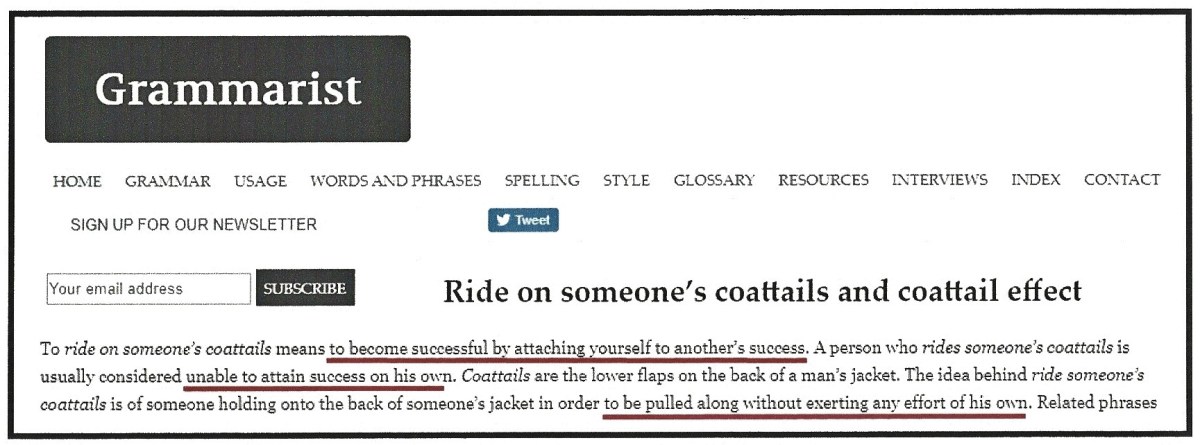
 distinction.







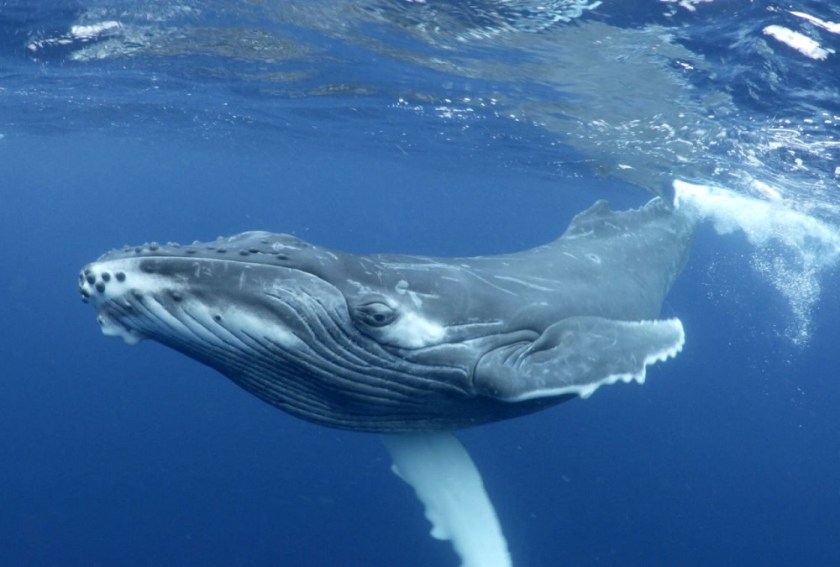


 sea lions, seals, dolphins, whales, turtles and birds. Their goal with every animal is to rescue, rehabilitate and return it to the wild for that second chance at life.






 “Daddy-Don, I think the blue and red striped tie today.”















 the natural history unit of New Zealand media company Television New Zealand.

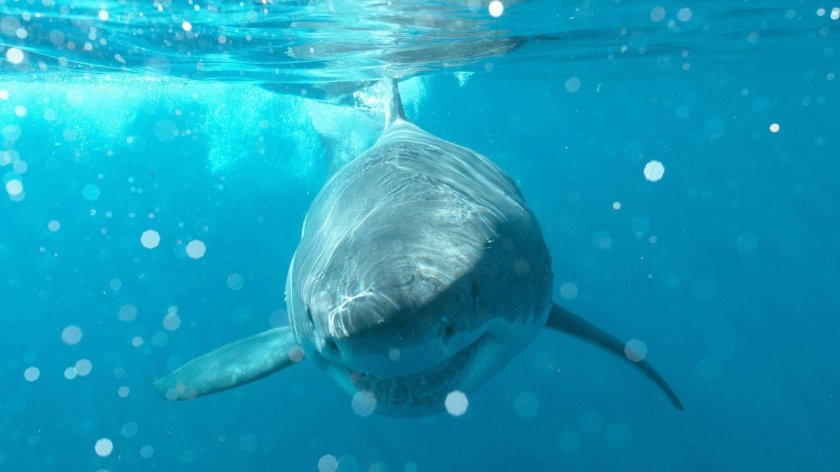

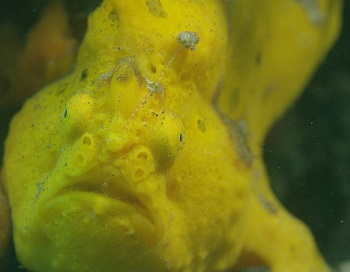


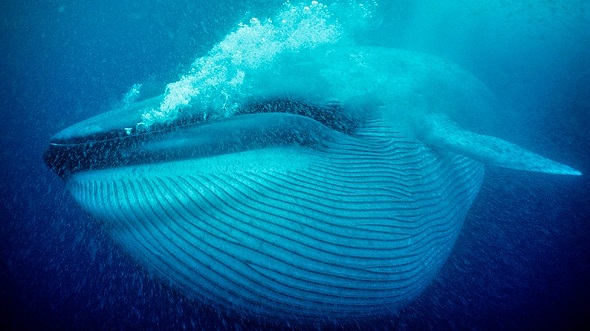
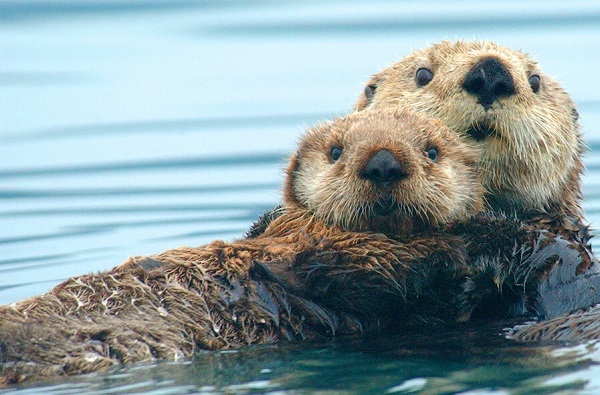

 then eats her partner.
 avoid conflict or rise to meet it.

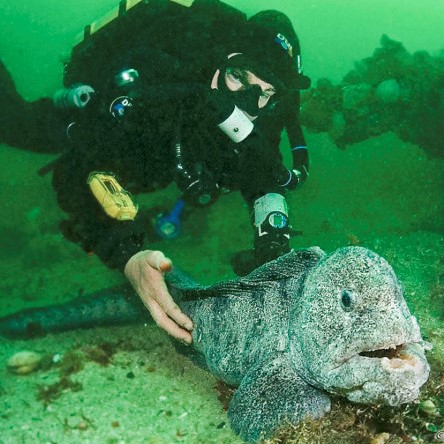

 about a 40-minute drive from Washington DC. She worked for Akima, a government contractor. She was not, in the words of Washington Post columnist Petula Dvorak, “an activist, a protester, a radical or a meddler.”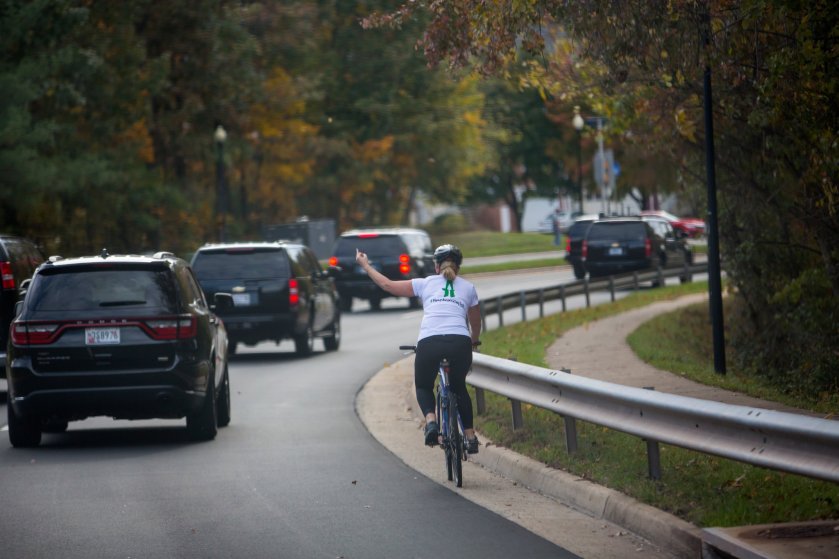


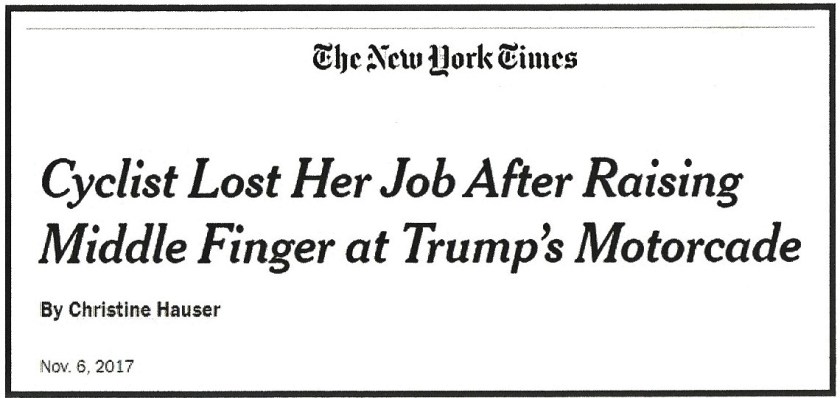


 2019. She ran a professional campaign, defeated a Republican, and looks forward to working on issues including paying teachers in Virginia a living wage, supporting paid family and medical leave for county staff, and compensating firefighters so that they can live in the communities they serve.


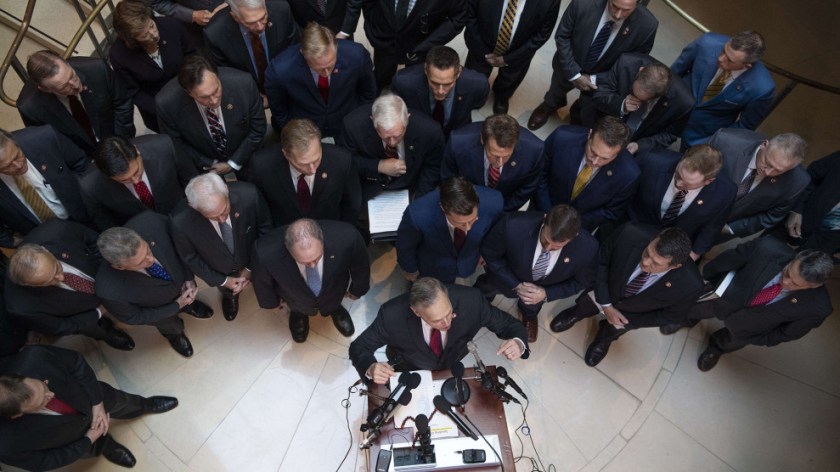

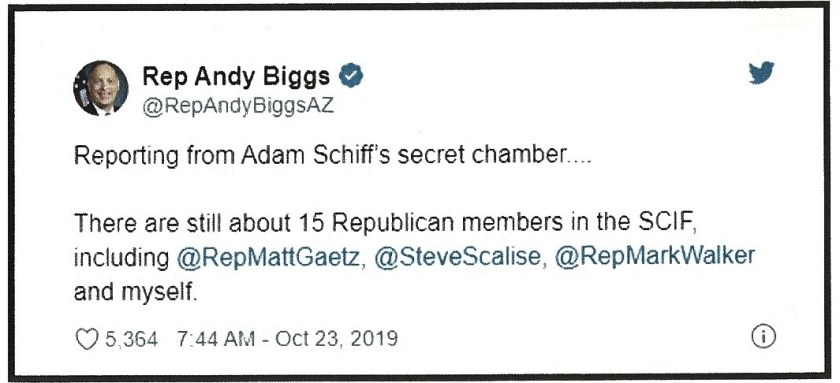
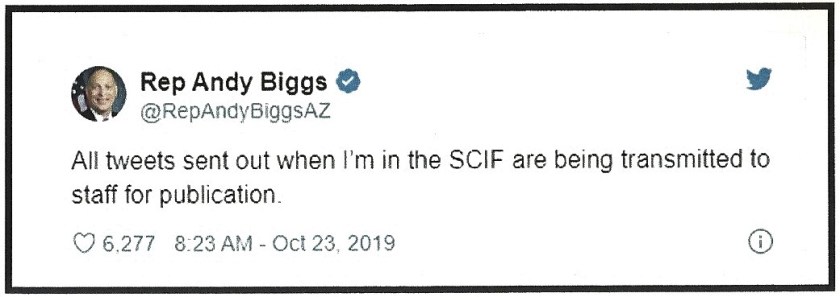


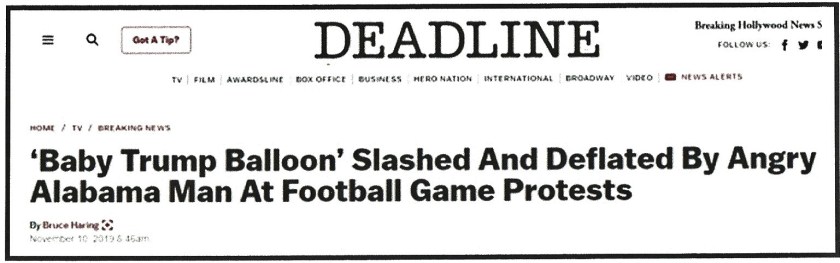





 instead of ignoring, the science on climate change? Helping our veterans get better services? Solving immigration? Sorting out issues in the Middle East? Addressing gun control issues? Revealing his Obamacare replacement that he talks about but doesn’t exist?
 criminal mischief. He was booked into the Tuscaloosa County Jail and held on a $2,500 bond.
















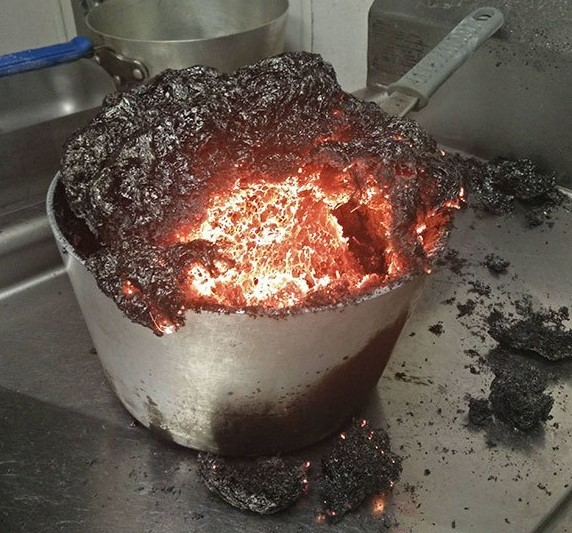

 Publication date: May 2019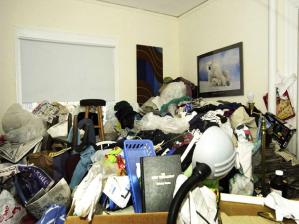

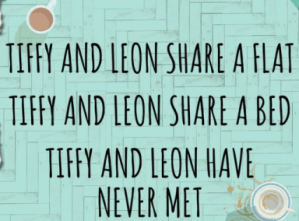 The premise of The Flatshare has possibilities – Leon is looking for a flatmate, and Tiffy is looking for a place she can afford. He works nights and is away weekends, while she works days. So, though they’d be living in the same space and sleeping in the same bed, their paths never need cross.
 abused by Justin, and after she moves out, his abuse – now combined with stalking – continues. And while those circumstances brought on my sympathy, it was too late for me to like her.


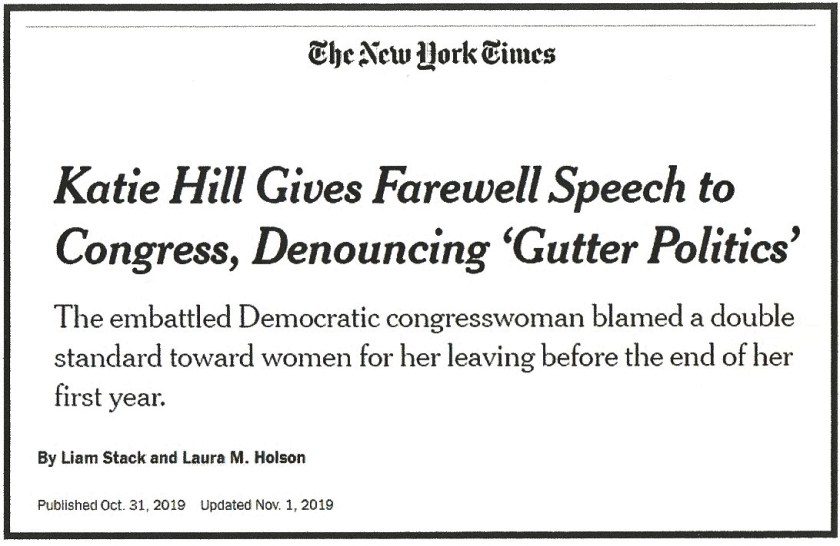
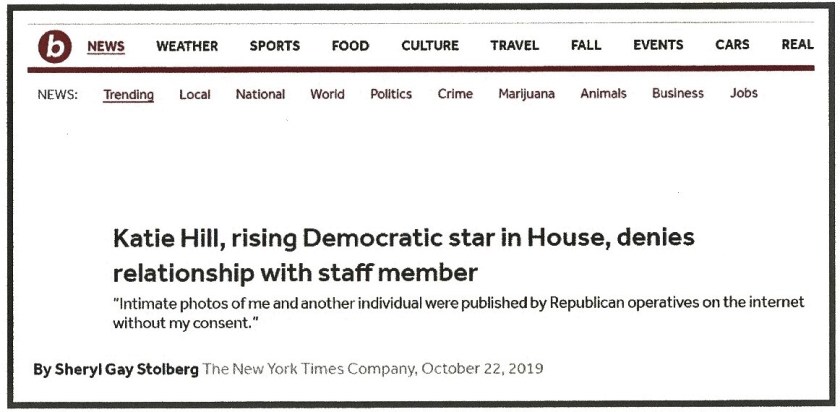



 She was being investigated by the House Ethics Committee for a possible sexual relationship with a subordinate, which she denied. Nothing was proven or resolved before her resignation.




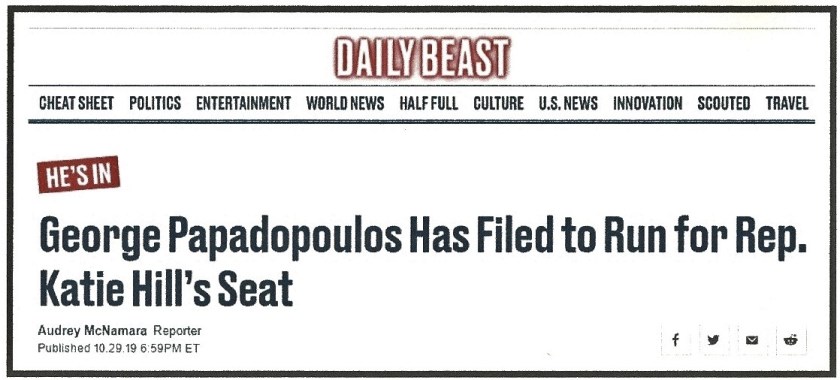
 She’ll be grist for the media mill for another week or two, then fade from the headlines.



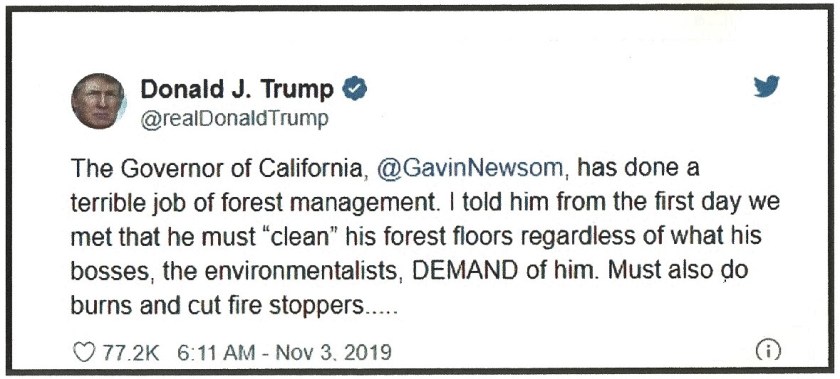
 fires, not forest fires, and many ran through large swaths of private land, including the Camp Fire.









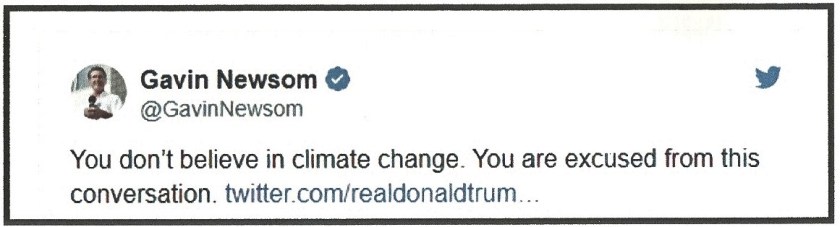






 Yeah, me neither. We changed our clocks yesterday due to damn Daylight Saving Time.





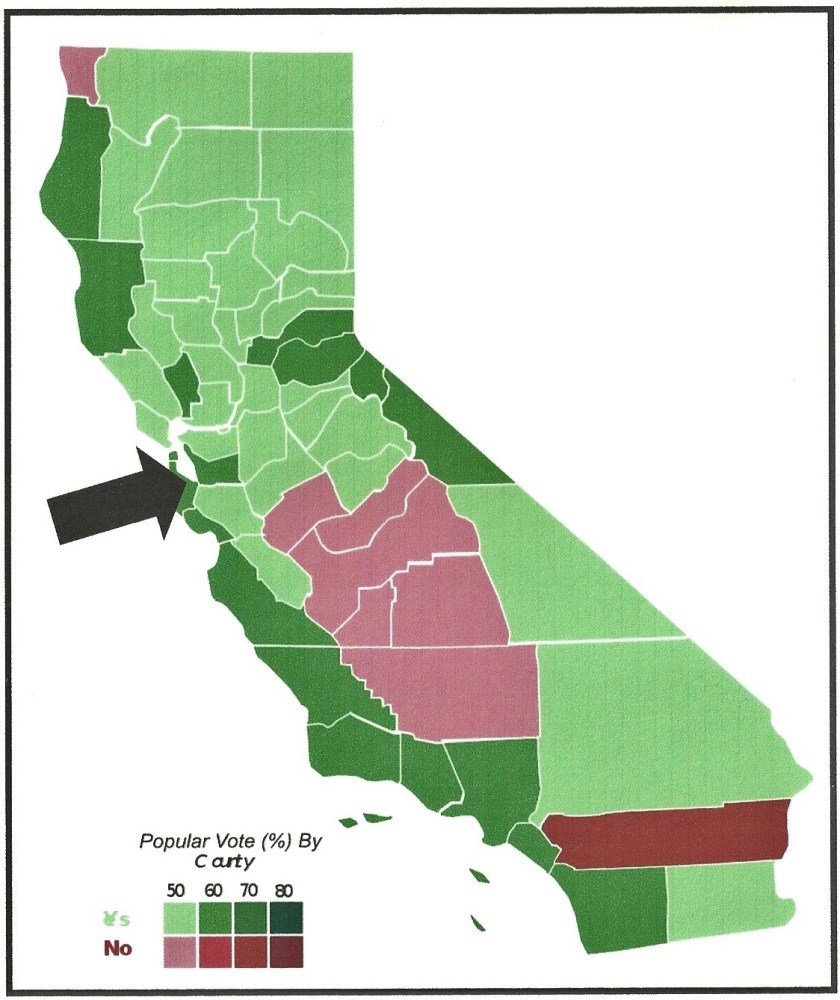


 Science, and Transportation. That’s a standing committee made up of 14 Republicans and 12 Democrats.


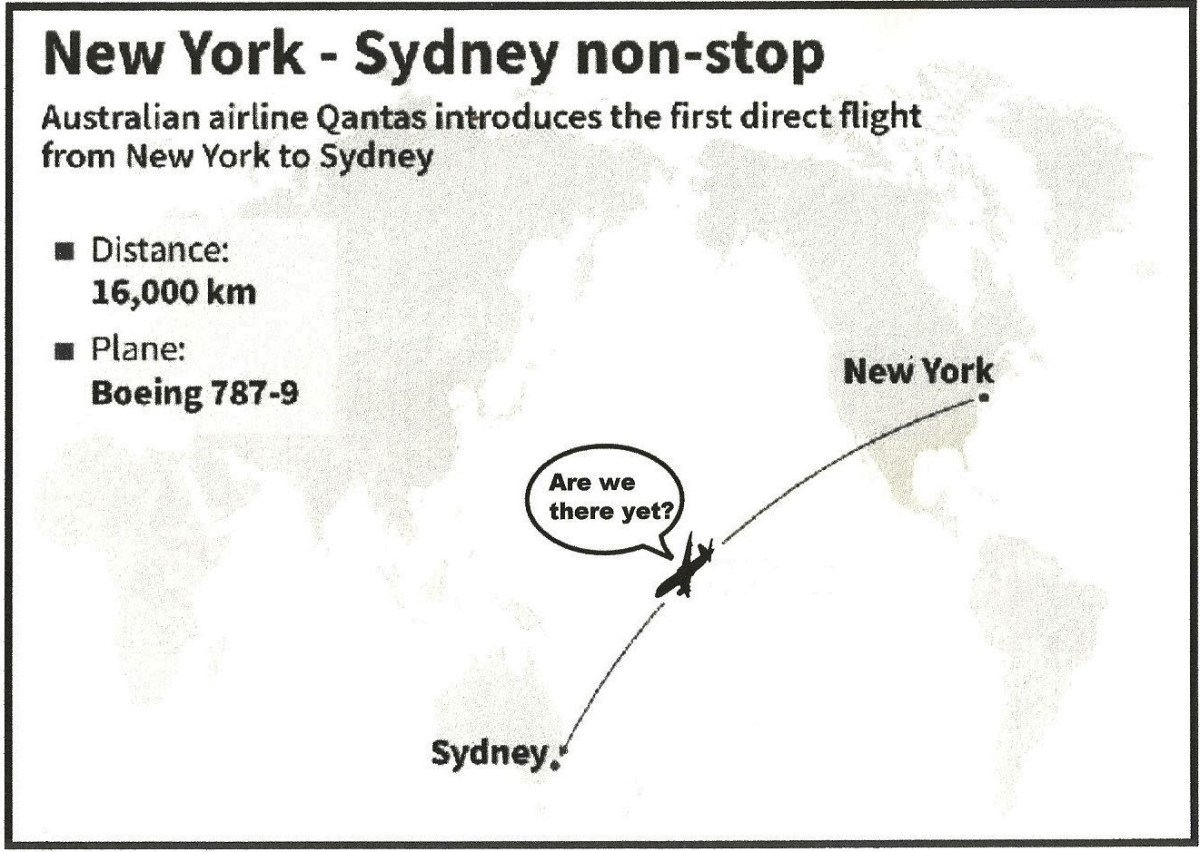

 If the plane was a widebody, you could stretch out across the four or five center seats for a nice, long nap. Pillows and blanket were free, and clean. I’d stretch out, cover up, and mumble, “Wake me up when the food arrives” to a passing flight attendant.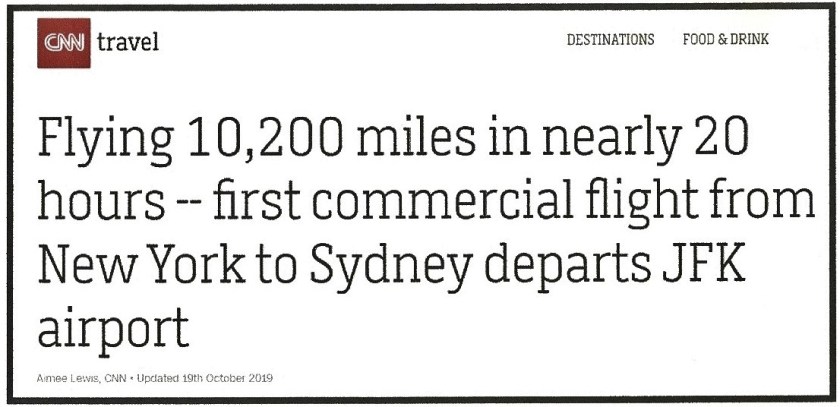

 you’re getting a free trip from New York to Sydney. The bad news is, you’re getting a free trip from New York and we hope to Sydney.”

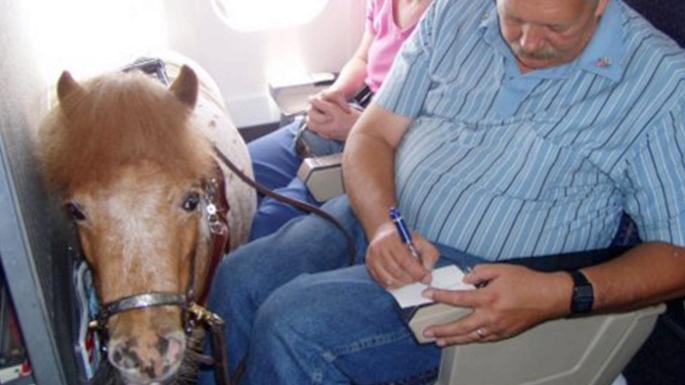


 finally a day honoring me.








 dedicated to protecting all forms of wildlife. Describing sloths as “shy, quiet creatures,” the goals of AIUNAU include reminding us humans that while sloths may be adorable, they make lousy house pets. Sloths are best left alone in their Central and South American forests to survive and – hopefully – thrive.









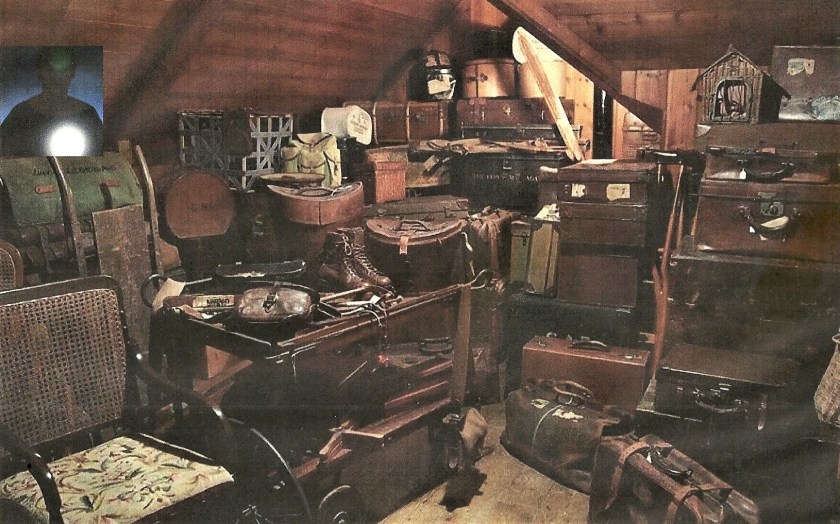


























 Unfair: We judge someone by her hair, his suit, their handshake. “Geez, that hair!” and “Geez, that suit!” and “Geez, that handshake!” and dismiss them.

 Perhaps there is something not quite right about snap judging a movie so quickly.


 services mail fraud, which don’t sound all that serious until you add in words like “felony conspiracy,” “money laundering” and “prison sentences.”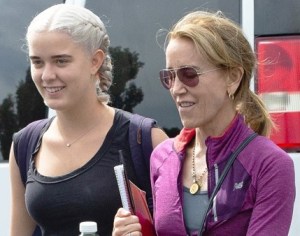



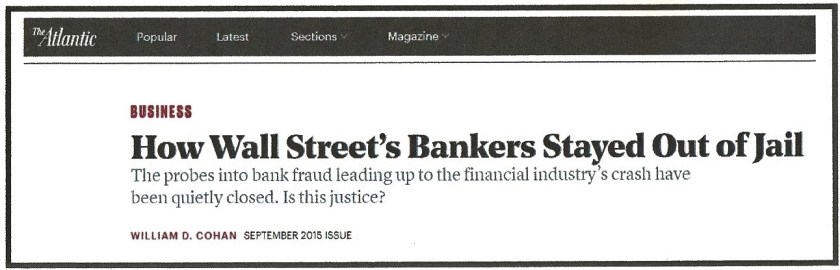



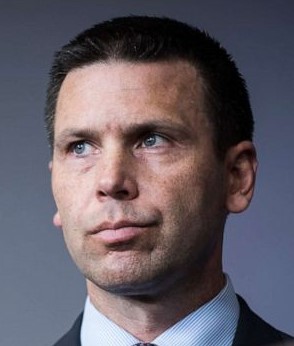


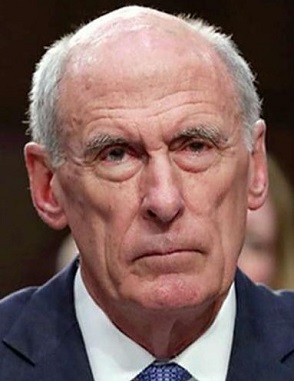











 which she often refers to as “boobs.”



 eastern part of California.


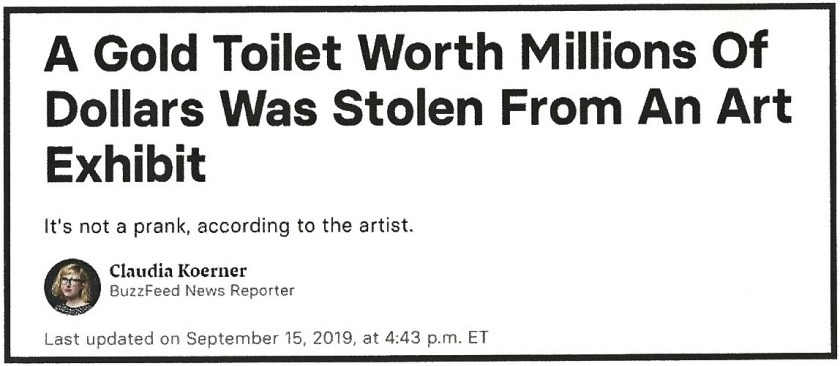


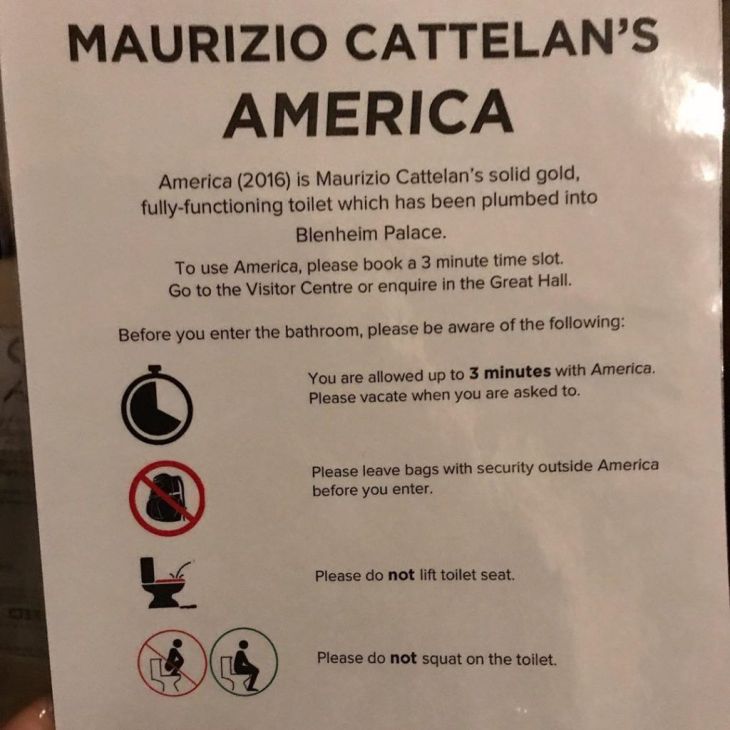




 Conway was, as usual, abrasive and obnoxious, interrupting Woodruff multiple times and not responding to questions.
 nine to 14:


 Unless the President/ Commander-in-Chief is Trump.
 waiting for good news or bad news.




 San Diego to New York, for you. Did you want the same departure time?”













 And how’s this for Host’s mastery of grammar:




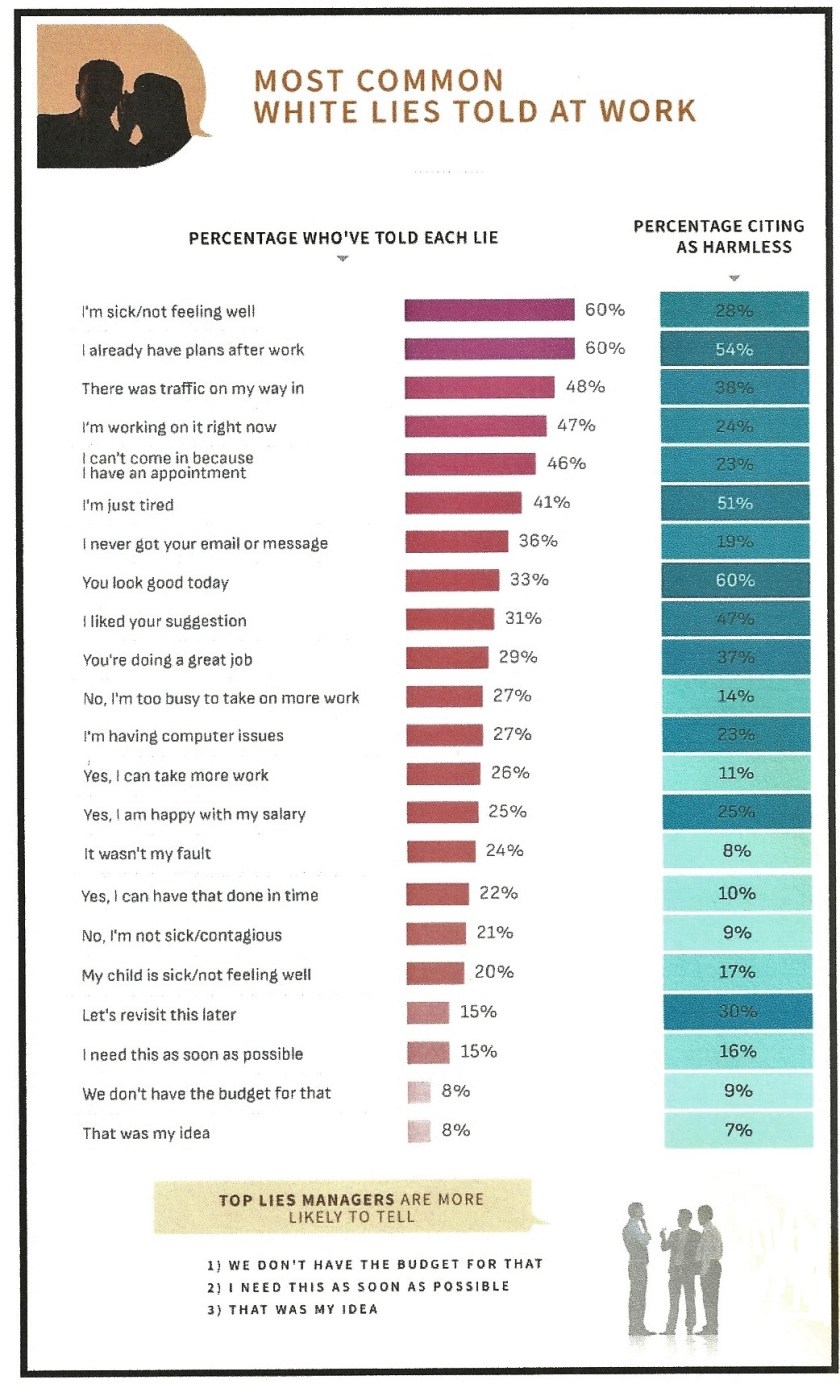













 latter on page seven (which I know only because I numbered the pages myself):
 morrow, and the words a clever mixture of fairy tale and fact William, though he had little interest in music except for dancing which he had grown to enjoy – one moved about in the dance and he preferred that to merely listening to tedious readings or poems – nevertheless found himself startled by the words.”
 In the front of the book I learned that A Pride of Kings was “first published in Great Britain in 1978 by Nel Books,” but my version had been published in 2017 by Three Castles Media Ltd.







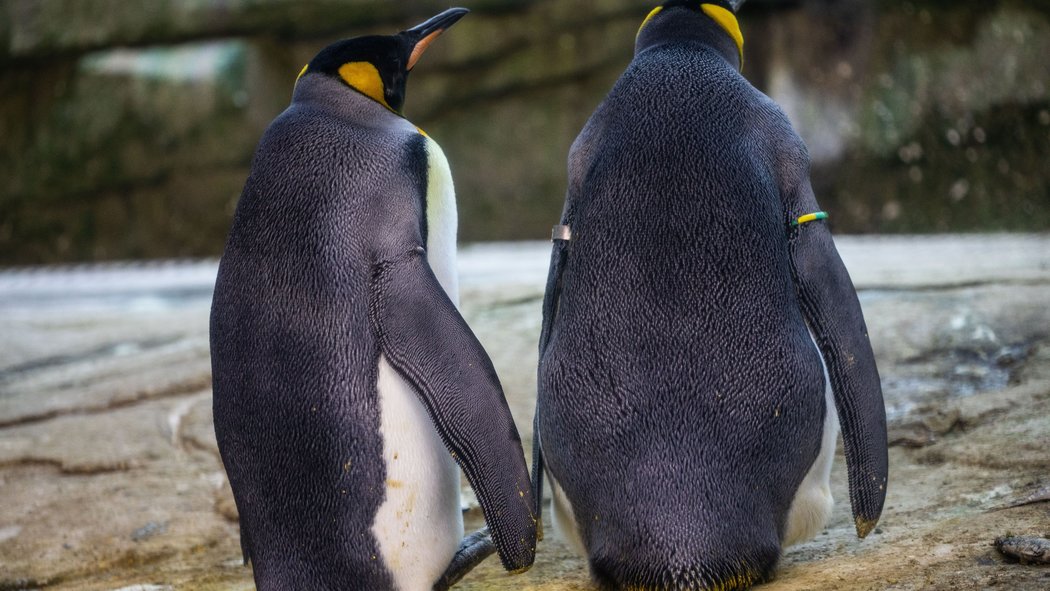


 And Ohio does not prohibit housing discrimination based on sexual orientation.
 You’re wondering, “But in the U.S., why isn’t everywhere the same and nobody can discriminate because of race or age or sexual orientation?”






 Evening News on September 4.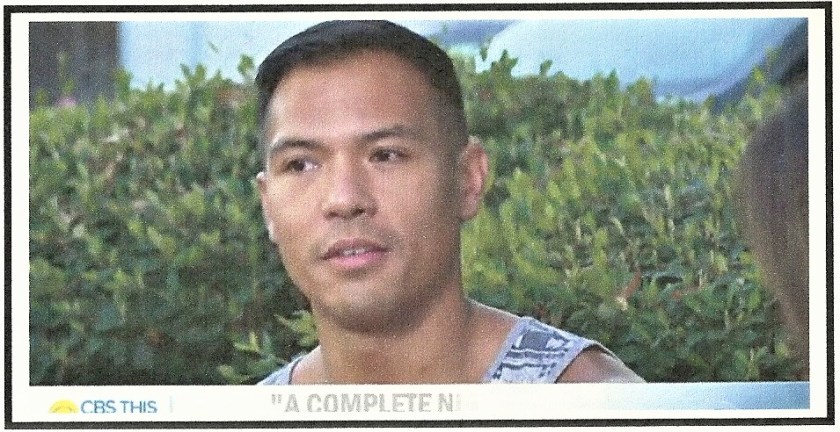
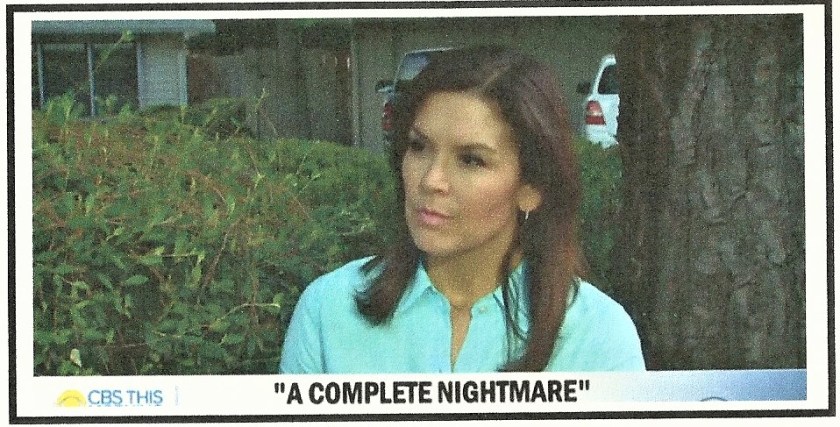

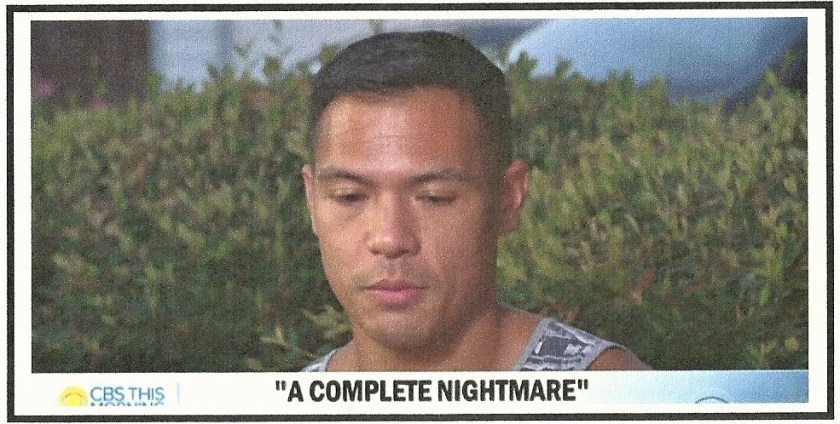

 & Documentary Emmy Awards. “For sure,” she thinks, “I’m good for an ‘Outstanding Continuing Coverage of a News Story’ and ‘Outstanding Achievement of Making a Man Cry.’”


 will spawn the hive’s next generation of bees. Drones are males, and their purpose is to mate with the new queen. The honeybees we see are outside the hive are females, and their roles are to forage for food (pollen and nectar from flowers), build and protect the hive, and clean and circulate air by beating their wings.


 by research to declining populations of bees and other pollinating insects around the world.



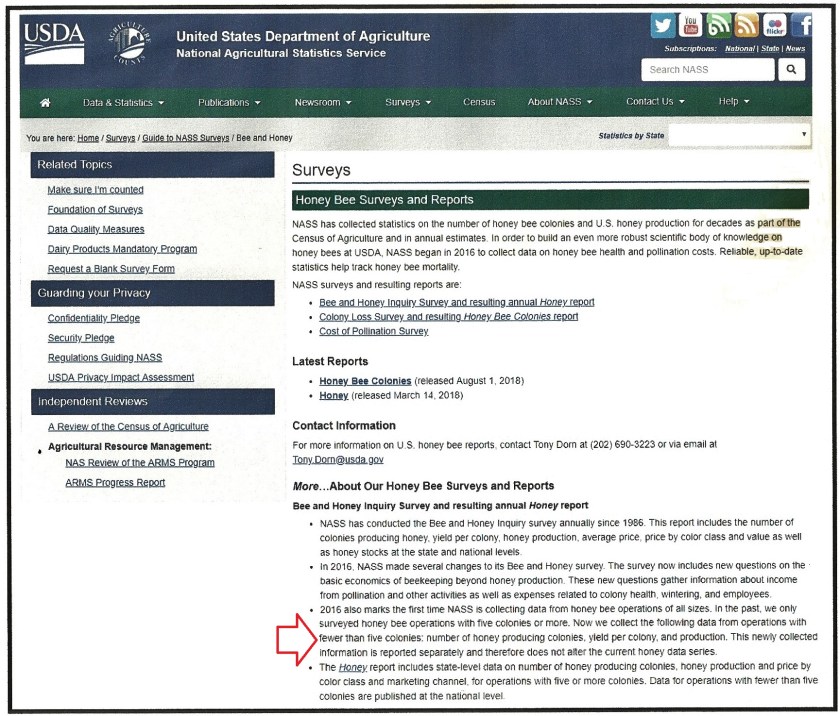




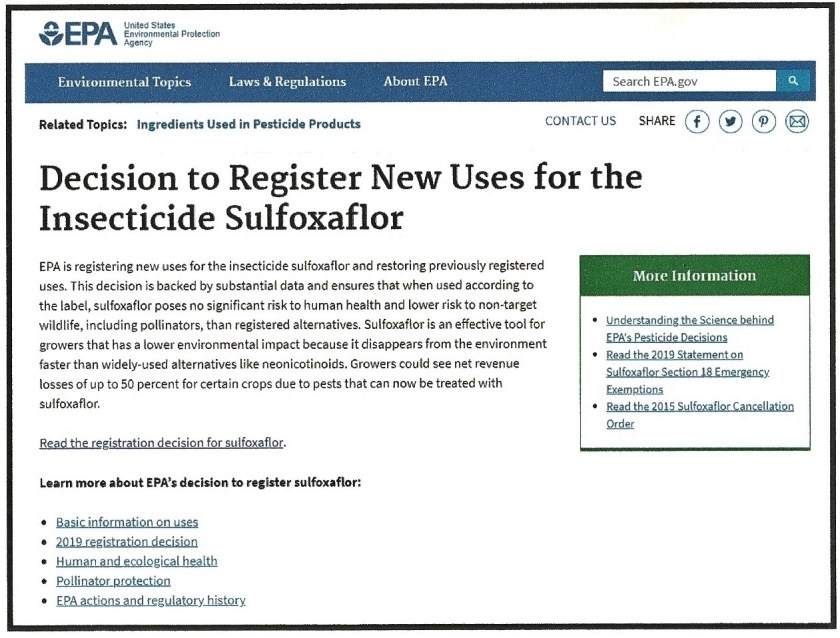


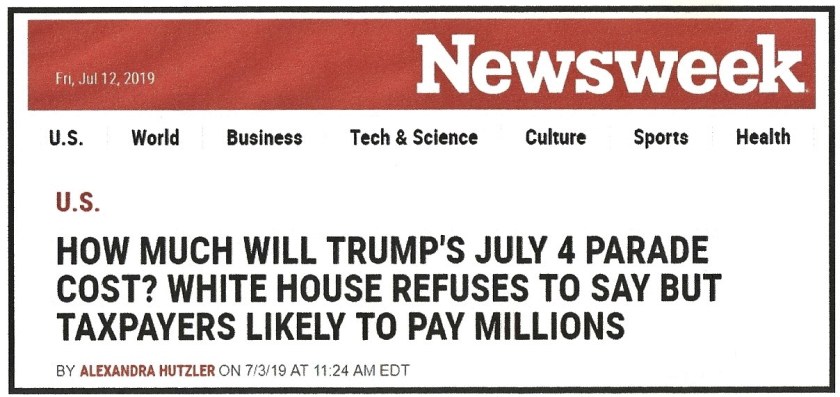






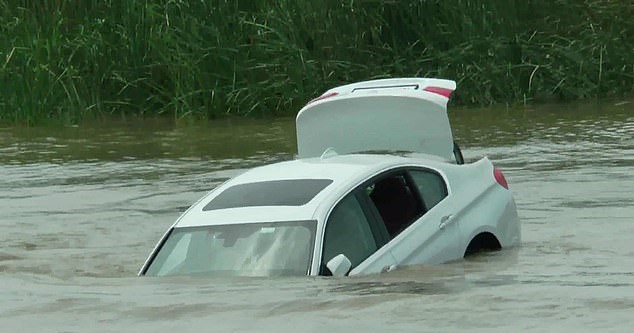





 Transportation: Japan is famous for its ultra-fast bullet trains and immaculate metro systems. And, Japanese trains are almost never late.











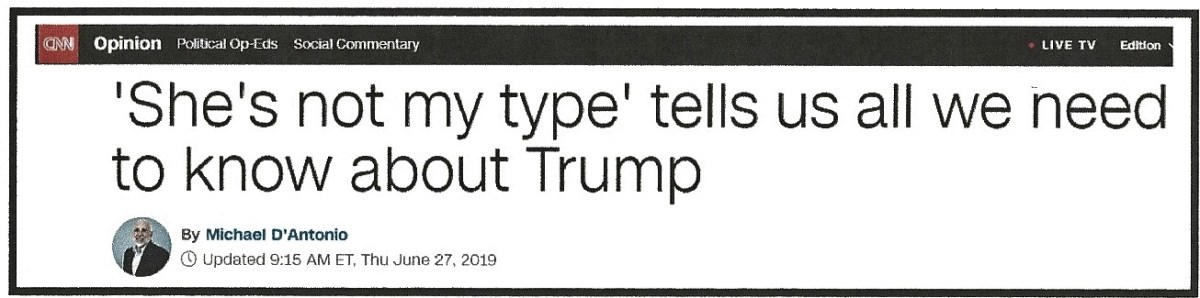


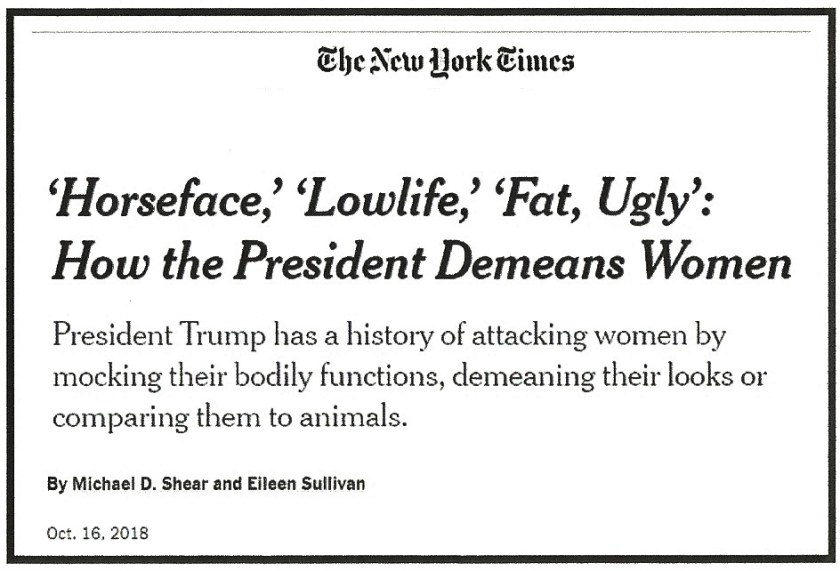









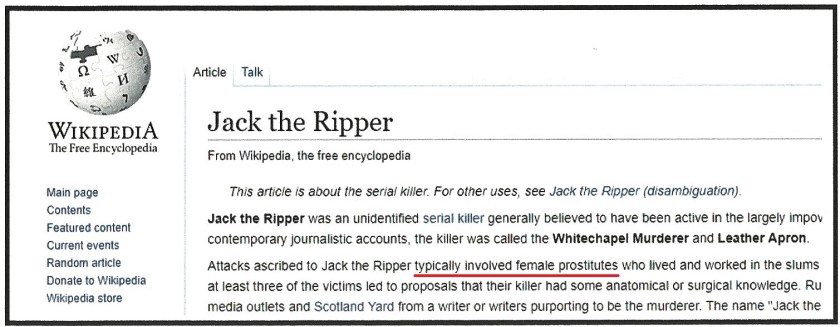


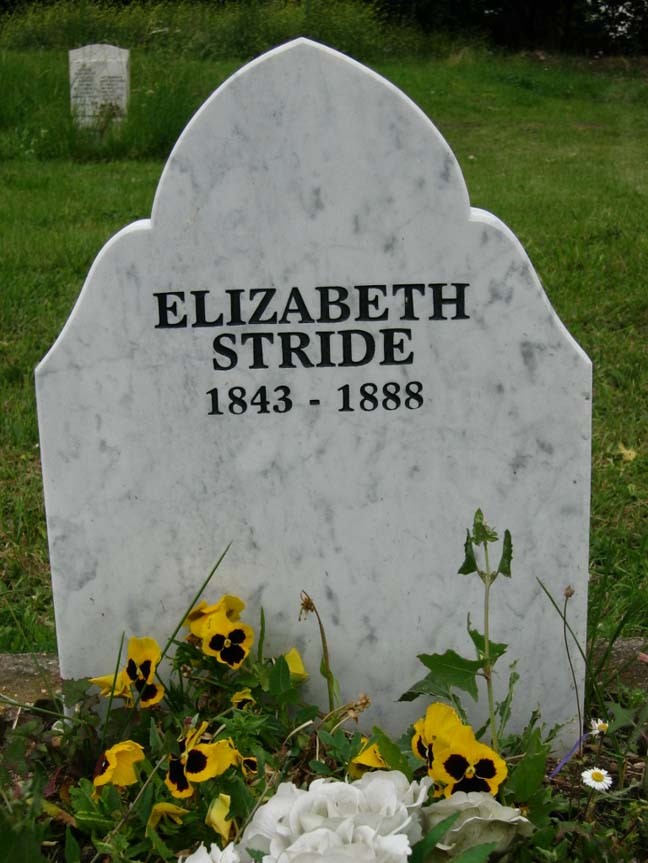
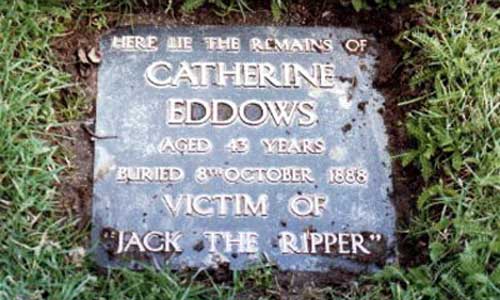


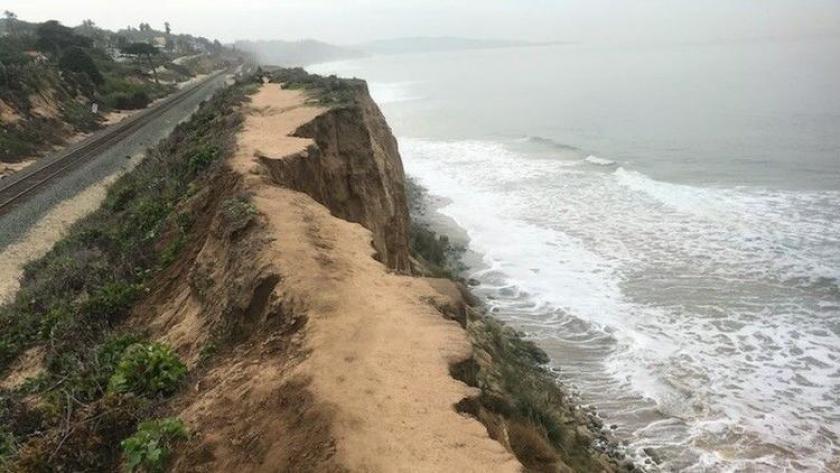


 additional 600 semi-trucks would travel the already crowded Interstate 5 daily without the coastal rail route. Think more vehicle crashes. Think egregiously longer commutes. Think greenhouse gas emissions.
 City Marine Terminal. If these vehicles don’t travel by train, the shipping cost will increase – and be passed on to consumers.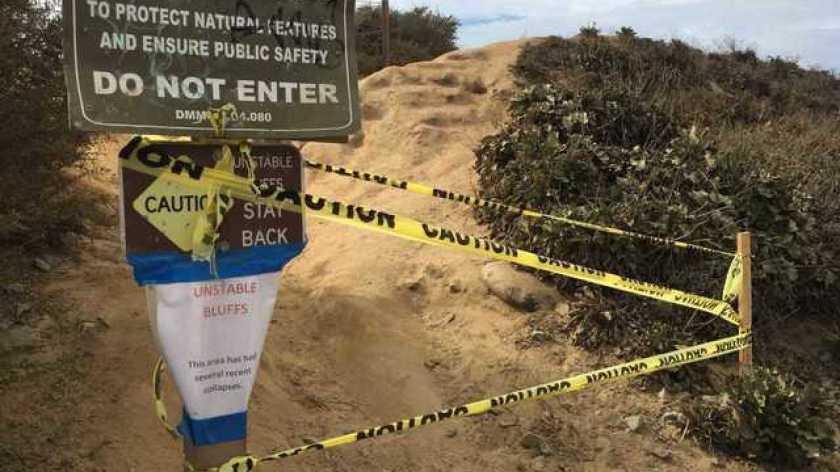


 1998 at a total cost of about $5 million, according to the San Diego Association of Governments (SANDAG).



 “When it comes to all things presidential,” Trump said, “who knows better than Your Favorite President?
 we break records and Make America Great Again and to hell with Greenland and their nasty prime minister.
 ‘Mr. Trump, I know you’re anxious to serve our country and go to Vietnam’ – and I was, I was ready to go and fight. Nobody was more ready than I was. But the doctor said, ‘No, you have bone spurs.’ So I wasn’t able to enlist.


 Grandma (answering phone): Hello?
 your booklet, “How to Write Letters for All Occasions,” which:


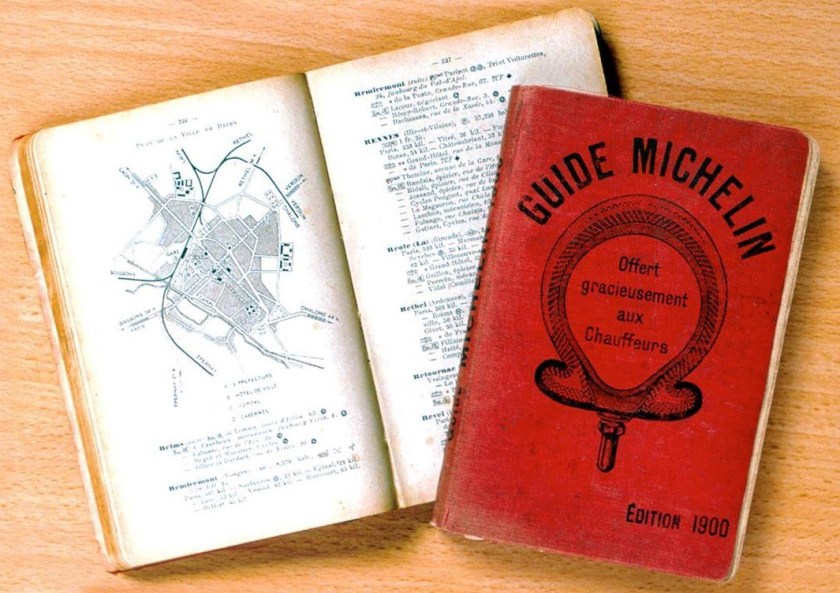







 documentation. Housing, subsistence for basic living expenses and medical care are provided to the witnesses. Job training and employment assistance may also be provided.
 housing unit.
 And – sadly – is the FBI doing what Barr tells them to do? Is this another Trump trumped-up favorite: a “national emergency” but this time, a secret?
 she was 17 has told a court she believes U.S. authorities hold video footage of her having underage sex with powerful associates of Andrew’s friend Jeffrey Epstein.
 “For decades, Epstein has been credulously described as a big-time hedge-fund manager and a billionaire, even though there’s not a lot of evidence that he is either.”

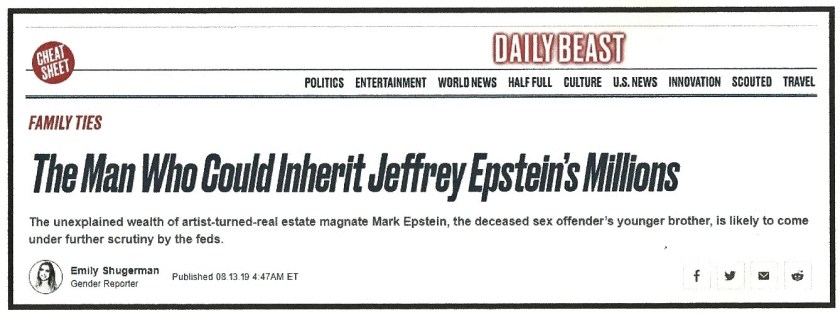












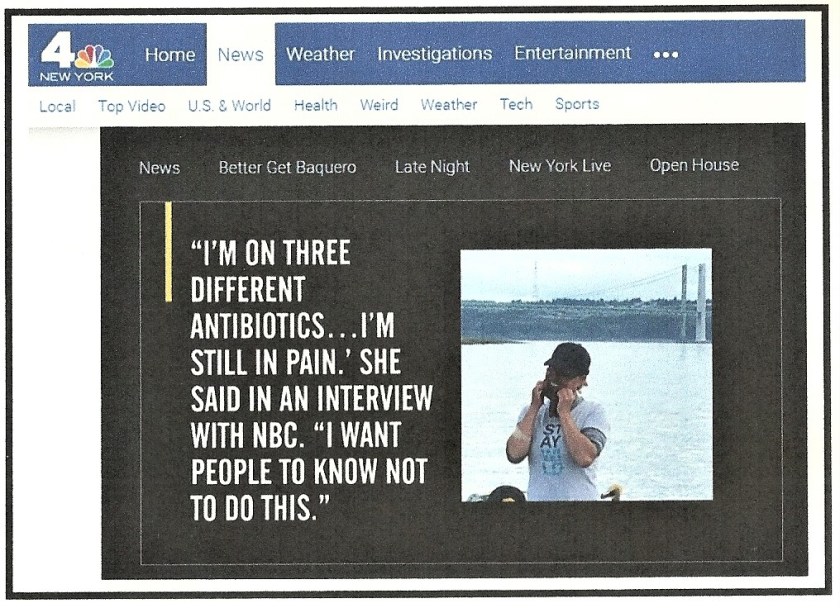




 “Matt went back to his phone, which was quivering in his hand spasmodically like a heart waiting to be transplanted.”

 I Hate Houseguests